Federal oversight of autonomous vehicle technology has entered a rigorous new phase as the National Highway Traffic Safety Administration (NHTSA) formally escalates its review of Tesla’s newly introduced Cybercab. Moving far beyond preliminary inquiries, the federal agency has issued a legally binding Special Order demanding that a designated Tesla corporate officer submit sworn answers and formal affidavits by September 30. This regulatory escalation turns what was initially a fact-finding mission into a formal compliance test, forcing the automaker to officially justify its self-certification strategy for a vehicle explicitly manufactured without traditional manual driver controls.
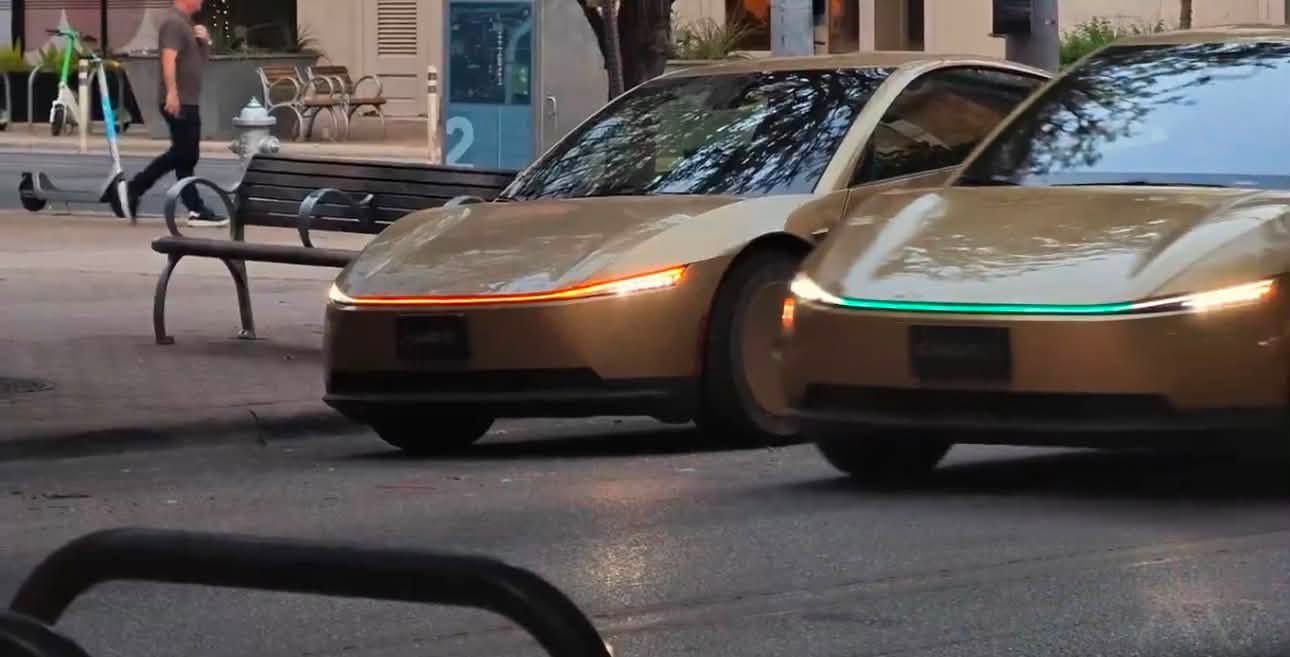
The escalation highlights the growing tension between rapid autonomous vehicle deployment and traditional regulatory frameworks. As companies race to commercialize driverless mobility services, federal watchdogs are increasingly scrutinizing how these novel vehicle architectures map onto decades-old safety standards designed exclusively around human operators.
Main Facts and Regulatory Mechanics
The Special Order stems directly from Audit Query AQ26002, which NHTSA initiated on September 3. That initial date coincided precisely with Tesla’s commercial rollout of its Cybercab service in Austin, Texas. While an Audit Query allows regulators to request voluntary information and documentation, a Special Order carries the full weight of federal law. It transforms the administrative review into a compulsory demand with severe legal ramifications for non-compliance or misrepresentation.
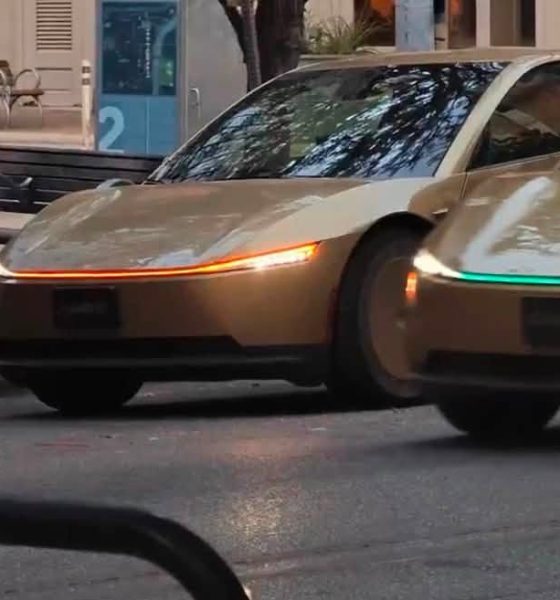
Under the terms of the September 16 order, a corporate officer at Tesla must personally attest to the completeness and accuracy of the company’s responses under penalty of perjury. The directive lists 21 specific requests aimed squarely at the Cybercab’s unique design philosophy. Because the vehicle lacks a permanently attached steering wheel, accelerator pedals, brake pedals, and rearview mirrors, regulators want a transparent, legally binding account of how Tesla determined that the vehicle complied with existing Federal Motor Vehicle Safety Standards (FMVSS).
Legal experts and industry observers note that the stakes for Tesla extend far beyond administrative friction. Under federal statutes, providing false or misleading information under a sworn NHTSA Special Order exposes the company and individual signatories to immense criminal liability. Furthermore, if regulators eventually determine that the vehicle’s initial self-certification was fundamentally flawed, the civil penalty exposure could scale dramatically. Estimates from automotive regulatory analysts suggest that structural non-compliance penalties could approach $139 million, alongside potential operational rollbacks or mandated recalls if safety standards are found to have been bypassed.

Chronology of Events
The friction between Tesla and federal safety regulators regarding autonomous infrastructure follows a meticulously tracked timeline over the past several months:
- May through July 2026: Autonomous developers navigate varying paths for steering-wheel-free vehicle certification. Notably, competitor Zoox secured a formal exemption in July under Part 555, the specific regulatory pathway established by NHTSA for vehicles lacking human-operated driving controls.
- September 3, 2026: Tesla officially launches its commercial Cybercab robotaxi service in Austin, Texas, allowing members of the public to hail driverless rides via a dedicated application. Simultaneously, NHTSA opens Audit Query AQ26002 to investigate the vehicle’s compliance parameters.
- September 16, 2026: NHTSA converts the preliminary audit into a formal Special Order, setting a strict September 30 deadline for Tesla to deliver sworn affidavits and comprehensive engineering justifications.
- Mid-September 2026: Despite the looming federal deadline, Tesla maintains uninterrupted commercial operations of the Cybercab fleet in Austin, continuing app-based passenger transit while preparing its official regulatory defense.
Technical Discrepancies and Core Regulatory Questions
At the heart of NHTSA’s 21 specific inquiries is a fundamental conflict between legacy safety mandates and modern, autonomous vehicle architecture. One of the primary focal points of the Special Order centers on physical control requirements. For example, federal regulations explicitly state that "the service brakes shall be activated by means of a foot control." Because the Cybercab completely eliminates foot pedals in favor of fully automated braking logic, regulators are demanding a granular technical explanation of how the vehicle satisfies this statutory requirement.

Additionally, investigators are probing whether Tesla utilized temporarily attached human controls—such as portable steering yokes or temporary pedals—during any phase of the vehicle’s compliance testing or certification process. If temporary manual controls were utilized to satisfy testing protocols, regulators want to know which specific safety standards depended on that auxiliary equipment being present, and how those standards translate to a strictly driverless production vehicle.
This approach contrasts sharply with the regulatory strategies adopted by other autonomous vehicle developers. Competitors have typically pursued formal exemptions through Part 555 petitions before deploying vehicles devoid of traditional controls. Tesla, by contrast, has relied heavily on an internal self-certification process, asserting that its technological redundancies and safety validations meet or exceed the performance outcomes intended by legacy rules.

Official Responses and Corporate Strategy
To date, Tesla has maintained an official public silence regarding its precise strategy for answering the Special Order. Company representatives have not outlined whether they intend to file for retroactive exemptions, challenge the agency’s interpretation of legacy safety standards, or provide empirical data proving equivalent safety outcomes through software validation.
Despite the regulatory pressure, operational expansion has not slowed. The Cybercab fleet continues to ferry passengers across Austin through the Robotaxi platform. Tesla leadership appears confident in the vehicle’s underlying architecture, pressing forward with network expansion even as the shadow of the September 30 deadline looms large. By keeping the vehicles on public roads, Tesla is signaling that it views the dispute as a technical and legal debate over paperwork and regulatory interpretation rather than an immediate operational hazard.

Broader Industry Impact and Market Implications
The outcome of this regulatory standoff carries profound implications for the broader autonomous vehicle industry. As artificial intelligence and advanced robotics rapidly redefine personal and commercial transportation, federal agencies are forced to decide whether legacy regulatory frameworks must be strictly enforced through amendments and exemptions, or if a more flexible, performance-based standard can accommodate vehicles engineered entirely around autonomy.
If NHTSA adopts a rigid interpretation of statutes written decades before the advent of machine learning and autonomous steering, companies attempting to deploy driverless fleets without manual controls could face prolonged legal hurdles and massive administrative delays. Conversely, a pragmatic resolution that accommodates self-certified autonomous designs could accelerate the timeline for nationwide commercial robotaxi deployment.
For now, all eyes are fixed on the impending September 30 deadline. When the signed affidavit from Tesla’s designated corporate officer lands on the desk of federal regulators, it will mark a critical milestone—not just for the future of the Cybercab, but for the regulatory framework governing the entire autonomous vehicle revolution in the United States.