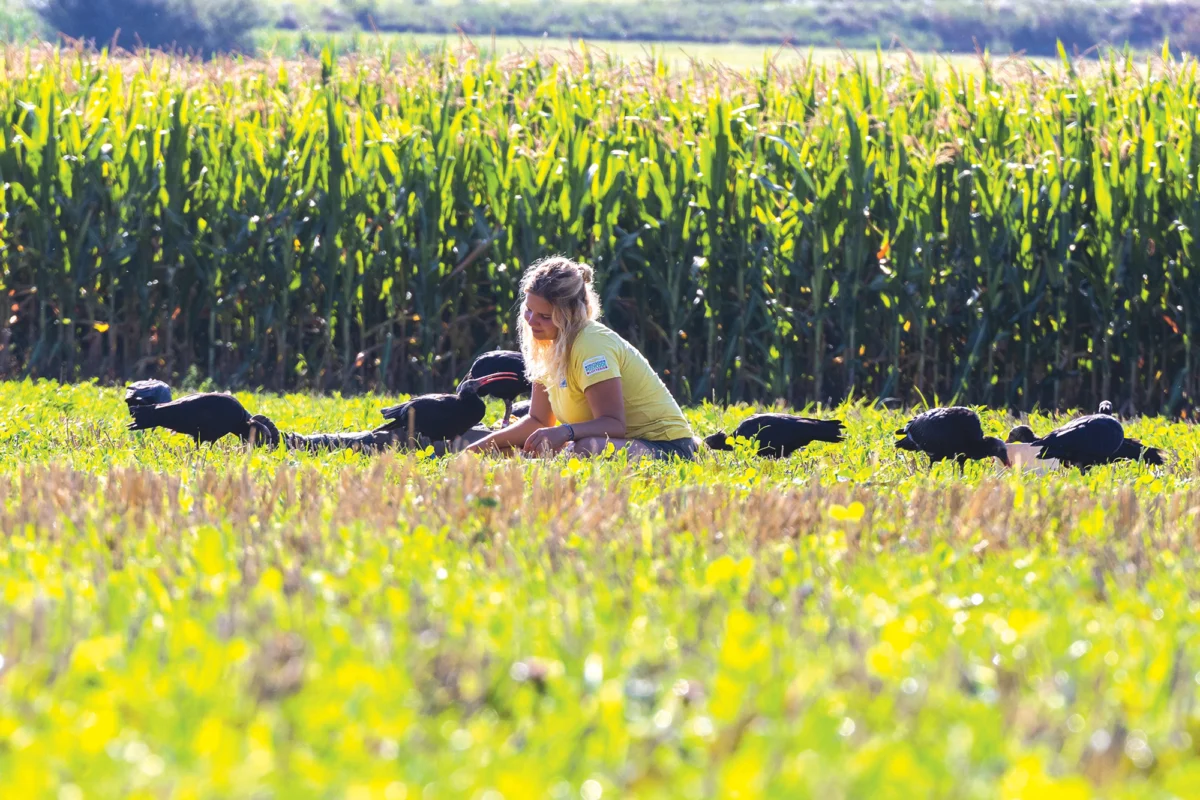
The plight of the northern bald ibis, a species teetering on the precipice of oblivion, has galvanized a dedicated team of biologists who are undertaking an ambitious and unprecedented mission: to teach these critically endangered birds a new migratory path. This endeavor, fraught with challenges and requiring immense dedication, represents a last-ditch effort to secure the future of a species that has all but vanished from its ancestral flyways.
A Perilous Journey for a Vanishing Species
The northern bald ibis (Geronticus eremita) was once a widespread species, its distinctive appearance and unique foraging habits gracing landscapes across Europe, North Africa, and the Middle East. However, a confluence of factors, including habitat loss, agricultural intensification, hunting, and the widespread use of pesticides, led to a catastrophic decline in its populations throughout the 20th century. Today, wild populations are confined to extremely small, isolated pockets, primarily in Morocco and Syria, facing constant threats that push them closer to irreversible extinction.
The urgency of the situation is underscored by stark figures. While precise global estimates fluctuate, the wild northern bald ibis population is believed to number in the low hundreds, making it one of the most endangered bird species on the planet. Conservation efforts have been ongoing for decades, but reintroducing birds to their former habitats and ensuring their survival has proven exceedingly difficult, particularly when it comes to re-establishing migratory behaviors that have been lost over generations.
The Maverick Biologists and Their Unconventional Approach
At the forefront of this critical conservation initiative are individuals like Barbara Steininger and Helena Wehner, whose commitment to the northern bald ibis is nothing short of extraordinary. Their roles go far beyond that of traditional researchers; they have embraced the challenging and emotionally demanding task of becoming surrogate mothers to the fragile chicks.
The narrative of their involvement begins in April 2023, near an aviary in southern Austria. For Steininger, then twenty-five years old, the moment of receiving two featherless northern bald ibis chicks was a mixture of anticipation and nervousness. "Not an everyday occurrence," she reportedly stated, "especially if your fosterlings are birds." This sentiment highlights the unique nature of their undertaking, which requires an intimate and hands-on approach to nurturing these vulnerable creatures.
The chicks, devoid of the protective down that would typically shield them in the wild, were placed into Steininger’s warm hands by a zookeeper from Wildlife Park Rosegg. This marked the beginning of an intense period of care for both Steininger and her colleague, twenty-eight-year-old Helena Wehner. Over the subsequent weeks and months, they would become the sole caregivers for these young birds, a responsibility that demanded unwavering attention and a deep understanding of avian needs.
The process of raising these chicks mirrors, in many ways, the nurturing of human infants. The biologists provide not only essential sustenance but also crucial emotional support. Cuddles and words of encouragement, delivered in a gentle, almost baby-talk cadence, are deemed as vital as the meticulous hand-feeding regimen. Eight times a day, the chicks are fed a carefully prepared mixture, not of milk or formula, but of shredded beef hearts and mice – a diet designed to mimic what they would receive from their natural parents. "Just that it’s not breast milk or formula," Wehner noted, emphasizing the specialized nature of their care.
This profound level of devotion is reserved for a species teetering on the brink, a testament to the critical conservation status of the northern bald ibis.
Re-establishing Lost Instincts: The Core of the Mission
The ultimate goal of Steininger, Wehner, and their team extends far beyond mere survival within an aviary. The true objective is to reintroduce the northern bald ibis to its migratory heritage, a complex set of behaviors that have been largely extinguished in recent generations due to the species’ fragmented existence and lack of wild mentors.
Historically, northern bald ibises migrated from their breeding grounds in Central Europe to overwintering sites in the Mediterranean region. This migratory route, honed over millennia, was essential for their survival, allowing them to access food resources and suitable climates throughout the year. However, with the drastic decline of wild populations, this knowledge has not been effectively passed down.
The current project aims to bridge this knowledge gap by using a method that has seen success with other migratory birds, notably the common crane. This involves imprinting the young ibises onto human caregivers who then act as surrogate parents. As the birds mature, they are gradually introduced to ultralight aircraft piloted by the conservationists. The pilots, often dressed in distinctive bird-like costumes, simulate the role of an adult ibis leading its flock.
The ultralight aircraft become the new "lead birds," guiding the young ibises on a carefully planned, northward migration. This process is meticulously managed, with the birds following the aircraft on their daily flights, gradually learning the routes and the instinct to migrate. The goal is to lead them to new, protected overwintering sites in Italy, establishing a viable new migratory corridor that bypasses the threats and challenges that have decimated their historical flyways.
A Chronology of Hope and Challenge
The journey to re-establish a migratory route for the northern bald ibis is a long-term endeavor, built upon years of research, planning, and incremental progress. While the specific timeline for the current cohort of birds is ongoing, the broader context of such projects provides a framework:
- Early 21st Century: Growing awareness of the northern bald ibis’s critically endangered status prompts renewed conservation efforts. Research into reintroduction strategies intensifies, drawing lessons from successful crane migration projects.
- 2010s: Pilot programs and captive breeding initiatives lay the groundwork for potential reintroduction. Challenges related to imprinting and migratory behavior guidance are identified and studied.
- Early 2020s: The establishment of specialized breeding facilities and the recruitment of dedicated individuals like Steininger and Wehner become crucial. These facilities focus on raising chicks with the intent of imprinting them onto human caregivers and surrogate "lead birds."
- Spring 2023: The intensive hand-rearing of a new cohort of northern bald ibis chicks begins in Austria, with Steininger and Wehner taking on the role of primary caregivers. This period involves daily feeding, socialization, and the gradual introduction to their human "parents."
- Late 2023 – Early 2024: As the chicks mature, they are introduced to ultralight aircraft. These initial flights are short and designed to build familiarity and trust. The "practice flights" are crucial for accustoming the birds to the presence of the aircraft and the guidance of the pilots. The image provided, showing northern bald ibises during a practice flight with Johannes Fritz and the "bird moms," likely depicts this critical phase.
- Autumn 2024 (projected): The team aims to initiate the first major migratory flight with this group of birds, guiding them south towards their new, carefully selected overwintering grounds in Italy. This will be the most challenging phase, requiring precise navigation, weather monitoring, and constant vigilance.
- Ongoing: Success is measured not just by reaching the destination but by the birds’ ability to survive the winter, find food, and potentially return to their breeding grounds in the following spring, thus completing a full migratory cycle and demonstrating the viability of the new route.
Supporting Data and the Scientific Basis
The strategy employed by the conservationists is rooted in established ethological principles. Birds, particularly migratory species, rely heavily on instinct and learned behaviors passed down through generations. When these natural transmission mechanisms are broken, as they have been for the northern bald ibis, artificial interventions become necessary.
The imprinting process is critical. By being the first animate beings the chicks encounter, the human caregivers become the surrogate parents. This bond facilitates the acceptance of the ultralight aircraft as the "parental figure" during migration. Research on migratory birds has consistently shown that young birds will follow a perceived leader, whether it be a natural parent or an artificial substitute.
The choice of ultralight aircraft is deliberate. Their relatively slow speed and maneuverability allow them to closely mimic the flight patterns of adult ibises. The pilots, often experienced conservationists themselves, are trained to maintain a consistent flight path and speed that the young birds can easily follow.
The selection of new overwintering sites is equally data-driven. Factors such as the availability of suitable foraging habitats, the presence of water, and the absence of major threats like human development or predator populations are rigorously assessed. Furthermore, establishing a new migratory corridor requires careful consideration of stopover points that offer adequate resources and safety during the long journey.
Reactions and Implications
The ambitious nature of this conservation project has garnered attention and support from various conservation organizations and ornithological societies worldwide. While official statements from major international bodies are often cautious, the general sentiment is one of hopeful anticipation.
Dr. Alistair Finch, a renowned ornithologist specializing in avian migration, commented on the broader implications: "Projects like this are absolutely vital for species on the very edge. The challenge of re-establishing lost migratory routes is immense, but the potential reward – saving an entire species from extinction – is immeasurable. It requires a unique blend of scientific understanding, practical skill, and an almost parental dedication from the individuals involved."
The success of this initiative could have significant ripple effects:
- Species Survival: The most direct implication is the potential to pull the northern bald ibis back from the brink, establishing a self-sustaining wild population.
- Ecological Restoration: Reintroducing a species can help restore ecological balance within its habitat, contributing to biodiversity.
- Conservation Model: The techniques developed and refined in this project can serve as a blueprint for future reintroduction efforts for other endangered migratory species facing similar challenges.
- Public Awareness: Such high-profile projects often galvanize public support and awareness for conservation issues, encouraging broader engagement and funding for wildlife protection.
The Broader Impact: A Beacon of Hope in Conservation
The efforts of Steininger, Wehner, and their colleagues represent more than just a scientific endeavor; they are a profound testament to human resilience and commitment in the face of overwhelming odds. The northern bald ibis, with its ancient lineage, stands as a symbol of what can be lost when human activities disrupt the natural world.
The success of this project hinges on a delicate interplay of instinct, learned behavior, and human intervention. It is a painstaking process, marked by daily routines of feeding, nurturing, and patient guidance. The image of the northern bald ibises soaring alongside an ultralight aircraft, under the watchful eyes of their human "bird moms," encapsulates the hope that drives this maverick team.
Should they succeed in establishing a viable migratory route, it will not only be a triumph for the northern bald ibis but a powerful reminder that even in the darkest hours of a species’ existence, dedicated individuals can forge new pathways to survival, ensuring that these magnificent birds continue to grace our planet for generations to come. The story of the northern bald ibis and its determined saviors serves as a compelling narrative of hope, ingenuity, and the enduring power of the natural world.