The Race to Alaska (R2AK) is not for the faint of heart. Billed by its organizers as "a stupid worth doing," this grueling 750-mile self-supported expedition challenges participants to navigate the treacherous Inside Passage from Port Townsend, Washington, to Ketchikan, Alaska, using only human power. The rules are stark: no engines, no outside assistance, and no supply drops. Competitors can choose to sail, paddle, or row their vessels, but the fundamental principle remains—pure, unadulterated human grit against the unforgiving elements. As the R2AK organizers themselves wryly note, it’s an event that evokes comparisons to the Iditarod, but with the added possibilities of drowning, being struck by freighters, or facing off against grizzly bears.
This inherent madness is often amplified by the R2AK’s organizers’ penchant for injecting dark humor into their communications, a strategy that perhaps serves as a necessary coping mechanism against the looming specter of Type 2 or Type 3 fun—those types of enjoyment that are only appreciated in retrospect, if at all. It is within this spirit of audacious challenge that the official competitor description for Karl Kruger’s 2017 entry, "Heart of Gold," perfectly encapsulates the sheer insanity of attempting this monumental feat on a stand-up paddleboard (SUP).
Karl Kruger’s Unconventional Vessel and the R2AK Challenge
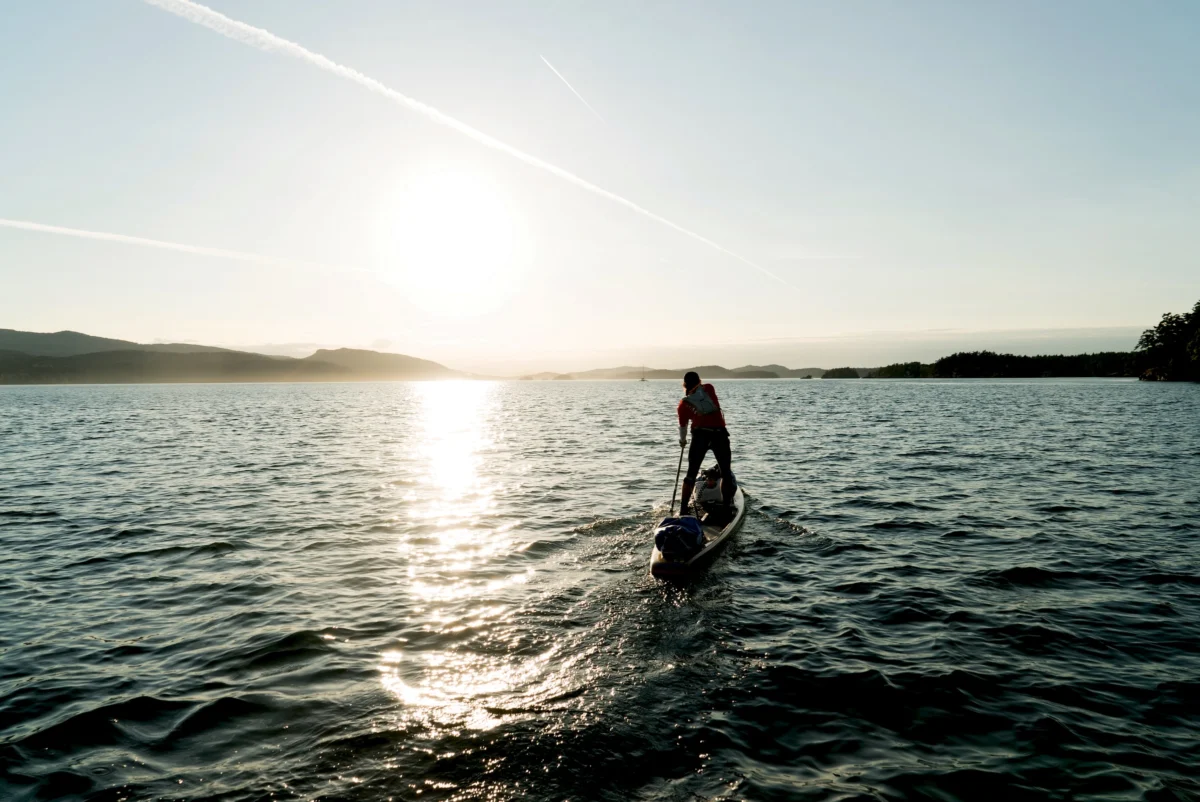
Kruger, hailing from Orcas Island, Washington, embarked on the 2017 R2AK with a singular, bold vision: to conquer the 750 miles of the Inside Passage on a custom-built, heavily reinforced 19-foot stand-up paddleboard. This unconventional choice of vessel immediately set him apart, transforming his participation into a focal point of the race’s inherent narrative of pushing human and material boundaries. His sole means of propulsion was the traditional SUP paddle, a testament to his commitment to a pure, unadulterated human-powered endeavor.
The R2AK, founded in 2015 by Dave Merson and the Port Townsend-based Northwest Maritime Center, was conceived as an antidote to the increasingly commercialized and technologically advanced world of sailing races. Its core ethos is to strip away the reliance on engines and external support, forcing competitors to confront their own resourcefulness and resilience. The race’s starting line in Port Townsend, a historic seaport known for its maritime heritage, serves as a symbolic gateway to the wild, untamed waters of the Pacific Northwest.
The R2AK: A History of Grit and Ingenuity
The inaugural R2AK in 2015 saw 39 teams set off, with only 14 successfully completing the journey. The race immediately garnered attention for its unique blend of extreme challenge and lighthearted presentation. Early editions featured a variety of craft, from high-performance racing yachts to humble kayaks and even a human-powered outrigger canoe. The common thread among all participants was a shared understanding that this was not merely a race, but an expedition into the heart of self-reliance and the raw beauty of the Alaskan wilderness.
The 750-mile course is notorious for its unpredictable weather patterns, strong currents, and tidal races. Competitors must contend with everything from dense fog and gale-force winds to frigid waters and potential encounters with marine wildlife. The self-supported nature of the race means that participants must carry all their food, water, safety equipment, and repair materials, adding a significant logistical challenge to the physical demands.
Karl Kruger’s "Heart of Gold" Entry: A Calculated Risk
Kruger’s decision to tackle the R2AK on a stand-up paddleboard was a testament to his deep understanding of the event’s spirit and his own personal fortitude. While SUPs are typically associated with calm waters and recreational paddling, Kruger’s custom 19-foot board was designed for the rigors of open ocean and passage navigation. The added length and reinforced construction were crucial for stability, buoyancy, and the ability to carry essential gear over such an extended distance.
The "Heart of Gold" team, comprised solely of Kruger, represented a profound commitment to individual effort. This approach aligns with the R2AK’s emphasis on self-sufficiency, where teams are encouraged to rely on their own skills and ingenuity rather than external support. The team name itself, "Heart of Gold," evokes a sense of pure intention and unwavering determination, qualities essential for enduring the immense physical and mental challenges of the race.
Navigating the Inside Passage: Challenges and Triumphs
The 750-mile journey through the Inside Passage is a complex and demanding undertaking. The route weaves through a labyrinth of islands, fjords, and channels, each presenting its own set of navigational hazards. Strong tidal currents, which can reach speeds of several knots, are a constant factor, requiring careful planning and precise timing. The weather in this region is notoriously fickle, with fog banks that can appear without warning, reducing visibility to near zero, and powerful storms that can materialize rapidly.
For a stand-up paddleboarder, these conditions are amplified. Unlike a sailboat or kayak, a SUP offers less protection from the elements and a more exposed platform for the paddler. The constant motion of the water, combined with the physical exertion of paddling, demands an extraordinary level of stamina and balance. Kruger’s chosen vessel, while custom-built for the task, would still be subject to the full force of the sea.
The R2AK’s Impact on Competitors and the Maritime Community
The Race to Alaska has become a significant event in the adventure racing and maritime communities, attracting a dedicated following of participants and spectators. It fosters a unique camaraderie among competitors, who often share stories and offer mutual encouragement, despite being in direct competition. The race also highlights the enduring appeal of human-powered exploration and the challenges inherent in navigating some of the world’s most spectacular, yet unforgiving, waterways.
The R2AK’s success lies in its ability to tap into a primal human desire for adventure and self-discovery. By stripping away the technological crutches of modern life, it forces participants to confront their own limitations and discover reserves of strength they may not have known they possessed. The stories that emerge from the R2AK are often tales of incredible resilience, ingenious problem-solving, and a profound connection with the natural world.
Analyzing the R2AK’s "Stupid Worth Doing" Philosophy
The R2AK’s self-proclaimed "stupid worth doing" philosophy is a clever distillation of the event’s appeal. It acknowledges the inherent absurdity of voluntarily subjecting oneself to such extreme hardship, while simultaneously celebrating the profound personal rewards that can be reaped from such an endeavor. The race is not about winning in the traditional sense, but about the journey itself, the lessons learned, and the personal growth achieved.
Karl Kruger’s participation on a stand-up paddleboard is a prime example of this philosophy in action. It represents a willingness to embrace the unconventional, to push the boundaries of what is considered possible, and to find joy in the struggle. The "Heart of Gold" entry serves as a powerful reminder that the greatest adventures often lie just beyond our comfort zones, waiting to be discovered by those brave enough to seek them out. The official competitor description, with its understated yet evocative details, perfectly captures the audacious spirit that defines the Race to Alaska and the individuals who dare to participate. It is a testament to the enduring allure of challenges that, while perhaps appearing "stupid" to some, ultimately yield a gold standard of personal achievement and an unforgettable experience.