






The commercial transport sector is undergoing a profound structural evolution, driven by tightening global emissions regulations, aggressive corporate sustainability targets, and the declining total cost of ownership associated with zero-emission fleets. At the forefront of this transformation is the heavy-duty trucking industry, a segment historically reliant on heavy-oil internal combustion engines due to the sheer power and endurance required for long-haul operations. Addressing this challenge requires innovative approaches that bridge the gap between legacy capital investments and modern environmental mandates.
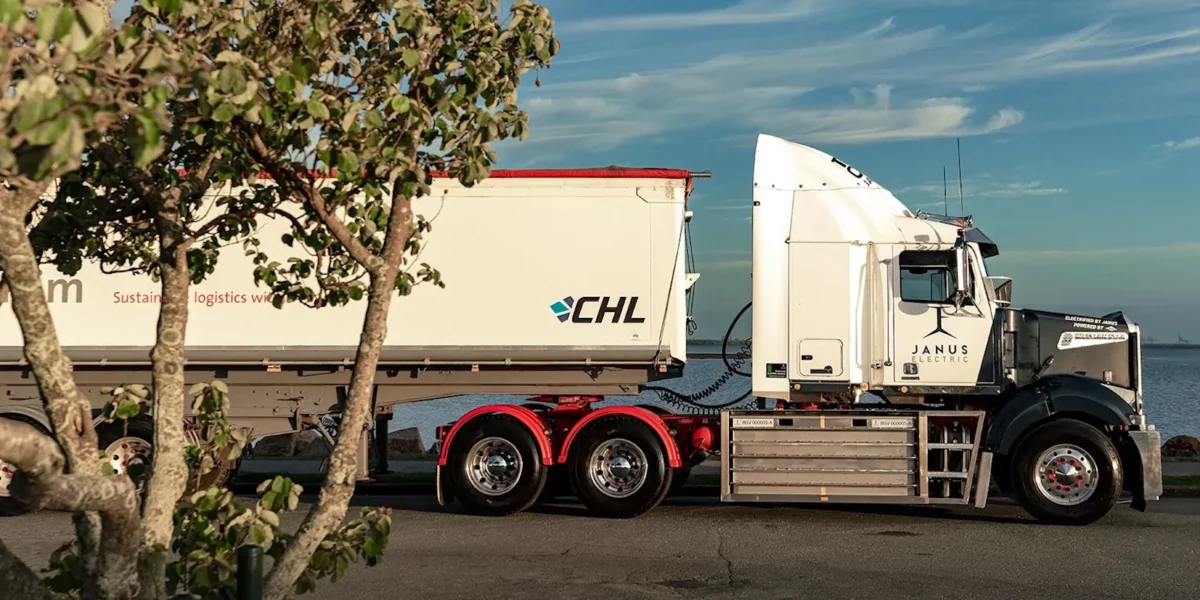
Enter Janus Electric, an Australian heavy-vehicle conversion specialist that has steadily expanded its footprint across international markets, including the United States and Canada. By leveraging the modular architecture of Class 8 glider trucks—rolling chassis and bodies produced without engines or transmissions—the company bypasses the immense capital expenditure required to build entirely new electric vehicle fleets from scratch. Instead, Janus transforms existing or newly manufactured diesel-ready gliders into advanced battery-electric haulers.
However, scaling a heavy-duty vehicle conversion business relies heavily on securing robust, reliable, and scalable energy storage systems. To meet its growing order backlog across North America and Australia, Janus Electric has finalized a major strategic agreement with Electrovaya Inc., a leading lithium-ion battery technology and manufacturing company. This partnership establishes a framework for multi-million-dollar battery supplies while cementing a deeper financial alignment between the two clean-transport entities, signaling a maturation of the heavy-duty electric retrofit market.
The Mechanics of the Conversion: Power, Range, and Rapid Turnarounds
The core appeal of the Janus Electric conversion model lies in its practical engineering and operational continuity. Heavy-duty transport fleets cannot afford prolonged downtime, making traditional charging bottlenecks a significant hurdle for electric fleet adoption. Janus addresses this constraint through an integrated architecture centered on high-capacity electric motors and a proprietary battery-swap ecosystem.

Converted Class 8 trucks utilizing the Janus system are equipped with a robust 480-horsepower electric motor. Power is supplied by a modular energy storage setup consisting of a standard 310 kWh lithium-ion battery pack, with configurations accommodating up to two packs mounted on either side of the chassis. This dual-pack configuration yields a real-world, loaded driving range of up to 370 miles, making regional haul routes and heavy-duty logistics entirely feasible on a single operational cycle.
Once depleted, the vehicle’s energy reserves can be replenished through two distinct pathways tailored to fleet logistics. Operators can utilize high-power DC fast-charging infrastructure to recharge the onboard packs in under 90 minutes. Alternatively, and perhaps more crucially for high-utilization commercial operations, the depleted packs can be physically extracted and replaced with freshly charged units at specialized swap stations in approximately four minutes. This rapid-swap capability mirrors the speed of refueling a conventional diesel tank, drastically mitigating downtime and redefining operational efficiency for freight operators.
Financial Momentum and Regulatory Tailwinds
The collaboration between Janus Electric and Electrovaya arrives at a critical juncture of commercial acceleration for the retrofit specialist. Over the past year, Janus has seen its order book expand significantly, crossing the threshold of 70 units during the summer months. This commercial traction is heavily supported by a convergence of favorable regulatory frameworks and targeted financial incentives designed to accelerate the decarbonization of freight corridors.
In the United States, initiatives such as the California Air Resources Board’s Hybrid and Zero-Emission Truck and Bus Voucher Incentive Project (HVIP) and the U.S. Environmental Protection Agency’s Diesel Emission Reduction Act (DERA) grants have provided substantial financial relief for fleet operators looking to transition. When combined with regional support frameworks—such as the Port of Los Angeles’ "Plus" program—commercial customers can secure up to $166,000 in subsidies per truck conversion.
When factoring in these substantial upfront incentives alongside the well-documented operational savings of electric propulsion—which fleet data indicates can approach $160,000 per truck over its lifecycle—the economic argument for retrofitting diesel gliders becomes compelling. Furthermore, the aesthetic and structural familiarity of classic truck bodies, such as the square-nose Western Star configurations utilized by Janus, eases operator acceptance in a traditionally conservative market segment.

The Strategic Supply and Investment Agreement
Securing non-binding reservations is a foundational step for any emerging clean-tech enterprise, but translating those commitments into tangible vehicle deliveries requires ironclad supply chain partnerships. Recognizing this imperative, Janus Electric and Electrovaya have structured a multifaceted agreement to secure the battery modules necessary for North American and international deployment.
The partnership is anchored by an initial purchase order valued at approximately $26 million for Electrovaya’s advanced lithium-ion battery systems. These high-performance packs will serve as the primary energy source for Janus’s growing fleet of converted Class 8 semi-trucks destined for deployment in the United States and Canada. Beyond the commercial supply arrangement, the agreement features a direct equity investment: Electrovaya has committed to purchasing approximately $1.4 million in Janus Electric stock using direct capital, aligning the long-term interests of both organizations.
Ben Hutt, Managing Director and Chief Executive Officer of Janus Electric, emphasized the strategic significance of the agreement during the announcement. "Electrovaya is an important partner to Janus Electric, and we’re particularly pleased it has decided to invest directly in our business," Hutt stated. "The investment is a strong vote of confidence in our technology and approach to electrifying heavy transport. Reliable battery supply is critical to our growth, and Electrovaya’s expanding North American manufacturing capabilities will be important as we scale. Both companies see considerable opportunity in this market, and we look forward to building on our partnership."
From Electrovaya’s perspective, the partnership represents a strategic entry point into one of the most lucrative and high-demand segments of the commercial vehicle market. Dr. Raj Das Gupta, Chief Executive Officer of Electrovaya, highlighted the unique value proposition offered by the collaboration.
"Class 8 trucking is one of the most exciting and demanding frontiers in electrification, and Janus has demonstrated real commercial traction with fleets in the US, Canada and Australia," Dr. Das Gupta said. "Janus has developed a practical solution to one of the major challenges facing heavy transport, enabling diesel-powered trucks to be converted to electric without compromising their commercial operations."

Manufacturing Footprint and Supply Chain Resilience
A key element supporting this partnership is Electrovaya’s ongoing expansion of its domestic manufacturing footprint in the United States. To meet rising demand and comply with stringent local sourcing requirements, Electrovaya is advancing the development of its new production facility in Jamestown, New York.
Scheduled to come online in 2027, the Jamestown plant will focus on the large-scale production of lithium-ion cells, modules, and complete battery packs. Crucially, the facility is positioned to be potentially compliant with the federal Build America, Buy America (BABA) act. This domestic production capability ensures that Janus Electric customers in North America will have access to locally manufactured, high-grade energy storage systems that satisfy the stringent regulatory criteria required to qualify for various federal and state-level clean energy subsidies.
Broader Industry Implications and Market Outlook
The alliance between Janus Electric and Electrovaya illustrates a broader structural shift within the heavy-duty transportation sector. For decades, fleet electrification was viewed primarily as an all-or-nothing proposition requiring the mass acquisition of expensive, brand-new electric semi-trucks from legacy original equipment manufacturers. While major OEMs continue to scale their proprietary battery-electric and hydrogen fuel cell portfolios, the high initial capital cost of new Class 8 vehicles remains a formidable barrier for small- to mid-sized fleet operators.
Retrofitting existing glider chassis with modular electric powertrains offers an economically viable intermediate pathway. By utilizing glider frames and replacing internal combustion engines with standardized electric motors and swappable battery packs, companies like Janus reduce the capital expenditure required for fleet decarbonization by a significant margin.
However, the viability of the retrofit model depends entirely on the stability of the component supply chain—most notably, the access to safe, high-capacity, and durable lithium-ion batteries. By partnering with an established domestic manufacturer like Electrovaya, Janus Electric mitigates supply chain vulnerability while ensuring that its technical solutions meet the rigorous performance, thermal management, and longevity standards demanded by commercial freight operations.

As the Jamestown manufacturing facility approaches its operational launch in 2027, and as regulatory frameworks in North America and Australia continue to penalize heavy diesel emissions, the synergy between advanced battery manufacturing and commercial vehicle retrofitting is poised to accelerate. The success of this $26 million partnership will likely serve as a blueprint for other clean-tech innovators seeking to scale sustainable heavy transport solutions without placing undue financial strain on the global logistics network.