







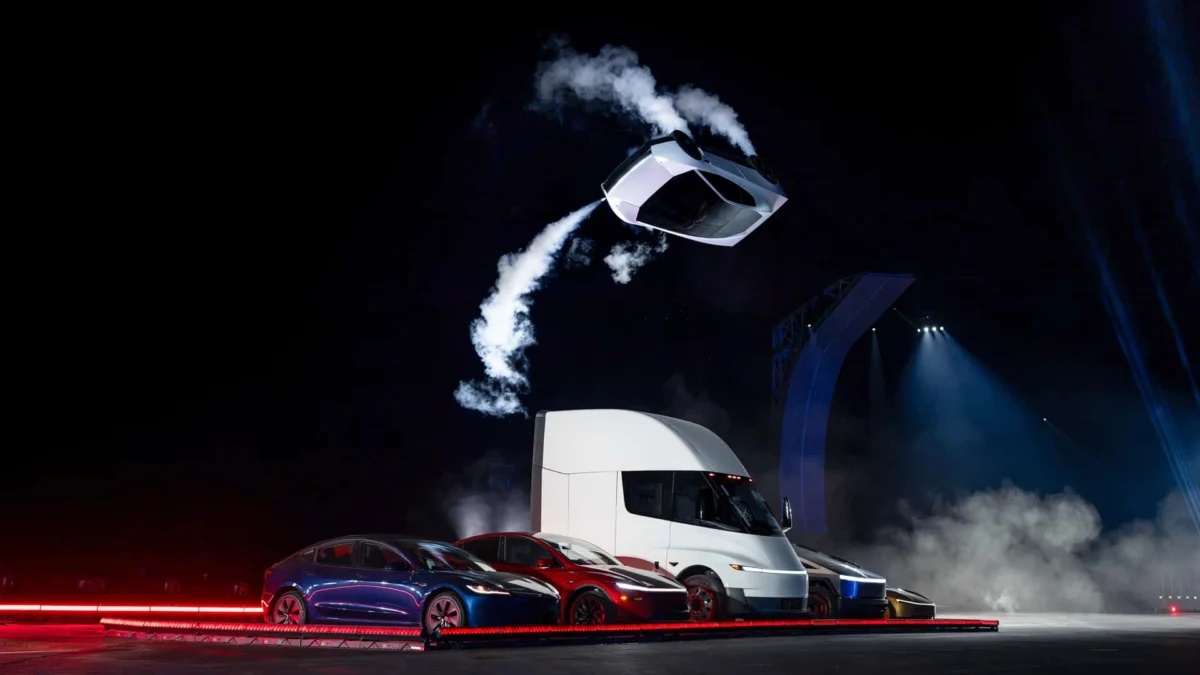
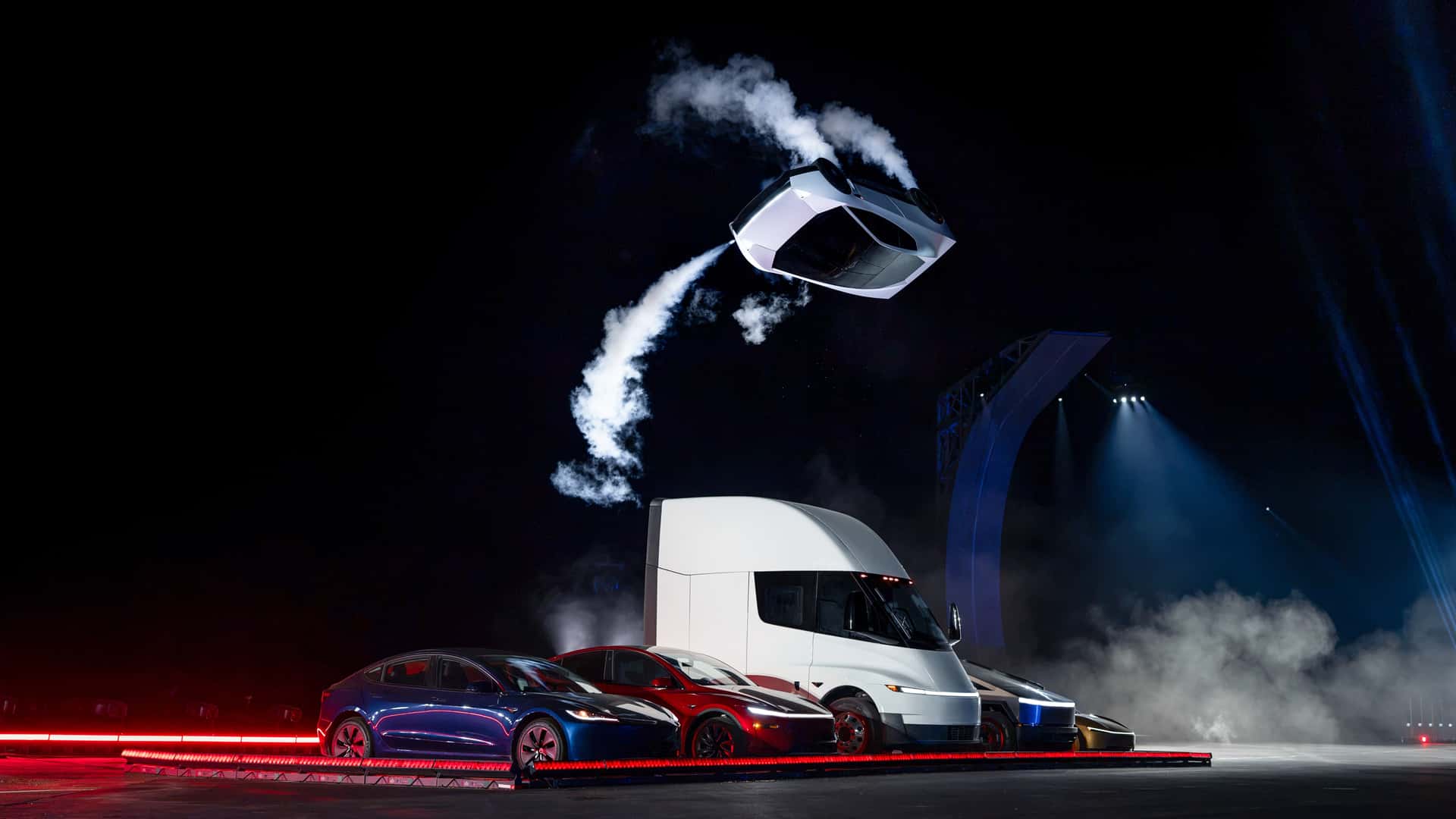
The recent demonstration of the Tesla Roadster performing mid-air maneuvers, including an apparent flip and controlled landing, has ignited a significant international conversation regarding the intersection of automotive engineering and aerospace technology. By releasing high-definition, multi-angle footage of the uncrewed vehicle during its recent exhibition, Tesla has provided the public with an unprecedented look at the prototype’s capabilities. While the spectacle was visually arresting, it has also prompted a rigorous technical assessment from industry experts, automotive analysts, and the global engineering community, all of whom are scrutinizing the feasibility of integrating cold-gas thruster technology into a consumer-grade vehicle.
Chronology and Event Context
The demonstration was part of a broader, highly publicized Tesla event intended to showcase the company’s "next-generation" capabilities. The Roadster, which has been in a state of development limbo for several years, was presented not merely as a high-performance electric vehicle, but as a testbed for extreme engineering solutions.
The sequence of events leading to the demonstration involved a controlled, uncrewed deployment of the vehicle. In the footage, the car is observed accelerating into a ramp structure, followed by an airborne rotation, before returning to a landing position. This event served as a milestone for Tesla’s "SpaceX package," an optional configuration that Elon Musk has long touted as a revolutionary step for personal transportation. The release of the onboard camera footage follows days of intense speculation on social media, where skeptics and supporters alike debated whether the maneuvers were the result of complex mechanical assistance, digital simulation, or genuine aerodynamic manipulation.
The Physics of the Cold-Gas Thruster System
At the heart of this discussion is the integration of cold-gas thrusters—a technology typically reserved for orbital maneuvering in spacecraft. Unlike traditional internal combustion engines or electric drivetrains, the proposed system utilizes high-pressure nitrogen to generate instantaneous, localized thrust.
Technical specifications suggest that the system operates at pressures reaching approximately 10,000 psi. This high-pressure environment necessitates a 200-liter storage tank, which must be carefully integrated into the vehicle’s chassis, likely behind the driver’s compartment. The sheer force generated by such a system is substantial; however, it introduces significant logistical challenges. Currently, the system requires a refill time ranging between two and six hours, a duration that is currently incompatible with standard consumer usage. Tesla engineers have reportedly set a target to reduce this replenishment cycle to under 30 minutes, though the infrastructure required to support high-pressure nitrogen refueling for individual consumers remains entirely nonexistent.
Performance Specifications and Production Reality
Tesla’s roadmap for the Roadster remains fluid, with a production start date currently targeted for 2028. The company has articulated a tiered model structure that separates the standard high-performance version from the more experimental variants.
The base Performance model, according to recent disclosures, will forgo the cold-gas thruster system entirely. This version is designed to leverage traditional electric powertrain advancements to achieve sub-two-second acceleration from 0 to 60 mph. In contrast, the "Rocket" variant is the iteration that incorporates the thruster array. This specific model is characterized as a single-seat configuration, prioritizing track-only or demonstration performance over road legality.
Industry analysts have noted that the divergence between these models is critical. While the base Performance model aligns with current automotive safety standards and regulatory frameworks, the Rocket variant exists in a category that effectively defies existing road-legal requirements. From lighting and crash-test compliance to the sheer danger of deploying high-pressure gas in public traffic, the engineering hurdles for a street-legal version of this car are immense.
Analysis of Regulatory and Safety Implications
The integration of aerospace-grade thrusters into a vehicle intended for public roads presents a paradigm shift in automotive regulation. National Highway Traffic Safety Administration (NHTSA) guidelines and similar global regulatory bodies have strict mandates regarding vehicle stability, projectile hazards, and passenger safety.
A vehicle capable of altering its pitch, roll, and yaw mid-air—or even just using thrusters for enhanced cornering—introduces variables that current traffic laws are not equipped to manage. Furthermore, the handling of 10,000 psi nitrogen tanks requires specialized maintenance and safety certification. Even if Tesla overcomes the mechanical challenges, the legal framework for a "flying" or "thruster-assisted" road car would require years of legislative review and new safety protocols, potentially delaying the rollout of the most advanced configurations indefinitely.
Industry and Public Reaction
The reaction to the footage has been bifurcated. On one hand, supporters of Tesla view the demonstration as a testament to the company’s ability to push the boundaries of what is possible, effectively blurring the lines between an automotive company and an aerospace manufacturer. On the other hand, a substantial segment of the engineering community has raised concerns regarding the sustainability of such features.
Critics point out that the energy density and logistical requirements of the cold-gas system make it a novelty rather than a utility. The need for a dedicated, high-pressure refueling station mirrors the early days of hydrogen fuel cell development, where the lack of infrastructure hindered widespread adoption. Moreover, some observers have questioned the necessity of such stunts, suggesting that they serve more as marketing theater to keep the Roadster in the public consciousness during a prolonged development phase.
Broader Impact and Future Outlook
The "Flying Roadster" is a case study in how modern tech companies utilize viral marketing to manage long product lead times. By continuously teasing the outer limits of the vehicle’s potential, Tesla maintains high levels of brand engagement and investor interest. However, the move toward 2028 production requires a pivot from conceptual "stunt" engineering to the manufacturing of a reliable, mass-marketable product.
The implications for the broader automotive sector are significant. As electric vehicle manufacturers reach a plateau in terms of traditional battery-electric performance, the search for "force multipliers"—such as aerodynamics, weight reduction, and, in this case, auxiliary thrust—will likely intensify. Tesla’s experiment may not result in a consumer car that can jump over traffic, but it is forcing a conversation about how much power should be available to the average driver and how far a vehicle can deviate from the traditional four-wheeled format.
Looking ahead, the next four years will be defining for the Roadster project. Tesla must successfully transition the vehicle from a prototype that can perform short-duration, controlled stunts into a daily driver that meets the stringent safety, environmental, and infrastructure standards of the 2030s. Whether the cold-gas thruster system remains a prominent feature of the final production vehicle or is relegated to a niche, limited-run enthusiast model, the impact of this demonstration on the automotive industry’s imagination is already permanent.
As Tesla continues to refine its design and test its thruster systems, the world will be watching to see if this marriage of road and sky can survive the harsh reality of mass production. For now, the Roadster remains a symbol of the company’s bold, if occasionally polarizing, approach to engineering—a machine that stands as a bridge between the traditional automobile and a more speculative, aerospace-inspired future. The challenge for Tesla now is to prove that this bridge can support the weight of commercial reality.