







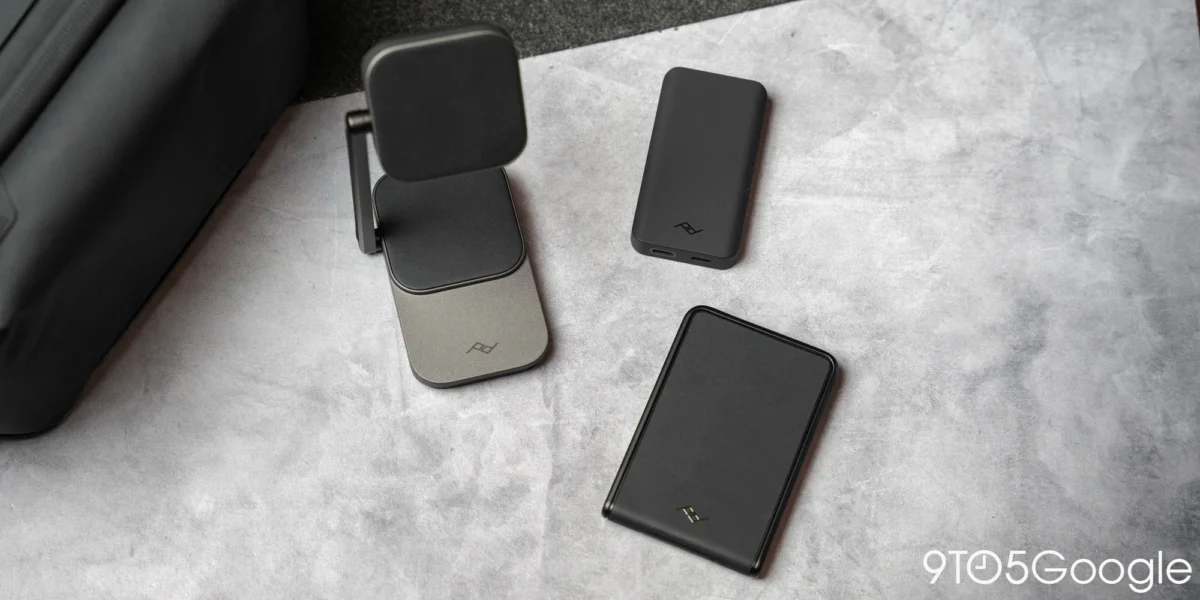
The consumer electronics landscape continues to shift toward standardized, high-efficiency power delivery, a trend that Peak Design has embraced with the launch of its latest trio of charging accessories. Known primarily for its sophisticated travel gear and camera equipment, the company has increasingly pivoted toward mobile power solutions that prioritize both industrial design and technical performance. This latest release, which features a 2-in-1 Mobile Charging Station, a high-output slim travel charger, and a refined portable battery, signals a concerted effort by Peak Design to integrate itself into the daily workflows of power-conscious smartphone users, particularly those within the Android and Qi2-enabled ecosystem.

A Chronology of Peak Design’s Mobile Evolution
Peak Design’s entry into the mobile accessory market was initially marked by its "Mobile by Peak Design" ecosystem, which leaned heavily on the company’s proprietary SlimLink mounting technology. While the company built its reputation on durable backpacks and camera clips, the transition to charging hardware began in earnest last year at the Consumer Electronics Show (CES). During that event, the brand provided a developmental preview of its charging roadmap, promising a future where high-speed wireless power would be as portable as their famous camera bags.
Following that initial showcase, the company spent months refining its thermal management and power distribution protocols. By November 2026, the company officially transitioned from prototype to production, bringing these highly anticipated accessories to market. This move mirrors the broader industry shift toward the Qi2 wireless charging standard, which effectively bridges the gap between Apple’s MagSafe ecosystem and the wider Android market, ensuring universal compatibility with magnetic alignment and faster power transfer.

The 2-in-1 Mobile Charging Station: Engineering for Efficiency
At the core of the new lineup is the 2-in-1 Mobile Charging Station, a device that addresses the common consumer complaint of single-coil wireless chargers being too slow or too limited in orientation. This station is constructed from high-grade aluminum, mirroring the aesthetic language of premium workstation setups.
Technically, the station supports dual 25W Qi2 wireless charging. Unlike many competitors that pair one high-speed coil with a secondary, lower-power coil, Peak Design has engineered both pads to deliver significant power simultaneously. This requires substantial input power, and the device necessitates at least a 75W wall adapter to reach its maximum efficiency. To accommodate users who may not have a high-wattage brick, the unit includes a secondary USB-C port, allowing for a third device to be wired into the mix. This design choice highlights a shift in user behavior—moving away from dedicated, single-device chargers toward multi-functional, desk-centric hubs that reduce cable clutter.

Compact Power: The 65W Travel Adapter
Complementing the desktop station is the new 65W slim travel charger. In an era where flagship smartphones and ultralight laptops are increasingly sold without power adapters, the demand for compact, gallium nitride (GaN)-based chargers has skyrocketed. Peak Design’s iteration of this tool emphasizes portability. The charger features two USB-C ports, with power distribution logic that shifts based on usage: a full 65W when a single device is connected, or a split of 30W/30W or 45W/20W when both ports are occupied.
Industry data suggests that the average modern traveler carries at least three mobile devices requiring USB-C charging. By providing a 65W ceiling, Peak Design ensures that users can effectively charge a laptop and a phone simultaneously, or a phone and a tablet, without the need for the bulky, heavy power bricks traditionally supplied by hardware manufacturers. The emphasis here is on the "tech pouch" experience—a philosophy consistent with the brand’s history of designing for photographers and mobile professionals who prioritize weight reduction.

The Qi2 Kickstand Travel Battery
Rounding out the trio is the Qi2 Kickstand Travel Battery, a 5,000mAh portable power bank that features 25W wireless charging capabilities. While 5,000mAh is a modest capacity by modern standards, the engineering focus here is on the form factor. The inclusion of a wrap-around kickstand—which doubles as a structural frame—allows the device to maintain a sleek, minimal footprint while offering a functional viewing angle for the user.
The battery features a tactile faux leather finish, which serves as a friction-providing surface to prevent device slippage. During initial testing cycles, the battery demonstrated high stability when mounted to large-format devices like the Pixel 11. The integration of status LEDs along the bottom edge provides immediate visual feedback on battery health and charging status, a feature that power users frequently cite as a requirement for reliable on-the-go power.

Market Implications and Technical Analysis
The introduction of these products by Peak Design represents a maturation of the third-party accessory market. By adhering strictly to the Qi2 standard, the company is positioning itself as a premium alternative to the generic, low-cost chargers often found on e-commerce platforms.
From an analytical perspective, the decision to require a 75W minimum power input for the 2-in-1 station is a calculated trade-off. While it creates a higher barrier to entry—as consumers may need to purchase an additional high-wattage adapter—it ensures that the wireless charging coils can maintain the 25W output without thermal throttling. In the world of inductive power, heat is the primary enemy of charging speed and battery longevity. By using aluminum throughout the chassis, Peak Design is likely attempting to maximize passive heat dissipation, a necessary step to maintain the integrity of 25W wireless charging over extended periods.

Furthermore, the pricing strategy reflects the company’s "premium-tier" positioning. With the charging station and the battery both priced at $99.95, and the charger at $64.95, these products are not aimed at the budget-conscious consumer. Instead, they are targeted at the professional demographic that has already invested in high-end mobile hardware and requires accessories that are as durable and reliable as their primary devices.
Official Positioning and Consumer Feedback
While Peak Design has not released specific sales figures, the company’s marketing literature emphasizes "durability and aesthetic harmony." The focus on premium materials—aluminum and faux leather—is intended to differentiate these products from the mass-produced plastic chargers that dominate the market. For the average user, the primary appeal lies in the consolidation of hardware; the ability to use a single 65W charger for a MacBook Air or a flagship Android device, combined with the versatility of the Qi2 magnetic standard, provides a compelling value proposition for those looking to simplify their daily carry.

As the industry moves toward 2027, the success of these products will likely be measured by their long-term compatibility with future smartphone generations. Given that Qi2 is a standardized protocol, the investment in these accessories is significantly more "future-proof" than the proprietary magnetic solutions of the past. For the time being, Peak Design has solidified its presence in the mobile power space, moving from a peripheral player in photography accessories to a significant contributor to the mobile productivity ecosystem. Whether these products will gain widespread adoption among casual users remains to be seen, but for the pro-sumer market, the combination of high-speed delivery and refined industrial design appears to be a winning formula.