






Tesla has completely overhauled its customer referral strategy in the United States, shifting its primary incentive model away from driving vehicle sales and toward expanding the adoption of its Full Self-Driving (Supervised) software ecosystem. Under the newly restructured framework, active Tesla owners can no longer secure hardware discounts for friends or family members purchasing new electric vehicles. Instead, the program now revolves exclusively around software engagement, offering free trials of FSD (Supervised) to referred vehicle owners and paying out recurring software subscriptions or store credits to the referrers.
The quiet pivot, reflected in updates to Tesla’s official support pages, marks a significant departure from a decade-old corporate strategy that historically utilized peer-to-peer recommendations as a primary engine for automobile deliveries. By stripping vehicle purchases entirely from standard buyer and referrer rewards, the company is signaling a profound shift in its operational focus—transitioning from a pure automotive manufacturer toward a technology platform centered heavily on recurring digital revenue streams.
Mechanically, the new FSD-centric referral pipeline establishes specific operational boundaries for participants. To distribute an active referral link, the referring owner must either pay the monthly FSD (Supervised) subscription fee or have purchased the software outright prior to Tesla’s recent discontinuation of permanent FSD sales. Vehicle owners who secured FSD via temporary, one-year promotional grants are barred from participating as referrers. Eligible users can access their unique referral pathways through the Tesla mobile application, starting with version 4.62.0.

On the receiving end, the referred individual must already own a registered Tesla vehicle equipped with compatible autonomous driving hardware. Furthermore, the recipient cannot have purchased FSD outright or paid for an FSD subscription within the preceding 12 months. Recent vehicle buyers who received a complimentary FSD trial bundled with a new automobile purchase must wait a full 12 months after that initial trial concludes before they become eligible to utilize a peer referral link.
When a referred customer transitions from their initial trial period into a paid monthly FSD subscription, the incentive structure activates. Referrers who subscribe to FSD monthly are granted one free month of service, while referrers who own the software outright receive a $99 Tesla Credit—the exact monetary equivalent of a single monthly FSD subscription. These accrued credits carry a 12-month expiration window and cannot be redeemed for cash. To prevent exploitation, Tesla has capped the rewards at 12 successful conversions per calendar year, limiting an individual referrer to a maximum annual yield of one free year of software access or $1,188 in platform credit.
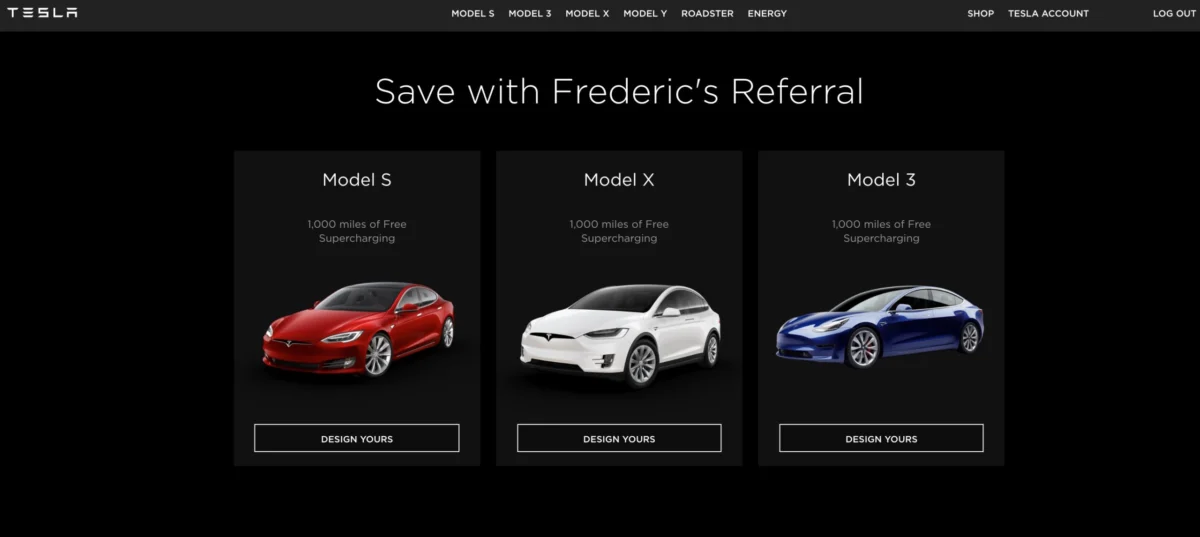
The elimination of vehicle-based rewards represents a stark contrast to previous iterations of the program. When Tesla reinstated its Refer and Earn initiative in August 2024, the program offered direct financial incentives to move metal, granting buyers a $1,000 discount on a Model S, Model X, Model Y, or Model 3, alongside a $500 credit for the referrer. Throughout its history, Tesla frequently adjusted, terminated, and resurrected the referral program, yet physical automobiles consistently remained at the core of the incentive structure.
Under the newly updated guidelines, standard vehicle purchases have been entirely removed from general buyer benefits. Instead, buyer incentives are now restricted strictly to solar energy installations. Referrer benefits remain applicable to solar systems, limited demo drive milestones (capped at 30 over an account’s lifetime), and the newly introduced FSD referral mechanism. Popular consumer models such as the Model 3, Model Y, and Cybertruck appear within the program terms solely under loyalty classifications, applicable only to existing owners purchasing an additional Tesla product. Meanwhile, luxury flagships Model S and Model X have been omitted from the rewards matrix entirely.

This transformation coincides with strategic adjustments to how Tesla commercializes its autonomous driving technology. On February 14, the company officially halted the outright sale of FSD, forcing new customers in the United States to adopt a subscription-only model priced at $99 per month. In its Q3 shareholder correspondence, Tesla reported approximately 1.74 million active FSD subscriptions, reflecting a 67% year-over-year increase. This metric encompasses historical upfront purchasers while excluding active promotional trials.
The public disclosure of this specific subscriber count—initiated in January—is directly tied to corporate governance and executive compensation structures. The metric serves as a foundational performance indicator outlined in CEO Elon Musk’s 2025 CEO Performance Award, which establishes a milestone target of 10 million active FSD subscriptions. Because temporary promotional trials do not contribute to this metric, the new referral program has been specifically engineered to target paid conversions, directly supporting the valuation milestones tied to executive performance incentives.
Industry analysts note that the redesigned referral program offers high economic efficiency for the automaker. Rather than absorbing the cost of direct vehicle price reductions or hardware subsidies, Tesla is leveraging software assets already installed within its existing fleet. Because the program requires participants to already own a Tesla vehicle, it generates zero new automotive sales units. Instead, the architecture is meticulously optimized to extract higher software monetization yields from the existing customer base. With cumulative global vehicle production surpassing 8.9 million units by the end of 2025, and only a fraction of those vehicles currently enrolled in paid FSD plans, the addressable market for software conversions remains vast.
By removing financial incentives for vehicle sales and channeling resources exclusively toward software subscriptions, Tesla has realigned its promotional apparatus with its primary long-term financial metrics. The structural evolution of the referral program underscores a broader corporate transformation, prioritizing digital service expansion and recurring software revenue over sheer volume in automotive deliveries.