









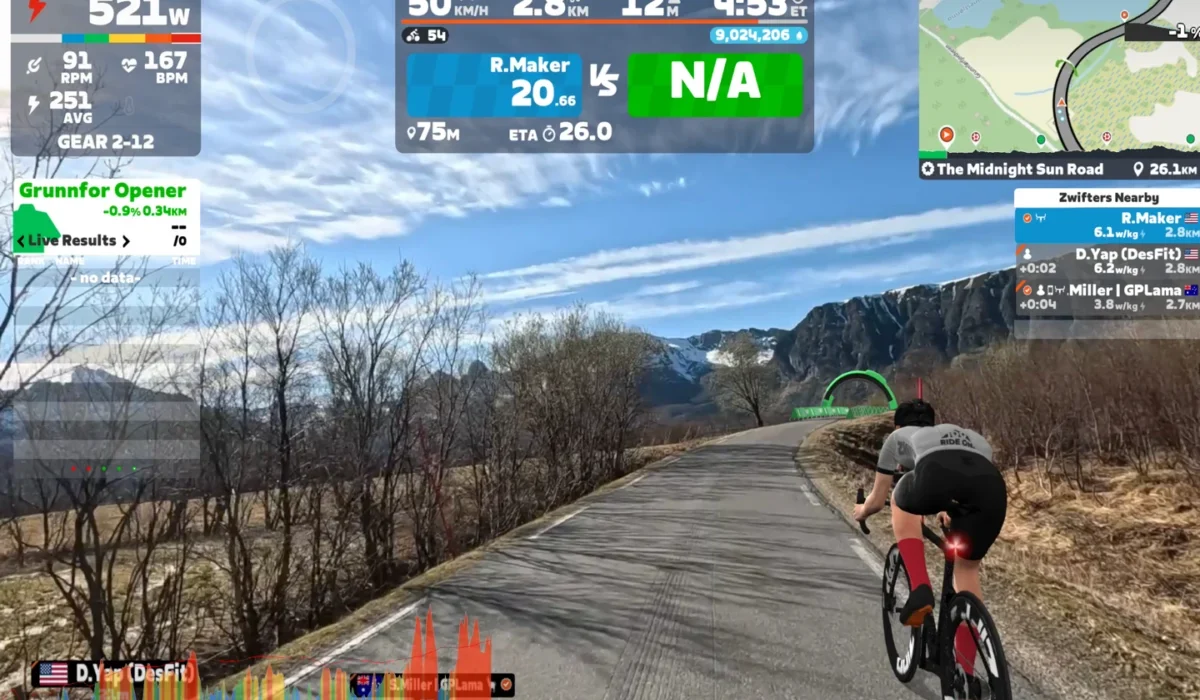
Indoor cycling platform Zwift has officially unveiled its new premium membership tier, Zwift Plus, introducing a dual-component service that blends real-world video routes with adaptive training software. Priced at $29.99 (€29.99 / £26.99) per month—a significant increase from the standard $19 monthly subscription—the new tier also offers an annual commitment option of $299. While the legacy Zwift experience and its routine software updates remain intact for standard subscribers, Zwift Plus is specifically targeted at athletes looking for curated outdoor realism and dynamic, automated coaching.
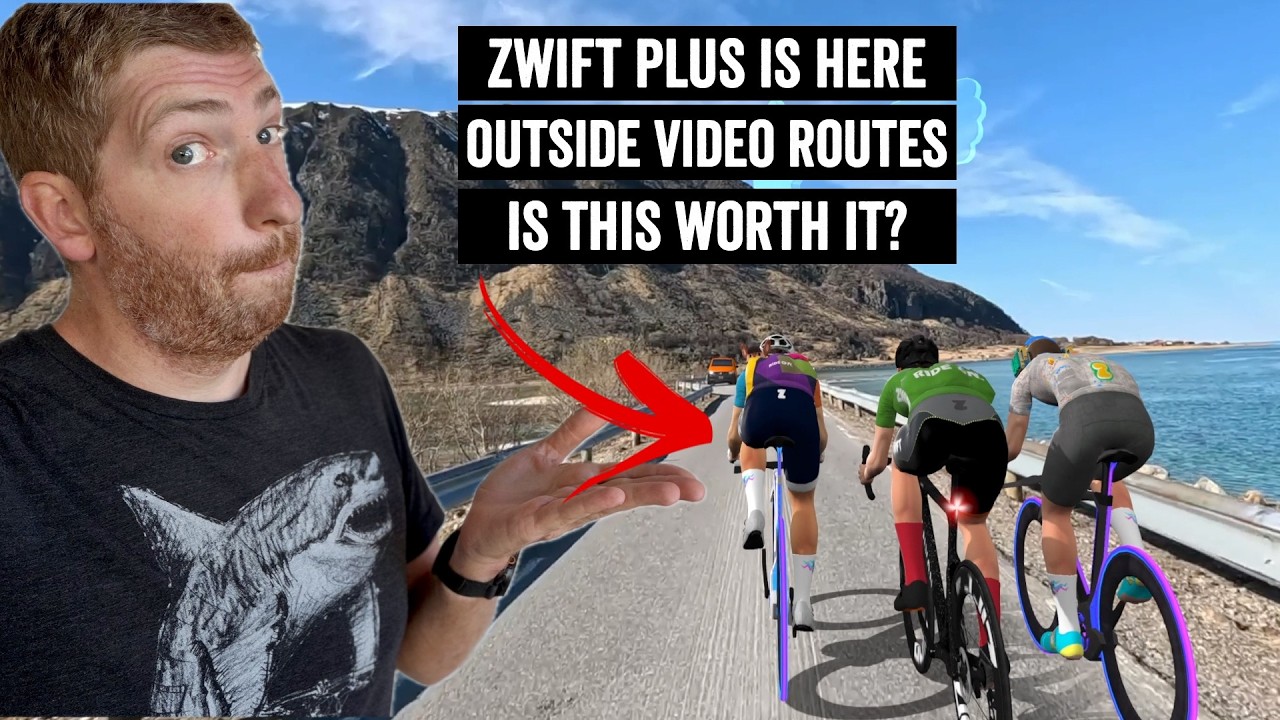
The launch follows Zwift’s acquisition of Rouvy roughly six months prior, a corporate maneuver that naturally sparked industry speculation regarding a merger of platforms. However, company representatives have clarified that Zwift Video Routes were developed independently prior to the acquisition. Rather than integrating Rouvy’s existing infrastructure or massive route library, Zwift elected to dispatch its own production crews to capture high-definition footage of iconic cycling locations worldwide, maintaining a distinct corporate and operational boundary between the two brands.
The Engineering and Production Behind Zwift Video Routes
The development of Zwift Video Routes involved an exhaustive, independent field-recording process designed to meet strict visual and technical quality standards. Eschewing large, specialized camera vehicles in favor of discreet rental cars, Zwift’s media production teams utilized custom roof-mounted rigs secured by three Neewer CA013 suction-cup mounts. Each mount is rated to support up to 110 pounds (50 kilograms) of force, reinforced with heavy-duty stabilization straps to withstand varying road conditions and high speeds.
For optical capture, the production setup deployed dual GoPro Hero 13 Black cameras shooting continuously at 4K resolution and 120 frames per second using a wide-angle profile. GPS tracking and barometric altitude data were simultaneously recorded via Hammerhead Karoo 3 cycling computers to map accurate topographical profiles. Rather than stitching together spliced clips from fragmented recording sessions—a common practice among competitors to bypass road hazards—Zwift insisted on continuous, uninterrupted single-take footage. This commitment to a single take meant that numerous production runs were discarded due to unexpected traffic, stray livestock, or poor weather conditions. For instance, the famous Sa Calobra climb in Mallorca required five separate full-length shoots before yielding a pristine master file.
Integration of Augmented Reality and Virtual Elements
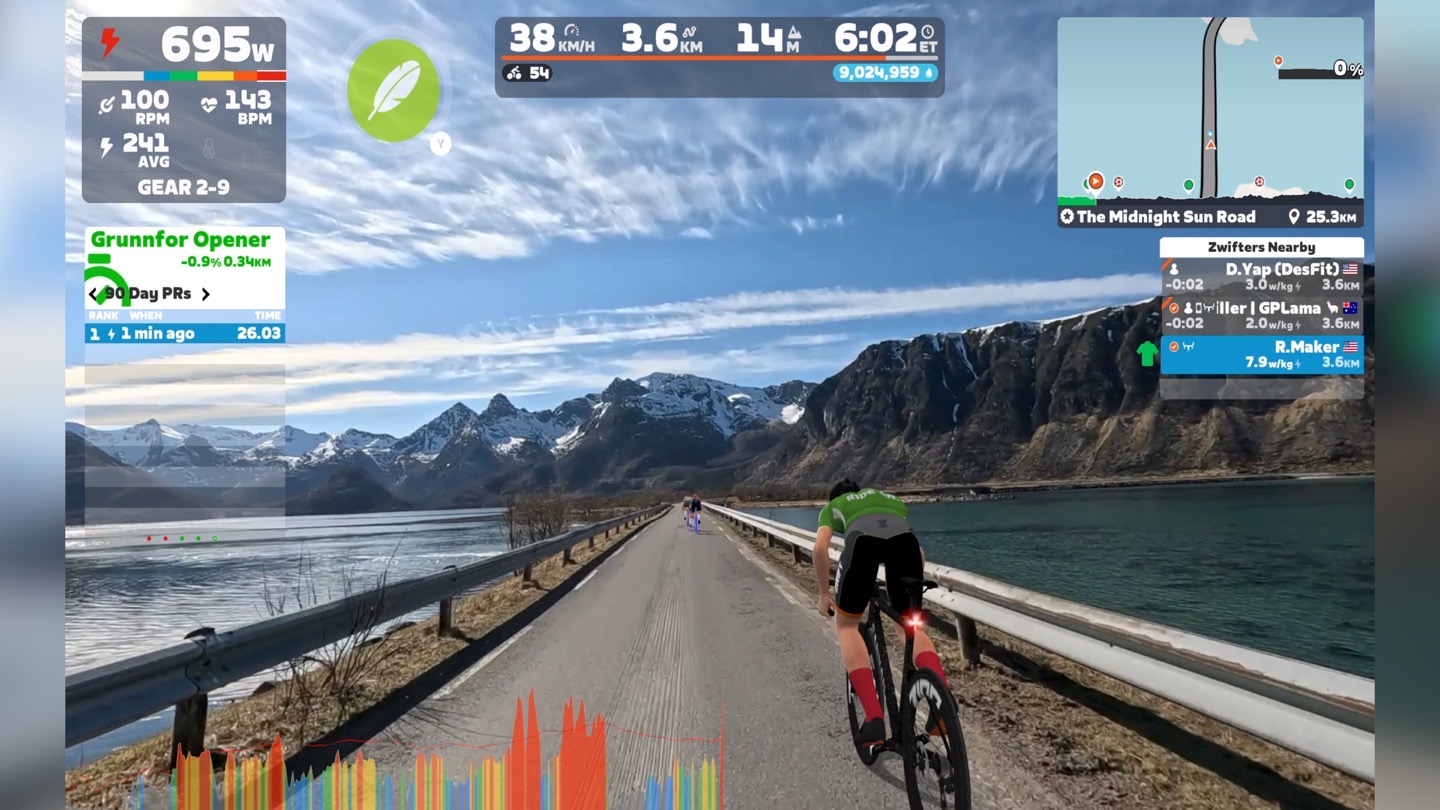
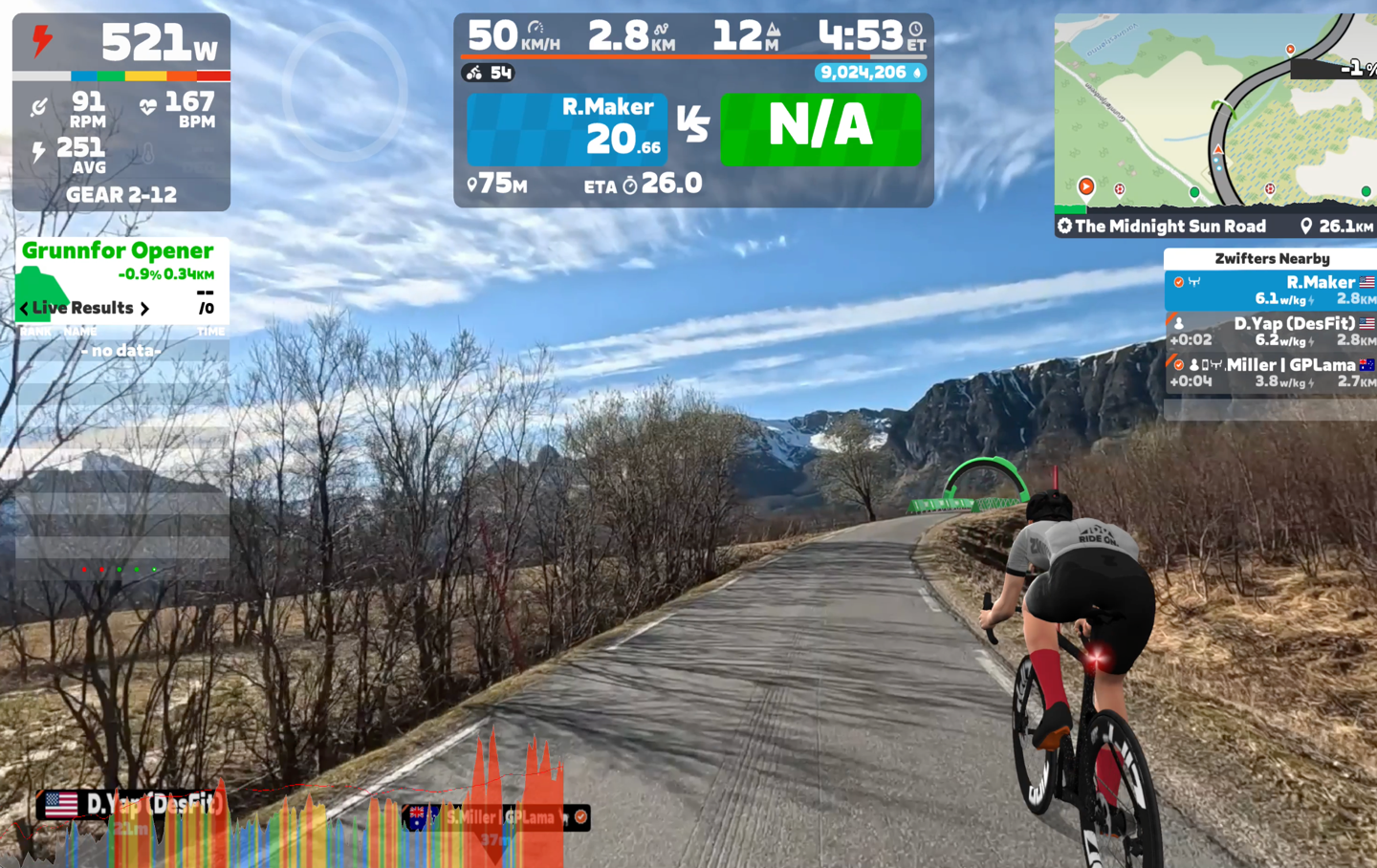
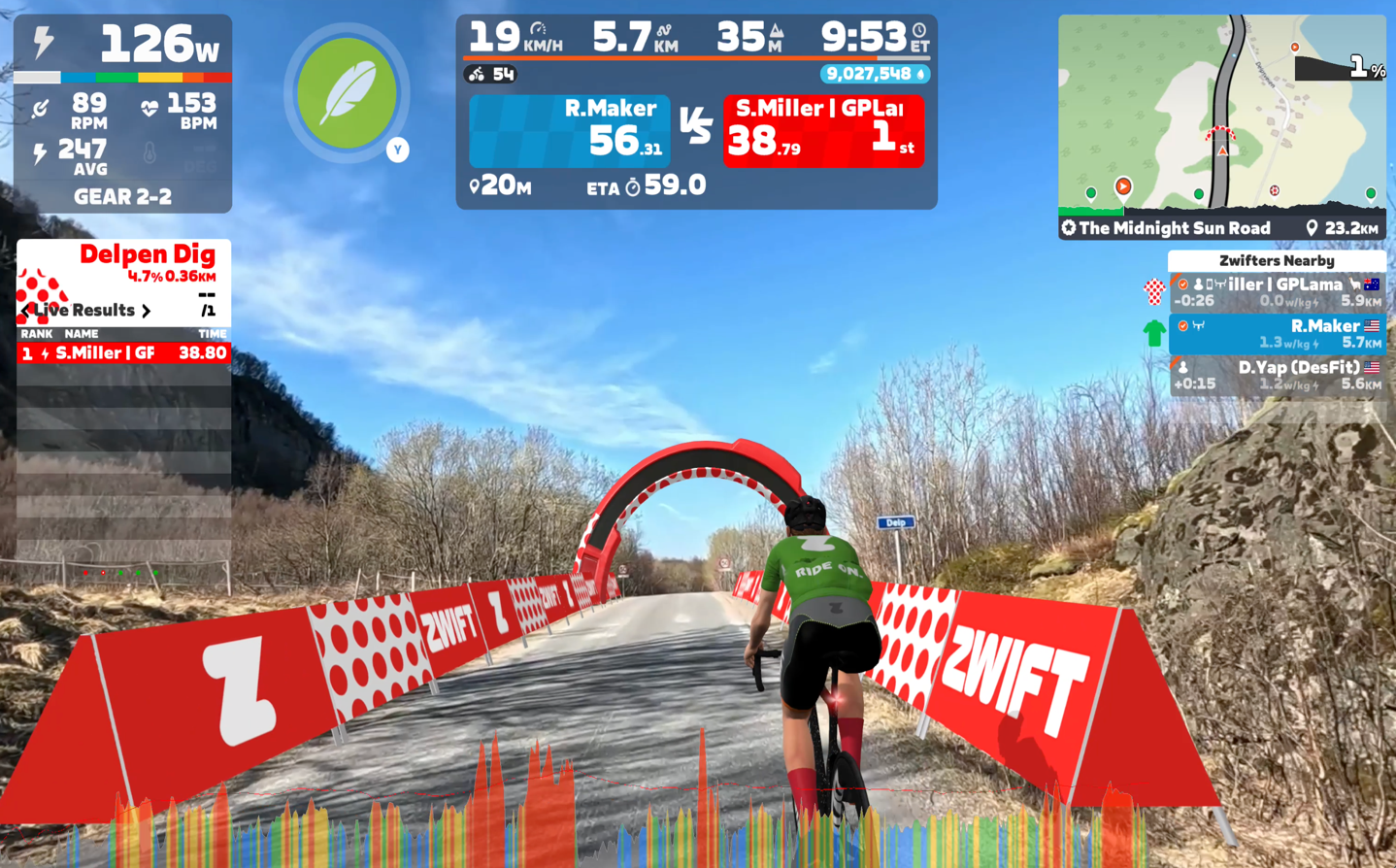
Despite relying on real-world video feeds, the platform overlays traditional Zwift elements to preserve the interactive and gamified nature of the application. Riders experience augmented reality features such as digital start and finish banners, Sprint and King of the Mountains (KOM) arches, and virtual rider shadows projected onto the road surface. Furthermore, Zwift deployed custom augmented-reality traffic elements—including virtual orange support vans—to obscure road construction or hazardous real-world obstacles captured during filming.
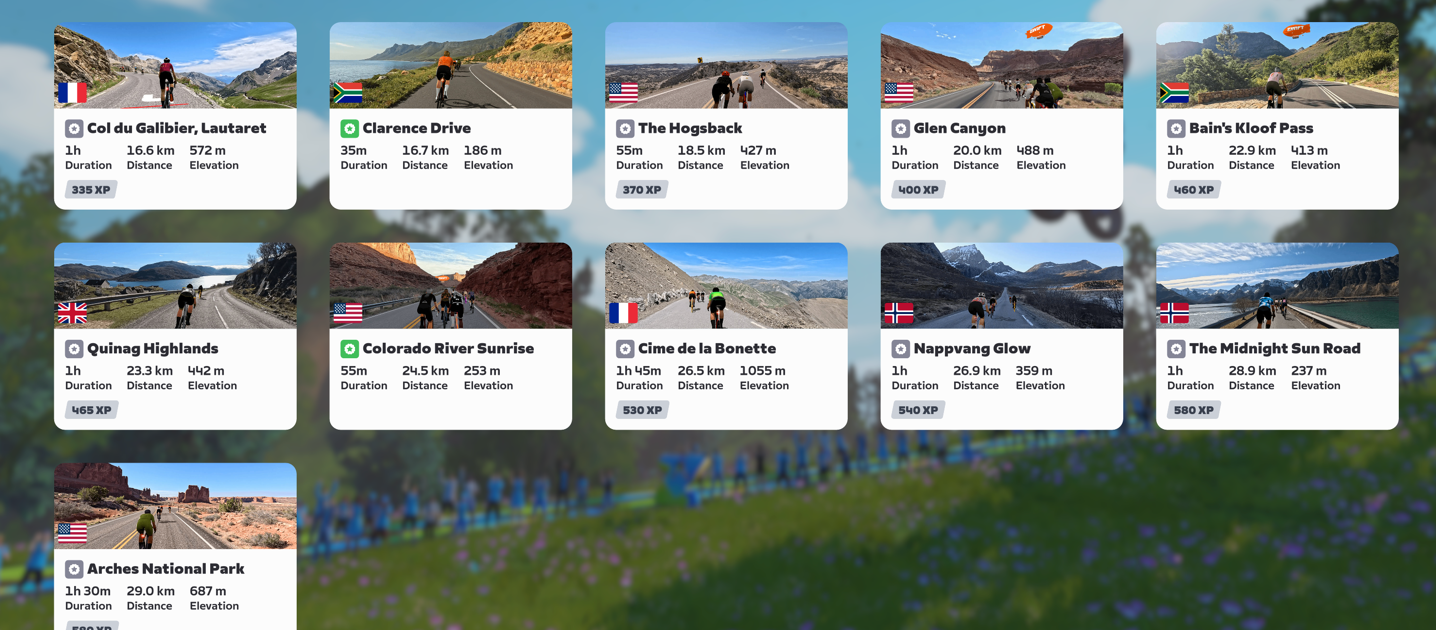
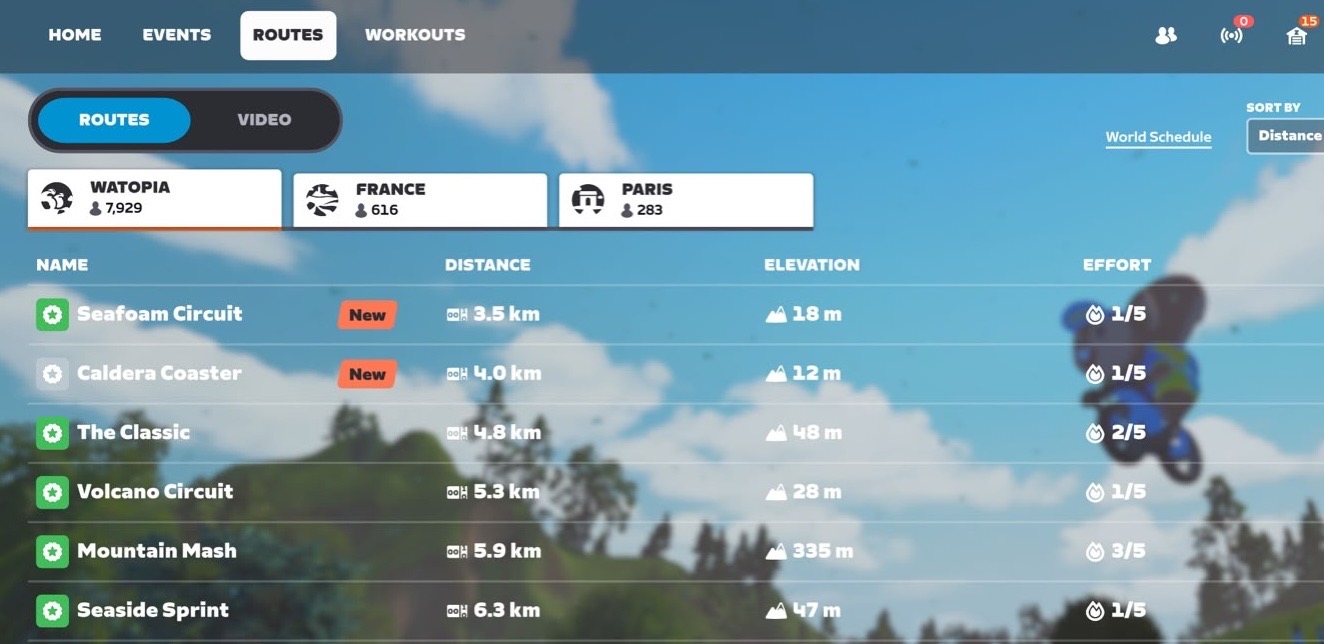
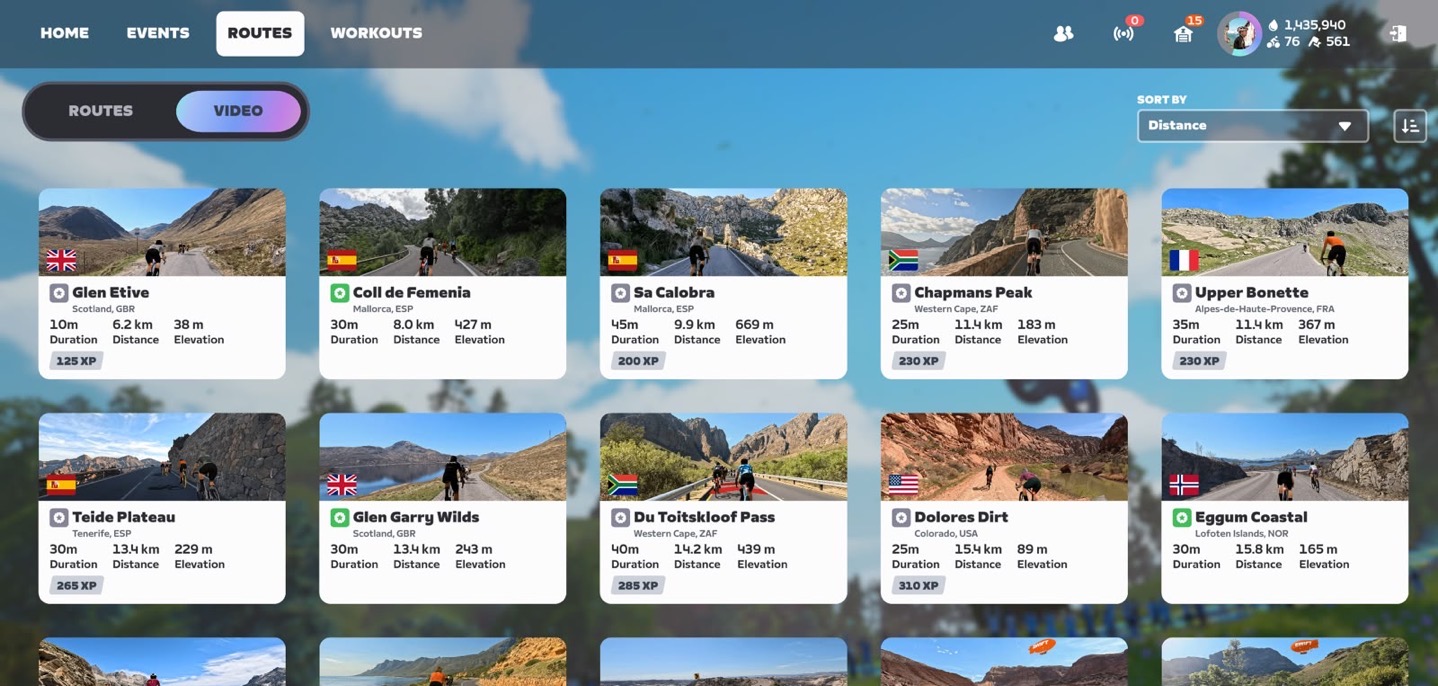
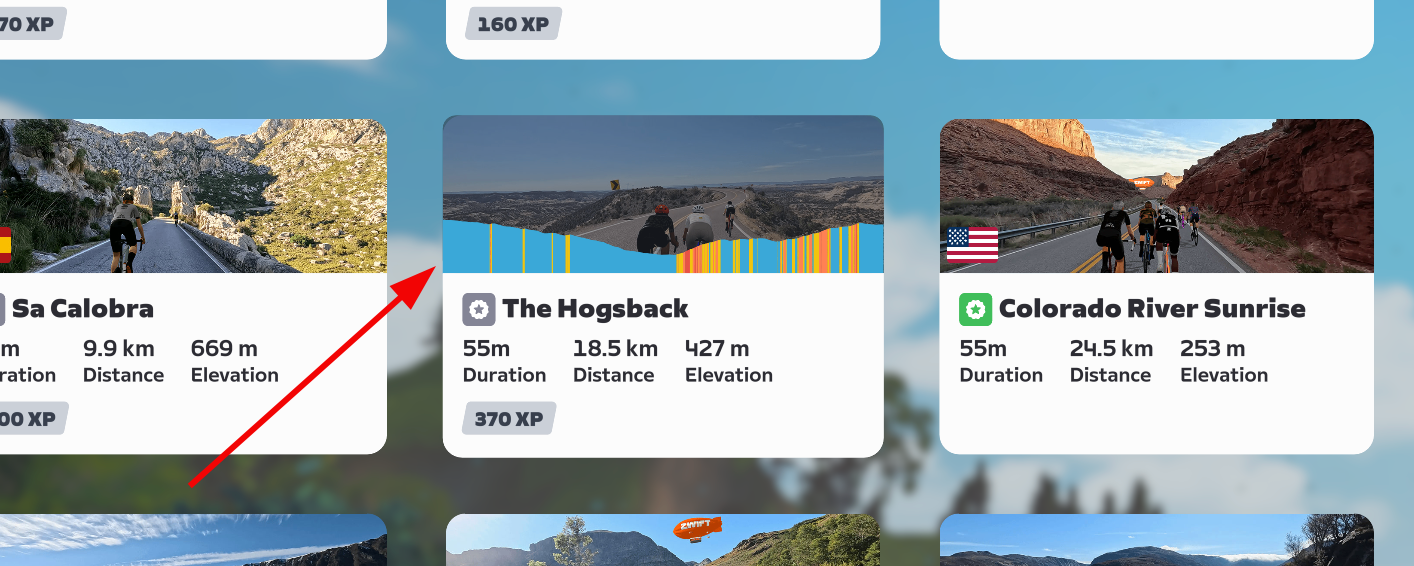
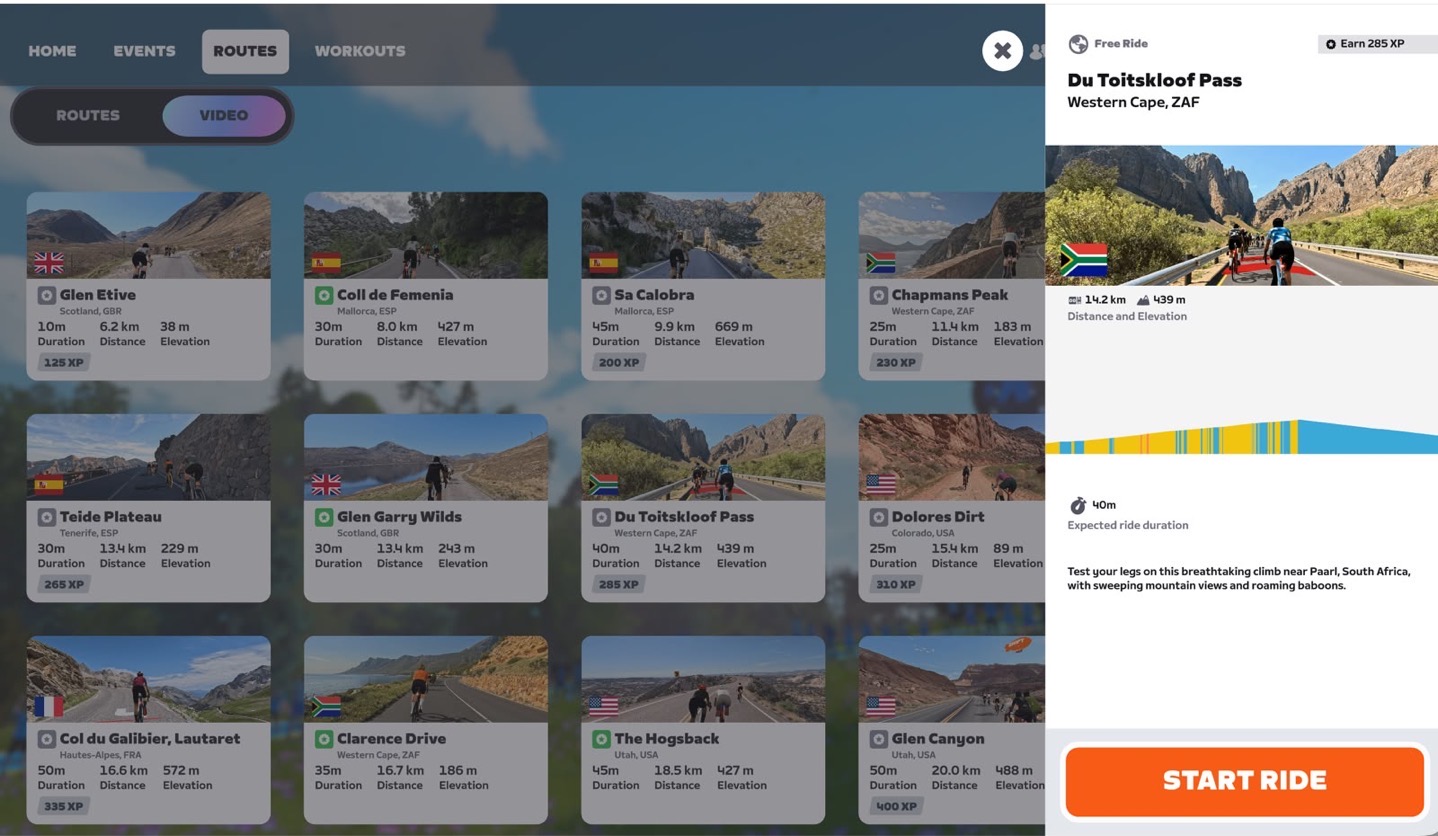
At launch, the video route library consists of 21 curated routes spanning approximately 385 kilometers across Europe, the United States, and South Africa. Most routes are designed to be completed within an hour, featuring continuous looping capabilities that allow riders to automatically teleport back to the starting threshold upon completion. To ensure smooth playback without interrupting the physical workout, the application streams video independently from the primary game HUD. If a user encounters local network throttling or insufficient bandwidth, the video stream may temporarily buffer—displayed visually as an orange road surface—while the underlying Zwift simulation, metrics, and multiplayer connectivity continue uninterrupted.
Zwift Coach and Adaptive Training Architecture
Alongside video routes, Zwift Plus introduces Zwift Coach, an adaptive training system designed to dynamically adjust an athlete’s weekly schedule based on performance metrics and external lifestyle factors. Notably, the coaching engine does not rely entirely on generative artificial intelligence for workout prescription. Instead, the underlying algorithmic models originate from training analytics methodologies similar to those developed by BestBikeSplit, assigning scientifically validated workout intensities and durations tailored to historical athlete data.
Artificial intelligence is instead utilized as a logistical dispatcher, determining the most appropriate delivery mechanism—such as a specific standard route, a video route, a structured interval session, or a Pacer Group ride—to fulfill the user’s weekly training load requirements. The system is responsive to spontaneous schedule changes; if an athlete deviates from the plan by completing an unassigned ride, Zwift Coach automatically recalculates subsequent training days to incorporate necessary recovery periods or adjust upcoming interval intensities.
Market Implications and Competitive Landscape
The introduction of Zwift Plus marks a strategic pivot for the indoor training market, positioning Zwift in closer direct competition with established video-route platforms like Rouvy and FulGaz. While Rouvy maintains a massive inventory exceeding 6,000 routes—including specific race courses for Ironman and global Gran Fondos—Zwift’s strategy emphasizes strict quality curation over sheer volume. By targeting foundational cycling icons and promising a steady cadence of five to ten new routes per month, Zwift aims to reach a benchmark of 100 high-definition routes within its first year.
Industry analysts note that the higher subscription fee tests consumer tolerance for premium tiers in the fitness technology sector. However, by unifying structured coaching, multi-player social density, and real-world cinematography into a single ecosystem, Zwift is attempting to capture a segment of the market that previously required multiple software subscriptions. As the platform rolls out fast-follow features such as organized events and meet-ups for video routes, the long-term impact on the competitive hierarchy of indoor cycling software will depend heavily on consumer adoption rates and the sustained expansion of its proprietary video library.