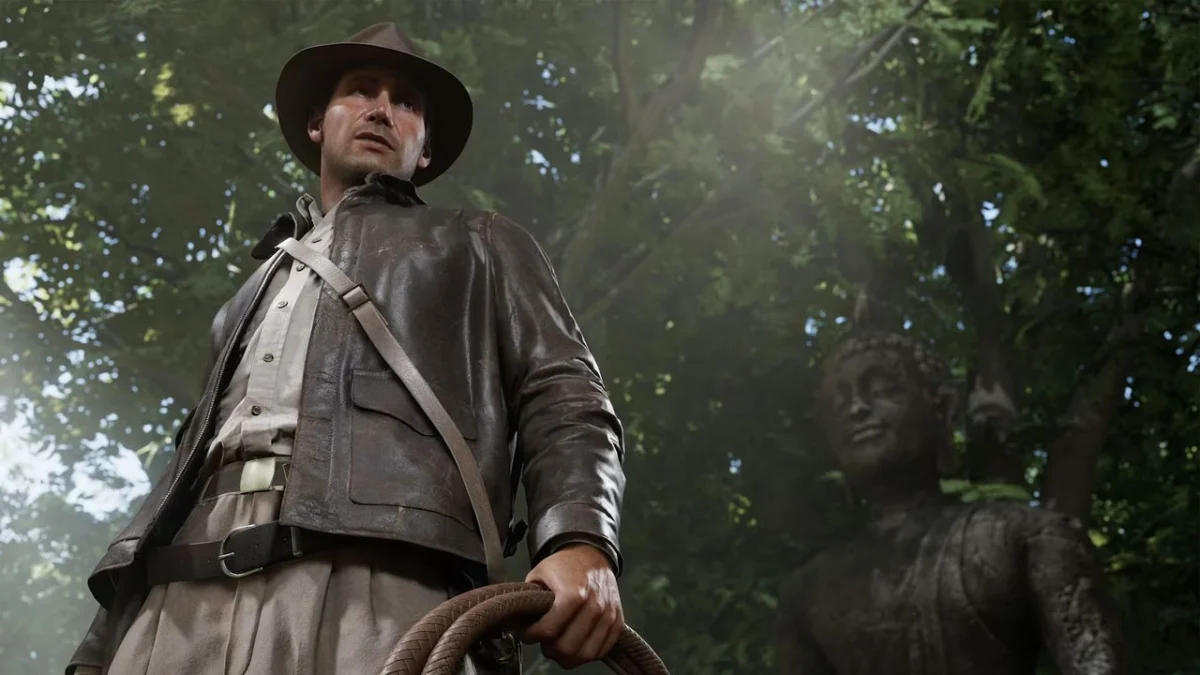
The intersection of interactive entertainment and historical hardware has yielded a fascinating real-world experiment, as a prominent content creator has acquired and tested the exact model of vintage camera featured in the acclaimed 2024 video game Indiana Jones and the Great Circle. Developed by MachineGames and published by Bethesda Softworks, the title has drawn immense praise not only for its narrative fidelity to the legendary Lucasfilm franchise but also for its meticulous attention to period-accurate equipment.
By purchasing the physical counterpart to the in-game photography gear, the enthusiast community has gained a unique window into the technological realities faced by explorers of the late 1930s. The experiment shifts the focus from digital pixel counts to the tactile, mechanical limitations of analog photography, raising questions about how well vintage consumer technology could genuinely withstand the dusty, high-stakes environments popularized by cinema’s most famous fictional archaeologist.
The Chronology of an Icon: Setting the Stage in the Late 1930s
To understand the significance of the camera within the narrative of Indiana Jones and the Great Circle, one must examine the precise timeline established by the Lucasfilm canon. The overarching franchise places its iconic protagonist in a turbulent era defined by global tension, rapid industrialization, and unprecedented archaeological discoveries.
The chronology of the early adventures is tightly wound around the late 1930s:
- 1936: The events of Raiders of the Lost Ark unfold, establishing Indiana Jones as a globe-trotting professor of archaeology embroiled in high-stakes conflicts with hostile foreign powers over biblical artifacts.
- 1937: Indiana Jones and the Great Circle is set precisely during this year. The game bridges the narrative gap between the search for the Ark of the Covenant and the subsequent quest for the Holy Grail, requiring players to utilize investigative tools to document clues, decipher ancient languages, and solve complex environmental puzzles.
- 1938: The narrative timeline advances to Indiana Jones and the Last Crusade, where Jones partners with his father to track down religious relics while evading geopolitical adversaries.
Within The Great Circle, the camera serves as an essential mechanical utility rather than a mere cosmetic prop. Players must actively frame shots, capture evidence of nefarious operations, and cross-reference photographic details with journal entries to progress through labyrinthine tombs and remote field sites.

Unmasking the Hardware: The Argus Model A Versus the Relic Brand
Eagle-eyed players and photography buffs quickly noted that the in-game branding attributes Indiana Jones’s photographic tool to a fictional manufacturer named "Relic." However, digital artists and prop designers at MachineGames clearly based the virtual asset on a very real piece of photographic history: the Argus Model A.
Manufactured by the International Radio Corporation (IRC) in Ann Arbor, Michigan, the Argus Model A was produced between 1936 and 1941. Its release coincided almost perfectly with the setting of The Great Circle, meaning that an adventurer operating in 1937 would theoretically be utilizing cutting-edge, newly available consumer technology.
Often affectionately—or derisively—dubbed "the brick" due to its boxy, unyielding silhouette, the Argus Model A holds a monumental status in photographic evolution. According to historical records preserved by organizations such as the Film Photography Project, the device is frequently cited as the second most important 35mm camera ever manufactured, trailing only behind the German Leica in terms of mass adoption and industry influence.
At a time when precision photographic equipment was prohibitively expensive, often costing a month’s wages for the average worker, the Argus Model A disrupted the market by retailing for a mere $12.50. This affordability allowed roughly two million everyday photographers to enter the realm of 35mm film, forever democratizing the medium.
Technical Specifications and Field Performance
The content creator behind the channel WatchingtheAerial acquired a vintage Argus Model A to evaluate its handling, durability, and practical design outside of the digital realm. The physical specifications of the camera reveal a fascinating engineering compromise tailored for the pre-World War II consumer market:
- Body Construction: Constructed from a combination of early Bakelite—one of the first synthetic plastics—and stamped aluminum, the camera body was designed to be lightweight yet structurally rigid.
- Optics: It features a collapsible 50mm IRC f/4.5 Anastigmat lens, which requires the user to manually extend the lens barrel into position before shooting.
- Mechanics: Unlike modern digital sensors or even late-century film SLRs, the Argus Model A relies on a basic shutter mechanism with limited speed increments and manual film advancement.
Putting such a device through simulated archaeological fieldwork highlights the immense gulf between modern expectations of durability and mid-century manufacturing constraints. While the Bakelite shell offered commendable resistance to corrosion compared to pure metal housings of the era, the material is notoriously brittle. A severe impact against a stone temple wall or a fall down an excavated shaft—common hazards in Indiana Jones’s line of work—would likely shatter the casing entirely, rendering the internal shutter mechanism useless.

Furthermore, the manual nature of the collapsible lens introduces operational vulnerabilities in dusty or sandy environments. Fine particles can easily infiltrate the telescoping mechanism, binding the threads and compromising focus accuracy.
Broader Implications: The Convergence of Gaming, History, and Hardware
The decision by a creator to test a historical camera model inspired by a video game underscores a growing trend in digital media consumption: the desire for tangible, physical connections to virtual worlds. As video games reach unprecedented levels of graphical fidelity and historical research, they increasingly function as interactive museums that introduce younger audiences to antique technologies, art movements, and geopolitical contexts.
Industry analysts note that titles like Indiana Jones and the Great Circle drive unexpected surges of interest in niche hobbyist markets, including vintage analog photography, mechanical wristwatches, and mid-century attire. When millions of players interact with a digital representation of a 1936 Argus Model A to solve puzzles, a subset of that audience inevitably seeks out the physical artifact, preserving historical hardware that might otherwise languish forgotten in attics and thrift stores.
Ultimately, while the real-world Argus Model A might not possess the indestructible plot armor of a Hollywood action hero—and would likely fail catastrophically under the physical abuse endured by Indiana Jones—its enduring legacy as a democratic triumph of American manufacturing remains secure. Through a unique blend of modern digital entertainment and old-school hardware experimentation, the forgotten brick of 1936 has found a new generation of admirers.