



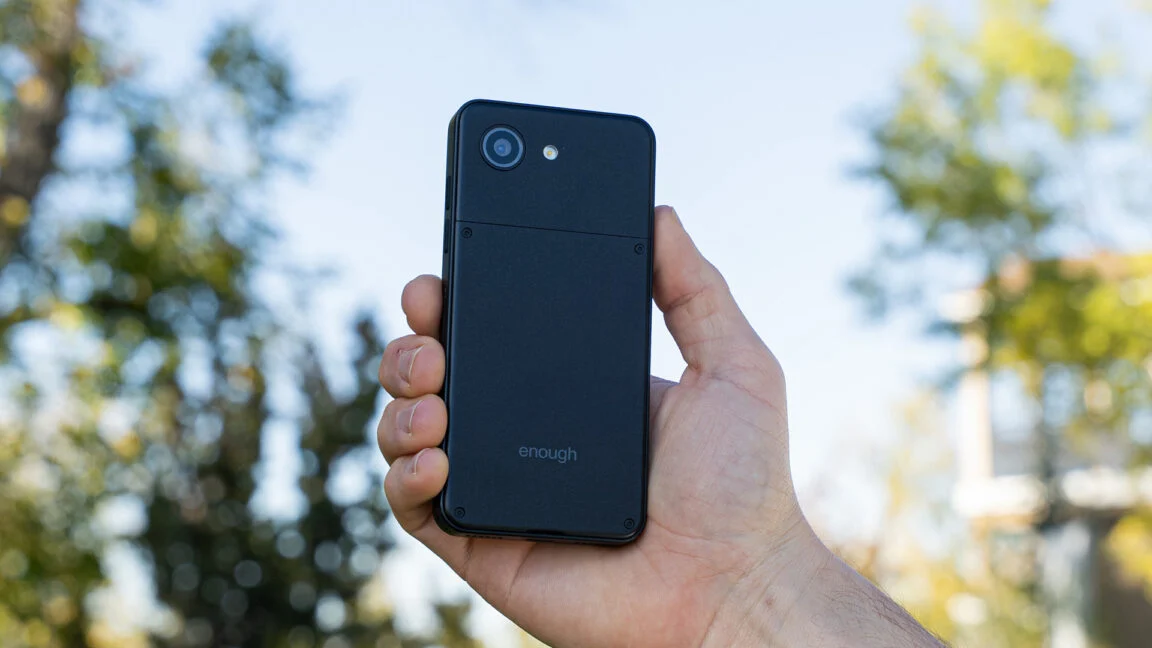
The evolution of the smartphone industry over the past decade has been defined by a relentless upward trajectory in physical dimensions. What began as the 3.5-inch standard established by the original iPhone has gradually been eclipsed by massive, glass-clad devices often exceeding 6.7 inches in diagonal display length. This trend, driven by consumer demand for high-definition video consumption and mobile gaming, has largely left behind the demographic of users who prioritize one-handed usability and pocketability. Today, a new entrant named Enough Phone is seeking to disrupt this status quo with the official opening of preorders for its debut device, a compact smartphone built around a 5.3-inch display.
The Enough Phone represents a philosophical pivot away from the "bigger is better" ethos. By selecting a 5.3-inch screen, the company claims it has identified the minimum threshold required to maintain modern performance metrics while adhering to a form factor that feels truly portable. While the device is not marketed as a flagship killer—it lacks the top-tier, multi-lens camera arrays and bleeding-edge silicon found in $1,200 handsets—it is intentionally positioned to be "enough" for the average user, balancing essential functionality with a minimalist design language.
A Chronology of the Shrinking—and Expanding—Smartphone
To understand the significance of the Enough Phone, one must look at the historical progression of mobile design. Between 2007 and 2012, the industry coalesced around displays ranging from 3.5 to 4 inches. The introduction of the "phablet" category, popularized by the original Samsung Galaxy Note, shifted the needle significantly. By 2015, the 5-inch display became the standard baseline, and by 2020, most flagship devices had pushed into the 6.5-inch territory or higher.
The "Mini" era, briefly championed by Apple with the iPhone 12 Mini and 13 Mini, served as a temporary oasis for fans of small phones. However, lukewarm sales figures eventually led major manufacturers to abandon the sub-6-inch form factor entirely. Enough Phone’s entry into the market is a calculated risk, betting that a dedicated sub-culture of power users—those who feel alienated by the current oversized landscape—is large enough to sustain a niche business model.
Technical Specifications and Design Philosophy
The Enough Phone is powered by the MediaTek Dimensity 7500 system-on-chip, paired with 8GB of RAM and 128GB of internal storage, which is further expandable via a microSD card slot—a feature that has become increasingly rare in modern mobile hardware. The display is a 5.3-inch 1520×720 HD+ LCD panel. While this resolution is lower than the Quad-HD screens found on premium devices, it is sufficient for the screen size, resulting in a pixel density that remains sharp for daily tasks.
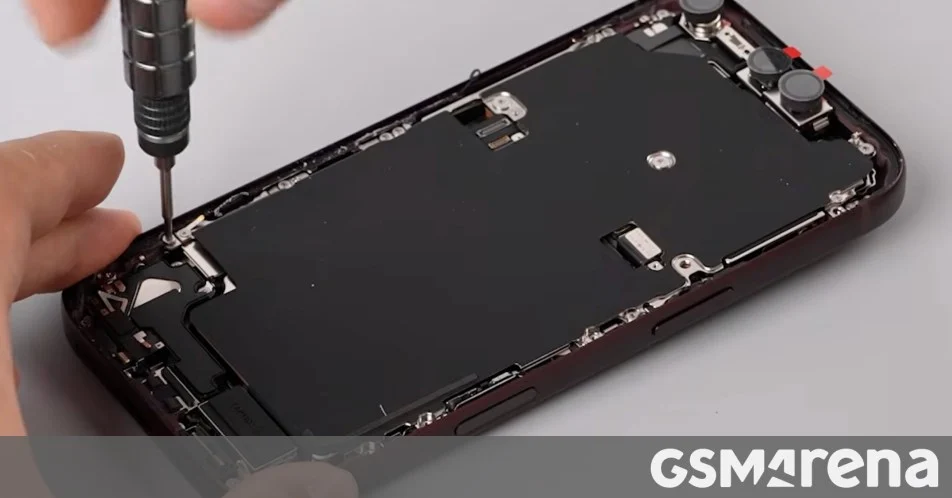
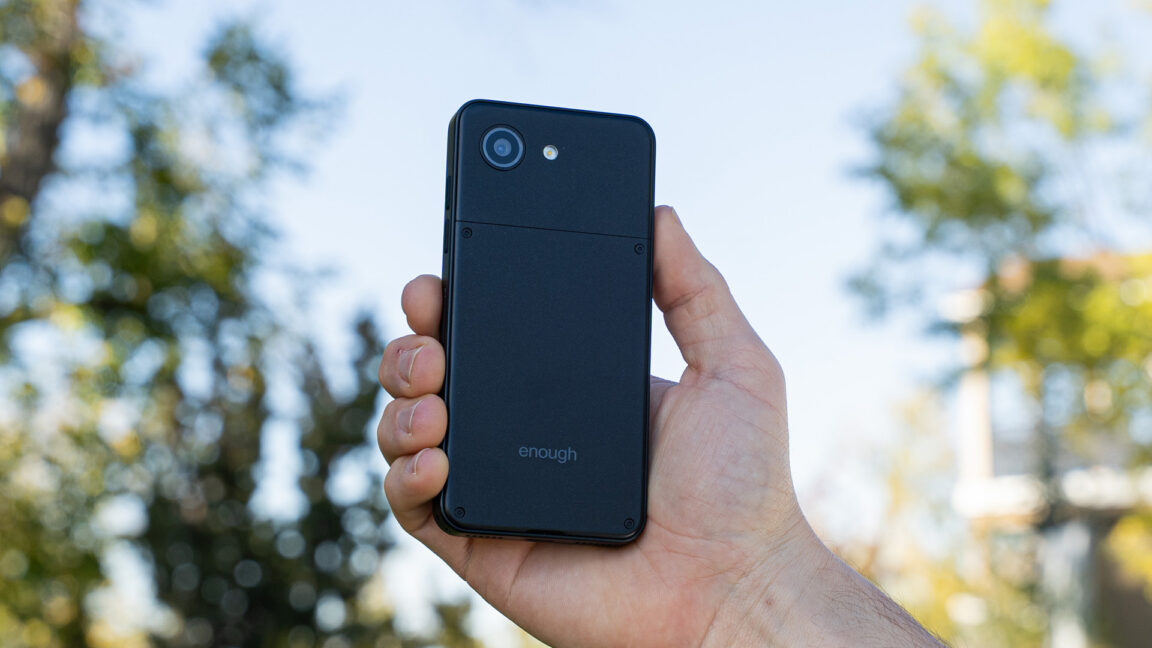
The device measures 133 x 64 x 12 mm. While its footprint is nearly identical to the iPhone 13 Mini, it is noticeably thicker. This design choice is not accidental; it was a deliberate trade-off to facilitate a user-replaceable 3500 mAh battery. In an era where sealed, glued-in batteries have become the industry standard to facilitate thinner aesthetics and higher water-resistance ratings, the Enough Phone prioritizes longevity and repairability. The back cover can be removed by unscrewing a few fasteners, allowing users to swap batteries in the field or extend the device’s lifespan significantly beyond the typical two-year replacement cycle.
Software Flexibility: Android 17 or OdysseyOS
One of the most distinctive features of the Enough Phone is its bifurcated software approach. Upon checkout, customers can choose between two primary operating systems. The first is a standard, Google-certified build of Android 17, ensuring compatibility with the full suite of Play Store apps, banking software, and cloud services that define the modern mobile experience.
The second option is OdysseyOS, a "de-Googled" iteration of the Android platform. OdysseyOS is designed for users seeking to reduce their digital footprint or those who desire a "dumbphone" experience without fully abandoning modern hardware. The OS strips away standard web browsers and invasive telemetry, focusing on core communication tools. This offering reflects a growing movement within the tech community toward digital minimalism, where users are actively seeking ways to reduce screen time and privacy exposure.
Market Implications and Challenges
The Enough Phone enters a market fraught with challenges for smaller OEMs. With a limited marketing budget and a niche target audience, the company faces significant hurdles regarding carrier interoperability and retail distribution. While the device is unlocked and intended for broad global 5G and LTE support, the company has acknowledged that support for highly restrictive carriers, such as certain iterations of Verizon’s network, remains unconfirmed.
Furthermore, the lack of a finalized IP (Ingress Protection) rating for waterproofing and dust resistance poses a potential barrier to entry for mainstream consumers accustomed to the rugged reliability of modern flagships. The company has stated that these ratings are still being evaluated, but the focus remains on the structural integrity of the removable battery housing.
From an economic perspective, the device is priced at $399 for early adopters during the preorder phase, with an MSRP of $599. This pricing tier places the Enough Phone in direct competition with mid-range offerings from heavyweights like Google’s "a-series" and Samsung’s "FE" line. While the Enough Phone cannot compete on raw camera performance or display technology, its value proposition is built on modularity, size, and the inclusion of software options that are otherwise unavailable on mass-market handsets.
The Repairability Movement and Sustainability
The decision to utilize a user-replaceable battery aligns the Enough Phone with the broader "Right to Repair" movement, which has gained significant legislative momentum in the European Union and parts of the United States. By adopting a design similar to the Fairphone, the company is signaling that it views the smartphone as a tool to be maintained rather than a disposable commodity to be replaced.
Environmental impact studies have consistently shown that the production phase of a smartphone accounts for the majority of its carbon footprint. By extending the usable life of the device through replaceable components, the Enough Phone could theoretically offer a lower total environmental impact over a five-year period compared to a flagship device that must be discarded once the battery degrades.
Future Outlook and Industry Response
As the device moves from the prototype phase to consumer hands, the industry will be watching to see if the "Enough" brand can generate sufficient volume to remain viable. If the preorder phase sees high engagement, it may signal to larger manufacturers that there is a latent, unserved market for compact, repairable technology.
However, the history of "niche" phones is littered with failures. Previous attempts by companies like Palm (with its credit-card-sized phone) and various ruggedized, modular, or minimalist startups have struggled to scale. The Enough Phone’s success will likely depend on its ability to prove that its hardware is not just "enough" to work, but durable enough to be a daily driver for a user base that is currently underserved.
In the final analysis, the Enough Phone is an experiment in consumer priorities. By stripping away the bloat and focusing on the tactile experience of a smaller device, the company is attempting to answer a fundamental question: Do people truly want the largest screens possible, or have they simply been given no other choice? As the first units ship, the data gathered from this launch will provide a definitive answer, potentially influencing the design language of the next generation of mobile devices.