The modern personal computer hardware market is frequently defined by a relentless push toward larger, more powerful, and increasingly expensive components. As central processing units (CPUs) from both Intel and AMD continue to push thermal limits with higher core counts and aggressive boost algorithms, the cooling industry has responded in kind. Tower coolers have grown into monolithic blocks of aluminum and copper, often requiring massive 140mm fans, while all-in-one (AIO) liquid cooling loops have become ubiquitous in enthusiast builds. Yet, a persistent segment of the PC building community remains underserved by these oversized solutions: mainstream users, budget-conscious builders, and those constructing systems within space-constrained small form factor (SFF) chassis.
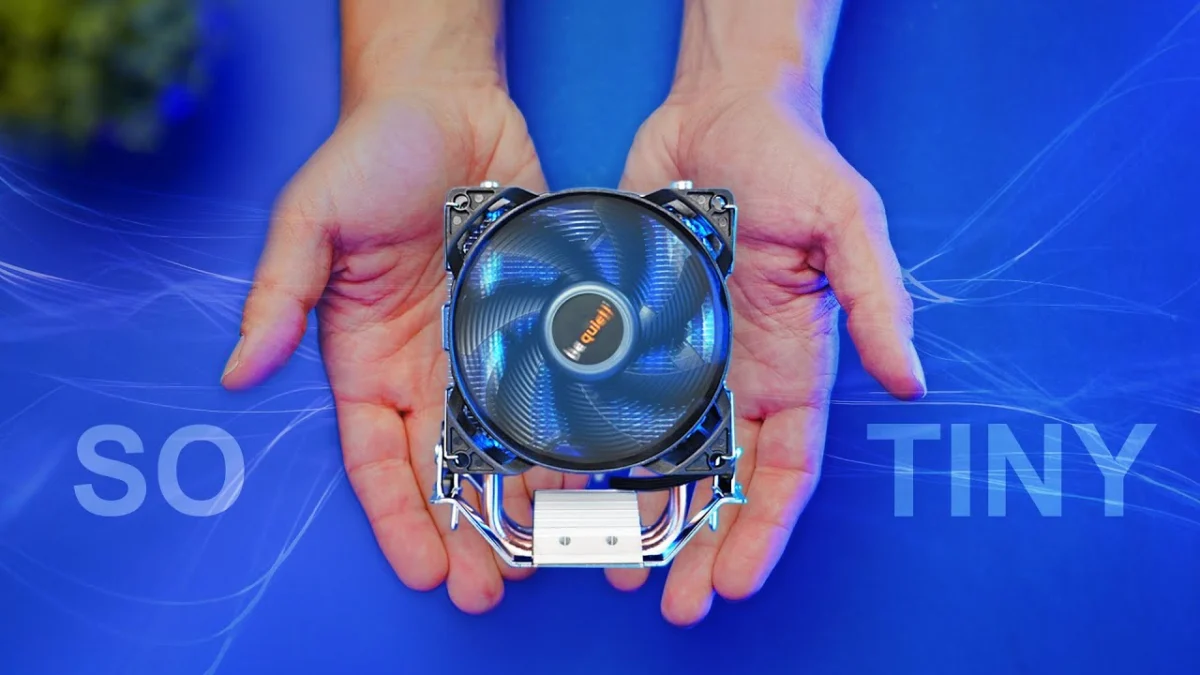
Into this ecosystem steps German thermal engineering firm be quiet! with the release of the Pure Rock Slim 2, a compact 92mm air cooler priced aggressively at $25. Designed to bridge the gap between basic stock cooling solutions and expensive aftermarket towers, the Pure Rock Slim 2 aims to prove that high-performance thermal dissipation does not inherently require a massive footprint or a substantial financial investment. As supply chain pressures and third-party reseller markups complicate the retail landscape, evaluating whether this diminutive cooler can genuinely satisfy the needs of modern mainstream processors is critical for budget-minded consumers.
Background Context and Market Positioning
The trajectory of CPU cooling over the past decade has mirrored the evolution of processor design. As semiconductor fabrication nodes have shrunk, power density has increased, concentrating high levels of heat into smaller surface areas on the processor die. Historically, this trend favored the proliferation of 120mm tower coolers, such as the venerable Cooler Master Hyper 212 series, which established an industry baseline for affordable aftermarket cooling. Concurrently, high-end solutions like the Noctua NH-U12S and be quiet!’s own Dark Rock Pro 4 catered to enthusiasts willing to trade physical space and money for acoustic tranquility and maximal thermal headroom.
However, the rapid growth of the small form factor (SFF) market—exemplified by popular enclosures like the Cooler Master NR200—has fundamentally shifted spatial constraints for builders. Many compact cases impose strict limitations on CPU cooler height, often capping clearance at 155mm or lower. This restriction instantly eliminates standard 120mm tower coolers and many mid-tier dual-tower designs, forcing users to compromise with low-profile horizontal coolers or expensive, complex liquid cooling loops.
The Pure Rock Slim 2 arrives as a direct evolution of the original Pure Rock Slim, a model that carved out a reliable niche in the budget sector. By refining the physical dimensions, updating the installation hardware to seamlessly accommodate dominant market trends, and maintaining a strict $25 price ceiling, be quiet! has positioned the product as a versatile utility player. It targets a broad demographic: users upgrading from loud, inefficient stock coolers, builders assembling compact systems, and budget-conscious consumers who refuse to sacrifice acoustic comfort for affordability.
Physical Design, Engineering, and Specifications
At first glance, the physical dimensions of the Pure Rock Slim 2 underscore its intended application. Standing at a modest 135mm in height, 82mm in depth, and 97mm in width, the cooler is structurally dwarfed by traditional 120mm and 140mm alternatives. This compact footprint is the cornerstone of its compatibility profile, ensuring that it avoids interference not only with side panels in narrow enclosures but also with adjacent motherboard components.
A critical engineering challenge in designing sub-100mm air coolers is maintaining adequate surface area for heat dissipation without obstructing memory slots. The Pure Rock Slim 2 addresses this by utilizing a dense aluminum fin array traversed by three 6mm copper heatpipes. These heatpipes employ a Heatpipe Direct Touch (HDT) architecture, meaning the copper pipes make direct contact with the CPU integrated heat spreader (IHS) to facilitate rapid thermal transfer. A factory-applied thermal compound is pre-spread on the baseplate, streamlining the out-of-box assembly experience for novice builders.
Airflow is driven by a 92mm Pure Wings 2 fan, a staple of be quiet!’s product lineup known for its rifle-bearing design and optimized fan blade geometry. Operating at a maximum speed of 2,300 RPM, the fan generates significant static pressure relative to its size. While a rotational speed exceeding 2,000 RPM might traditionally imply elevated noise levels, be quiet! has engineered the acoustic profile to remain remarkably subdued. The inclusion of pulse-width modulation (PWM) support allows the motherboard to dynamically scale fan speeds based on real-time thermal loads, ensuring near-silent operation during idle and low-intensity tasks.
Evolution from the Original Pure Rock Slim
Comparing the Pure Rock Slim 2 to its predecessor reveals targeted iterations rather than a complete architectural redesign. While the core thermal capacity—rated at a maximum Thermal Design Power (TDP) of 130W—remains consistent, be quiet! implemented three primary enhancements based on consumer and reviewer feedback from the first-generation model.
First, the physical fin array was subtly extended at the rear of the heatsink to marginally increase surface area and improve downstream airflow distribution. Second, minor geometric adjustments were made to the baseplate to optimize mounting pressure distribution across modern processor sockets. Finally, and perhaps most importantly for end-users, the entire installation mechanism was overhauled to drastically reduce assembly friction.
Installation Process and Compatibility Analysis
The mounting hardware of an entry-level CPU cooler often dictates its real-world usability. Complicated backplates and ambiguous multi-step instructions can frustrate novice builders and add unnecessary time to system assembly. The Pure Rock Slim 2 simplifies this process by adopting divergent strategies for AMD and Intel platforms, reflecting current market realities where AMD processors have experienced a surge in consumer adoption.
For AMD AM4 and AM5 platforms, be quiet! utilizes a pre-installed bracket system that interfaces directly with the standard motherboard retention module supplied with every compatible motherboard. The installation sequence requires the user to flip the cooler, align the retention clips over the plastic hooks of the stock motherboard frame, and secure the assembly by levering the clips into place. This tool-free approach leverages existing hardware, eliminating the need to remove the motherboard from the chassis—a major convenience for upgrades.
Conversely, the Intel installation process relies on traditional push-pin mechanisms for LGA 1200 and LGA 1700 sockets. While push-pins offer rapid, tool-free installation, they have historically drawn criticism from enthusiasts due to inconsistent mounting pressure compared to screw-down backplates. However, be quiet! has refined the tension tolerances to minimize movement, ensuring adequate thermal interface contact despite the reliance on push-pins.
Crucially, the slim profile of the heatsink guarantees 100% memory compatibility. Regardless of whether a builder utilizes standard-height RAM or high-profile modules with elaborate RGB diffusers across all four DIMM slots, the Pure Rock Slim 2 maintains ample clearance, preventing the physical conflicts common with wider dual-tower coolers.
Performance Testing and Acoustic Analysis
Evaluating a thermal solution requires balancing two competing metrics: cooling efficiency and acoustic output. Tested under controlled laboratory conditions, the Pure Rock Slim 2 demonstrates performance characteristics that frequently punch above its weight class, particularly when benchmarked against its modest price tag and compact dimensions.
At a baseline thermal load of 95W, the cooler excels. The 92mm Pure Wings 2 fan operates with exceptional acoustic restraint; during testing, the fan output dropped to the testing environment’s minimum noise floor when operating at 70% speed capacity. Even under maximum sustained load at full 2,300 RPM, noise emissions peaked at approximately 40 decibels. This acoustic profile places the Pure Rock Slim 2 on par with, or quieter than, many larger 120mm alternatives that generate higher turbulence and motor noise.
When subjected to a 125W thermal load—approaching the cooler’s stated 130W TDP threshold—the Pure Rock Slim 2 continues to hold its composure. Comparative data indicates that the cooler matches the thermal dissipation capabilities of the single-tower Noctua NH-U12S while maintaining a lower decibel output, and consistently outperforms the Cooler Master Hyper 212 Evo across equivalent test parameters.
However, physics dictates strict operational boundaries. When pushed to a demanding 150W load, the cooler rapidly reaches its thermal saturation point. At this wattage, the physical limitations of a 92mm fan and a compact three-heatpipe heatsink become apparent, resulting in thermal throttling unless paired with aggressive case airflow or a more robust cooling solution. Consequently, while the Pure Rock Slim 2 is more than adequate for mainstream quad-core, six-core, and efficient eight-core processors, high-end, overclocked enthusiast silicon requires a larger cooling ecosystem.
Pricing Realities and Retail Availability
Priced officially at $25 MSRP, the Pure Rock Slim 2 occupies a highly competitive bracket historically dominated by legacy budget coolers. However, broader macroeconomic trends and supply chain dynamics introduce variables into consumer purchasing.
In the current retail market, newly released PC components are occasionally subject to inventory fluctuations and third-party reseller markups across major e-commerce platforms like Amazon and Newegg. While the baseline manufacturer-suggested retail price remains firmly at $25—with potential promotional discounts lowering the barrier to entry further—buyers may need to exercise diligence to avoid inflated reseller pricing. Despite these transient market hurdles, the cooler remains one of the least expensive aftermarket thermal solutions offered by a tier-one manufacturing brand.
Broader Industry Implications and Conclusion
The introduction and validation of the be quiet! Pure Rock Slim 2 highlight a maturing segment of the PC hardware market. As silicon manufacturing yields processors with improved power efficiency at baseline frequencies, the necessity for massive, expensive cooling apparatuses diminishes for the average consumer.
The strategic implications for builders are clear: oversized cooling solutions are frequently an unnecessary expense for standard gaming and productivity rigs. By delivering performance competitive with significantly larger and more costly units, alongside a quiet acoustic profile and broad physical compatibility, the Pure Rock Slim 2 redefines expectations for entry-level thermal hardware. For builders assembling systems constrained by budget or space, this $25 compact cooler proves that substantial engineering competence does not require an extravagant footprint.