The landscape of personal computing is undergoing a significant transition, one characterized by both aggressive technological integration and a sudden pivot in corporate branding. Microsoft, the architect behind the Windows ecosystem, has effectively begun to distance itself from the "Copilot+ PC" label, a marketing initiative launched with great fanfare earlier this year to signify a new tier of AI-ready hardware. Despite the formal requirements for this branding remaining intact, the company’s latest Surface product launches suggest that the moniker may be losing its status as a primary consumer-facing identifier.
A Rapid Rise and Quiet Retreat
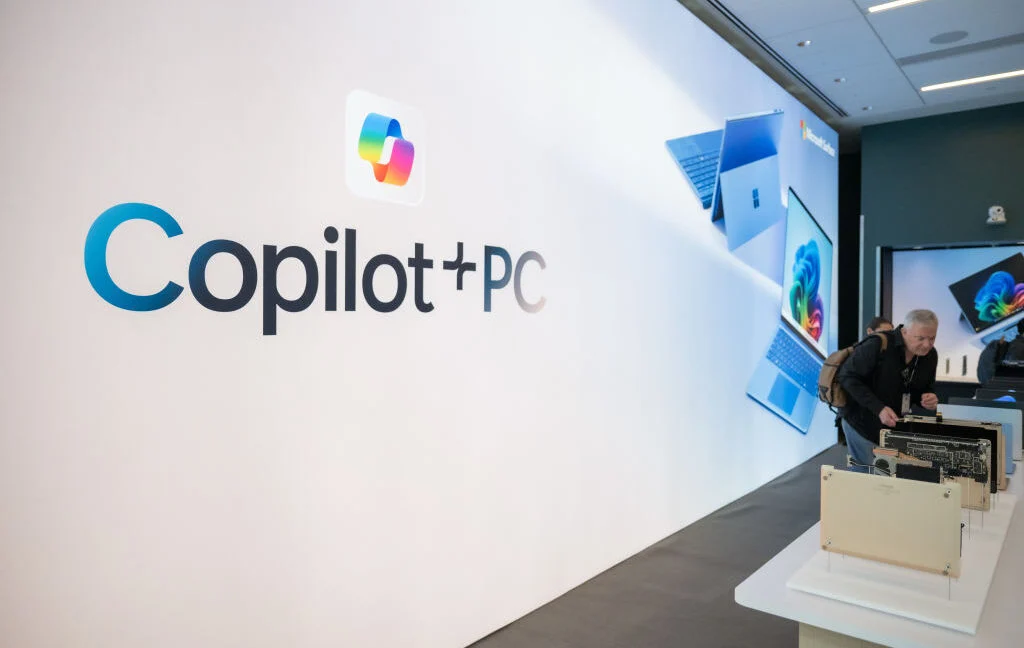
The "Copilot+ PC" designation was introduced in May 2024 as a clear, consumer-friendly benchmark. Microsoft intended for the badge to serve as a seal of approval, ensuring that buyers could easily identify systems capable of running advanced, locally-accelerated artificial intelligence workloads. To earn the label, a device had to meet a strict hardware threshold: at least 16GB of RAM, 256GB of solid-state storage, and an integrated Neural Processing Unit (NPU) capable of delivering at least 40 trillion operations per second (TOPS).
This initiative was designed to separate run-of-the-mill laptops from the "fastest, most intelligent Windows PCs ever." However, the release of the new Surface Pro 12-inch (2nd Edition) and the Surface Laptop 13-inch (2nd Edition)—slated for an October 13 market arrival—marks a departure from this strategy. Despite these devices featuring Qualcomm Snapdragon X2 Plus processors and boasting a Qualcomm Hexagon NPU rated at 80 TOPS—well above the minimum requirements—the "Copilot+ PC" branding is conspicuously absent from their marketing collateral.
The shift reflects a broader trend among original equipment manufacturers (OEMs) and Microsoft itself: a move away from the specific, somewhat controversial "Copilot+" branding toward more generalized marketing that emphasizes performance and "AI-readiness" without tethering the device to a specific, potentially polarizing brand name.
Chronology of the AI PC Push
The timeline of Microsoft’s AI-focused hardware strategy reveals the speed at which the industry has evolved.
- May 2024: Microsoft unveils the "Copilot+ PC" category at a major press event, positioning it as the standard for the next generation of Windows computing. The marketing campaign highlights exclusive features such as "Recall," a controversial feature designed to track user activity via local snapshots.
- Summer 2024: Early reviews and feedback from the tech community highlight hardware inconsistencies. Critics point out that the branding feels forced, as Intel and AMD—the stalwarts of the Windows ecosystem—initially lacked the NPU throughput to match the early Qualcomm-based Copilot+ PCs, creating a fragmented market.
- September 2024: Industry analysts begin to observe that the prominence of the "Copilot+" landing page on the official Microsoft website is diminishing. The page, once a central pillar of the Windows marketing strategy, begins redirecting to a more generic "performance PCs" landing page.
- October 2024: Microsoft confirms via leadership statements that its newest Surface hardware will not lean on the "Copilot+" brand, even though the devices comfortably exceed the hardware benchmarks previously established for that category.
The Hardware Benchmark: Why 40 TOPS Matters
To understand the implications of this branding pivot, one must consider the technical architecture that defined the category. The requirement of 40 TOPS was not arbitrary; it was intended to ensure that Windows 11 could perform "on-device AI" tasks—such as live translation, real-time background blurring, and advanced image generation—without relying on cloud latency.
The decision to move to an 80 TOPS NPU in the new Surface lineup demonstrates that Microsoft and its silicon partners, like Qualcomm, are pushing the performance ceiling higher. Yet, by decoupling this raw power from the "Copilot+" badge, the industry is signaling that the "AI PC" concept is moving from a marketing novelty to a standard feature set.
Kedar Kondap, SVP of compute at Qualcomm, noted that the objective of the branding was always to define a category. Now that the category is well-understood by consumers and the technical bar is established, the specific label may be viewed as redundant. "It’s more offering the same experiences, probably without just using [Copilot+ PC] terminology now," Kondap told Windows Central.
Official Perspectives and Market Reality
The silence surrounding the removal of the branding has prompted questions regarding whether the label was viewed as a net negative for sales. Brett Ostrum, corporate VP of Surface at Microsoft, addressed the strategy during recent discussions, emphasizing that the focus remains on the "narrative around AI on the edge" and hybrid solutions.
"They do meet all the requirements of our previous bar for what Copilot+ devices are," Ostrum stated. By framing the devices as "performance PCs" rather than specifically "Copilot+ PCs," Microsoft appears to be attempting to avoid the baggage associated with the early launch phase, which included technical hiccups and public privacy concerns regarding the Recall feature.
From an analytical standpoint, this suggests that Microsoft is transitioning from a "product-led" marketing strategy—where the hardware is sold based on a single brand badge—to an "experience-led" strategy. The goal is no longer to sell the consumer a "Copilot+ PC," but rather to sell them a Windows machine that simply happens to be exceptionally good at AI tasks.
Broader Implications for Intel and AMD
The "Copilot+ PC" requirements were, in many ways, an indictment of the status quo of the PC market at the time of their introduction. When Microsoft launched the initiative, it essentially sidelined Intel and AMD, as only Qualcomm’s ARM-based chips could meet the 40 TOPS requirement. This created a friction point in the industry, as long-time hardware partners were effectively excluded from the most prestigious tier of Windows hardware.
Now, as Intel’s Lunar Lake and AMD’s Ryzen AI 300 series processors begin to ship with NPUs that meet or exceed these requirements, the pressure to maintain a strict, exclusive branding label has lessened. With major manufacturers now able to compete on equal footing, the industry may be moving toward a more unified, less fragmented naming convention.
The Future of AI Integration in Windows
The retreat from "Copilot+" branding does not signal an end to Microsoft’s AI ambitions. On the contrary, the company is deeply invested in integrating AI across the entire Windows experience. The shift is likely a realization that consumers are becoming desensitized to "AI" as a buzzword. As AI features become ubiquitous—baked into the OS, the browser, and productivity suites—the need for a separate hardware category to denote "AI capability" diminishes.
Instead, the market is shifting toward a focus on core metrics: battery life, raw processing power, and the efficiency of the NPU in real-world applications. By dropping the label, Microsoft is effectively normalizing AI-capable hardware. The "intelligent PC" is no longer an exception; it is the new baseline.
Conclusion: A Maturing Market
The trajectory of the Copilot+ PC brand provides a case study in how quickly the tech industry pivots when market reception does not align with internal marketing projections. What began as an attempt to curate a premium, AI-forward category has evolved into a standard expectation for hardware manufacturers.
As Microsoft enters the final quarter of 2024, the focus for the Surface division and its competitors will be on demonstrating value to the end user. Whether or not the badge is present, the demand for hardware that can process AI locally will continue to grow. Microsoft’s decision to quietly retire the branding may be viewed by future historians of the PC industry not as a failure, but as a recognition that the "AI PC" era has finally arrived—and that it no longer requires a special label to prove its worth.