In a remarkable display of unconventional engineering, a dedicated hardware enthusiast known as Uwoslab has achieved a significant milestone in the realm of off-grid computing by successfully powering a modern AM4 desktop PC using an interconnected array of 192 standard AA alkaline batteries. This ambitious project, detailed in a recent demonstration, not only proves the feasibility of such an extraordinary power source but also highlights innovative approaches to power delivery, sidestepping traditional inefficiencies and opening new avenues for experimental hardware setups.
The Genesis of an Unconventional Power Source
The concept of battery-powered personal computers is not entirely novel, with laptops having long relied on advanced lithium-ion cells for portability. However, extending this principle to full-fledged desktop systems presents a unique set of challenges due to their higher power demands, diverse voltage requirements, and the sheer impracticality of integrating conventional battery solutions. Historically, attempts to run desktops on consumer-grade batteries have often been met with limited success, frequently encountering issues such as insufficient voltage, rapid discharge, or system instability.
Uwoslab, a creator known for pushing the boundaries of hardware experimentation, embarked on this project with prior experience, including a less successful attempt to power a PC using 9V zinc-carbon batteries. That earlier experiment quickly demonstrated the limitations of certain battery chemistries for high-drain applications, with the PC failing to sustain operation for more than a few seconds. Learning from these previous hurdles, Uwoslab strategically pivoted to alkaline batteries, specifically selecting "high-drain" AA cells, which offer a more stable 1.5V output and a better capacity-to-voltage trade-off for demanding loads. This informed decision laid the groundwork for the successful outcome of the current endeavor.
Engineering the Battery Bank: A Detailed Chronology of the Build
The project commenced with an ambitious initial plan involving 400 AA batteries, envisioning a configuration of eight cells wired in parallel, with 50 such parallel banks then connected in series. While the final build utilized a slightly reduced number of cells, the core methodology remained consistent with the need for substantial voltage and current delivery. Ultimately, Uwoslab constructed a robust power bank using 192 AA alkaline batteries, meticulously organized into three custom-fabricated wooden boxes. Each box served as a modular unit, housing 64 batteries and providing essential structural rigidity and insulation for the delicate electrical connections.
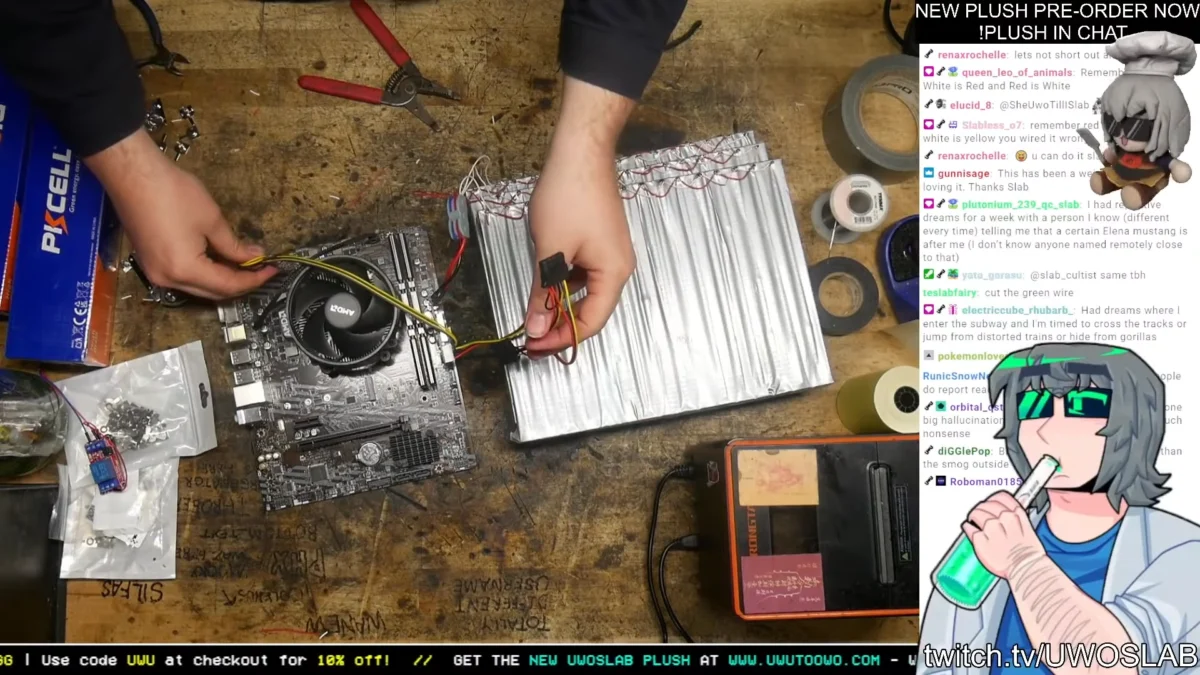
The construction process was methodical. The wooden boxes were precisely laser-cut to create individual slots for each AA cell, ensuring a snug fit and proper alignment. Within each box, batteries were arranged to facilitate both series and parallel connections. To achieve the requisite 12V for the PC’s power supply, groups of eight 1.5V AA cells were wired in series. These series groups were then connected in parallel with other similar groups across the three boxes to increase the overall current capacity and extend runtime. Contact pads and clips were strategically placed at either end of the apparatus, serving as the main positive and negative terminals. To further enhance the structural integrity and prevent any accidental disconnections or short circuits, the entire assembly was meticulously reinforced with duct tape, creating a resilient and interconnected power grid. This careful attention to both electrical configuration and physical stability was paramount to the experiment’s success, distinguishing it from less robust DIY attempts.
The Crucial Power Delivery System: Bypassing Conventional Inefficiency
One of the most critical innovations in Uwoslab’s design was the direct approach to power delivery, a factor that significantly contributed to the experiment’s success where others have faltered. A common pitfall in attempting to power a desktop PC from a low-voltage DC source (like batteries) is the reliance on a traditional wall-plug power supply connected via a 12V-to-220V (or 110V in some regions) inverter. This method introduces substantial energy losses due to the multiple conversion steps: DC from batteries to AC via the inverter, and then back to various DC voltages (12V, 5V, 3.3V) within the PC’s standard ATX power supply unit. Each conversion step, particularly the DC-to-AC inversion, can result in significant heat generation and a reduction in overall power efficiency, often leading to insufficient or unstable power delivery to the PC.
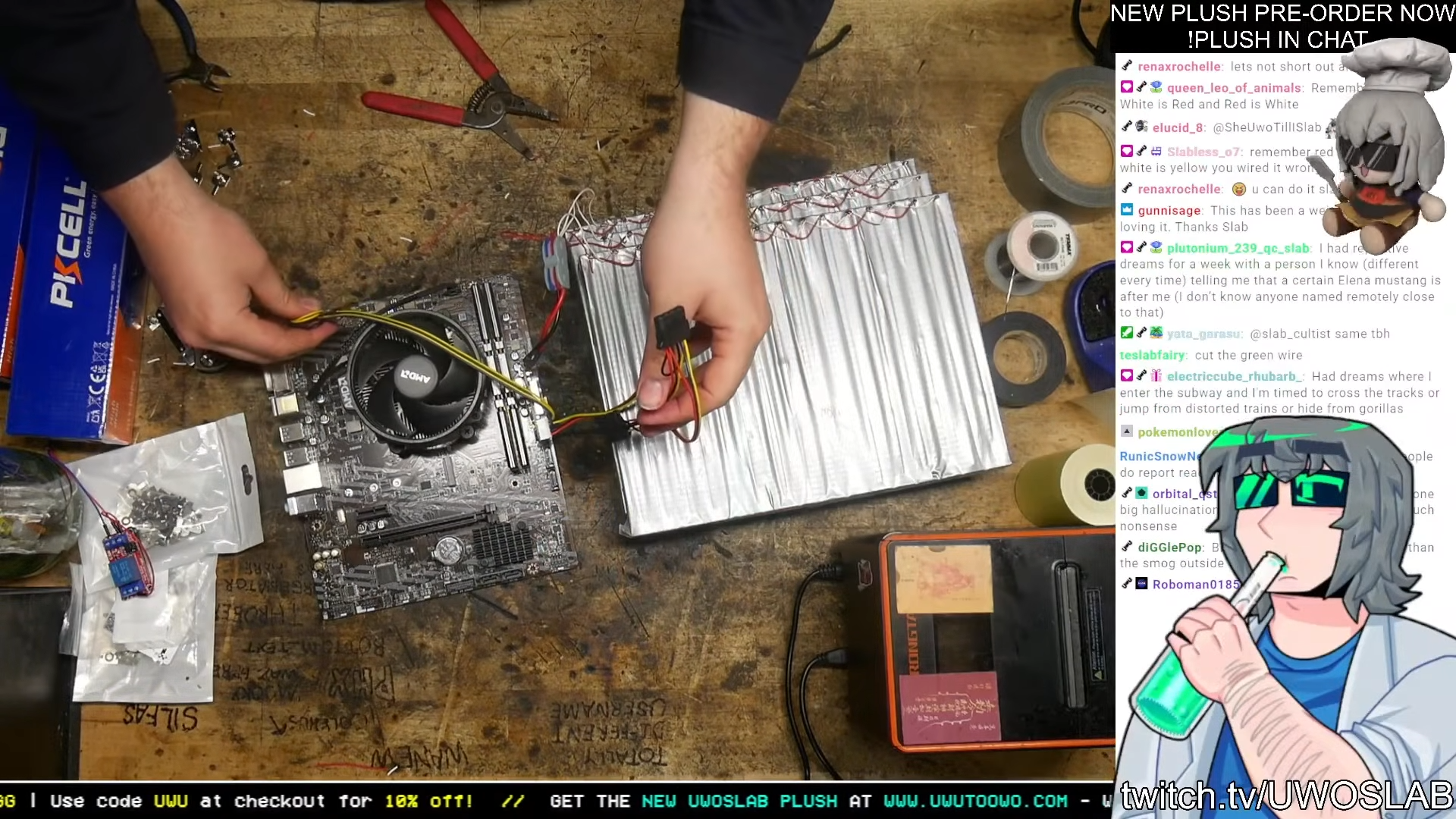
Uwoslab ingeniously bypassed this inefficient cascade by integrating a 12V DC-to-ATX adapter board directly into the system. This specialized board directly accepts the 12V DC input from the battery bank and converts it into the precise voltages required by the motherboard and other PC components (such as 5V and 3.3V), adhering to the ATX standard. This direct-injection method drastically minimizes conversion losses, ensuring that a higher percentage of the battery’s stored energy is efficiently delivered to the computer. This streamlined power path is crucial for sensitive electronics like an x86 computer, which demand stable voltage and current to operate reliably, especially under load. The ability to maintain voltage consistency, even as alkaline batteries naturally experience a voltage drop over time, was greatly enhanced by this direct approach.
The Test Subject: An AM4 System with a Retro Twist
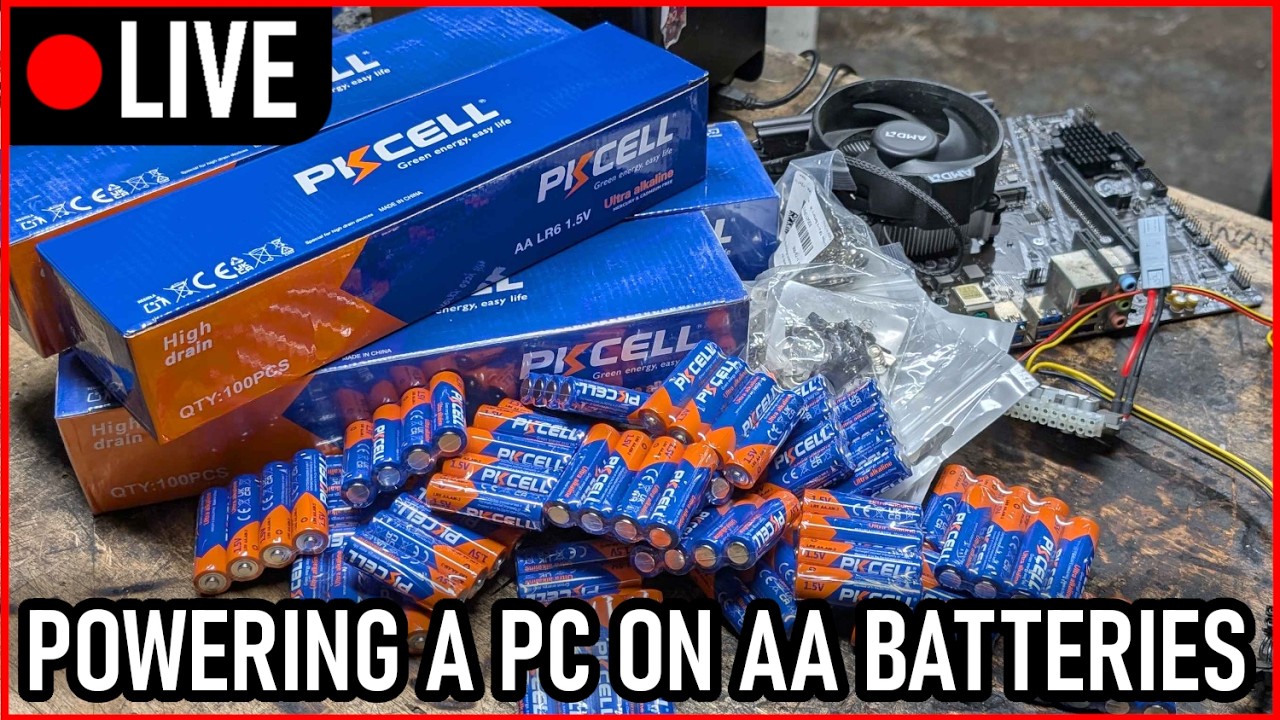
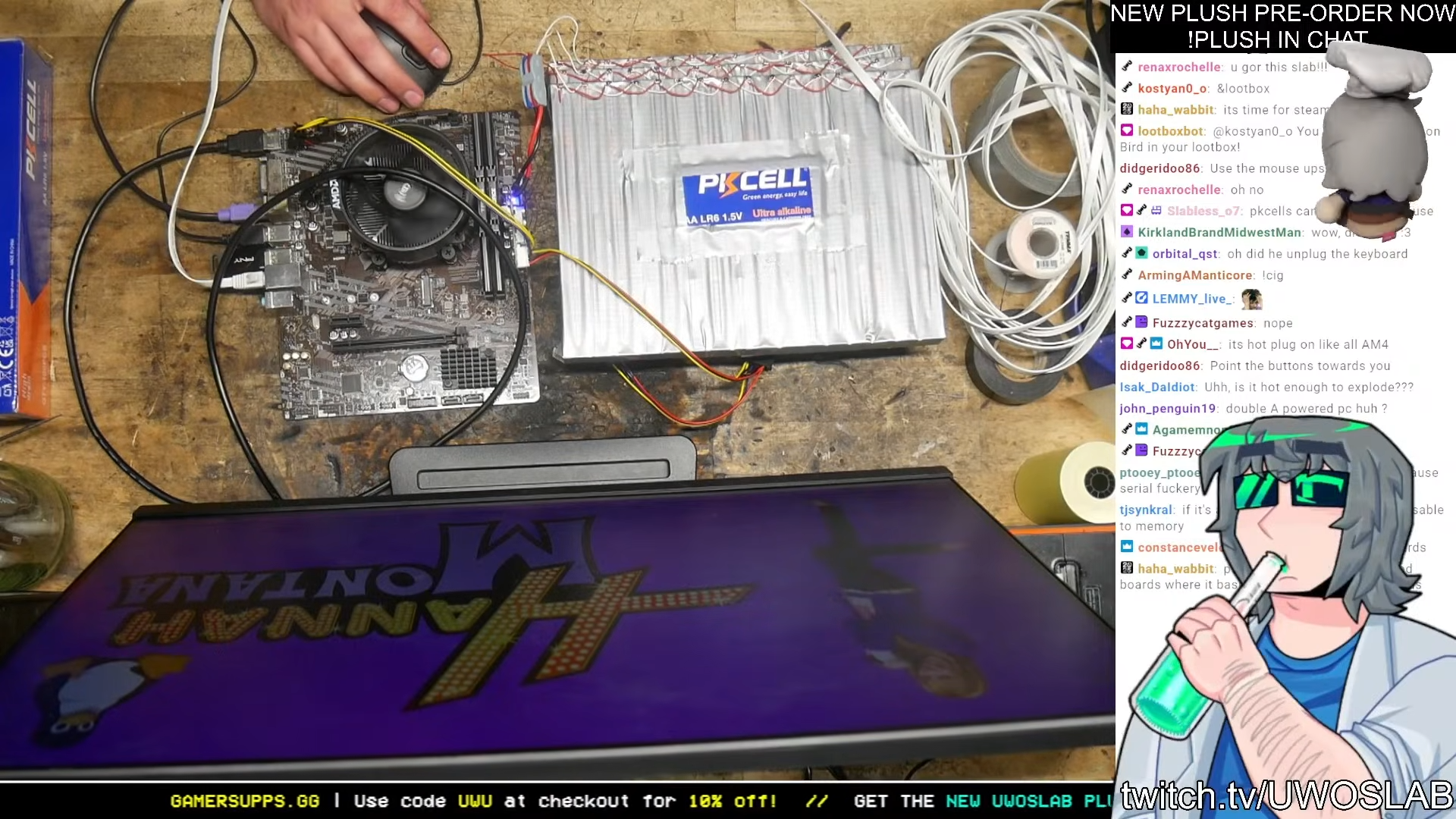
The desktop system chosen for this experiment was an AM4 platform, equipped with a G-series AMD processor, indicating the presence of integrated graphics (iGPU) and thus eliminating the need for a power-hungry dedicated graphics card. This choice was deliberate, as systems relying solely on integrated graphics typically have a significantly lower power footprint compared to those with high-performance discrete GPUs. Further simplifying the setup and minimizing power draw, the PC operated without a traditional storage device, booting directly from a flash drive.
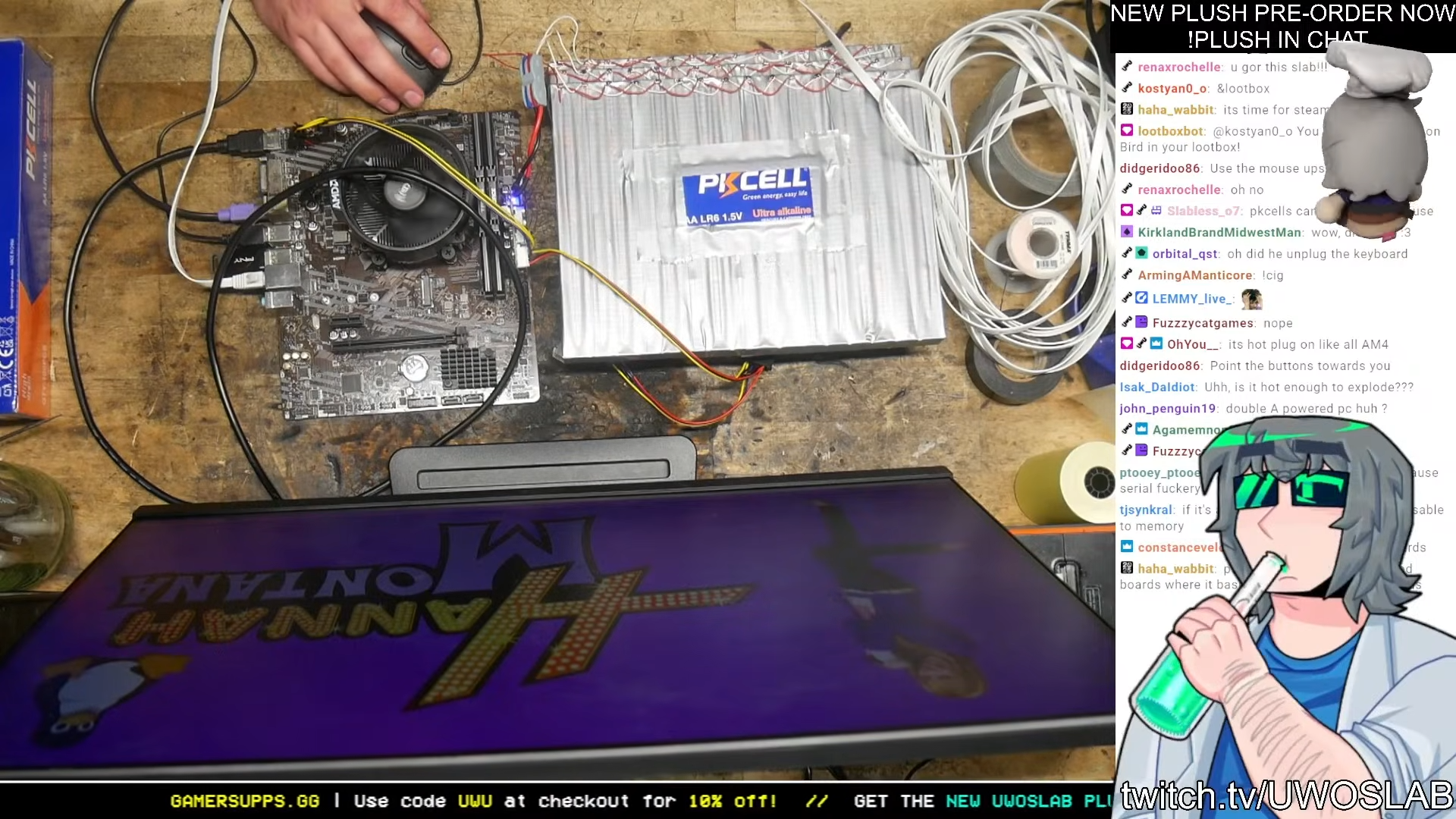
Adding an unexpected and delightfully quirky dimension to the experiment was the operating system itself: Hannah Montana Linux. This obscure, Debian-based Linux distribution, originally released in 2009 and inspired by Disney’s popular teen pop star, recently experienced a surprising revival. Its lightweight nature, combined with its unique aesthetic, made it an ideal candidate for a proof-of-concept build where resource efficiency was implicitly valued. The choice underscored the playful, experimental spirit of the entire project, merging serious hardware hacking with a touch of nostalgic computing humor.
The Experiment Unfolds: Performance and Durability
With the elaborate battery bank meticulously assembled and the streamlined power delivery system in place, the moment of truth arrived. The system powered on seamlessly, booting effortlessly into the Hannah Montana Linux environment. This initial success already marked a significant improvement over Uwoslab’s previous 9V battery attempt, which struggled to keep the PC alive for more than a fleeting moment.
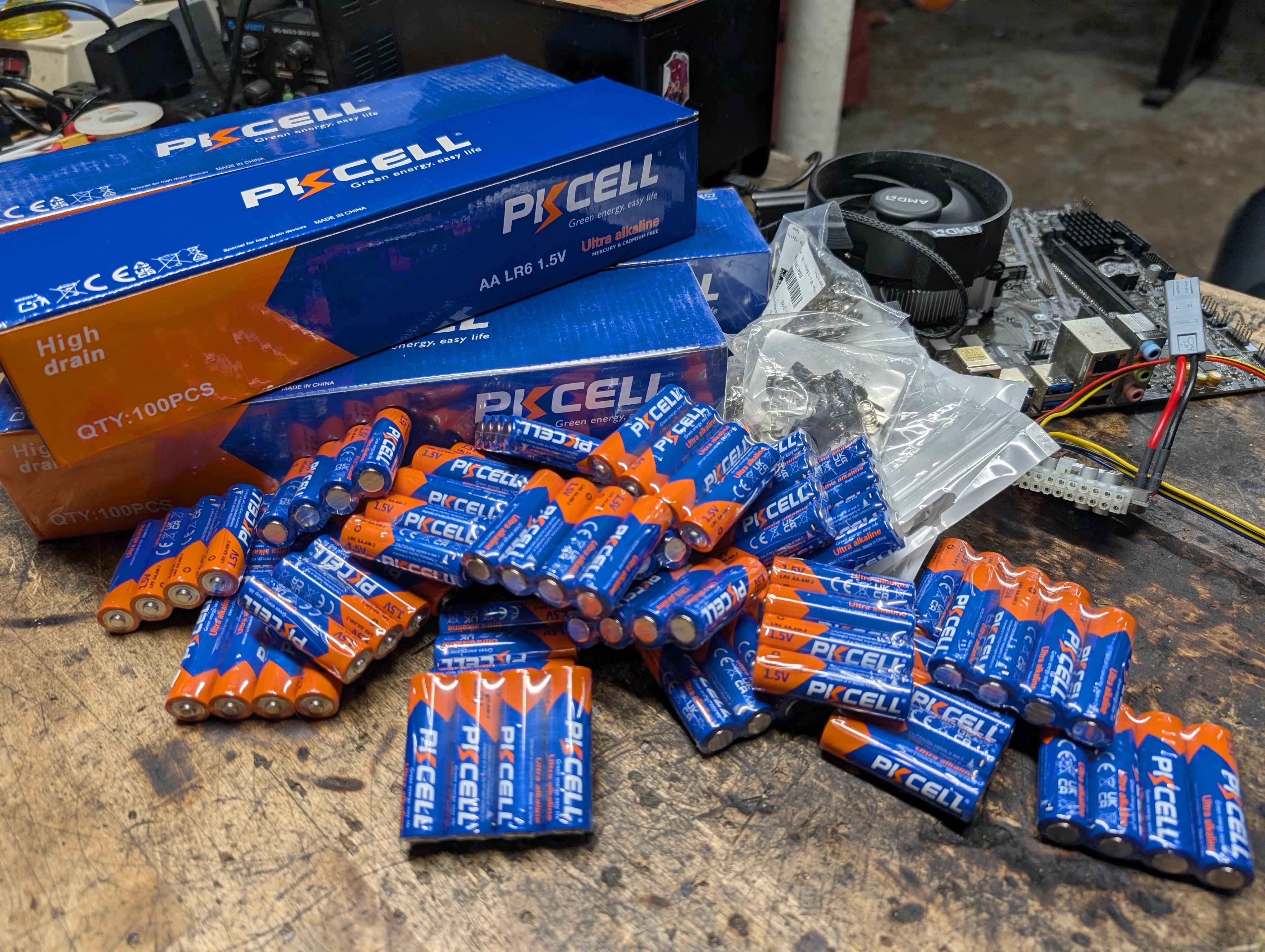
To thoroughly test the stability and sustained power delivery of the AA battery bank, Uwoslab subjected the PC to a rigorous CPU stress test using stress-ng, a widely recognized Linux utility for benchmarking system performance under heavy load. During this test, the CPU was deliberately pushed to 98% utilization, simulating a demanding workload. The results were impressive: the system maintained remarkable stability throughout the 30-minute test duration. Critical voltage monitoring showed that the battery bank, which initially read a robust 13V, maintained a stable 11.95V under full CPU load. This minimal voltage drop, barely below the nominal 12V requirement, is a testament to the efficient power delivery system and the "high-drain" capabilities of the selected alkaline batteries.
Uwoslab shared the successful outcome via social media, stating: "IT WORKED! Unlike the 9V attempt, this one ran the desktop for 30 minutes without running dead off of 200 AAs. Given the capacity at the end of the test it will likely run a couple more hours before the power drop becomes too much. we benchmarked with Hannah Montana Linux." This statement confirms the experiment’s resounding success, not only in booting the system but in sustaining a high-load operation for a considerable period, with an estimated total run-time extending well beyond the initial 30-minute test.
Analysis of Technical Feasibility and Power Dynamics
The success of this experiment offers valuable insights into the practicalities and limitations of using consumer batteries for demanding applications like desktop PCs. Alkaline batteries, while readily available and relatively inexpensive, are known for their characteristic voltage sag under load and their generally lower energy density compared to modern lithium-ion alternatives. "High-drain" alkaline variants are engineered with lower internal resistance to better cope with peak current demands, but this often comes at the expense of overall capacity.

A typical low-power AM4 system with an integrated GPU, like the one used, might draw anywhere from 60 to 100 watts under full CPU load. The theoretical calculation of 160 watts of power for ten straight hours, if 400 high-drain AA cells were perfectly combined, provides a useful benchmark for the potential of such a setup. Even with 192 batteries, Uwoslab’s system demonstrated adequate power delivery, sustaining crucial 12V lines at nearly nominal levels. The direct DC-to-ATX conversion played a pivotal role in this, likely achieving efficiencies upwards of 85-90%, significantly higher than the 60-70% often seen with AC inverters and traditional PSUs under light loads. This efficiency was key to maintaining voltage stability and extending the operational window.
The Environmental and Economic Footprint
While a technical marvel, the practicality and sustainability of powering a PC with 192 (or 400) single-use AA alkaline batteries warrant consideration. Each alkaline battery has a finite lifespan, and once depleted, they contribute to electronic waste. The environmental impact of disposing of hundreds of batteries after a few hours of use is substantial, raising questions about responsible consumption. In contrast, rechargeable lithium-ion or nickel-metal hydride (NiMH) batteries offer a more sustainable alternative for repeated use, though they introduce different complexities in terms of charging infrastructure and initial cost.
Economically, the cost of purchasing 192 high-quality AA alkaline batteries can quickly add up, easily surpassing the price of a small uninterruptible power supply (UPS) or a dedicated portable power station designed for electronics. This reinforces the notion that Uwoslab’s project is fundamentally an experimental proof-of-concept rather than a practical, everyday power solution. It serves as a testament to ingenuity rather than a blueprint for widespread adoption in off-grid computing.
Broader Implications and the Spirit of DIY Innovation
Uwoslab’s successful experiment transcends mere technical achievement; it embodies the spirit of DIY innovation and problem-solving that defines much of the tech enthusiast community. Such projects serve as valuable educational tools, demystifying complex electrical engineering principles and demonstrating the practical application of circuit design. They inspire others to experiment, to question conventional methods, and to find creative solutions to seemingly impossible challenges.
In an era increasingly focused on portable and off-grid computing solutions, this project, while not a commercial product, offers a fascinating glimpse into the possibilities when conventional power paradigms are challenged. It underscores the adaptability of modern computer hardware to unconventional power sources, provided the delivery system is meticulously engineered. Ultimately, Uwoslab’s battery-powered PC stands as a memorable contribution to the history of hardware hacking, reminding us that with enough ingenuity and determination, almost anything is possible in the world of computing.