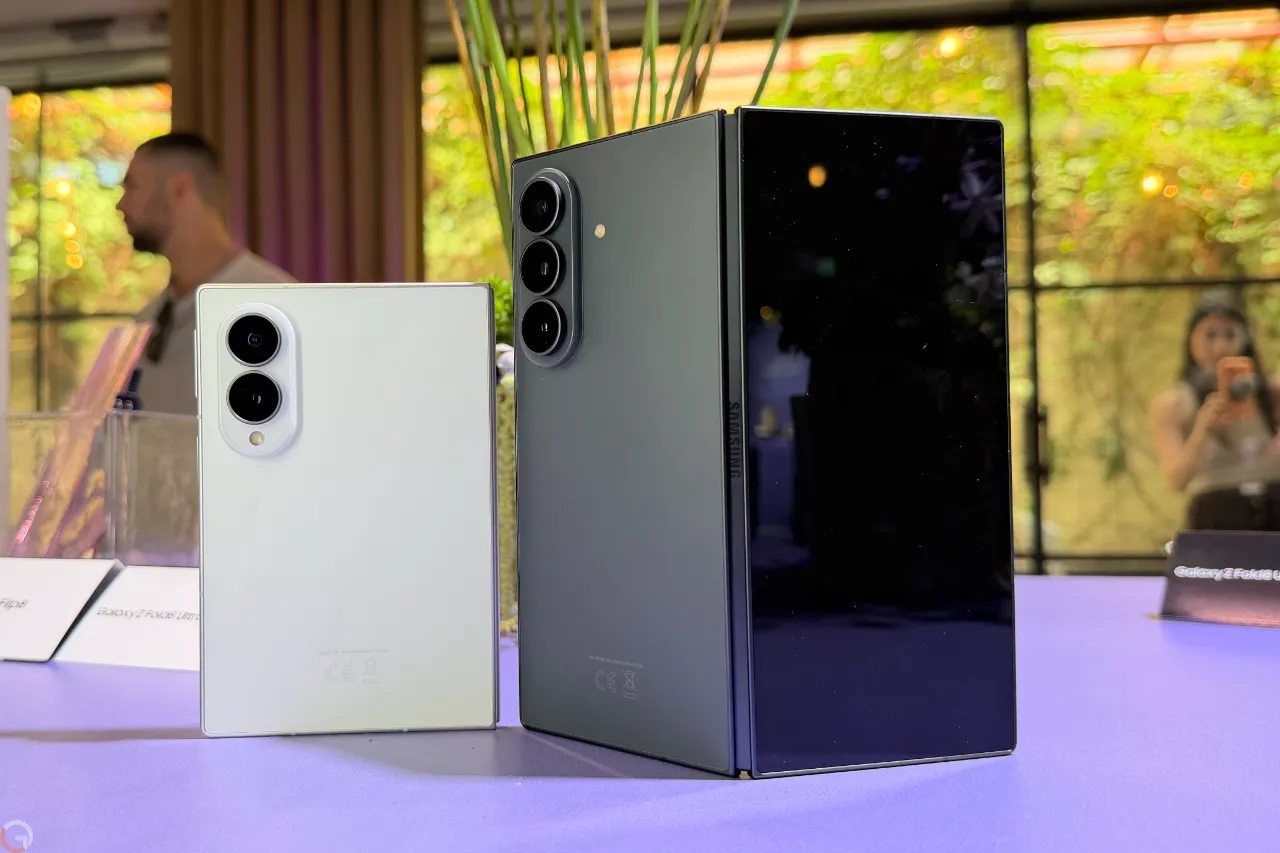













Recent industry disclosures indicate that the South Korean electronics giant has moved beyond the conceptual phase, transitioning the highly anticipated Galaxy Z Tab into active development. This ambitious project seeks to bridge the gap between ultra-portable mobile devices and high-performance workstations by utilizing advanced flexible display technology. According to information shared by industry tipster kro on the social media platform X, Samsung is engineering a device that features a sprawling 17-inch internal screen capable of folding down into a compact 8-inch form factor, essentially mimicking the footprint of a small, portable notebook.
The Shift Toward Large-Format Foldables
The development of the Galaxy Z Tab represents a significant pivot in mobile hardware strategy. For years, the foldable market was dominated by smartphone-sized devices such as the Galaxy Z Fold and Galaxy Z Flip. However, as hinge durability improves and flexible display costs continue to stabilize, manufacturers are increasingly looking toward the tablet and laptop segments as the next frontier for innovation.
By integrating a 17-inch display into a chassis that can fold down to an 8-inch profile, Samsung is addressing a core consumer demand: the need for expansive screen real estate for multitasking, creative work, and high-fidelity media consumption, without the bulk associated with traditional laptops. This design philosophy aligns with a broader industry trend where the line between a smartphone, tablet, and ultrabook is becoming increasingly blurred.
Engineering Challenges and Design Strategy
The technical hurdles involved in producing a 17-inch foldable are substantial. Maintaining structural integrity, preventing screen creasing, and ensuring the longevity of the flexible OLED panel are the primary engineering obstacles. Industry analysts familiar with Samsung’s R&D processes suggest the company is likely applying principles perfected during the iteration of its existing Galaxy Z Fold series.
A critical design choice for the Galaxy Z Tab is expected to be the use of a dual-screen configuration—a primary flexible internal display coupled with an independent outer panel. This architecture offers distinct advantages over the outward-folding, single-screen designs seen in some competing models, such as the Huawei Mate XT. By utilizing an inward-folding design, the delicate, soft-polymer surface of the internal display is shielded from environmental hazards, accidental scratches, and direct impacts when the device is stored in a bag or pocket.
Furthermore, the dual-panel approach allows for the use of a rigid outer screen that functions as a standard, durable tablet interface when the device is closed. This provides users with the immediate utility of a traditional 8-inch device, while the 17-inch interior remains reserved for intensive tasks that benefit from a "canvas" approach to digital workspace management.
Market Context and Competitive Landscape
Samsung is not operating in a vacuum. The race to define the "foldable notebook" category has seen significant investment from various industry players. ASUS and Lenovo have already experimented with foldable notebook concepts, providing early prototypes that helped gauge consumer interest in devices that lack a physical keyboard in favor of a full-screen interface.
Moreover, Huawei has continued to push the boundaries of large-format folding, with devices like the MateBook Fold Ultimate showcasing the potential for seamless transitions between mobile and desktop-style computing. Even Apple, long considered a conservative observer in the foldable space, is rumored to be exploring a similar concept—often referred to in leaks as the "iPad Duo." The competitive pressure is mounting, as the ability to provide a consistent, high-performance software ecosystem across these unconventional form factors will likely determine which manufacturer captures the premium market share.
For Samsung, the Galaxy Z Tab is not just a hardware project; it is an attempt to cement its leadership in the foldable category. Having pioneered the mainstream adoption of foldable phones, the company is positioned to leverage its established supply chain, proprietary hinge mechanics, and software optimizations (such as One UI’s multitasking features) to ensure that the Z Tab offers a more refined user experience than its predecessors or competitors.
A Measured Timeline for Development
While the transition to active development is a milestone, prospective consumers should temper their expectations regarding a near-term release. Industry analysts indicate that the project remains in the early phases of the product lifecycle. Rigorous stress testing, certification, and the optimization of application support for such an unconventional aspect ratio are time-consuming processes.
Current market projections and supply chain intelligence suggest that a commercial launch is unlikely to occur before the end of 2027. This timeline allows Samsung to refine its thin-film glass technology and potentially integrate next-generation processing power—such as the future iterations of Qualcomm’s Snapdragon or Samsung’s own Exynos chips—which will be necessary to drive a display of that magnitude effectively.
The Broader Implications for Mobile Computing
The potential arrival of the Galaxy Z Tab signals a transformation in the mobile computing paradigm. Historically, users have had to choose between the portability of a tablet and the power of a laptop. The Galaxy Z Tab promises to eliminate this trade-off by offering a "modular" screen size.
When unfolded to its full 17-inch capacity, the device could replace a secondary monitor for professionals on the go, provide an expansive canvas for artists, or offer a distraction-free environment for writers. When closed, it serves as a high-end, compact slate for media consumption or communication.
However, the success of this device will rely heavily on software adaptation. A 17-inch foldable device requires an operating system capable of fluid window management, gesture-based control, and instant app resizing. Samsung’s ongoing collaboration with developers to optimize Android and its proprietary UI layers for large-screen, multi-window environments will be the true determinant of the Galaxy Z Tab’s utility. If the software experience matches the hardware ambition, the device could trigger a shift in the laptop market, leading many users to abandon traditional clamshell designs in favor of more flexible, versatile hardware.
Looking Toward the Future
As the industry moves toward the 2027 window, the attention will likely shift toward the durability of the screen’s hinge and the brightness levels of the foldable OLED panels. Samsung’s experience in the smartphone market provides them with a "first-mover" advantage in terms of user feedback and iterative improvement.
While the company has yet to provide an official statement or a formal product announcement, the move into active development is a clear signal of intent. The Galaxy Z Tab represents a high-stakes bet on the future of mobile productivity, reflecting a broader shift toward hardware that adapts to the user’s immediate environment rather than forcing the user to adapt to the constraints of the hardware.
As the engineering hurdles of display creasing and structural rigidity are progressively overcome, the Galaxy Z Tab stands to serve as a bellwether for the consumer electronics industry. If successful, it will confirm that the future of mobile computing is not just about raw power, but about the flexibility of the form factor itself. The industry remains in a state of anticipatory watchfulness, awaiting further leaks or official confirmations that will clarify the specifications and expected market pricing of this high-end device. Until then, the Galaxy Z Tab remains a potent symbol of the next decade of mobile innovation, promising to redefine the standards of what a portable, high-productivity device can achieve.