A remarkable discovery has been made within the expansive and ecologically significant landscape of Madhya Pradesh’s Kuno National Park, a region currently at the forefront of India’s ambitious cheetah reintroduction program. Two camera traps, strategically placed to monitor wildlife, have captured compelling evidence of a caracal, a reclusive and seldom-seen wild cat, traversing the park’s nocturnal terrain. This sighting, occurring in the very same habitat designated for the return of the cheetah, has ignited both scientific interest and cautious optimism regarding the broader biodiversity of the area.
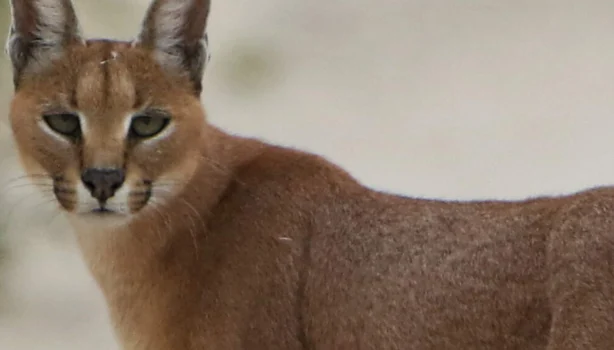
The images, which depict a lean, long-legged wildcat characterized by its distinctive black-tufted ears, confirm the presence of the caracal within Kuno. However, experts involved in wildlife research are urging a measured interpretation of this find, emphasizing that a single camera-trap record, while significant, cannot definitively establish the existence of a resident caracal population.
The Elusive Caracal: A Phantom of the Indian Wild
The caracal (Caracal caracal) is a medium-sized wild cat native to Africa, the Middle East, Central Asia, and India. Renowned for its striking appearance, it is distinguished by its slender build, long legs, and prominent black ear tufts, which give it its name – "caracal" derives from the Turkish word "karakulak," meaning "black ear." These adaptations, particularly its powerful hind legs, enable it to leap impressively high to catch birds in flight, a behavior that has earned it the moniker "desert lynx" in some regions.
In India, the caracal is a species of considerable conservation concern. It is listed under Schedule I of India’s Wildlife (Protection) Act, 1972, affording it the highest level of legal protection. Despite being categorized as "least concern" globally by the International Union for Conservation of Nature (IUCN) due to its widespread distribution across various continents, its status within India is far more precarious. Here, it is considered "near threatened," a designation that reflects its dwindling numbers and shrinking habitat. Official population estimates for caracals in India are notably absent, and widely circulated figures suggesting around 50 individuals are considered unsubstantiated.
A pivotal 2020 study highlighted the alarming decline of the caracal’s range in India, revealing a reduction of approximately 96 percent from pre-1947 levels. This drastic shrinkage has confined the species to fragmented pockets, primarily in parts of Rajasthan, Gujarat, and Madhya Pradesh. Consequently, confirmed sightings and records of caracals in recent years have become exceedingly rare, often occurring serendipitously as accidental captures on camera traps intended for other species, such as tigers, or during surveys near sensitive border areas.
Kuno National Park: A Landscape of Hope and Intrigue
Kuno National Park, situated in the Sheopur district of Madhya Pradesh, has recently garnered international attention as the chosen sanctuary for India’s ambitious cheetah reintroduction project. Launched in 2022, this initiative aims to restore the cheetah to its historical range in India, where it had become extinct in the mid-20th century. The park’s vast grasslands, interspersed with dry deciduous forests, provide a habitat considered suitable for these large predators.
The presence of camera traps within Kuno is intrinsically linked to the ongoing conservation efforts for the cheetah. These devices are crucial tools for monitoring the reintroduced big cats, assessing their adaptation, and understanding their ecological interactions within the park. It is within this context of intensive wildlife monitoring that the caracal has now made its appearance.
The Chronology of the Sighting
The discovery of the caracal in Kuno can be traced back to the deployment of motion-triggered camera traps within the park. These cameras are designed to operate autonomously, capturing images or video footage of wildlife when their sensors detect movement. This technology is particularly vital for documenting elusive species like the caracal, which are primarily nocturnal and possess a naturally shy disposition, making direct observation extremely challenging.
The specific timeline of the camera trap activation and subsequent image capture is detailed by park officials. The two camera traps, positioned in undisclosed locations within Kuno, successfully recorded the caracal’s nocturnal movements. This marks the first documented instance of the species being recorded in the park during the tenure of its current Field Director, Uttam Kumar Sharma, who has been stationed at Kuno for the past four years.
Following this significant discovery, the forest department has initiated a review of older camera trap data and other wildlife records. The objective is to ascertain whether caracals have been previously detected in Kuno or in adjacent forest areas, potentially indicating a longer, albeit undocumented, presence. This retrospective analysis is a critical step in piecing together the species’ historical and current distribution within the region.
Expert Analysis: Caution and Context
Wildlife biologists and conservationists are approaching the Kuno caracal sighting with a blend of excitement and scientific rigor. Shekhar Kolipaka, a senior landscape developer at the Commonland Foundation and a researcher who has extensively studied caracal distribution in India, articulated this measured perspective. In a statement to Mongabay India, Kolipaka emphasized the distinction between a single confirmed sighting and the presence of a breeding population.
"A single camera-trap photograph confirms the presence of a caracal, but does not indicate the existence of a resident population," Kolipaka stated. He further elaborated on the natural dispersal patterns of young wild cats, particularly males, who are known to embark on extensive journeys to establish their own territories. These dispersals can involve traversing significant distances, crossing various geographical barriers such as rivers, agricultural lands, human settlements, roads, and railway lines. The presence of a lone caracal could simply represent a transient individual passing through the park.
Kolipaka stressed the importance of continued monitoring. "Continued monitoring," he explained, "is what will show whether the animal in the photo settles down or keeps moving through." This underscores the need for sustained research efforts to determine the ecological significance of this sighting.
The effectiveness of camera traps in documenting such elusive species was also highlighted. As Kolipaka noted, the caracal’s nocturnal and shy nature makes it incredibly difficult to observe directly. Years of field observation from a vehicle might yield no sightings. Motion-triggered cameras, by contrast, provide invaluable data without disturbing the animals, often serving as the sole proof of a species’ presence in a given area, especially in cases with limited evidence.
Broader Implications and Conservation Strategies
The caracal’s appearance in Kuno is not being viewed in isolation but rather within the broader context of the park’s ecological health and the ongoing cheetah reintroduction efforts. Uttam Kumar Sharma, the Field Director of Kuno, suggested a potential correlation between the habitat improvements at the park and the caracal’s presence. He noted an increase in water availability and enhancements in grassland quality since the commencement of the cheetah project. Sharma posited that this habitat recovery might be a contributing factor to the caracal’s appearance.
This perspective was echoed by Madhya Pradesh Chief Minister Mohan Yadav, who remarked on social media that the cheetah project’s overarching aim extends beyond the welfare of cheetahs to encompass the protection of all wildlife and their habitats. This optimistic framing suggests a holistic approach to conservation within Kuno.
However, researchers more closely involved with caracal studies advocate for a data-driven approach. Their focus remains on accumulating concrete evidence through further fieldwork. The immediate next steps for the forest department are critical in this regard. These include a thorough review of historical park records to identify any past caracal occurrences and the implementation of intensified monitoring protocols in the specific areas where the camera traps recorded the animal. This will help determine whether the sighting represents a solitary transient or an indicator of a more established presence.
The caracal’s conservation status in India, coupled with its rarity, imbues this sighting with significant importance. It underscores the critical need for robust conservation strategies that address not only flagship species like the cheetah but also the diverse array of lesser-known, yet equally threatened, wildlife that shares these vital ecosystems. The caracal’s presence in Kuno, while requiring further investigation to ascertain its true significance, offers a glimmer of hope for the multifaceted biodiversity that the park aims to protect and nurture. The success of the cheetah project, it is increasingly apparent, may well be intertwined with the broader health and recovery of the entire Kuno ecosystem, including its most elusive inhabitants.
The implications of this caracal sighting extend beyond the immediate Kuno landscape. It serves as a potent reminder of the challenges and triumphs of wildlife conservation in India. The caracal, a species struggling against habitat loss and fragmentation, finding itself within a protected area undergoing significant conservation investment, highlights the potential for well-managed landscapes to support a diversity of species. The meticulous work of camera trapping, often a silent and unglamorous endeavor, has once again proven its indispensable role in revealing the hidden lives of wildlife, providing the crucial evidence needed to inform conservation decisions and inspire further action. The ongoing efforts to understand the caracal’s presence in Kuno will undoubtedly contribute to a more comprehensive understanding of this enigmatic feline and its place within India’s rich natural heritage.