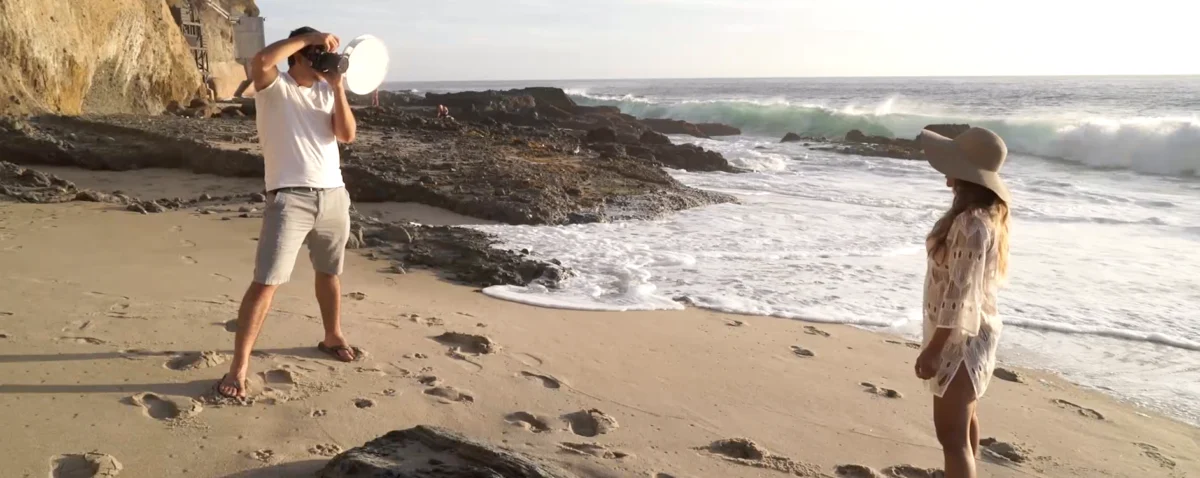
For decades, the photographic industry has treated direct, on-camera flash as a cardinal sin of lighting. Amateur photographers are frequently cautioned that the harsh, unflattering light produced by a strobe mounted directly atop a camera body results in "deer in the headlights" portraits, complete with washed-out skin tones and jarring, unsightly shadows. However, in the high-stakes worlds of fashion, editorial, and commercial photography, this once-maligned technique has been reclaimed as a deliberate aesthetic choice. By understanding the mechanics of light propagation, photographers can move beyond the "snapshot" look and harness direct flash to create high-contrast, edgy, and intentionally stylized imagery that has become a staple of modern advertising.

The Evolution of the Direct Flash Aesthetic
The professional acceptance of direct flash can be traced back to the late 20th and early 21st centuries. Photographers such as Terry Richardson became synonymous with a raw, "point-and-shoot" style that favored the immediacy of direct light over the soft, diffused beauty lighting common in traditional portraiture. This approach was rapidly adopted by brands like American Apparel, which utilized the harsh shadow transition—a hallmark of on-camera flash—to convey a sense of authenticity and counter-culture rebellion.
From a technical standpoint, the "edgy" look is achieved by the sharp demarcation between the illuminated subject and the background shadow. Unlike diffused light, which wraps around the subject, direct, on-camera flash creates a distinct, high-contrast silhouette that emphasizes textures and outlines. For commercial clients, this aesthetic provides a punchy, high-energy visual language that cuts through the visual clutter of digital advertising, making it a powerful tool for brand differentiation.

Mechanical Considerations and Technical Precision
To successfully implement direct flash, one must move past basic automatic settings and embrace precise manual control. The primary challenge of on-camera lighting is the unintended shadow cast behind the subject, particularly when the camera is oriented in a portrait (vertical) position. When a flash is mounted directly to the camera’s hot shoe, rotating the camera causes the light source to shift to the side of the lens, casting a distracting horizontal shadow across the backdrop.
The industry-standard solution for this issue involves the use of a camera bracket, such as the Vello CB-200. By elevating the flash unit above the lens, the light remains centered relative to the subject regardless of the camera’s orientation. This ensures that the resulting shadows are consistently placed behind the subject, maintaining a clean, professional aesthetic.

Furthermore, the relationship between the subject and the background is critical. Direct flash obeys the inverse square law; as the distance between the subject and the background increases, the light intensity on the background drops off significantly. By manipulating this distance, photographers can shift a background from pure white to deep grey or black without changing the flash power. This capability allows for rapid environment control, an essential skill for photographers working in unpredictable event or wedding environments.
Practical Applications in Event and Wedding Photography
While fashion photography uses direct flash as a stylistic choice, event and wedding photography often require it as a necessity. In large, dimly lit reception halls or outdoor evening ceremonies, the absence of reflective surfaces (such as white walls or low ceilings) makes traditional bounce flash impossible. In these scenarios, direct, on-camera flash acts as a critical utility.

When shooting a wedding reception, the logistical demand on the photographer is immense. Movement is constant, and the ambient light levels are frequently insufficient for high-quality imagery. Professional photographers mitigate the "harshness" of the flash by adopting a two-fold strategy: exposing for the ambient light first to maintain the mood of the venue, and then using the flash as a subtle, low-power fill to illuminate the subjects.
Research into event photography workflows suggests that the most successful practitioners maintain a consistent distance between themselves and the subjects. By remaining at a fixed range, the photographer ensures that the flash exposure remains stable, preventing the common "blown out" highlights or "lost in the dark" exposures that occur when a subject moves unexpectedly closer or further from the light source.

Comparative Analysis: Flash vs. Ring Light
A frequent point of confusion for emerging photographers is the distinction between direct flash and the ring light. While both are light sources, they produce vastly different visual results. A ring light, by virtue of its circular shape and lens-surrounding position, creates an omnidirectional, soft light that fills in facial features and produces a characteristic circular catchlight in the eyes.
Conversely, a standard speedlight (such as the Profoto A1) provides a directional, point-source light. When used directly, this light creates more depth and drama. Professional analysis indicates that while ring lights are superior for close-up beauty or fashion work where shadow-free skin is the goal, direct flash is superior for capturing movement and context, particularly in street or event photography where the photographer must remain mobile.

Best Practices for Subtlety and Quality
To avoid the amateur "point-and-shoot" look, professionals adhere to a strict set of protocols:
- Ambient Balancing: The flash should never be the sole source of light. By balancing the flash output against the ambient light, the photographer retains the atmosphere of the scene.
- Flash Power Calibration: Using the lowest possible flash power is essential for maintaining a natural appearance. Excessive power flattens the image and destroys the depth of the scene.
- Modification: Even in "direct" scenarios, light modification can yield superior results. Simple, improvised diffusers or small flash discs can soften the transition between light and shadow, preventing the harsh "clipping" of highlights on a subject’s face.
- Consistency: In dynamic environments like dance floors, setting the flash to manual mode prevents the camera’s TTL (Through-The-Lens) metering from being fooled by reflective surfaces or dark clothing, which often leads to inconsistent exposures.
Broader Implications and Future Trends
The resurgence of direct flash is indicative of a broader trend in visual media: the shift toward "raw" aesthetics. As high-resolution cameras and sophisticated post-processing software allow for more control, photographers are increasingly looking for ways to inject personality and stylistic intent into their work. Direct flash serves this purpose by adding a layer of deliberate, high-contrast grit that feels distinct from the overly polished, soft-lit images generated by modern AI and mobile phone computational photography.

The implication for the industry is clear: mastery of light is not synonymous with the mastery of soft, diffused light. Instead, it is the mastery of intent. Whether it is an editorial spread for a high-fashion magazine or a candid moment at a wedding, the ability to command direct flash provides photographers with a versatile, reliable, and stylistically distinct tool that—when used with technical precision—elevates the final product from a simple record of events to a crafted piece of visual art. As technology continues to evolve, the fundamentals of light physics remain constant, ensuring that these techniques will remain relevant for the foreseeable future.