










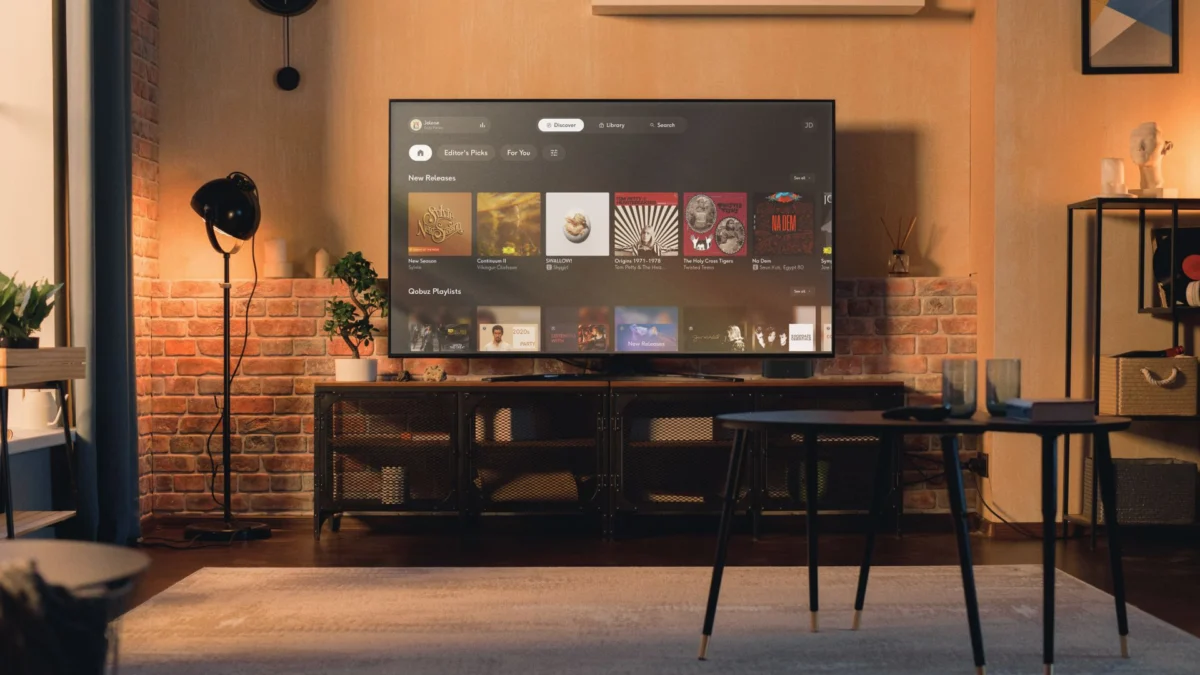
Independent high-resolution music streaming service Qobuz has officially expanded its reach to the Apple TV platform, marking a significant milestone in the company’s ongoing strategy to bring audiophile-grade audio experiences into the heart of the modern living room. This launch represents a departure from the traditional desktop and mobile-centric models that have historically dominated the high-fidelity streaming market, positioning the television not just as a visual centerpiece, but as a primary hub for high-end acoustic playback.
The newly released application is engineered specifically for the unique demands of the living room environment. By leveraging the expansive screen real estate of modern televisions and home cinema projectors, Qobuz aims to provide a deeply immersive experience that goes beyond simple audio playback. Users can now access the service’s entire catalog of lossless and hi-res tracks, complemented by an interface that prioritizes visual metadata, including album credits, liner notes, and high-resolution cover art, all displayed in a unified, side-by-side layout.
The Evolution of the Qobuz Streaming Ecosystem
Qobuz has long differentiated itself from mainstream competitors by emphasizing sound quality and human-led editorial curation over purely algorithmic recommendation engines. Founded in 2007, the company spent years establishing its reputation among audiophiles by focusing on FLAC-encoded audio at 24-bit/up to 192 kHz. The migration to Apple TV is the latest step in a multi-year effort to ensure that this high-resolution content is accessible on as many hardware endpoints as possible.
The chronology of this development began with the company’s initial focus on web and mobile interfaces, followed by deep integration into third-party hi-fi hardware through protocols like Roon and Google Cast. The arrival of a dedicated tvOS application signifies a shift toward treating the television as a legitimate "source component" in a high-end audio chain, provided the user has connected their Apple TV to a capable DAC (Digital-to-Analog Converter) or an AV receiver.
Technical Specifications and Playback Capabilities
The technical implementation of the Qobuz app on Apple TV is highly dependent on the generation of hardware the user owns. According to current documentation, the application is compatible with any Apple TV device capable of running tvOS 26. However, the fidelity of the output varies significantly based on the internal processing capabilities of the specific unit.
The 2026 iterations of the Apple TV 4K provide the most robust performance, supporting playback at the service’s maximum threshold of 24-bit/192 kHz. This ensures that the bit-perfect stream remains untouched, satisfying the requirements of even the most discerning listeners. Conversely, the 2022 model of the Apple TV 4K faces a hardware-imposed limitation, capping output at 24-bit/48 kHz. While this is still a high-quality resolution—exceeding standard CD quality—it does not fully capture the ultra-high-resolution files that Qobuz offers.
This hardware-software interaction underscores the necessity for users to understand their signal chain. For a listener to truly appreciate the difference between a 48 kHz and 192 kHz stream, the entire playback system—from the TV’s output to the receiver and ultimately the loudspeakers—must be calibrated to handle such high bandwidths without downsampling.
Integrated Features: Human Curation and Seamless Syncing
One of the central pillars of the new app is the integration of "Qobuzissimes," a feature designed to spotlight emerging artists and innovative new releases. By placing these selections on the large screen, Qobuz encourages a more deliberate, "lean-back" listening experience. This is further supported by the synchronization of lyrics, which are displayed on-screen in real-time, allowing users to follow along with the music.
The synchronization capability extends beyond just visual playback. The application utilizes a cloud-based library system that ensures any tracks, albums, or playlists added or modified within the Apple TV interface are immediately reflected across the user’s smartphone, tablet, and desktop applications. This cross-platform fluidity is a critical component for modern consumers who shift between portable listening and home-based playback sessions.
Furthermore, the implementation of "Qobuz Connect" provides a sophisticated remote-control interface. Users can initiate a track on their mobile device and "beam" the stream directly to the Apple TV. Crucially, the phone continues to act as a controller, allowing the user to manage playback, browse the library, and queue up subsequent tracks without interrupting the audio output handled by the Apple TV hardware.
Broader Implications for the Audiophile Market
The entry of a dedicated hi-res music service into the Apple TV ecosystem highlights a growing trend: the convergence of high-fidelity audio and home cinema systems. Historically, these two worlds—audiophile stereo setups and home theater surround sound systems—remained largely siloed. However, as television manufacturers and streaming device makers like Apple continue to improve the audio-processing capabilities of their hardware, the lines are blurring.
Industry analysts suggest that this shift could pressure other major streaming platforms to improve their bit-depth and sampling rates. While services like Apple Music and Tidal have already introduced lossless or high-resolution tiers, the user experience on TV interfaces has often lagged behind mobile apps. By prioritizing a rich, metadata-heavy display, Qobuz is setting a new benchmark for how music services should present themselves in the living room.
From a market perspective, this move is a strategic play for subscriber retention. In an industry where catalogs are largely similar, the user experience becomes the primary competitive differentiator. By providing a "premium" visual interface that mirrors the "premium" nature of their audio quality, Qobuz is attempting to solidify its position as the service of choice for the serious listener who values both sonic integrity and curated discovery.
Challenges and Considerations
Despite the clear benefits, the transition to living-room-based high-resolution streaming is not without its technical hurdles. Data consumption is a primary concern; streaming 24-bit/192 kHz audio consumes significantly more bandwidth than standard compressed formats like MP3 or AAC. Households with data caps or unstable internet connections may experience buffering if their network infrastructure is not robust.
Additionally, there remains the question of audio signal path. Many televisions, when connected to an external soundbar or receiver via HDMI (ARC/eARC), may inadvertently process or "re-sample" the audio signal, potentially stripping away the hi-res characteristics that the Qobuz app is designed to preserve. To maximize the utility of the app, users are encouraged to ensure their home audio setup is configured for "bit-stream" or "pass-through" mode, ensuring the raw audio signal reaches the DAC or amplifier without interference from the television’s internal digital signal processor (DSP).
Future Outlook
The launch of the Qobuz app on Apple TV is a clear indicator that the demand for high-quality audio is moving out of the basement "listening room" and into the shared space of the home. As hardware continues to evolve, it is likely that we will see further refinements to the app, including potential support for multi-channel audio or even more advanced metadata visualization features.
For current subscribers, the app is available for download via the tvOS App Store. The company has indicated that it will continue to update the platform based on user feedback, particularly regarding interface navigation and playback stability. As the industry continues to move toward higher resolution formats—a trend mirrored by the rising popularity of high-end consumer hardware—Qobuz’s integration into the Apple ecosystem serves as a reminder that the future of music consumption is not just about the quality of the sound, but about the quality of the interaction between the listener and the music.
By bridging the gap between professional-grade audio and mass-market consumer hardware, Qobuz is successfully positioning itself at the nexus of high-fidelity tradition and modern streaming convenience. Whether this leads to a broader industry-wide shift toward high-resolution standards across all TV-based streaming apps remains to be seen, but for now, it represents a significant victory for audiophiles who demand the best possible performance from their home entertainment setups.