










The landscape of home entertainment audio has undergone a significant transformation over the past decade, moving away from cumbersome multi-channel wired setups toward sophisticated, streamlined soundbar systems that leverage advanced spatial audio technologies like Dolby Atmos and DTS:X. As the 2026 What Hi-Fi? Awards reveal, the market is currently defined by a duality: the continued dominance of established, compact, plug-and-play solutions and the emergence of high-performance, modular systems that challenge traditional component-based home cinema.
The Evolution of Spatial Audio Standards
Dolby Atmos, which allows for object-based audio—where sounds are treated as individual entities that can be placed precisely in a three-dimensional space—has become the gold standard for home audio. While early iterations of Atmos required discrete ceiling-mounted speakers, modern soundbar technology utilizes psychoacoustic processing and upward-firing drivers to bounce sound off ceilings, creating a convincing "height" effect. The current crop of award-winning hardware demonstrates that this technology has trickled down from ultra-premium professional installations to accessible consumer living rooms.
Chronology of Market Dominance
The market trajectory over the last few years has seen a clear divide. Since 2021, the entry-to-mid-level segment has been consistently led by brands focusing on ecosystem integration, such as Sonos. The Sonos Beam (Gen 2), which has now secured its sixth consecutive What Hi-Fi? Award, serves as a barometer for the "compact soundbar" category. Its sustained success is attributed to its ability to bridge the gap between high-fidelity music performance and cinematic Dolby Atmos support in a form factor suitable for sub-50-inch displays.
In contrast, the "flagship" tier has shifted toward the modular approach. Following the release of the Sonos Arc Ultra and the Sony Bravia Theatre series, manufacturers are moving toward systems that allow users to scale their audio setup. This trend addresses a common consumer pain point: the desire for the simplicity of a soundbar combined with the genuine, physical surround immersion of rear satellites and dedicated subwoofers.
Comparative Analysis of Top-Tier Systems
The current market hierarchy is defined by the following key performers:
1. The Compact Benchmark: Sonos Beam (Gen 2)
The Beam (Gen 2) remains the industry’s most reliable performer for smaller living spaces. Its architecture relies on computational audio to create a wide soundstage without the need for an external subwoofer, making it the preferred choice for urban apartments or secondary bedrooms.
2. The High-End Standard: Sonos Arc Ultra
Representing the apex of single-bar performance, the Arc Ultra maintains its position due to its precision in spatial placement. Data from recent technical evaluations indicates that its ability to create a three-dimensional "bubble" of sound surpasses most rivals that lack rear-channel support, making it a "best-in-class" candidate for users prioritizing aesthetic minimalism without compromising on audio depth.
3. The Audiophile Choice: KEF XIO
Occupying the premium tier, the KEF XIO caters to the "prosumer" demographic. Unlike many mass-market soundbars that prioritize bass-heavy, "boomy" profiles for action movies, the XIO is engineered with a neutral, high-fidelity signature. It serves as a rare example of a soundbar that performs with equal competency when reproducing complex orchestral scores or high-resolution music, justifying its premium price point.
4. The Value-Oriented Performer: Hisense AX5125H
At the other end of the fiscal spectrum, the Hisense AX5125H exemplifies the democratization of high-end features. Priced at approximately £200, it provides a full-system configuration—soundbar, wireless subwoofer, and rear speakers. Its inclusion in the 2026 awards circuit highlights a shift in consumer expectations: users are no longer willing to settle for virtual surround sound when true, discrete channel separation is available at entry-level price points.
The "Wired" Renaissance: Sony’s Strategic Shift
A noteworthy development in the 2026 product cycle is the performance of the Sony Bravia Theatre System 6 and the Sony Bravia Theatre Trio. Contrary to the industry’s near-total pivot to wireless connectivity, Sony has reintroduced wired elements for specific components within these systems.
Technical analysis suggests this is a strategic move to ensure signal integrity and reduce latency in high-density Wi-Fi environments, where wireless rear speakers can occasionally suffer from interference. The Bravia Theatre Trio, when paired with the Rear 9 and Sub 9 modules, provides an immersive experience that rivals traditional AV receivers. This signals a potential market correction where manufacturers prioritize performance stability over the convenience of a completely cable-free installation.
Industry Implications and Consumer Impact
The findings from the 2026 testing cycle suggest three major implications for the broader consumer electronics industry:
- Platform Lock-in: Brands like Sonos continue to succeed because of their closed-loop ecosystem. Once a consumer invests in a Beam or Arc, they are incentivized to remain within the brand’s ecosystem for multi-room audio, effectively increasing the lifetime value of the customer.
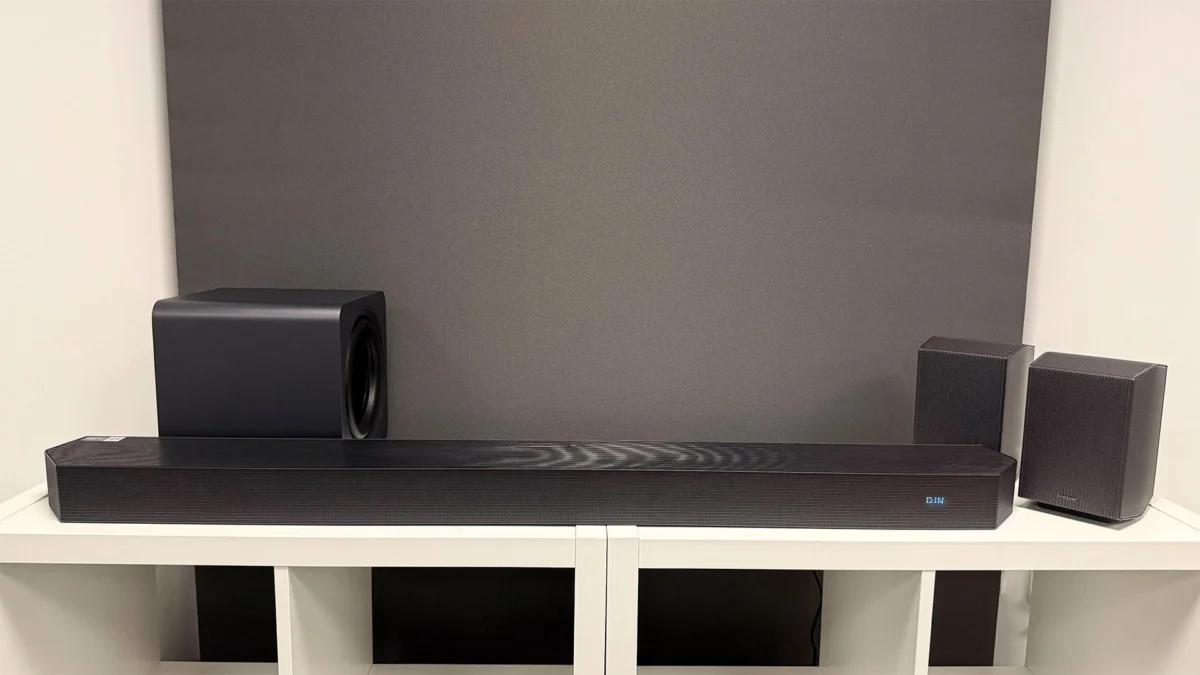
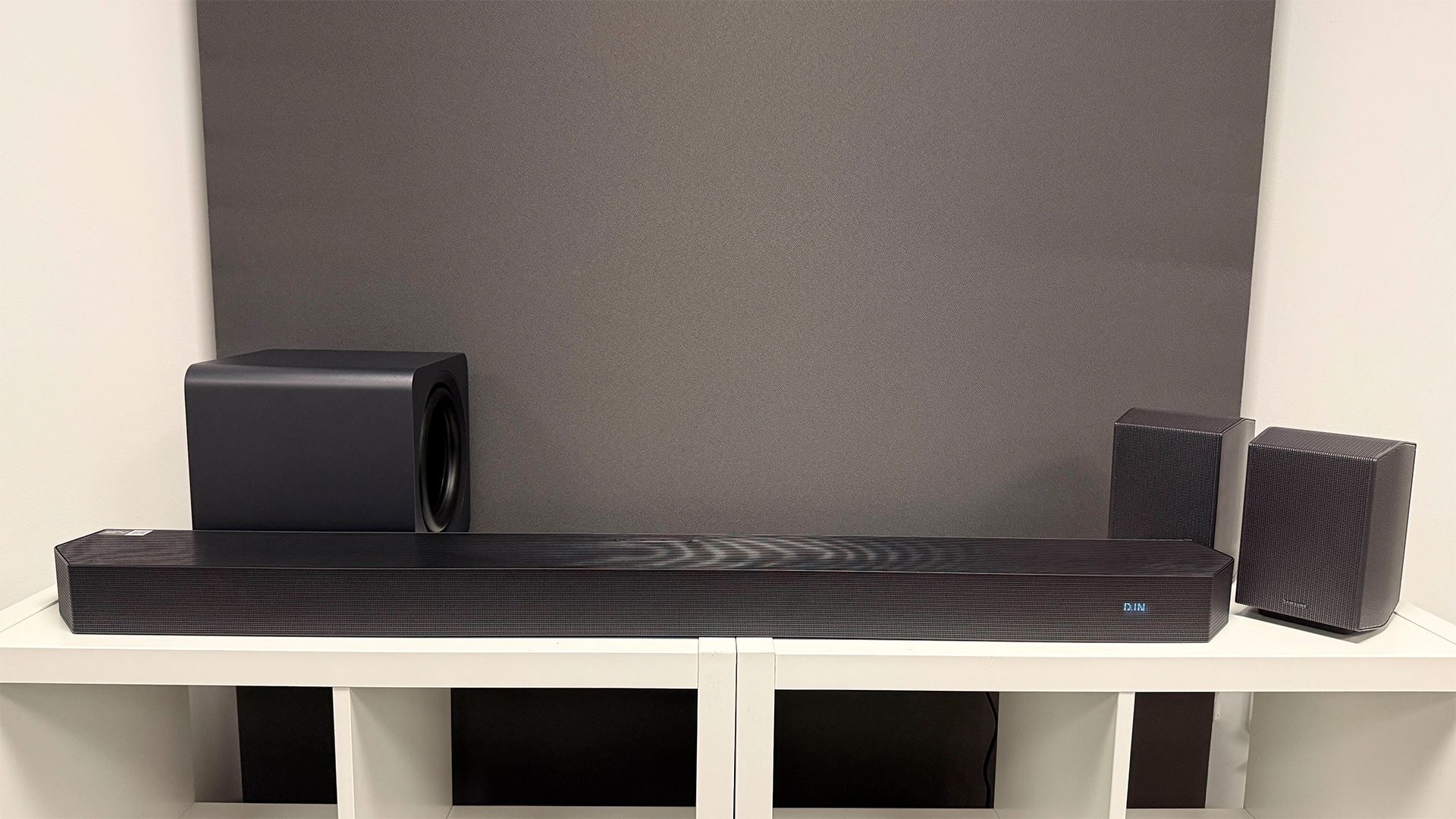
- The Decline of the "All-in-One" Myth: The consistent high performance of systems like the Samsung HW-Q990H and the Sony Bravia Theatre Trio reinforces that physics still plays a role in audio. No matter how advanced the software, a dedicated subwoofer and physical rear speakers significantly outperform a standalone bar. Consumers are increasingly recognizing this, driving demand for bundle-based systems.
- The Integration of Music and Cinema: Historically, soundbars were criticized for their poor musical performance—often sounding thin or harsh. The current award winners have largely solved this issue, with companies like KEF and Sonos utilizing advanced digital signal processing (DSP) to ensure that high-fidelity audio reproduction is no longer secondary to cinematic "thump."
Expert Consensus
As noted by the review teams, the "best" choice is no longer about the highest price tag, but about the synergy between the room size and the user’s specific audio needs. The rise of these systems indicates that the home cinema market is moving into a "post-complexity" era. Users are demanding the performance of a high-end, multi-speaker home theatre system, but they are demanding it in a package that can be set up in under an hour without the need for professional calibration or extensive interior renovation.
Future Outlook
Looking toward the remainder of 2026 and into 2027, the industry is expected to focus on two key areas: more granular room-correction software and increased interoperability between different brands. Currently, proprietary systems often prevent users from mixing and matching brands—for instance, using a Sony TV with a Sonos soundbar and a third-party subwoofer. As standard protocols like HDMI eARC continue to mature, there is mounting pressure from consumer advocacy groups for manufacturers to open their ecosystems, though current market trends favor the "walled garden" approach.
For the home cinema enthusiast, the 2026 market offers more diversity than ever before. Whether one is seeking the minimalist footprint of a Sonos Beam or the uncompromising, cinema-grade output of a fully expanded Sony Bravia Theatre system, the technology has reached a maturity level where "bad" audio is increasingly rare, provided the consumer understands the limitations of their chosen form factor. The awards conclude with a clear directive: for the best experience, invest in a system that allows for physical rear-channel presence, but do not underestimate the capabilities of modern computational audio for those constrained by living space.