






Apple has announced the rollout of a pioneering sign language interpretation feature for its Apple TV platform, marking a significant milestone in digital accessibility for Deaf and hard-of-hearing audiences. Set to launch globally on November 13, this feature moves beyond traditional closed captioning by integrating dedicated, expertly crafted sign language performances directly onto the screen. By offering visual interpretations tailored specifically to the tone, nuance, and pacing of individual films and television series, Apple is redefining how cinematic art and narrative media can be experienced by non-hearing viewers worldwide.
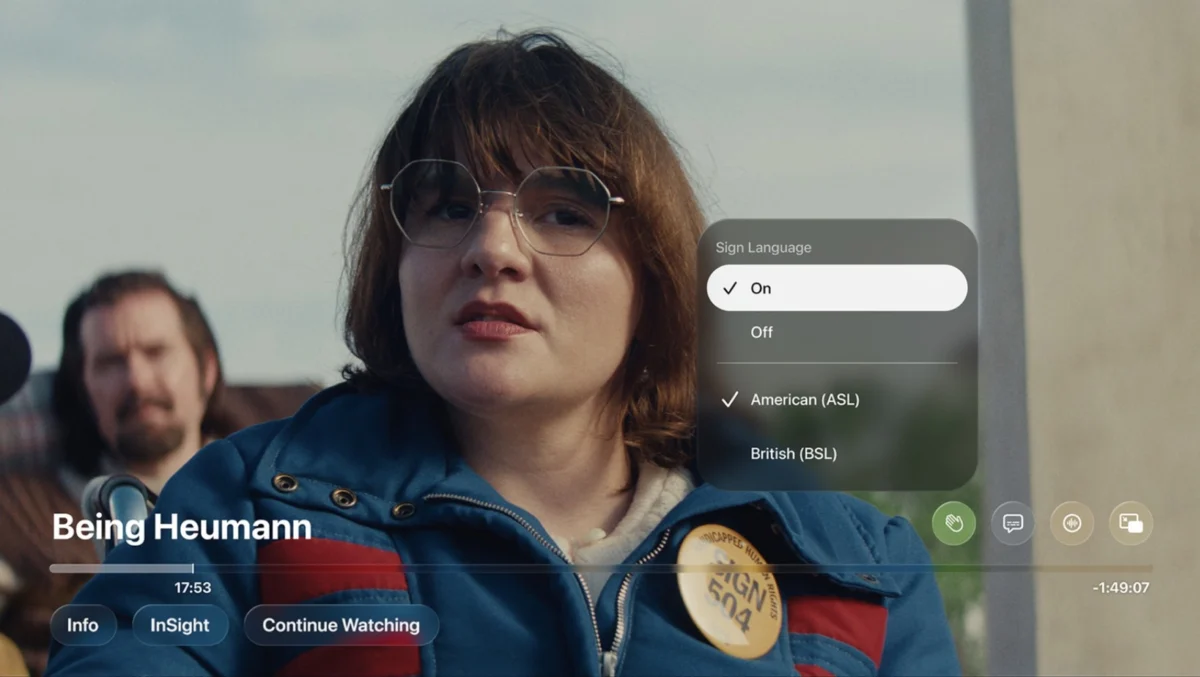
The rollout will debut alongside the release of Being Heumann, a biographical drama inspired by true events, which will feature comprehensive support for American Sign Language (ASL). Additionally, the highly anticipated, high-octane racing film F1, starring Brad Pitt, will launch with simultaneous support for both American Sign Language and British Sign Language (BSL). Apple has confirmed that the catalog will expand rapidly in the weeks following the initial release, with major titles such as Greyhound and Way of the Warrior Kid receiving sign language interpretation updates later this year, alongside an ongoing commitment to incorporate the feature into upcoming Apple Originals.

A Paradigm Shift in Media Accessibility
For decades, closed captions and subtitles have served as the primary bridge between cinematic content and Deaf audiences. While captions reliably transcribe spoken dialogue and occasionally denote ambient sounds or musical cues, they fundamentally lack the expressive depth, emotion, inflection, and cultural context conveyed through natural human gesture. Captions tell a viewer what words were spoken, but they often fail to capture how those words were meant—leaving nuance, sarcasm, urgency, and emotional subtext entirely to the reader’s interpretation.
Apple’s new feature addresses this long-standing limitation by introducing on-screen sign language interpreters whose performances are custom-tailored to the specific artistic vision of each production. Developed, designed, and rigorously tested in collaboration with Deaf consultants and native signers, these interpretations ensure that the visual grammar of sign language aligns seamlessly with the visual grammar of the film. Rather than treating accessibility as an afterthought or relying on generic third-party overlays, Apple’s native integration treats sign language performance as an integral layer of cinematic presentation.
Seamless Integration Across the Apple Ecosystem
The feature has been engineered with user experience and cross-platform accessibility at the forefront. Once rolled out on November 13, supported films and television series will carry a distinct, visible "Sign Language" label within the Apple TV interface. When viewing compatible media, users can activate the interpretation overlay instantly with a single press of a dedicated Sign Language button.

To ensure discoverability, Apple has integrated the feature into the platform’s natural language search capabilities. Users can locate compatible content simply by appending the phrase "with ASL" to their search queries within the Apple TV application. Furthermore, the company is curating a dedicated content hub titled "Movies & Shows with American Sign Language," allowing subscribers to effortlessly browse and explore the growing library of accessible titles.
Importantly, the accessibility upgrade is not restricted to a single hardware device or operating system. The sign language interpretation feature will be fully functional across the broad spectrum of Apple’s ecosystem—including iOS, iPadOS, macOS, tvOS, and visionOS—provided the devices are running software version 27.2 or later. The feature is also designed to operate smoothly on supported third-party streaming hardware running the latest iteration of the Apple TV application, ensuring maximum reach and flexibility for consumers.
Official Statements and Corporate Commitment
The introduction of native sign language interpretation reflects Apple’s long-standing institutional focus on inclusive design and universal accessibility. Sarah Herrlinger, Apple’s senior director of Global Accessibility Policy and Initiatives, emphasized the philosophical and practical importance of the new launch in an official corporate statement.

"At Apple, we believe everyone should be able to enjoy great stories and entertainment," Herrlinger stated. "Bringing sign language interpretation to Apple TV is an exciting step forward in making the viewing experience more accessible and inclusive for Deaf audiences. Accessibility is a core value at Apple, and we’re proud to continue creating experiences that allow more people to enjoy the content they love."
This initiative builds upon a robust foundation of accessibility features previously introduced across Apple hardware and software ecosystems. Over the years, the company has pioneered tools such as VoiceOver for blind and low-vision users, AssistiveTouch for individuals with motor impairments, Live Captions for real-time transcription across phone calls and media, and advanced spatial audio features designed to aid users with varying degrees of hearing loss. By extending this dedication to the streaming entertainment sector, Apple is setting a new benchmark for major technology and media conglomerates.
Industry Implications and the Future of Inclusive Streaming
The rollout of expert-driven sign language interpretation on a mainstream streaming platform carries profound implications for the broader entertainment industry. Historically, professional sign language translations for feature films and high-budget television series have been sparse, frequently relegated to specialized independent screenings, educational releases, or unofficial fan-made interpretations hosted on platforms like YouTube.

By incorporating native, studio-backed sign language performances directly into a major subscription streaming service, Apple is demonstrating that high-production-value accessibility is both commercially viable and technically achievable. Industry analysts suggest that this move could pressure competing streaming services—such as Netflix, Disney+, Amazon Prime Video, and Max—to reevaluate their own accessibility roadmaps and invest more heavily in native sign language integration rather than relying solely on automated subtitles and standard closed captions.
Moreover, the collaborative methodology employed by Apple—partnering directly with Deaf artists, native signers, and linguistic experts to craft project-specific interpretations—establishes a gold standard for ethical and culturally accurate media translation. This approach respects the rich linguistic diversity of sign languages, starting robustly with American Sign Language and British Sign Language, with the potential to scale to additional regional sign languages as the global catalog expands.
As the November 13 launch date approaches, the anticipation within the Deaf community underscores a shared desire for media representation that goes beyond mere transcription. By capturing the soul, emotion, and exact intent of cinematic storytelling through professional sign language interpretation, Apple TV is not merely updating its software—it is helping to open up the world of cinema in a profoundly human way.