










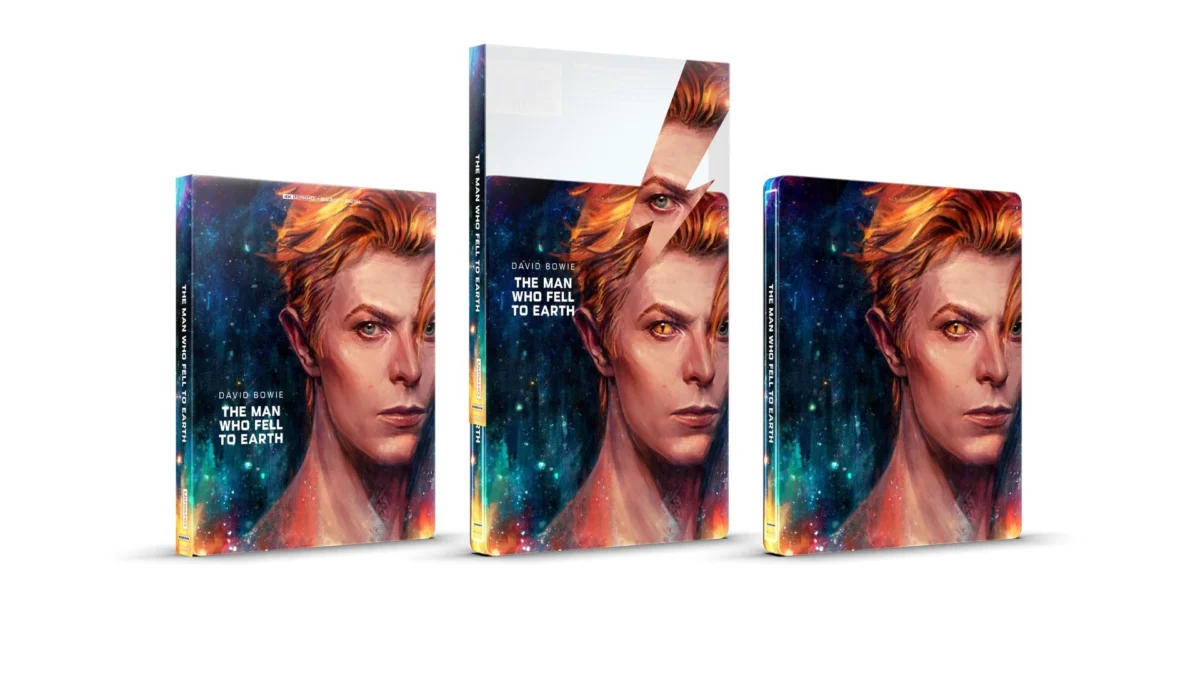
The cinematic landscape of the 1970s was defined by a shift toward experimental narratives and bold, visual storytelling, a movement spearheaded by director Nicolas Roeg. Among his most enduring contributions to this era is the 1976 science fiction classic, The Man Who Fell To Earth. Starring David Bowie in his inaugural feature film performance, the movie has long been considered a cult phenomenon. As the film approaches its 50th anniversary, Lionsgate Limited has announced a comprehensive, high-fidelity restoration, marking the first time the feature will be available in 4K resolution, complete with Dolby Vision HDR. This collectors’ edition, scheduled for release on December 15, serves not only as a technical upgrade but as a preservation effort for one of the most visually arresting films of the twentieth century.
The Genesis of an Alien Icon
To understand the cultural weight of this restoration, one must look back at the film’s production history. Released in 1976 and based on the 1963 novel by Walter Tevis, the film tells the story of Thomas Jerome Newton, a humanoid alien who arrives on Earth from a drought-stricken planet. Newton’s mission is simple: to secure water and technology to save his home world. However, his journey is complicated by the corruption of human society, his own burgeoning vices, and the isolation inherent in his extraterrestrial nature.
For David Bowie, the role was a natural extension of his "Thin White Duke" persona, a character he was cultivating during the mid-1970s. Roeg, having seen Bowie’s work and recognizing the musician’s ethereal, otherworldly screen presence, cast him immediately. The result was a performance that felt less like acting and more like a captured manifestation of an alien intelligence. The film’s visual language, characterized by non-linear editing and surrealist cinematography, challenged the conventions of science fiction at the time, moving away from the space opera tropes of the era and toward a more introspective, psychological exploration of alienation.
Technical Specifications and Restoration Details
The upcoming 50th-anniversary edition is a significant departure from previous home media releases. For cinephiles and enthusiasts of physical media, the transition to 4K Blu-ray represents a vital upgrade in clarity and color depth. The integration of Dolby Vision HDR is the standout technical feature, allowing for a broader spectrum of light and shadow, which is essential given the film’s high-contrast, desert-laden landscapes and the saturated, neon-lit interiors of the 1970s.
The restoration process has been meticulous, aimed at preserving the film grain while removing the degradation that has affected previous prints. Beyond the visual fidelity, the package includes a wealth of archival material that contextualizes the film’s production. Collectors will have access to an interview with David Bowie from a 1977 French television broadcast, providing a rare look at the artist during the height of his creative output. Additionally, the release includes retrospective interviews with members of the original cast and crew, a dedicated featurette on the film’s haunting, atmospheric soundtrack, and the original theatrical trailer. The physical packaging features bespoke artwork by illustrator Alice X. Zhang, further cementing the edition’s status as a premium collector’s item.
A Chronology of The Man Who Fell To Earth
The trajectory of this film—from a misunderstood box office entry to a revered classic—is a testament to the longevity of artistic vision.
- 1963: Walter Tevis publishes the original novel, The Man Who Fell to Earth, introducing the character of Thomas Jerome Newton.
- 1976: The film adaptation, directed by Nicolas Roeg, premieres in theaters. Despite mixed critical reception upon its initial release, it gains a dedicated following for its unique aesthetic.
- 1980s-1990s: The film transitions to home video, finding a new generation of fans as Bowie’s influence in music and film grows globally.
- 2016: On the 40th anniversary of the film, and following the passing of David Bowie, the film receives renewed critical scrutiny, with many critics labeling it a foundational work of avant-garde science fiction.
- 2024: Lionsgate Limited announces the 50th-anniversary 4K restoration, utilizing modern digital mastering to bring the original 35mm elements to the highest possible visual standard.
Supporting Data and Market Trends
The demand for high-end physical media has seen a resurgence in the last five years. While streaming platforms have become the dominant mode of content consumption, collectors have increasingly turned toward 4K Blu-ray as the gold standard for home cinema. According to industry data, sales of premium physical media formats—particularly "SteelBook" editions—have remained stable even as digital media consumption increases. This trend is driven by consumers who prioritize audio-visual fidelity that streaming services, often limited by compression algorithms, cannot consistently match.
Furthermore, the "Bowie effect" continues to be a powerful driver in the media market. Since his death in 2016, there has been a 300% increase in the acquisition of his back catalog and related media. The 4K restoration of The Man Who Fell To Earth is timed to leverage this sustained interest, offering fans a tangible piece of history that aligns with modern home cinema hardware capabilities, such as high-end OLED displays and surround sound systems.
Implications for Film Preservation
The release of this edition carries broader implications for the film industry. The restoration of niche or cult films often depends on the viability of the physical media market. When production houses like Lionsgate invest in a 4K scan of a 1976 master, it serves as a long-term archival act. By digitizing these assets at the highest resolution, the film is safeguarded against the physical decay of its original celluloid source.
Moreover, this release highlights the necessity of the "collector’s edition" model. By bundling the restoration with exclusive interviews and high-quality artistic packaging, studios can incentivize fans to support the preservation of classic cinema. It turns the act of buying a movie into an act of curating a personal archive, which is essential for the longevity of films that might otherwise fade into the obscurity of aging streaming libraries.
Official Stance and Pre-order Information
Lionsgate Limited has positioned this release as an exclusive, limited-run product, emphasizing the craftsmanship involved in the restoration. The decision to limit availability through their own direct-to-consumer channel suggests a strategy aimed at bypassing third-party retail markups and ensuring that the product reaches the core demographic of film collectors.
Pre-orders are currently open via the Lionsgate Limited official portal. Industry analysts suggest that due to the limited nature of the release and the inclusion of exclusive artwork, the stock is expected to move quickly, particularly among global fan bases in the United Kingdom and North America. Potential buyers are advised to ensure their home cinema setup—specifically their 4K Blu-ray players—is compatible with the Dolby Vision HDR format to extract the full value from the transfer.
Conclusion: The Enduring Legacy of Thomas Jerome Newton
The legacy of The Man Who Fell To Earth is not merely defined by its place in science fiction history, but by the way it captured the existential anxieties of the mid-1970s. It remains a deeply melancholic, visually sophisticated meditation on what it means to be an outsider. As the film turns 50, the 4K restoration offers a chance for both long-time devotees and a new generation of viewers to experience the film as it was meant to be seen: sharp, vibrant, and unflinchingly strange.
In an age of rapid digital consumption, the commitment to restoring a film of this caliber is a reminder of the importance of artistic continuity. Whether viewed for its technical achievements, its cultural significance, or the singular performance of David Bowie, the 50th-anniversary edition is a milestone in the history of physical media. It ensures that the man who fell to earth will remain a permanent fixture in the cinematic canon for decades to come, preserved in the highest quality that current technology allows.