









The Mechanics of Model Distillation
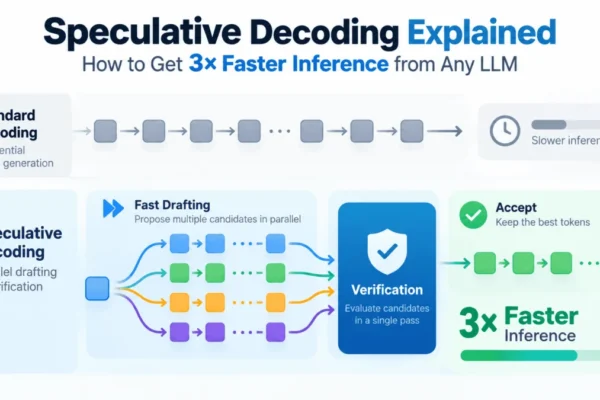
At the heart of this conflict is the practice of "adversarial distillation." This process involves using a sophisticated, high-performance model—such as GPT-6.2 Astra—as a teacher to train a smaller, more efficient model. By prompting the larger model to output its internal "chain-of-thought" reasoning, malicious actors can capture the logic behind a query. Once this reasoning is extracted, it can be used to fine-tune a cheaper, smaller model to mimic the performance of the more expensive original.
This phenomenon poses a massive financial and competitive threat to leading AI labs. If the "reasoning" that costs millions of dollars in compute to train can be siphoned away through millions of automated queries, the incentive for innovation is severely undermined. OpenAI’s latest efforts reflect an industry-wide recognition that protecting the "black box" of reasoning is as important as the model’s weight parameters themselves.
Chronology of the Defensive Pivot
The escalation in defenses follows a period of rapid exploitation by third-party entities. Throughout the latter half of the current development cycle, AI labs noted an uptick in coordinated, industrial-scale scraping campaigns.
- Early 2024: AI labs observe a surge in anomalous traffic patterns, characterized by high-frequency, structured queries designed to elicit step-by-step logic from top-tier models.
- Q2 2024: Internal red teaming reports reveal that GPT-6 Astra was susceptible to extraction attacks, with success rates climbing as high as 54 percent in controlled testing environments.
- Q3 2024: OpenAI initiates a dual-track response, focusing on both model-level training to resist extraction and infrastructure-level bans to disrupt coordinated botnets.
- Current Status: The deployment of GPT-6.2 Astra and Sol, incorporating the refined defensive architecture, has effectively neutralized the most common vectors of adversarial distillation, bringing success rates down to 0.2 percent for previously stored reasoning and 0.9 percent for active, live requests.
Comparative Data and Performance Metrics
The technical success of these new safeguards is best highlighted by the dramatic drop in the Attack Success Rate (ASR). OpenAI’s testing protocol involved "adaptive black-box red teaming," where six different attacker models were tasked with extracting information from the target systems.
| Attack Vector | GPT-6 Astra (ASR) | GPT-6.2 Astra (ASR) |
|---|---|---|
| Protected Reasoning (Prior Requests) | 54.0% | 0.2% |
| Active Reasoning (Live Requests) | 22.9% | 0.9% |
The disparity in these figures illustrates a paradigm shift. By moving from a reactive filtering approach to a proactive, multi-layered defensive strategy, OpenAI has made the cost of extracting reasoning significantly higher than the potential benefit for most bad actors. The company has confirmed that these architectural improvements are being back-ported to the standard GPT-6 Astra, ensuring that the legacy user base benefits from the same heightened security standards.
The Two-Tiered Defense Architecture
OpenAI’s defense strategy operates across two distinct planes: the granular and the systemic.
At the individual request level, the system employs three specific layers. First, "targeted training" is used to teach the model to recognize when a prompt is designed to bypass its internal guardrails. If a prompt is identified as a distillation attempt, the model is trained to withhold or obfuscate its internal logic. Second, input and output filters act as a real-time monitor, sanitizing messages and tool calls before they are processed or returned. Third, API-level blocks ensure that if an older or less secure model is used to query the system, it is restricted from accessing the specific "reasoning trace" metadata that provides the secret sauce for distillation.
At the systemic level, the company has pivoted to an aggressive enforcement model. Recognizing that automated scraping often requires thousands of accounts to avoid rate limits, OpenAI has begun banning between 10,000 and 50,000 accounts per week. These accounts are identified through behavioral analysis—spotting the "fingerprint" of automated distillation bots rather than human users.
The Industry Perspective: Anthropic’s Role
OpenAI is not alone in this battle. Anthropic, the developer of the Claude series of models, has been equally vocal regarding the theft of AI data. Earlier this year, Anthropic reported a 90 to 99 percent reduction in reasoning token theft following its own security overhaul.
The alignment between OpenAI and Anthropic suggests that this is now an industry-wide security imperative. Anthropic has gone a step further, formally accusing several international AI firms—specifically mentioning DeepSeek, Moonshot, and MiniMax—of scraping millions of queries to harvest Claude’s data. This public confrontation underscores the geopolitical and commercial stakes of the AI race. By calling for a "coordinated response," firms are essentially asking for a new legal framework that treats model reasoning as proprietary trade secrets rather than public-domain information.
Broader Implications for AI Development
The hardening of models like GPT-6.2 Astra against extraction has several profound implications for the future of the field.
1. The End of "Easy" Distillation:
The era of easily replicating high-end AI capabilities through cheap, automated scraping is rapidly drawing to a close. Smaller startups that relied on "distilling" the knowledge of frontier models to bootstrap their own products will now face a significant barrier to entry. This could lead to a consolidation of the market, where only the companies that can afford to train their own models from scratch—or possess massive, proprietary datasets—remain competitive.
2. Increased Friction for Developers:
Security measures designed to block malicious actors often create friction for legitimate developers. As API filters become more stringent, researchers and developers may find that their own valid, complex queries are occasionally flagged or blocked. The challenge for companies like OpenAI is to refine these filters so that the security "blanket" does not inadvertently suppress legitimate innovation and research.
3. The Legal and Policy Frontier:
The push for stricter defenses is also a push for clearer legal definitions. If reasoning is successfully protected, it effectively becomes a trade secret. Courts and international bodies will soon need to determine whether the "reasoning" of an AI—which is derived from training on massive public datasets—is truly the property of the company that built the architecture, or if the outputs of a model are, in fact, free for the public to use as they see fit.
4. A New Arms Race:
The current 0.2 percent ASR is not a permanent victory. In the world of cybersecurity, the "cat and mouse" game is inevitable. As defenders tighten their systems, attackers will likely develop more sophisticated, context-aware prompts that appear benign to current filters. The next generation of models will need to be "security-native," with adversarial resistance baked into the foundational pre-training process rather than added as an external layer.
Conclusion: The Future of Model Integrity
The rapid improvement in defending GPT-6.2 Astra and Sol represents a turning point in how AI labs view the integrity of their intellectual property. As these models move from experimental curiosities to the backbone of global enterprise infrastructure, the value of the underlying logic becomes immense.
OpenAI’s success in driving down the success rate of distillation attacks demonstrates that, when given sufficient resources and focus, developers can effectively shield their core technology. However, the persistence of the threat—and the willingness of competitors to engage in industrial-scale scraping—indicates that this struggle will remain a permanent feature of the AI landscape. For now, the "fortress" around the reasoning engines of GPT-6.2 is holding, but the industry remains on high alert for the next wave of adversarial innovation. The coming months will likely see even more stringent authentication protocols and potentially a formalization of "AI security" as a standardized discipline, distinct from traditional cybersecurity, as the industry works to ensure that the fruits of their multi-billion dollar investments remain proprietary.