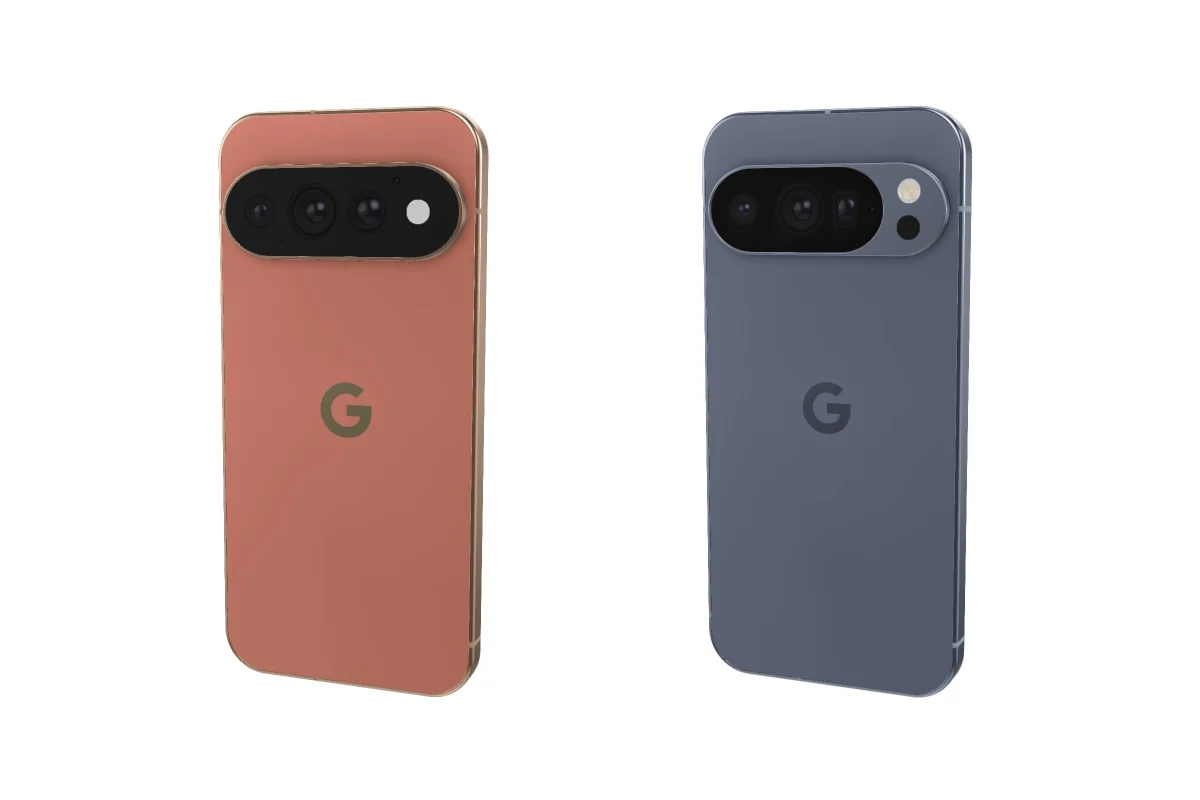
The launch of the Google Pixel 11 Pro has reignited the perennial debate among smartphone enthusiasts regarding the necessity of upgrading to the latest flagship iteration. With the Pixel 11 Pro now hitting global markets at a base price of approximately €1,100 for the 256GB model, it faces stiff competition from its predecessor, the Google Pixel 10 Pro, which currently occupies a more accessible market position at roughly €770 for the 128GB configuration. As consumers weigh the marginal gains of the new hardware against the substantial price delta, a detailed assessment of performance, camera capabilities, and overall value becomes essential.
Evolution of the Pixel Lineup
Since the inception of the Tensor-based Pixel series, Google has aimed to differentiate its devices through machine learning integration and computational photography rather than raw hardware supremacy. The trajectory from the Pixel 10 Pro to the Pixel 11 Pro represents a shift in focus toward efficiency and refinement. While the Pixel 10 Pro introduced a mature design language and a robust sensor suite, the 11 Pro seeks to optimize those foundations. This evolution is marked by a transition to the Tensor G6 chipset, which Google claims offers a 50% boost in AI computational tasks, despite the controversial decision to utilize a 7-core CPU architecture rather than the traditional 8-core design found in the G5 chip.

Architectural Parity and Physical Design
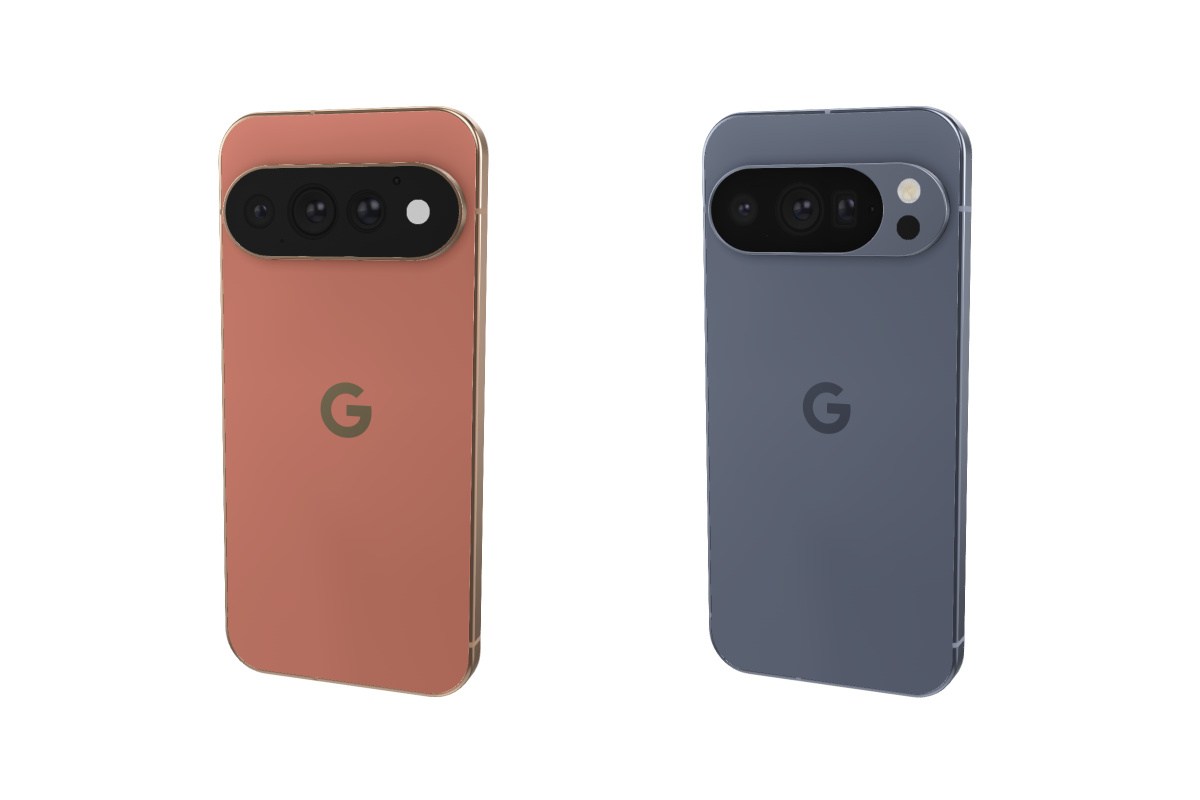
Upon physical inspection, the Pixel 11 Pro and the Pixel 10 Pro are remarkably similar. Both devices utilize high-grade aluminum frames and Gorilla Glass Victus 2 panels, maintaining an identical footprint and weight. The aesthetic continuity is reinforced by the shared IP68 dust and water resistance rating, ensuring that both devices meet modern flagship durability standards. For the consumer, this means the tactile experience remains largely unchanged; the transition from the 10 Pro to the 11 Pro offers no ergonomic advantage. The primary physical distinctions are limited to color palettes and minor adjustments to the camera housing, suggesting that Google has prioritized design consistency over radical innovation for this cycle.

Display Technology and Visual Fidelity
The display hardware on both devices relies on a 6.3-inch LTPO OLED panel with a resolution of 1280 x 2856 pixels. Both screens offer a dynamic 120Hz refresh rate and support for HDR10+ and Android Ultra HDR. Laboratory testing indicates that while the Pixel 11 Pro achieves a slightly higher peak brightness of 3,283 nits compared to the 3,165 nits of the Pixel 10 Pro, these differences are statistically significant in a controlled environment but remain largely imperceptible during daily usage. Both devices provide an exceptional visual experience, meaning the display, while high-performing, does not serve as a compelling driver for an upgrade.

Battery Efficiency and Power Management
Battery performance is one area where the technical specifications diverge slightly. The Pixel 11 Pro houses a 4,850 mAh battery, a marginal reduction from the 4,870 mAh capacity found in the 10 Pro. However, the integration of the Tensor G6 processor has yielded measurable improvements in energy efficiency. In standardized active-use scenarios, the 11 Pro demonstrated an endurance of 15 hours and 38 minutes, outperforming the 10 Pro by approximately three and a half hours. This gain is particularly evident in high-drain tasks like gaming and video streaming, where the refined silicon architecture mitigates thermal throttling and power consumption.

Charging technology also sees a minor evolution. While wired charging remains capped at 30W via Power Delivery, the 11 Pro introduces an "Extreme Charging" mode for rapid recovery when the battery drops below 50%. The most notable advancement is the shift to 25W wireless charging, supported by the Qi2.2 standard, a significant upgrade over the 15W ceiling of the previous generation.

Computational Power and Performance Benchmarks
The heart of the new device, the Tensor G6, presents a complex performance profile. By moving to a 7-core CPU configuration, Google has prioritized clock speed—featuring an ARM C1-Ultra core at 4.1 GHz—over core count. Benchmark results validate this strategy, showing a 20% increase in both single-core and multi-core performance compared to the Tensor G5.

However, the GPU situation is more nuanced. The transition to the IMG CXTP-48-1536 GPU, based on the older Series C architecture, has drawn criticism for its lack of ray tracing capabilities. While Google has successfully addressed many of the software compatibility issues that plagued the launch of the 10 Pro, the raw graphical overhead of the 11 Pro remains largely stagnant. Furthermore, the base model of the 11 Pro now offers 12GB of RAM, whereas the 10 Pro featured 16GB across all storage tiers. This discrepancy suggests that while the CPU has reached a new performance tier, the overall memory headroom in the base 11 Pro model is effectively reduced.

Camera Systems: Incremental Refinement
The camera hardware on both devices remains fundamentally aligned, utilizing a 50MP primary sensor and a triple-lens setup. The Pixel 11 Pro does introduce a larger sensor for the telephoto module, which improves low-light performance and noise reduction at higher zoom levels. In daylight, the 11 Pro produces images with marginally better definition and a more natural color rendering, particularly when handling man-made structures.

Software-side, the introduction of "Magic Capture" and "Camera Looks" provides new creative tools, yet these features are arguably iterative. The most significant discrepancy occurs in ultrawide performance, where the 10 Pro occasionally displays superior sharpness—an unexpected result that suggests the 11 Pro’s software post-processing may still be in an early state of optimization. For professional videographers, the ability of the 11 Pro to capture 4K60 HDR video is a welcome addition over the 4K30 limit of the 10 Pro, yet for the average user, the distinction is negligible.

Market Context and Economic Implications
The economic case for the Pixel 11 Pro is challenged by the current market pricing of the 10 Pro. With the 10 Pro available for significantly less than the 11 Pro, the value proposition hinges on whether a user prioritizes the latest, albeit incremental, improvements. Industry analysts suggest that Google’s pricing strategy for the 11 Pro reflects the rising costs of semiconductor fabrication and the high R&D investment required for the G6 processor.

However, the "wait-and-see" approach is becoming increasingly popular among the consumer base. The 10 Pro, having received several months of software refinements, currently offers a more stable and cost-effective experience. Official statements from Google indicate a commitment to long-term software support for both devices, meaning that the security and feature parity between the two models will likely remain high for several years.

Conclusion and Recommendations
The decision between the Google Pixel 11 Pro and the Pixel 10 Pro is not a matter of which phone is better, but rather which phone provides the best return on investment. The Pixel 11 Pro is, undeniably, a superior machine in terms of CPU throughput, battery endurance, and wireless charging speed. These are objective upgrades that will satisfy power users and those who demand the absolute latest in mobile technology.

Conversely, the Pixel 10 Pro remains a powerhouse that lacks only the minor refinements introduced in the 11 Pro. Its camera performance is virtually indistinguishable in most real-world scenarios, and its GPU stability remains a reliable asset. Unless a user specifically requires 4K60 HDR video recording or the specific efficiencies of the Tensor G6, the financial premium for the 11 Pro is difficult to justify. As of this quarter, the prudent recommendation for the majority of consumers is to leverage the lower price point of the 10 Pro, reserving the capital saved for future iterations where hardware leaps are likely to be more profound. The 11 Pro represents a refinement of an already excellent formula, but it does not fundamentally redefine the Pixel experience in a way that necessitates an immediate transition for those already holding a 10 Pro.