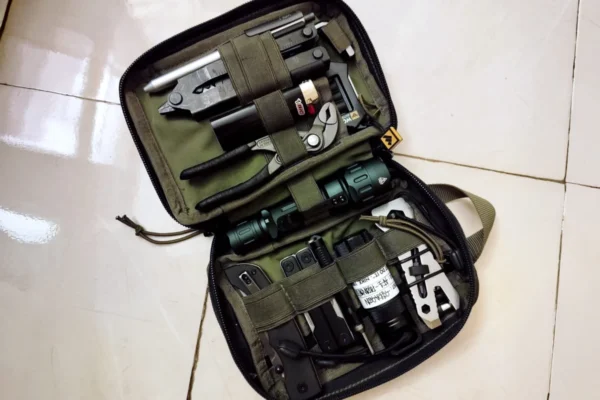









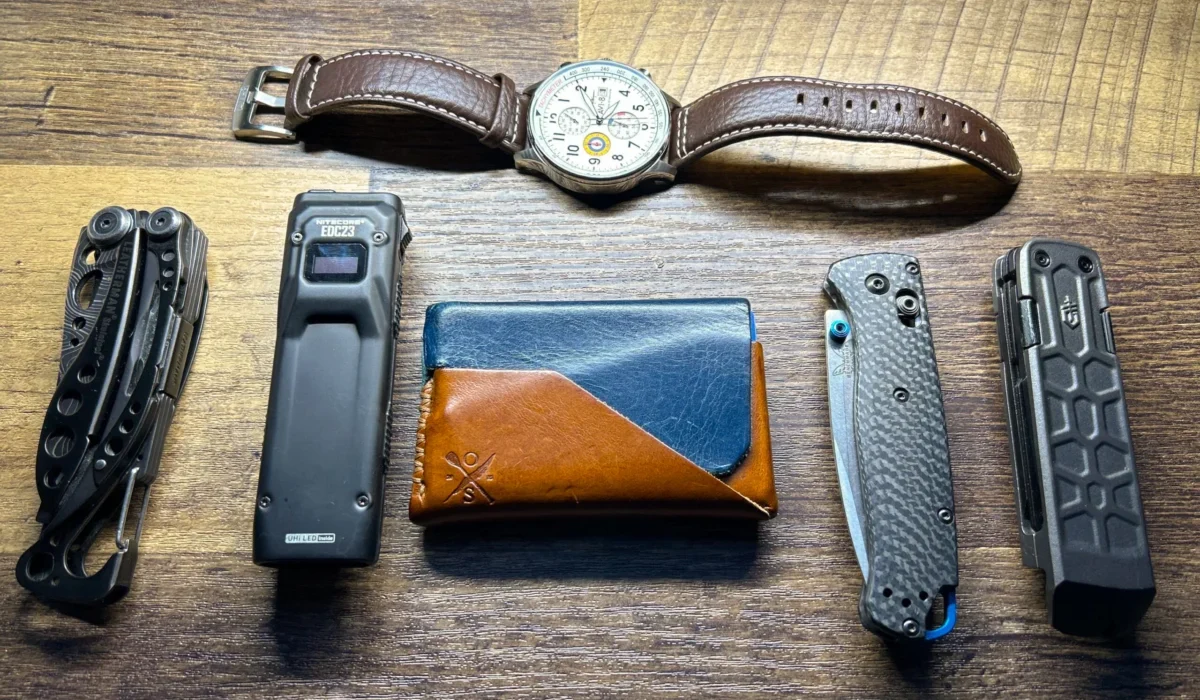
In the high-stakes environment of emergency medical services, the efficiency of an individual’s toolset is often measured not by the volume of gear carried, but by the strategic selection of reliable, lightweight, and high-performance equipment. A recent featured submission from a California-based Emergency Medical Technician (EMT) highlights a growing trend in the Everyday Carry (EDC) community: the pursuit of "full-sized" capability within a strictly minimalist footprint. By balancing professional-grade durability with ergonomic weight reduction, this specific collection offers a masterclass in modern field preparation.
The Philosophy of Minimalist Preparedness
The concept of Everyday Carry has evolved from simple pocket contents into a disciplined approach to preparedness. For first responders like Mando, an EMT operating in California, the gear carried on and off shift must serve a dual purpose: it must be robust enough to handle the rigors of emergency medical calls while remaining unobtrusive during domestic tasks or recreational camping trips.
The core philosophy displayed in this kit centers on the optimization of utility-to-weight ratios. In the field, an EMT is often limited by uniform space and the physical demands of movement. Carrying heavy, redundant tools can lead to fatigue or physical encumbrance. Consequently, the selection of equipment such as the Benchmade Bugout and the Leatherman Skeletool represents a calculated effort to maintain essential functionality without sacrificing mobility.

Chronology of the Modern EDC Shift
The transition toward lightweight EDC tools has been documented over the last decade as manufacturers have pivoted toward premium materials like carbon fiber, titanium, and high-intensity LEDs. Historically, EDC kits were defined by bulkier, all-steel multitools and incandescent flashlights. The shift began in the early 2010s with the introduction of "pocket-friendly" designs that did not compromise on edge retention or torque.
The timeline of this specific collection mirrors the broader industry trend:
- 2015-2018: The rise of ultralight folding knives, spearheaded by Benchmade’s commitment to lightweight polymer and carbon fiber scales.
- 2019-2022: Advancements in LED technology allowed for significantly smaller flashlights, such as the Nitecore EDC series, to output levels of light previously reserved for heavy-duty tactical torches.
- 2023-Present: The integration of USB-C rechargeable technology and flat-form factors has further streamlined the carry, allowing users to slip high-output tools into pockets previously occupied by bulkier gear.
Technical Analysis of the Featured Gear
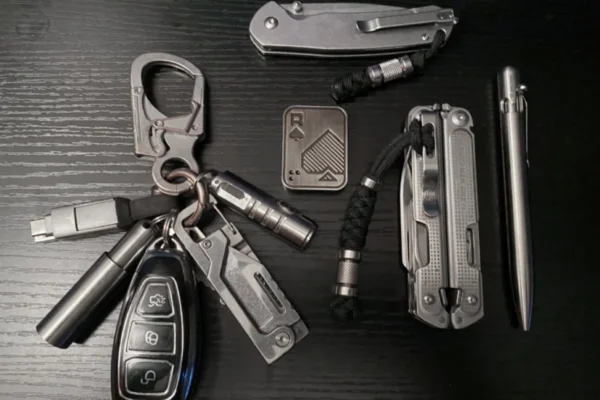
At the heart of this kit is the Nitecore EDC23, a significant piece of hardware that exemplifies the current state of illumination technology. The device offers 2,500 lumens of light in an ultra-slim, flat profile. This design is specifically engineered for "deep carry," fitting flush against the body or inside the pocket of tactical pants.
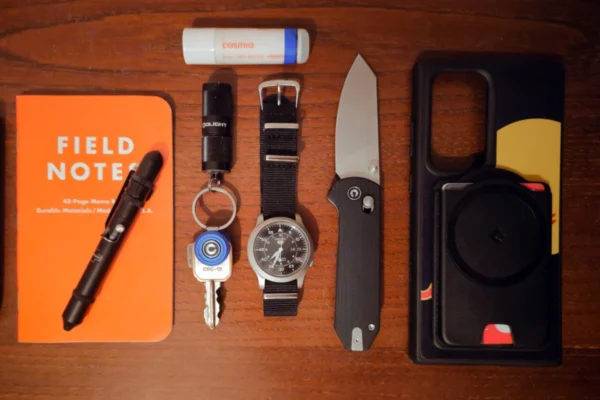
The Benchmade Bugout, noted as a gift and a staple of the kit, remains one of the most widely cited examples of minimalist knife design. Its carbon fiber construction provides an exceptional strength-to-weight ratio, ensuring the user has a reliable cutting edge for both precision medical cutting tasks and utility needs around the home.
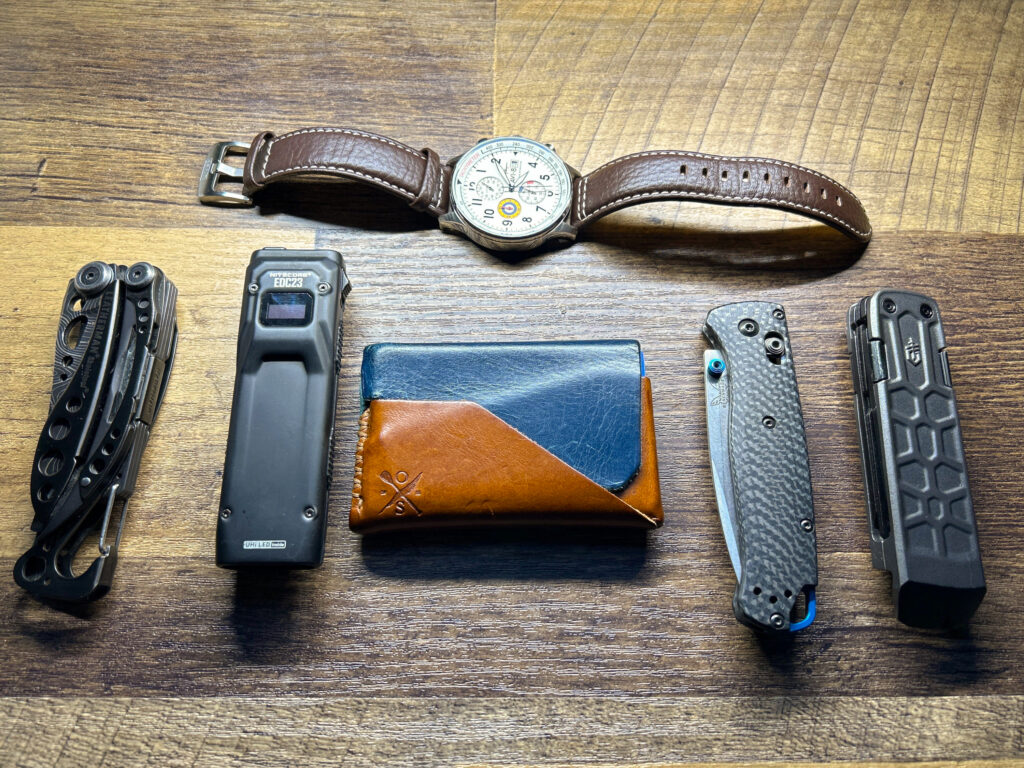
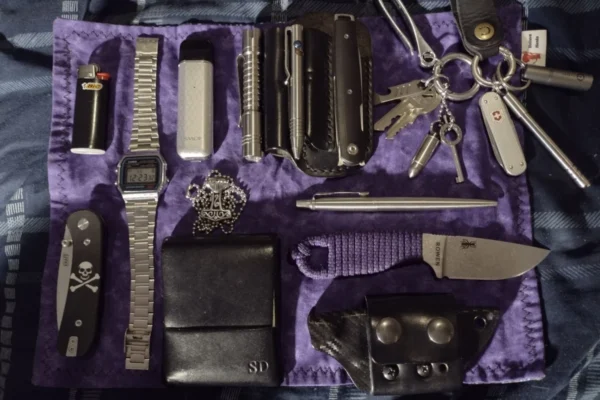
The Leatherman Skeletool, included in this kit, serves as the definitive lightweight multitool. Unlike its full-sized counterparts, the Skeletool strips away non-essential implements—such as saws or specialized files—in favor of a pliers-based architecture, a knife blade, and a bit driver. For an EMT, this configuration is ideal, as it provides the necessary mechanical leverage for basic repairs or adjustments on equipment while remaining light enough to carry daily without discomfort.
Organic Contrast and Material Science
Beyond the mechanical tools, the inclusion of OSL leather accessories—specifically a wallet and a watch strap—introduces a tactile, organic element to the kit. In the field of EDC, this is often referred to as "material contrast." While the carbon fiber and aerospace-grade aluminum of the tools represent high-tech durability, the leather provides a natural patina that ages with the user. This blend of modern synthetics and traditional materials is increasingly common among professionals who seek to bridge the gap between tactical utility and professional aesthetics.
Broader Implications for First Responder Gear
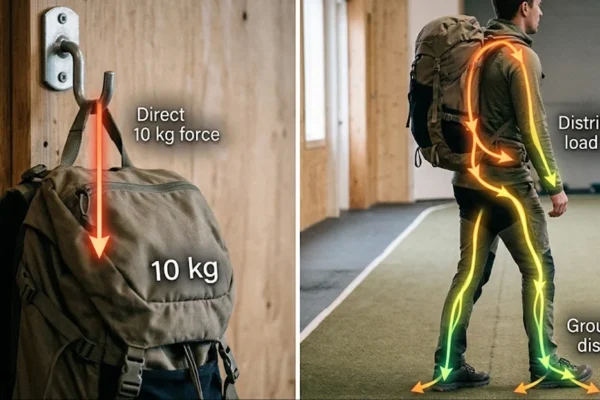
The implications of this minimalist approach are significant for the broader emergency services sector. As departments continue to evaluate the physical burden placed on EMTs and paramedics, the trend toward high-performance, lightweight equipment is being viewed as a health and safety optimization.
Data from ergonomic studies on first responders suggests that reducing the weight of "duty belt" and "pocket carry" gear can lead to lower incidences of chronic lower back pain and improved range of motion during life-saving maneuvers. By moving away from "just in case" gear—tools that are carried but rarely used—and toward a modular, minimalist kit, professionals can maintain a higher level of situational readiness.

Official Industry Perspective
Industry experts and manufacturers have noted that the "full-sized capability, minimalist footprint" model is currently the highest growth segment in the EDC market. According to recent consumer behavior reports, users are increasingly prioritizing "carryability" over absolute feature count.
"The goal is not to carry the most tools; it is to carry the right tools," noted one industry analyst. "When you look at a kit that includes a high-lumen flat light and a skeletonized multitool, you are seeing a user who has identified exactly what they need to function. The Benchmade Bugout and Nitecore EDC23 are not just accessories; they are calibrated instruments for a specific lifestyle."
Future Outlook and Conclusion
The curation of such a kit is never static. As technology advances, we can expect to see further integration of miniaturized power sources and even more resilient materials. For the EMT operating in California, this current lineup serves as a baseline for professional efficiency. It reflects a shift in culture where the "preparedness mindset" is defined by competence and speed rather than the sheer weight of equipment carried.
As more first responders share their setups, the collective knowledge base regarding what constitutes "essential" gear continues to expand. This democratization of information—where a professional can highlight why a specific carbon fiber blade is superior for their shift—drives manufacturers to continue innovating, ultimately leading to safer and more efficient outcomes in the field. The kit presented here is more than a collection of items; it is a manifestation of a disciplined, modern approach to the demands of emergency response and daily life.