






The automotive industry has increasingly shifted toward compact, forced-induction three-cylinder engines as a means of meeting stringent fuel economy and emissions standards. Among these is General Motors’ 1.2-liter LIH engine, a powerplant designed to offer efficiency in a small package. However, a recent, highly publicized teardown of a 2021 Chevrolet Trailblazer engine has brought the long-term reliability of this architecture into sharp focus. The engine, which had logged approximately 84,000 miles, suffered a catastrophic internal failure that resulted in the total destruction of its valvetrain, sparking a wider debate regarding manufacturer-recommended maintenance intervals for "wet" timing belt systems.
The Anatomy of a Catastrophic Failure
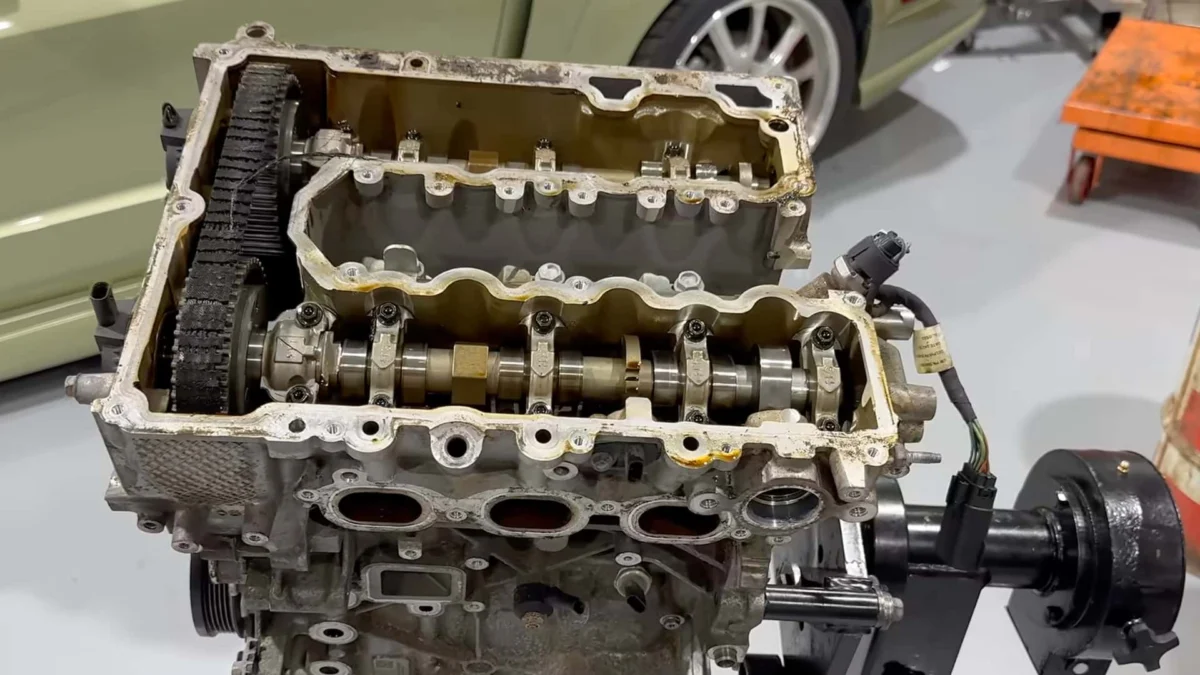
The teardown, performed and documented by the YouTube channel I Do Cars, provided a rare, granular look at the failure points of the LIH engine. Upon removing the valve cover, the investigative process revealed a scene of mechanical devastation. Several rocker arms were found to be missing or completely displaced, while both camshafts exhibited significant, deep gouges—clear evidence of metal-on-metal contact under high-stress conditions.
Further disassembly of the cylinder head confirmed that every valve had sustained contact with the pistons. This phenomenon, known in engineering circles as an "interference engine" failure, occurs when the timing synchronization between the crankshaft and the camshafts is lost. When the belt fails, the pistons continue their upward travel while the valves remain stationary in an open position, leading to an inevitable and violent collision.
The root cause of this synchronization loss was traced back to the timing belt itself. Unlike traditional "dry" timing belts, which operate in an external housing, the LIH engine utilizes a wet belt design that resides within the engine’s oiling system. The belt had suffered extensive degradation, with teeth shearing off and the structural fibers of the belt fraying. This debris was not contained; instead, it was circulated throughout the engine, ultimately clogging the oil pickup screen to the point of near-total restriction. This "emulsified" mass of belt material effectively starved the engine of necessary oil pressure, compounding the mechanical damage caused by the initial timing failure.
The Controversy of Service Intervals
A central point of contention in this incident is the manufacturer’s suggested service interval. The 2021 Chevrolet Trailblazer’s owner’s manual specifies that the oil pump drive belt and the timing belt should be inspected and potentially replaced at the 150,000-mile or 15-year mark. In the context of the damage observed at 84,000 miles, this interval appears significantly misaligned with the real-world operational life of the components.
The engineering logic behind a wet belt is often cited as a method to reduce friction and noise, potentially improving fuel economy. However, the reliance on such a component to remain submerged in motor oil for over a decade or 150,000 miles assumes that the chemical integrity of the belt material will remain stable despite constant exposure to heat, varying oil quality, and the mechanical stresses of a turbo-boosted three-cylinder engine. Critics of this design point out that if a belt begins to degrade prematurely, the resulting debris is catastrophic for the engine’s lubrication system, turning a relatively straightforward maintenance task into an engine-totaling event.
Contextualizing the LIH Engine and GM’s Powertrain Lineup
The 1.2-liter LIH engine is a critical component in GM’s small-vehicle portfolio. It currently powers several key models, including the 2026 Chevrolet Trailblazer, the 2026 Chevrolet Trax, the Buick Encore GX, and the Chevrolet Envista. Given the widespread use of this engine across the automaker’s entry-level crossover lineup, the failure of a single unit has implications for a large volume of vehicles currently on the road.
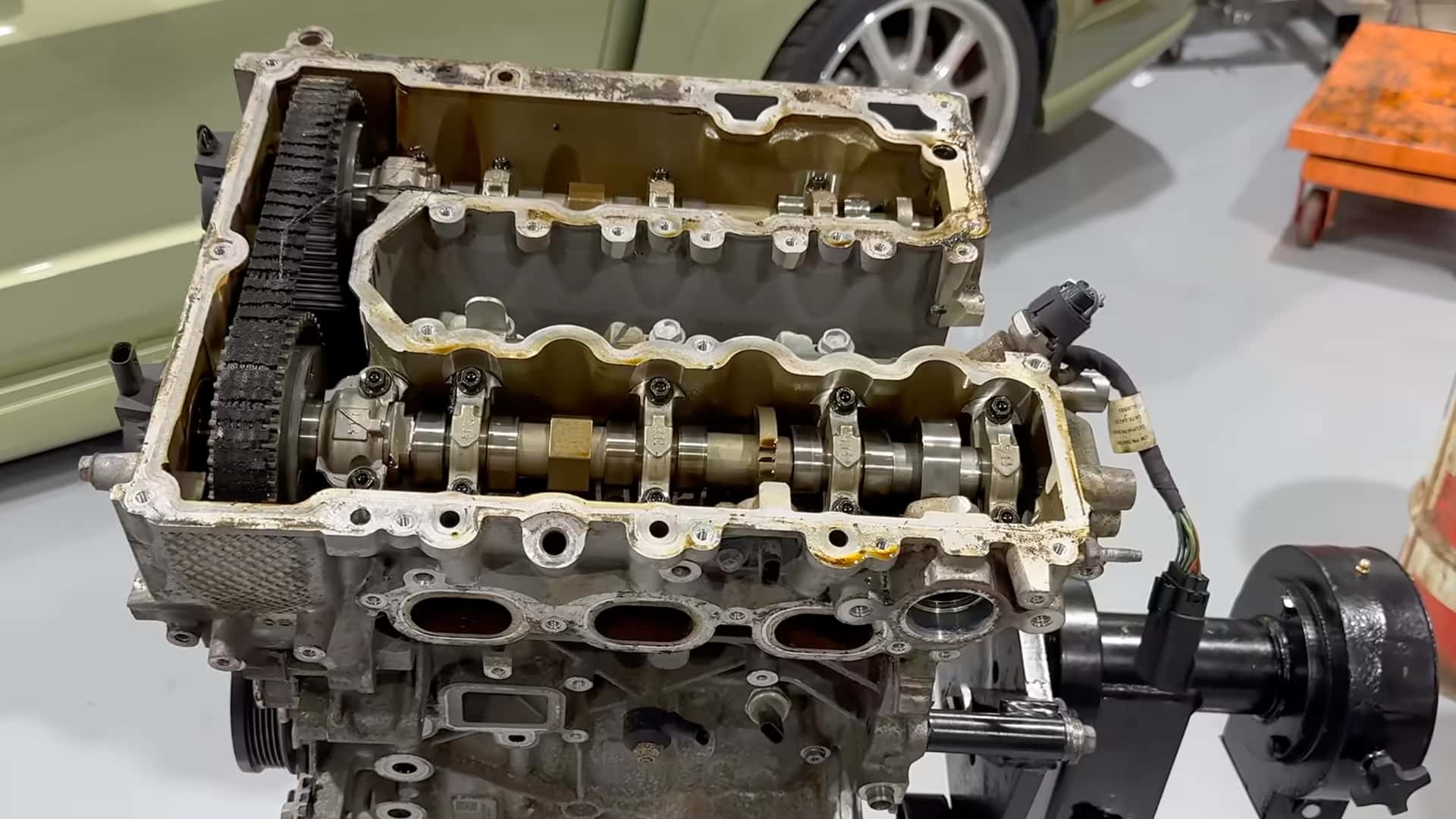
While this specific teardown is a singular case, it raises questions regarding the "core value" of these engines. As the host of the teardown noted, these engines are often sent directly to the scrap bin following failure rather than undergoing rebuilds, suggesting that professional mechanics and salvage yards may already be familiar with the inherent risks associated with this specific powertrain. Furthermore, the vehicle history of the unit tested showed significant prior repair work, leading to speculation that the engine may have been subject to stress or replacement earlier in its life. Nonetheless, even if the engine were not the original factory unit, an 84,000-mile lifespan remains well below the expectations of the average consumer.
Broader Implications for Reliability and Maintenance
The cost of repairing such a failure is substantial. Industry estimates for a complete timing belt service—should it be performed as a preventative measure—are significantly lower than the costs associated with the aftermath of a failure. A preemptive service is estimated between $1,200 and $1,500, a steep but manageable cost compared to the replacement of a long block or a complete engine swap, which would cost several times that amount.
This incident is not isolated to the Chevrolet brand; the automotive industry has seen several high-profile failures across various manufacturers regarding timing components. As automakers strive to squeeze more power out of smaller engines to meet corporate average fuel economy (CAFE) standards, the complexity of these engines increases. Consumers are increasingly forced to balance the manufacturer’s recommended maintenance intervals—which are often geared toward keeping total cost of ownership numbers low—against the reality of mechanical wear.
For owners of vehicles equipped with the LIH engine, the primary takeaway is a move toward more aggressive, rather than passive, maintenance. Waiting for the 150,000-mile milestone may be a financial gamble that many are no longer willing to take. Many mechanics now suggest that owners of vehicles with wet timing belts should consider shortened service intervals, potentially moving the replacement window closer to the 80,000 to 100,000-mile range to mitigate the risk of catastrophic failure.
The Role of Transparency and Communication
The visibility of such failures, facilitated by social media and automotive content creators, has shifted the power dynamic between manufacturers and vehicle owners. When internal engine failures are documented in high definition, it creates a public record that manufacturers cannot easily ignore. While the 2023 model year of the Trailblazer has seen numerous owner reports filed regarding engine and powertrain concerns, there has been no widespread safety recall regarding the timing belt system at this time.
General Motors continues to offer a five-year or 60,000-mile powertrain warranty on its current models. This warranty covers the powertrain during the initial ownership period, but as vehicles move past this threshold, the burden of potential catastrophic failure falls entirely on the consumer. The discrepancy between the warranty period and the recommended maintenance interval creates a "grey zone" where owners are often left to navigate expensive repairs on their own.
Conclusion: Moving Forward
The teardown of the 2021 Trailblazer serves as a cautionary tale regarding the evolution of automotive engineering. While the move to smaller, more efficient engines is a necessary step for the industry, it must be paired with realistic maintenance expectations and robust component durability. As the 1.2-liter LIH engine remains a cornerstone of GM’s small-vehicle strategy, the company may face increasing pressure to address the public’s concerns regarding these internal components.
For the automotive consumer, the lesson is clear: maintenance schedules provided in an owner’s manual should be treated as a baseline rather than an absolute rule, particularly when it comes to critical internal components. As vehicles become more complex and parts are designed for maximum efficiency within tight spaces, the importance of proactive, independent verification of engine health becomes paramount. Whether through more frequent oil analyses or shortened service intervals for high-risk components, owners may need to take a more active role in the longevity of their vehicles than ever before.