








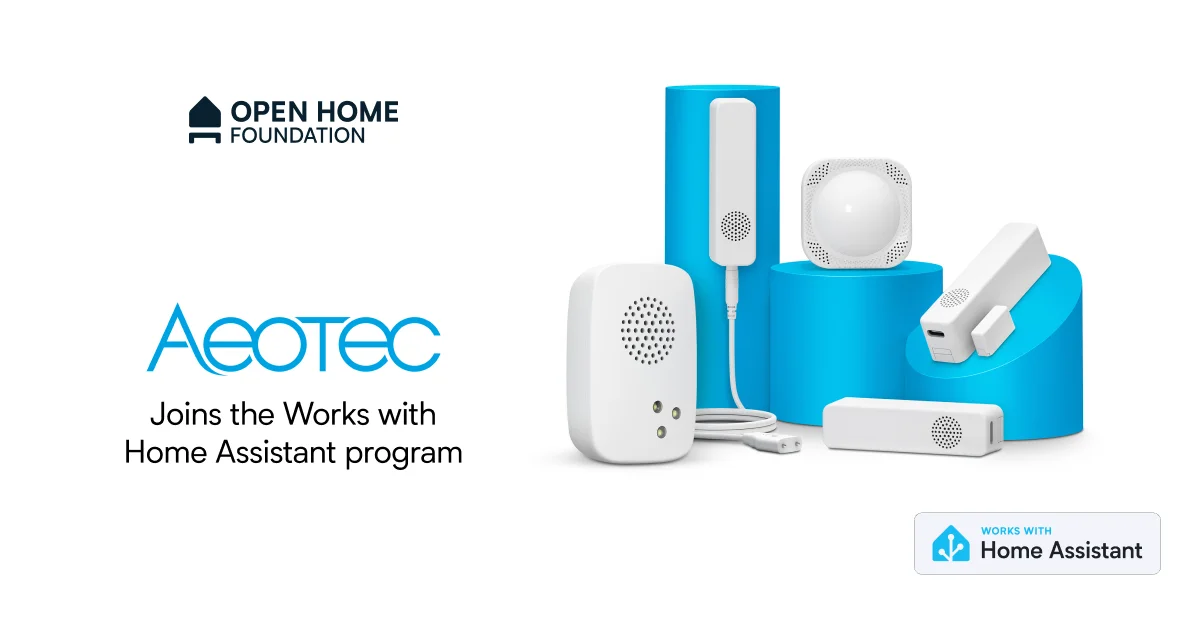
The global smart home automation landscape has reached another milestone as hardware manufacturer Aeotec officially joins the Works with Home Assistant certification program. Announced this month, the partnership brings nine newly certified devices into the Home Assistant ecosystem, encompassing an array of sensors, sirens, switches, and a modernized smoke detector. Crucially, this integration introduces advanced Z-Wave Long Range (LR) capabilities from Aeotec’s 8-series hardware lineup to users seeking robust, locally controlled residential automation.
This formal alignment bridges two prominent entities within the open-source and IoT technology sectors. While many smart home enthusiasts have utilized Aeotec hardware via Home Assistant’s Z-Wave integration for years, the new partnership establishes guaranteed compatibility, rigorous in-house testing, and long-term firmware support guarantees.
Two Decades of Hardware Evolution: From Aeon Labs to Aeotec
To understand the weight of this integration, it is necessary to examine the trajectory of the hardware manufacturer. Founded in Silicon Valley in 2006 under the moniker Aeon Labs, the company spent its formative years engineering specialized Z-Wave modules and communication sensors tailored for custom installers and early smart home hobbyists.
By 2016, the organization completed a corporate rebranding, dropping the original name in favor of Aeotec. This shift marked a period of accelerated international growth. In a strategic consolidation of European distribution and engineering talent, Aeotec later merged with Z-Wave Europe. This union transformed the enterprise into a multinational Internet of Things (IoT) powerhouse, establishing localized expertise and operational hubs spanning three continents.
Throughout its operational history, Aeotec has balanced proprietary ventures with open-standard development. Notably, the firm served as the primary hardware manufacturing partner behind the widely adopted Samsung SmartThings hub ecosystem. However, rather than trapping consumers within a closed, proprietary walled garden, Aeotec maintained a parallel commitment to open connectivity standards—including Z-Wave, Zigbee, and Matter—allowing end users ultimate flexibility in architectural design.
Decoding the Technology: Z-Wave Long Range and the 8-Series Lineup
The standout technological driver of Aeotec’s Works with Home Assistant induction is the integration of Z-Wave Long Range technology, implemented across the company’s 8-series devices and the SmokeShield system.
Traditional Z-Wave architecture relies heavily on a mesh network topology. In a standard mesh, mains-powered smart devices (such as smart plugs or in-wall switches) act as signal repeaters, bouncing data packets across the property to reach battery-operated sensors located at a distance. While effective, mesh networks can suffer from routing latency and dependency on intermediate nodes.
Z-Wave Long Range fundamentally alters this operational model by introducing a star network topology. In an LR configuration, individual end-devices communicate directly and exclusively with the central Z-Wave controller or adapter. This direct-connect methodology yields significant performance metrics:
- Range Extension: Line-of-sight communication distances extend up to 1 kilometer (approximately 3,280 feet), compared to the standard Z-Wave benchmark of roughly 300 meters.
- Node Capacity: A single Z-Wave LR network supports up to 4,000 active nodes, a massive expansion over the traditional limit of 232 devices per network.
- Power Efficiency: By bypassing the requirement to relay foreign network traffic, battery-powered peripherals experience optimized operational lifespans.
To leverage these capabilities, users require a compatible host adapter—such as the Home Assistant Connect ZWA-2—operating within regional spectrum allocations currently available in the United States and Europe. Legacy adapters will continue to recognize Aeotec 8-series hardware, though functionality gracefully falls back to traditional mesh networking parameters without the extended range benefits.
The underlying communication layer relies on Z-Wave JS, an open-source driver governed by the Open Home Foundation, ensuring that data processing remains entirely local, private, and independent of external cloud servers.
Official Statements and Industry Alignment
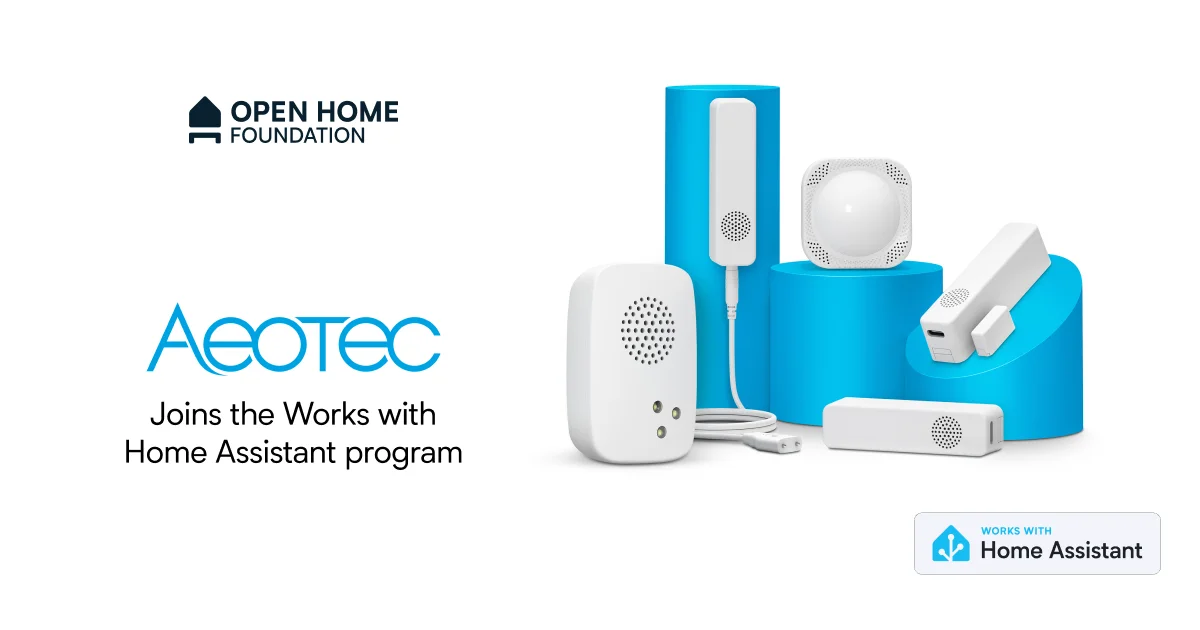
The formal inclusion of Aeotec into the Works with Home Assistant ecosystem reflects a mutual dedication to open-source governance, data privacy, and user empowerment.
Denis Paetz, President of Europe at Aeotec, emphasized the collaborative ethos driving the company’s hardware development cycle. "At Aeotec, we have always built our products together with the community, not just for it," Paetz stated. "Smart home enthusiasts have shaped our devices from the very beginning, and we feel a deep responsibility to give them a flawless experience. Home Assistant is one of the most important pillars of that community, so being part of the Works with Home Assistant program means a great deal to us. It is our commitment that every Aeotec device works reliably, openly, and exactly as our users expect."
As an active corporate member of the Z-Wave Alliance, Aeotec collaborates directly with Silicon Labs—the primary semiconductor manufacturer behind the Z-Wave Long Range chipsets embedded within Aeotec hardware. This tripartite alignment between silicon developers, protocol standard bodies, and automation platform maintainers ensures that software updates, security patches, and protocol enhancements are deployed cohesively.
Security and Onboarding Infrastructure
Deploying smart home infrastructure securely requires sophisticated cryptographic frameworks. Aeotec’s newly certified hardware utilizes two critical Z-Wave protocols to streamline deployment while safeguarding residential networks:
- SmartStart: This provisioning feature eliminates traditional, tedious pairing procedures. Installers simply scan the unique QR code affixed to the physical device using a mobile or desktop companion app before powering it on. The controller automatically provisions the device into the network topology safely and instantaneously.
- S2 Security (Security 2): Once initialized, all communication payloads transmitted across the network are encrypted using AES 128-bit encryption standards. This prevents malicious interception or unauthorized command injection from the moment the node joins the system.
Testing Rigor and Certification Criteria
The Works with Home Assistant program maintains strict empirical thresholds before conferring official certification upon third-party hardware. The Home Assistant engineering team subjects candidate devices to rigorous testing regimens designed to verify compliance with core privacy and operational tenets.
For this certification round, the testing methodology involved operating Home Assistant Container on an Intel NUC mini PC, utilizing the Home Assistant Connect ZWA-2 adapter paired with the Z-Wave JS integration. Zigbee-variant peripherals were independently evaluated using a Home Assistant Connect ZBT-2 adapter alongside the Zigbee Home Automation (ZHA) integration.
To secure and retain certification, manufacturers must satisfy three primary mandates:
- Local Execution: Devices must function entirely within the local area network (LAN) without requiring mandatory internet access, cloud accounts, or third-party server authentication to execute basic commands.
- Feature Parity: The exposed entities and attributes must deliver the expected functionality within the Home Assistant dashboard natively.
- Long-Term Support Commitments: Partner brands must pledge ongoing firmware maintenance and hardware support cycles to protect consumer investments against premature obsolescence.
Broader Economic and Architectural Implications
The integration of industrial-grade, long-range Z-Wave hardware into an open-source automation hub highlights a broader shift in the consumer electronics market. As privacy concerns surrounding cloud-dependent IoT ecosystems mount, consumers increasingly demand local control, zero telemetry, and vendor-agnostic interoperability.
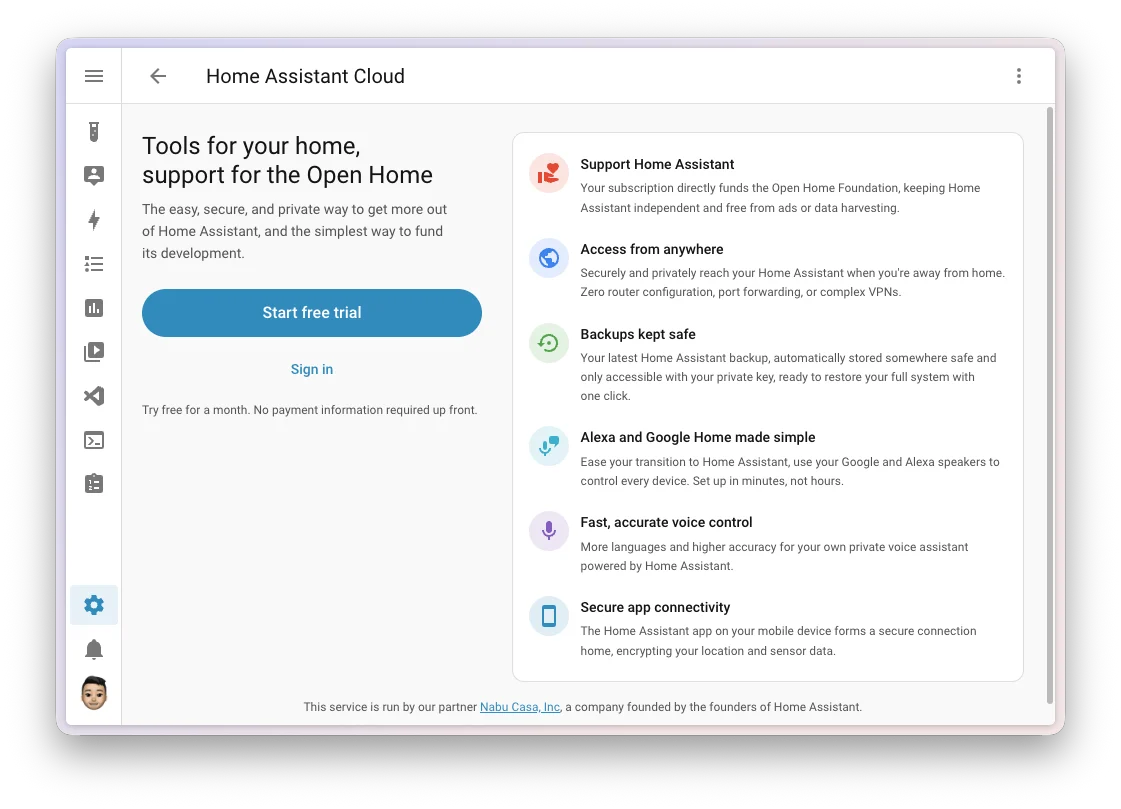
Furthermore, the financial model sustaining the Works with Home Assistant program links directly to the Open Home Foundation. Services such as Home Assistant Link (formerly Home Assistant Cloud) generate revenue streams that are reinvested directly into non-profit foundations, subsidizing core software development, security audits, and partner acquisition initiatives. This self-sustaining economic loop ensures that commercial partnerships like the one forged with Aeotec contribute to the long-term viability of open-source home automation infrastructure.
Looking Ahead
With nine certified devices now integrated into the Works with Home Assistant directory—ranging from environmental monitors and flood detectors to advanced wall switches and life-safety equipment—users possess expanded options for outfitting complex residential environments. As Aeotec continues to deploy firmware updates and develop next-generation hardware iterations under the 8-series banner, the partnership establishes a durable benchmark for hardware-software collaboration in the modern smart home sector.