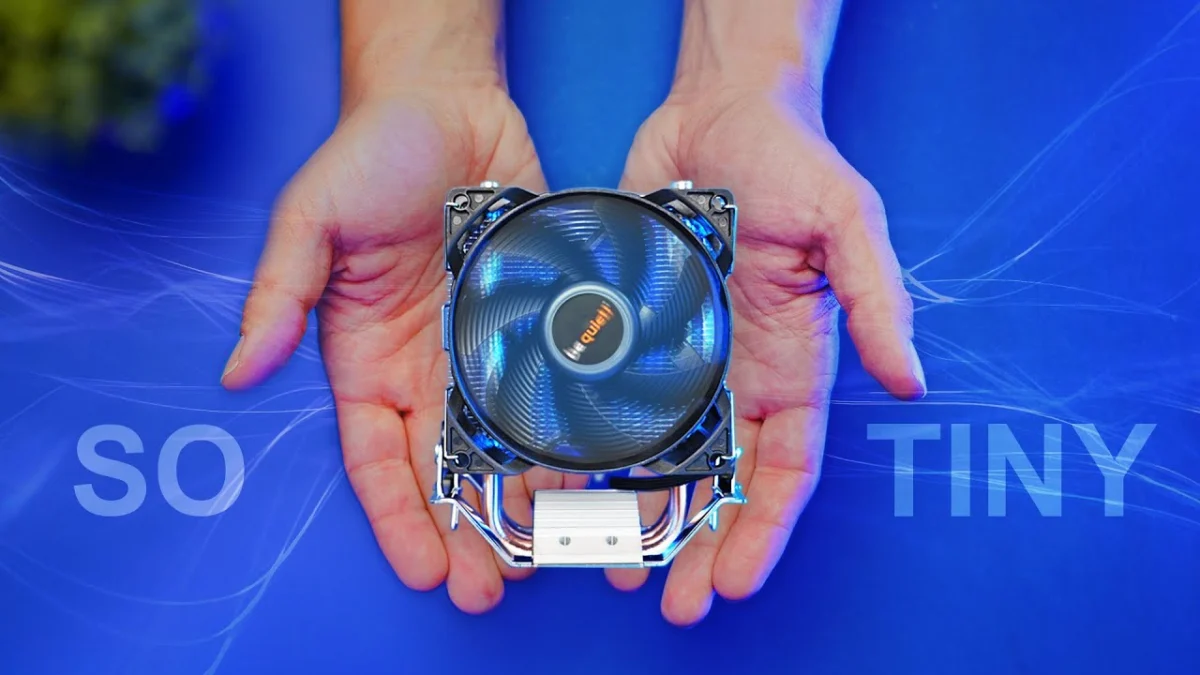
The contemporary personal computer hardware market is often dominated by a race for extreme cooling performance, characterized by massive 140mm dual-tower heatsinks and complex liquid-cooling all-in-one (AIO) loops. However, a significant portion of mainstream users do not require the thermal dissipation capacity demanded by overclocked high-end workstations or bleeding-edge gaming rigs. Recognizing this persistent market segment, thermal solution manufacturer be quiet! has introduced the Pure Rock Slim 2, a compact 92mm CPU cooler engineered to deliver broad system compatibility and reliable acoustic performance at an aggressive retail price point of $25. This launch prompts a broader evaluation of whether oversized cooling towers are increasingly becoming an unnecessary expense for the average consumer.
Background Context and Evolution in the Budget Cooling Segment
Over the past decade, the sub-$30 CPU cooler market has been largely anchored by legendary designs such as the Cooler Master Hyper 212 series. These 120mm single-tower coolers established a baseline for budget enthusiasts seeking an upgrade over stock Intel and AMD stock coolers. Yet, as PC form factors have evolved, particularly with the surging popularity of compact modular chassis like the Cooler Master NR200, clearance constraints have emerged as a critical design challenge. Many popular 120mm tower coolers exceed the height thresholds of smaller cases, forcing builders to compromise on airflow configurations or switch to costlier liquid cooling solutions.
To address this dimensional dilemma, manufacturers have periodically revisited smaller-format coolers utilizing 92mm fans. The introduction of the Pure Rock Slim 2 represents an evolutionary step from the original Pure Rock Slim, incorporating subtle engineering refinements designed to maximize thermal efficiency within restricted physical boundaries. While 92mm coolers are fundamentally constrained by their surface area compared to their 140mm counterparts, recent advancements in heat pipe distribution and fin array density have allowed smaller units to punch significantly above their weight class.
Design Specifications and Physical Architecture
A detailed examination of the be quiet! Pure Rock Slim 2 reveals a streamlined physical profile. The unit measures 135mm in height, 82mm in depth, and 97mm in width. This compact footprint contrasts sharply with standard 120mm alternatives such as the Noctua NH-U12S or the Cooler Master Hyper 212 Evo, making the Slim 2 an ideal candidate for height-restrictive environments.
The thermal architecture relies on a dense aluminum fin array traversed by three 6mm copper heat pipes. These pipes utilize a Heatpipe Direct Touch (HDT) base, which establishes direct contact with the processor integrated heat spreader (IHS) to facilitate rapid thermal transfer. Factory-applied thermal compound is included on the base plate to streamline the initial setup process.
Airflow is driven by a 92mm be quiet! Pure Wings 2 fan operating at a maximum rotational speed of 2300 RPM. Despite the high rotational velocity—which often correlates with increased acoustic output in smaller fans—the Pure Wings 2 is engineered with optimized fan blades to minimize turbulence. When compared to its predecessor, the Slim 2 features a slightly extended rear fin array and a modified base plate, structural updates intended to eke out marginal improvements in thermal dissipation.
Installation Mechanics and Compatibility Considerations
The installation process for CPU air coolers has historically been a point of friction for builders, frequently requiring cumbersome backplates and intricate fastening mechanisms. With the Pure Rock Slim 2, be quiet! has completely revised the mounting procedure to prioritize user-friendliness, though the experience differs notably between CPU socket manufacturers.
Reflecting current consumer adoption trends where AMD Ryzen processors command significant market share, the Slim 2 features a pre-installed AMD mounting bracket. For AM4 and AM5 platforms, installation leverages the standard motherboard retention module. Users simply orient the cooler, clip the retention brackets onto the stock plastic hooks, and secure the unit by applying balanced downward pressure. This toolless-adjacent approach minimizes installation time, though the absence of a screw-down mount introduces a negligible degree of lateral movement.
Conversely, the Intel installation process relies on traditional push-pin mechanisms. While push-pins offer rapid, tool-free deployment, they are occasionally scrutinized by enthusiasts for failing to deliver the uniform mounting pressure achievable with threaded fastener systems.
One of the primary engineering triumphs of the Slim 2’s narrow profile is its guaranteed memory clearance. Unlike bulky dual-tower coolers that often overhang primary DIMM slots and necessitate low-profile RAM modules, the Slim 2’s slim architecture ensures zero interference with fully populated memory configurations, regardless of tall RGB heat spreaders.
Thermal and Acoustic Performance Analysis
Evaluating the real-world efficacy of a budget cooler requires analyzing both thermal dissipation limits and operational noise signatures. Testing conducted across varying thermal loads provides a clear picture of the Pure Rock Slim 2’s operational envelope.
At baseline 95W thermal loads, the cooler demonstrates exceptional acoustic restraint. The Pure Wings 2 fan operates with such low noise emissions that it registers at the testing facility’s minimum noise floor up to 70% fan speed. Even under maximum 2300 RPM operation, the cooler tops out at approximately 40 decibels, comfortably outperforming many noisier competitors in the entry-level bracket. In terms of raw cooling capacity at this wattage tier, the Slim 2 competes effectively with larger, more expensive units like the Noctua NH-U12S, while maintaining a lower decibel output than the Cooler Master Hyper 212 Evo.
Pushing the thermal load to 125W—situated near the manufacturer’s stated 130W TDP (Thermal Design Power) threshold—the Slim 2 maintains structural composure. Iterative stress testing reveals that the cooler matches the thermal performance of the NH-U12S while capping noise output at 37 decibels, and consistently edges out the Hyper 212 Evo across equivalent testing intervals.
However, physical limitations become apparent when scaling the load to 150W. At this elevated heat output, the cooler rapidly reaches its thermal saturation point, confirming that high-end, overclocked multi-core processors will invariably necessitate larger dual-tower heatsinks or liquid cooling configurations.
Market Availability, Pricing, and Pricing Discrepancies
Officially priced at $25 USD, the be quiet! Pure Rock Slim 2 occupies a highly competitive segment of the DIY PC component market. However, market dynamics introduce minor hurdles for consumers seeking to acquire the unit at MSRP.
In the wake of ongoing supply chain fluctuations and high demand for accessible PC hardware, third-party resellers frequently acquire newly released components for secondary marketplace arbitrage on platforms like Amazon and Newegg. Consequently, prospective buyers must exercise caution and filter through vendor listings to secure the product at its intended $25 price point. Despite these retail anomalies, the cooler stands out as one of the least expensive entries from a tier-one thermal manufacturer.
Industry Implications and Consumer Takeaways
The market reception of the be quiet! Pure Rock Slim 2 highlights a broader maturation in consumer awareness regarding thermal requirements. As modern central processing units become increasingly power-efficient at stock operating parameters, the reflexive impulse to purchase massive, premium cooling towers is frequently rendered obsolete for standard gaming and productivity workflows.
By delivering Noctua-adjacent acoustic profiles and competitive low-wattage thermal performance at a fraction of the cost, the Pure Rock Slim 2 challenges prevailing assumptions about budget hardware limitations. While it is fundamentally unsuited for extreme enthusiast overclocking or high-wattage enterprise workloads, its combination of a compact footprint, effortless AMD installation, zero memory interference, and sub-$30 pricing makes it a highly viable option for mainstream builders seeking silent and reliable operation.