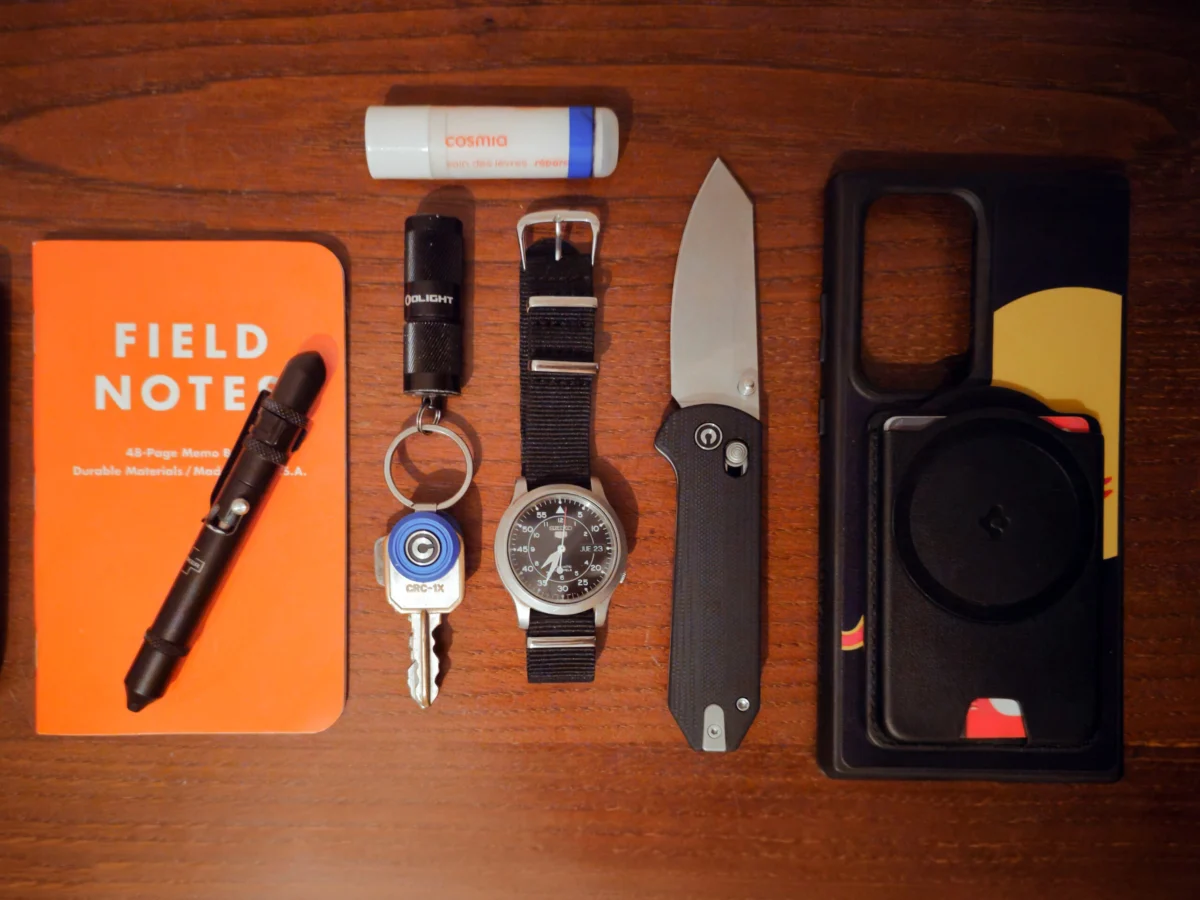
The culture of Everyday Carry (EDC) has evolved from a niche hobby for survivalists into a sophisticated practice of personal logistics, balancing aesthetic preference with high-utility functionality. Ruben Caeiro, an aeronautical automation operator based in Portugal, exemplifies this modern trend. His daily kit, characterized by its emphasis on weight reduction, ergonomic design, and high-value performance, offers a window into the professional requirements of those operating in highly technical, precision-oriented environments. By examining the components of his kit—most notably the award-winning CIVIVI Yonder—we can draw broader conclusions about the current state of the global EDC market, which is increasingly favoring modularity and refined material science.
The Evolution of Professional Toolkits
In the field of aeronautical automation, professionals must manage systems that require extreme reliability and precise timing. The equipment selected by individuals in this sector often reflects a psychological need for "preparedness," a core tenet of the EDC community. For Caeiro, the kit is not merely a collection of items but a functional extension of his workplace performance.
The transition from traditional, bulky gear to sleek, minimalist alternatives is not accidental. It is a response to the logistical demands of modern commuting and long shifts. The trend toward consolidated wallets, compact lighting, and precision writing instruments signifies a shift toward what experts call "micro-utility." By reducing the physical footprint of their gear, operators are able to maintain a higher level of mobility, a trait essential for those navigating complex industrial or aeronautical environments.
Chronology of the Modern EDC Movement
The EDC movement as a distinct cultural phenomenon gained significant momentum following the 2008 financial crisis, as a general cultural interest in self-sufficiency and "prepping" began to overlap with a burgeoning appreciation for industrial design.
- 2005–2010: The rise of online forums and blogs focused on "tactical" gear and military-grade survival equipment.
- 2011–2015: A shift toward aesthetic minimalism. Brands began prioritizing sleek titanium, carbon fiber, and brass finishes over camouflage patterns.
- 2016–2020: The democratization of high-quality machining. Companies like CIVIVI and Kizer began producing premium-level tools at mass-market price points, effectively collapsing the barrier to entry for enthusiasts.
- 2021–Present: The current era, defined by "Everyday Carry" as a lifestyle branding exercise, where professional equipment (like those used in aeronautics) is integrated into lifestyle photography and digital documentation.
Spotlight on the CIVIVI Yonder: A Benchmark in Design
Central to Caeiro’s current setup is the CIVIVI Yonder, a folding knife that has garnered significant industry attention. Designed by Zac Whitmore, the Yonder represents a pivotal moment in manufacturing efficiency. At the 2024 Blade Show—the premier industry event for knife manufacturers—the Yonder was awarded the "Best Buy of the Year," a testament to its impact on the market.
From a technical standpoint, the Yonder utilizes a crossbar-lock mechanism, a design that historically was restricted to higher-end, expensive knives due to complex spring-tension requirements. The ability of manufacturers to produce this mechanism at a sub-$100 price point illustrates the current manufacturing "sweet spot." By utilizing G10 handle scales and high-performance blade steels, the Yonder achieves an optimal balance between weight and structural integrity. For an automation operator, a tool must be ambidextrous, quick to deploy, and easy to maintain; the Yonder’s mechanical simplicity fulfills these requirements with precision.
The Anatomy of a Minimalist Kit
The components of Caeiro’s kit serve as a case study for the "minimalist-value" school of thought. This approach dictates that every item must serve at least two purposes, or be small enough that its presence is effectively invisible until required.
- Magnetic Wallet Systems: Integrating payment methods directly into the mobile device chassis removes the need for traditional bi-fold wallets. This is a common trend among tech-forward professionals who operate in environments where physical storage space is at a premium.
- Ultra-Compact Key Management: By moving away from loose keyrings to organized, chassis-based key organizers, users reduce noise and pocket wear, while simultaneously improving the speed of tool retrieval.
- Bolt-Action Writing Instruments: The preference for mini bolt-action pens is largely driven by the durability of the mechanism. Unlike click-top pens, which can be prone to failure, bolt-action pens utilize a machined channel that is less susceptible to debris—a critical factor for someone working in an industrial aeronautical facility.
- Secondary Rotation Gear: Caeiro’s interest in the Kizer Feist and the Casio Edifice (with the Tiffany-style dial) highlights the concept of "gear rotation." Many in the EDC community maintain a "work" set and a "dress" set. The Kizer Feist, known for its front-flipper design, offers a more refined, slim profile compared to the more utilitarian Yonder, while the Casio Edifice provides a professional, time-tested aesthetic that remains reliable in diverse environments.
Data and Market Implications
The global EDC market, encompassing everything from tactical apparel to precision tools, has seen a compound annual growth rate (CAGR) that suggests a steady increase in consumer spending on high-durability goods. According to recent consumer behavior studies in the outdoor and utility goods sector, there is a clear migration toward "BIFL" (Buy It For Life) products.
The significance of this trend lies in the shift away from disposable consumer goods. When individuals like Caeiro invest in a quality notebook (Field Notes) or a reliable timepiece (Casio), they are participating in a cycle of maintenance and repair rather than replacement. This behavior has broader environmental implications, as it promotes a circular economy where tools are passed down or resold rather than discarded.
Official and Expert Perspectives
Industry experts often comment on the psychological benefits of EDC. According to psychologists specializing in workplace ergonomics, the act of "curating" one’s tools can lead to a sense of agency and readiness. "When a professional has a reliable toolset that they have personally vetted and organized, it reduces the ‘cognitive load’ associated with minor daily problems," notes an industry analyst familiar with the sector.
Furthermore, the integration of aesthetic considerations—such as the "Tiffany dial" watch—suggests that the modern professional is no longer satisfied with utility alone. They demand that their tools reflect their personal identity. This synthesis of function and form is the primary driver behind the success of brands that cater to the EDC market.
Future Projections for Everyday Carry
As we look toward the remainder of the decade, the integration of smart technology into traditional EDC gear is expected to accelerate. We are already seeing the early stages of this with smart-wallets that include GPS tracking and flashlights that utilize USB-C rechargeable lithium-ion cells.
However, the core of the movement remains firmly rooted in the mechanical. As Caeiro’s submission suggests, the future of EDC is not necessarily in adding more gadgets, but in refining the existing kit to be more efficient, more durable, and more visually aligned with the user’s professional life. The aeronautical automation sector, with its reliance on rigorous standards and precision, will likely remain a bellwether for what constitutes "essential" equipment.
In conclusion, Ruben Caeiro’s daily carry is a testament to the fact that professionalism and personal expression can coexist through the medium of high-quality tools. By selecting gear that balances the heavy-duty requirements of his field with a minimalist, aesthetically pleasing design language, he demonstrates a sophisticated approach to the modern toolkit. Whether through the award-winning ergonomics of the CIVIVI Yonder or the timeless utility of a Casio timepiece, the EDC community continues to push the boundaries of what it means to be prepared in the 21st century. The ongoing dialogue between makers, collectors, and professionals will undoubtedly continue to shape the next generation of essential everyday tools.