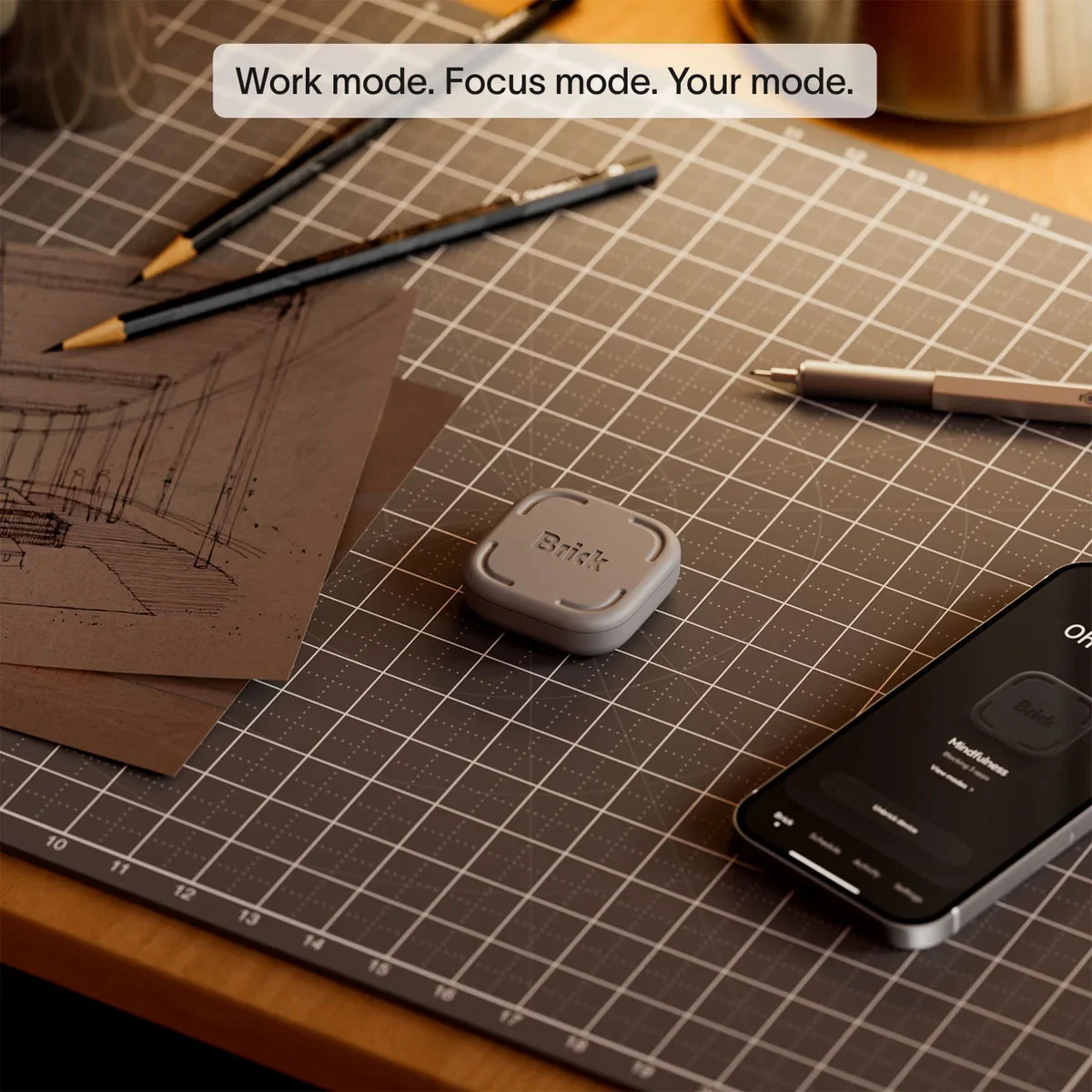
For years, smartphone users have struggled against the inherent design of modern operating systems, which prioritize engagement over user agency. While Apple’s Screen Time and Google’s Digital Wellbeing features offer built-in parental and self-imposed controls, they share a fatal design flaw: the "Ignore Limit" button. This persistent escape hatch often undermines the very willpower necessary to curb excessive screen time. Enter Brick, a hardware-based solution that replaces digital notifications with a physical, tactile barrier. By utilizing a $59 battery-free NFC puck, the company has introduced a radical concept to the productivity market: the necessity of physical movement to regain control of one’s digital life.
The Mechanism of Digital Disconnection
The Brick system operates on a straightforward premise that leverages near-field communication (NFC) technology, similar to the protocols used for contactless mobile payments. Users download a companion application—compatible with Android 12 or higher and iOS 17 or higher—and select the specific applications or websites they wish to restrict. Once the user taps their smartphone against the physical "Brick" puck, these designated apps are immediately locked.
The lock is not merely a software toggle; it is an enforced barrier that prevents the user from accessing the selected platforms until they physically return to the puck and tap their device again. While the app allows for remote initiation of a locking session, the act of unlocking is intentionally tethered to the physical presence of the hardware. To prevent total isolation during emergencies, the system includes five "Emergency Unbricks," which allow users to bypass the lock in critical situations. Because the puck is battery-free and requires no subscription, it functions as a one-time hardware purchase, distinguishing it from the recurring SaaS (Software as a Service) models that dominate the productivity software landscape.
A Chronology of the Anti-Doomscroll Movement
The inception of Brick can be traced back to the collaborative efforts of founders TJ Driver and Zach Nasgowitz, both graduates of the University of Wisconsin-Madison. The company officially launched in mid-September 2023, arriving at a time when public discourse regarding the psychological impacts of algorithmic feeds and infinite scrolling was reaching a fever pitch.
By mid-2026, the product had gained significant traction in the media and public consciousness. The phenomenon, colloquially dubbed "Bricking," began to transcend the label of a mere tech gadget, morphing into a social ritual. Reports from outlets such as the New York Post highlighted the growing trend of social groups adopting the device in unison, creating a sense of shared accountability. This "social proof" element has been central to the company’s marketing strategy, as the physical act of tapping a puck serves as a visible commitment to digital wellness that a software-based pie chart cannot replicate.

Friction as a Behavioral Intervention
The core philosophy behind Brick is the psychological principle of "friction." In the context of user experience (UX) design, friction is typically something developers aim to eliminate to improve conversion rates. However, in the context of behavioral psychology, intentional friction is a powerful tool for interrupting habitual or addictive behaviors.
Driver and Nasgowitz have consistently argued that willpower alone is insufficient when competing against the multi-billion-dollar attention economies of major social media platforms. By requiring a physical walk—perhaps to another room or a different part of the house—the user is granted a "cooling-off period" that disrupts the impulsivity of checking an app. TechCrunch, in its June 2026 analysis, emphasized this distinction, noting that the physical return to the puck forces a moment of reflection that a simple software override does not provide.
Evaluating Effectiveness and Data
Critics and testers from publications including Consumer Reports, The Independent, USA Today, and The Wall Street Journal have scrutinized the device’s efficacy. While the price point of $59 is often cited as a significant barrier for some consumers, the consensus among reviewers is that the device delivers on its primary promise.
The Independent, in a detailed testing report, observed a marked shift in user habits, with a test subject reporting a reduction in daily screen time from approximately 4.5 hours to roughly 2 hours over the course of the trial. Such a dramatic decrease suggests that for heavy "doomscrollers," the physical requirement to unlock the phone acts as a potent deterrent. Despite these successes, the device is not a panacea for all digital habits. Consumer Reports has noted that the system is susceptible to circumvention if the user simply deletes the companion app, a maneuver that can effectively terminate a locking session if "Strict Mode" is not properly configured. Furthermore, the device does not extend its restrictive reach to secondary devices such as laptops or tablets, meaning a user might find themselves locked out of their phone only to transition immediately to another, unrestricted screen.
Broader Implications for Tech Wellness
The emergence of Brick signals a growing trend toward "analog-hybrid" solutions for digital problems. As the tech industry continues to refine algorithms that maximize time-on-device, there is a counter-movement emerging that seeks to introduce physical, non-digital constraints.
The reliance on a shared household Brick also highlights potential pitfalls in a multi-user environment. If a household shares a single puck, it functions as a shared key, which could be misplaced or manipulated by other residents, complicating the enforcement of personal boundaries. Additionally, the device does not block essential services—maps, phone calls, and other utility-based applications remain functional—which addresses the concern that users might become completely disconnected in a crisis.

From an economic and societal perspective, Brick highlights the limitations of current operating system features. Apple and Google have been criticized for the ease with which their built-in restrictions can be bypassed. While these companies prioritize user autonomy and the prevention of accidental lockouts, the success of Brick suggests that a segment of the population is willing to trade that autonomy for a harder, more rigid enforcement mechanism.
Strategic Outlook
For those considering the investment, the utility of the device appears to be highly dependent on the user’s specific pain points. If the "rabbit hole" is primarily limited to mobile smartphone usage, the $59 cost may represent a high-value investment in long-term mental clarity. However, for power users who habitually migrate across multiple devices, the hardware-limited nature of the Brick may prove insufficient.
The company’s decision to keep the product simple—battery-free, no recurring fees, and a singular, focused function—positions it as an outlier in a market saturated with complex, subscription-heavy wellness apps. As of late 2026, the product remains available through the company’s primary website and associated portals.
Ultimately, the "Brick" is not an upgrade to one’s phone, but an upgrade to one’s environment. By externalizing the control mechanism, the founders have effectively shifted the responsibility of moderation from the user’s fluctuating willpower to their physical surroundings. Whether this model will inspire a new category of "friction-based" hardware or remain a niche tool for the hyper-intentional remains to be seen. However, as the conversation surrounding digital wellbeing shifts toward more drastic interventions, the simple, square puck stands as a testament to the fact that sometimes the best way to control technology is to disconnect it from the digital interface entirely and anchor it to the physical world.
As of current reporting, there have been no official responses from Apple or Google regarding the integration or competitive impact of such hardware on their native Screen Time or Digital Wellbeing suites. Nonetheless, the popularity of the device serves as a data point for tech giants, potentially influencing future updates to their own restrictive features to include more "friction-heavy" options for those who find the current "Ignore Limit" button to be insufficient for their needs. For the consumer, the choice remains clear: if the internal motivation to disengage is lacking, the external walk to the fridge or the desk might be the only barrier that truly holds.