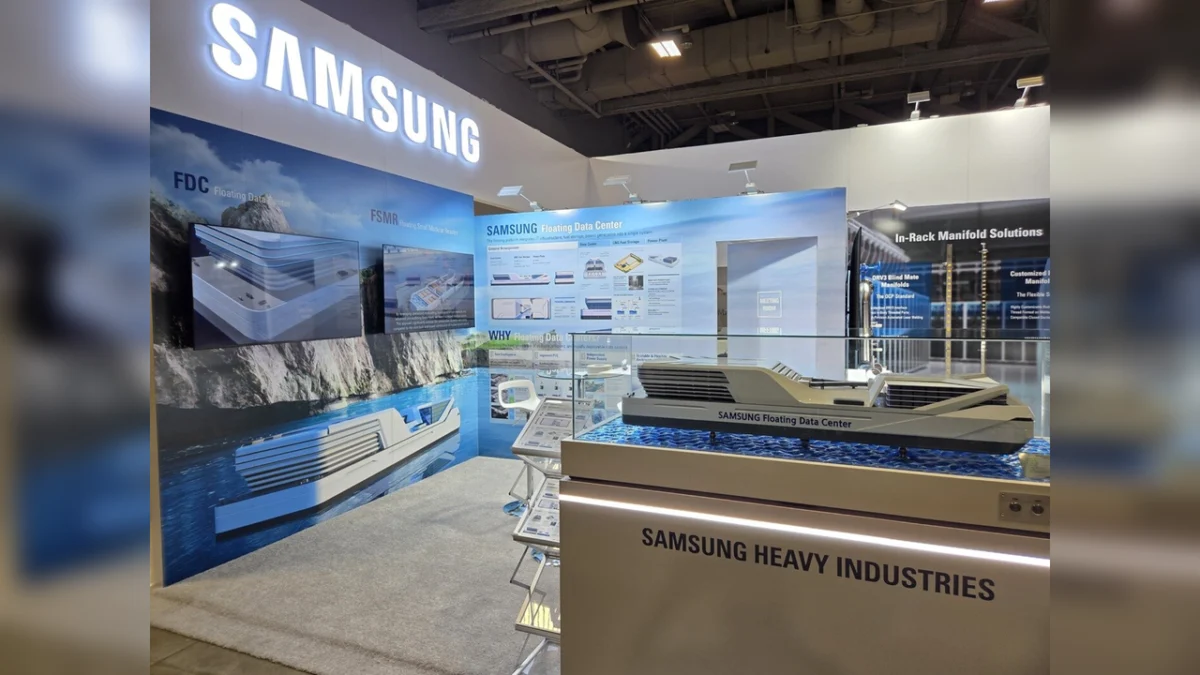
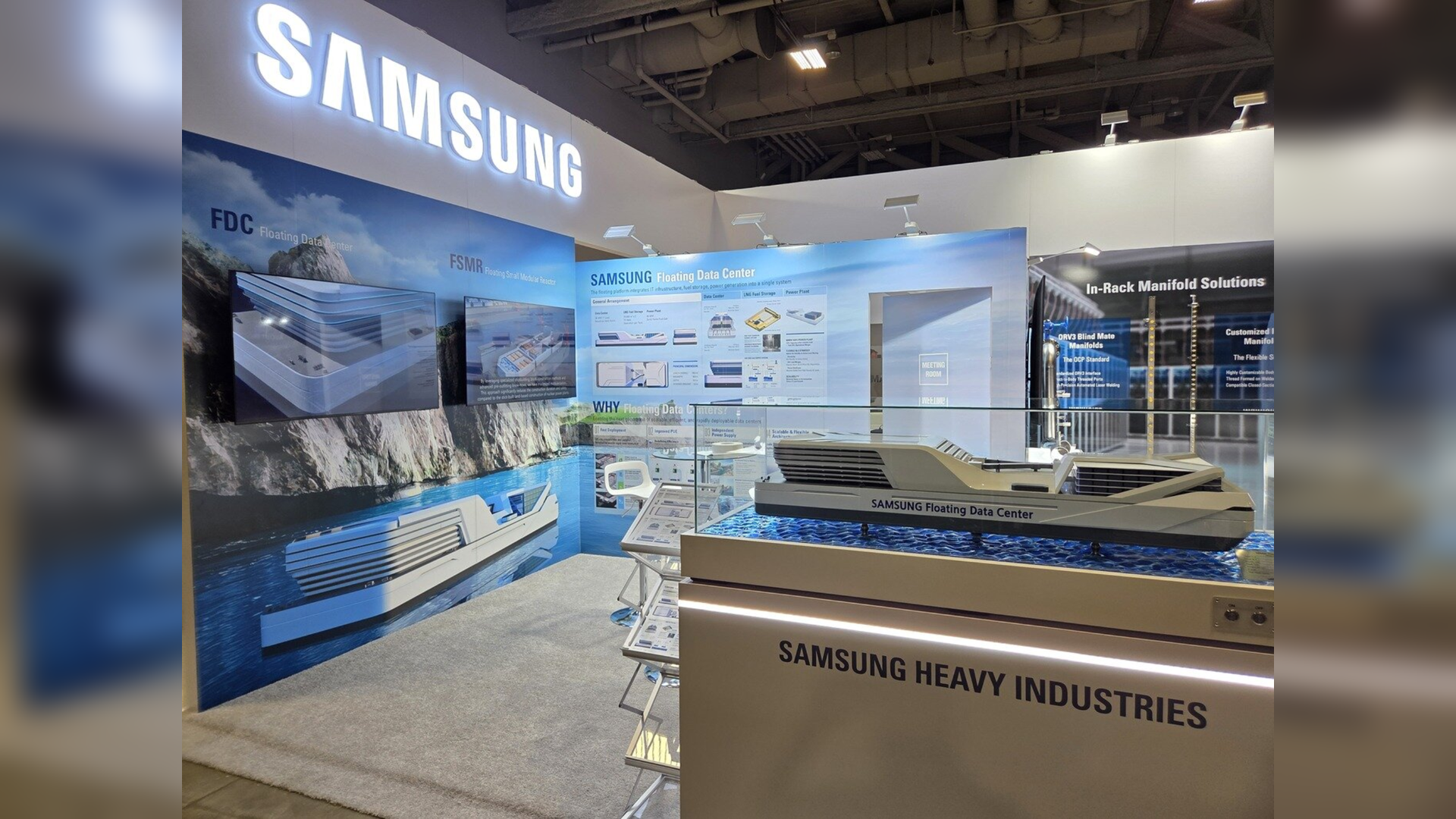
In a groundbreaking move signaling a potential paradigm shift in the global digital infrastructure landscape, Samsung Heavy Industries (SHI) has officially unveiled a conceptual model for a large floating data center ship. This innovative platform is designed to house the burgeoning computational demands of artificial intelligence (AI) tools worldwide, with a particular focus on supporting advanced AI systems such as future iterations of OpenAI’s ChatGPT. The announcement comes on the heels of a strategic collaboration, solidified by a letter of intent signed in October 2025 between Samsung and OpenAI, outlining a comprehensive partnership that includes the joint development of these cutting-edge floating data centers and associated power generation facilities.
The Genesis of an Offshore Vision: Addressing AI’s Insatiable Demands
The collaboration between a shipbuilding titan and a leading AI research organization underscores the critical need for scalable, efficient, and rapidly deployable infrastructure to keep pace with the exponential growth of artificial intelligence. The design blueprint for these floating data centers is explicitly tailored to accommodate the immense processing power and unique operational requirements of advanced AI models. As AI systems become increasingly complex, their computational footprints expand commensurately, demanding unprecedented levels of processing capacity, energy, and cooling – resources that traditional land-based data centers are increasingly struggling to provide efficiently and sustainably.
The floating data center concept is a direct response to these escalating demands. By leveraging offshore environments, the partnership aims to circumvent many of the logistical and environmental hurdles that plague conventional data center development. OpenAI, a pioneer in generative AI with its flagship ChatGPT, requires vast amounts of compute for model training and inference. Industry analysts estimate that training a single large language model can consume energy equivalent to hundreds of homes for a year, highlighting the urgent need for novel infrastructure solutions. This strategic alliance with Samsung Heavy Industries positions OpenAI to potentially secure a significant advantage in rapidly expanding its compute capabilities, a crucial factor in the fiercely competitive AI race.
Innovative Offshore Deployment: Speed to Power as a Strategic Imperative
The core innovation of this concept lies in its offshore deployment strategy. These purpose-built vessels would be strategically positioned near coastal energy assets, such as existing thermal or nuclear power plants. This proximity allows for direct connection to robust power grids and access to vast, natural cooling resources – seawater. Samsung Heavy Industries touts that this approach dramatically compresses the typical years-long build-out cycle for land-based data centers into a much shorter timeline, promising accelerated deployment of critical AI infrastructure.
Traditional data center development is often hampered by protracted processes involving land acquisition, zoning permits, environmental impact assessments, and, critically, securing new high-capacity grid connections. The floating model bypasses many of these bottlenecks. Instead of waiting for new power grid infrastructure to be constructed or upgraded, these mobile data centers can dock near existing baseload power stations, effectively treating the shoreline as a dynamic deployment zone for digital infrastructure. The barges themselves are envisioned to house fully liquid-cooled data halls, a technology particularly well-suited for high-density AI compute, offering superior thermal management and energy efficiency compared to air-cooled systems. Furthermore, the modular nature of these floating units allows for scaling capacity according to demand, enabling operators to add or remove barges as computational needs evolve.
Min Suh, CEO of Mousterian Corp., a Dallas-based infrastructure developer focused on high-density AI compute and a key partner in this initiative, articulated the strategic advantage succinctly: "Speed to power is the new moat. We’ve thoughtfully partnered with some of the leading global conglomerates, allowing us to deliver over 1,500MW of capacity over the next 3 years." This statement underscores the industry’s recognition that rapid access to significant power resources is now a primary differentiator in the AI sector. The ability to quickly commission and scale compute infrastructure can provide a decisive competitive edge over rivals constrained by slower, traditional development cycles.
Ambitious Targets and the Role of Mousterian Corp.
The partnership, spearheaded by Samsung Heavy Industries and involving Mousterian Corp., has set an ambitious target: to deliver more than 1.5 gigawatts (GW) of capacity within approximately three years. Achieving this goal necessitates the deployment of multiple barge-based projects, each carefully integrated with local power and grid constraints. Each vessel is expected to host thousands of high-performance servers, optimized for the intensive demands of AI training and inference workloads. For context, 1.5 GW is roughly the output of a large nuclear power plant or several conventional fossil fuel power plants, indicating the sheer scale of the computational infrastructure envisioned.
Mousterian Corp.’s expertise in developing high-density AI compute infrastructure is critical to the success of this venture. Their focus on optimizing data center designs for AI workloads, which differ significantly from general-purpose cloud computing, ensures that the floating platforms are purpose-built for maximum efficiency and performance. The company’s vision aligns perfectly with the need for rapid deployment, emphasizing that the traditional multi-year timelines for land-based data center construction are simply untenable in the fast-evolving AI landscape. The 1.5GW target, if realized, would represent a significant expansion of global AI compute capacity, potentially reshaping how and where advanced AI models are hosted and developed. However, the realization of this target is contingent on numerous factors, including timely regulatory approvals, efficient construction speed, and the consistent availability of suitable water bodies adjacent to baseload power plants.
Navigating the Uncharted Waters: Technical and Operational Complexities at Sea
While floating data centers offer compelling advantages in terms of speed and access to power/cooling, they simultaneously introduce a novel set of technical and operational challenges that demand innovative solutions. Experts and analysts have raised concerns regarding several critical areas.
Cybersecurity: Offshore facilities present unique cybersecurity vulnerabilities. Physical access controls, while present, could be complicated by the remote nature of the location. The attack surface might shift, requiring specialized maritime-grade security protocols and robust remote monitoring capabilities to safeguard sensitive AI models and proprietary data.
Physical Resilience and Reliability: The marine environment is inherently harsh. Saltwater is highly corrosive, necessitating specialized materials and rigorous maintenance protocols to prevent degradation of infrastructure. Exposure to severe weather events, such including hurricanes, typhoons, and powerful storms, poses significant risks to structural integrity and continuous operation. Designing these platforms to withstand extreme conditions, ensuring their stability, and developing comprehensive emergency response plans for offshore incidents are paramount. This extends to the cooling systems, which, while benefiting from cold seawater, must be robustly designed to handle filtration, biofouling, and potential contamination.
Maintenance and Logistics: Routine maintenance, hardware upgrades, and emergency repairs become significantly more complex and costly offshore compared to land-based facilities. Specialized vessels, personnel, and equipment would be required, potentially leading to longer downtime and higher operational expenses. The logistics of transporting new server racks, components, and personnel to remote offshore locations demand sophisticated planning and execution.
Fiber Optic Connectivity: Reliable, high-bandwidth fiber optic links are the lifeblood of any data center. Laying and maintaining subsea fiber optic cables to these floating platforms is a complex engineering feat, susceptible to damage from marine activity, seismic events, and deep-sea currents. Ensuring redundancy and ultra-low latency connectivity will be a continuous challenge.
Regulatory and Environmental Hurdles:
Beyond the technical challenges, the deployment of floating data centers faces a complex web of regulatory and environmental considerations.
Permitting and Jurisdiction: Operating large industrial facilities in marine environments falls under a diverse set of international and national maritime laws, environmental regulations, and territorial jurisdictions. Securing permits from multiple agencies, including maritime authorities, environmental protection bodies, and local coastal zone management entities, will be a protracted and potentially unpredictable process. Each barge project will require individual approvals, adding to the complexity.
Environmental Impact: The potential environmental impact on marine ecosystems is a significant concern. While the use of seawater for cooling offers energy efficiency, careful management is needed to prevent thermal pollution (discharging warmer water back into the ocean) and to avoid harm to marine life through water intake systems or chemical discharges. The physical presence of large structures and subsea cables could also affect marine habitats, migration patterns, and local fisheries. Robust environmental impact assessments and ongoing monitoring will be crucial for public acceptance and regulatory compliance.
Economic Viability and Market Outlook:
The economic viability of floating data centers at scale remains a subject of debate among industry analysts. While the "speed to power" argument is compelling, the initial capital expenditure for shipbuilding, specialized marine infrastructure, and robust environmental protections could be substantial. The claims of delivering 1.5GW in 36 months rest on unproven timelines across shipbuilding, permitting, and tenant onboarding, leading some experts to express skepticism regarding the feasibility of such an aggressive pace in practice.
The market demand for AI tools and the underlying data center infrastructure is undeniably real and growing rapidly. However, the execution of such an ambitious and novel strategy remains uncertain. Some analysts suggest that this model may ultimately carve out a niche option for specific high-compute, rapid-deployment scenarios rather than fundamentally overhauling how the majority of AI compute is housed globally. The true measure of success will be the number of barges that actually come online, operationalized, and achieve the promised performance and efficiency metrics within the stated timelines. The economic case will need to demonstrate that the benefits of rapid deployment and efficient cooling outweigh the complexities and potentially higher operational costs associated with a marine environment.
Broader Implications for Digital Infrastructure and Future Energy Strategies
Should Samsung Heavy Industries and its partners successfully navigate these challenges, the implications for digital infrastructure could be profound. Floating data centers could offer unprecedented flexibility in deploying compute capacity closer to demand centers, even in regions with limited land availability or strained terrestrial power grids. This could democratize access to high-performance AI compute, fostering innovation in new geographic locations.
Furthermore, this initiative highlights a broader trend: the increasing convergence of energy infrastructure and digital infrastructure. As AI’s energy appetite grows, the strategic co-location of data centers with power generation facilities, particularly renewable energy sources, becomes paramount. Floating data centers near coastal power plants represent one innovative approach to this challenge. This could also spur further research and development into sustainable offshore energy solutions, potentially integrating floating data centers with offshore wind farms or other marine-based renewable energy technologies in the future.
The partnership between Samsung Heavy Industries, OpenAI, and Mousterian Corp. is an audacious venture into uncharted technological waters. It represents a bold attempt to reimagine the foundational infrastructure that powers the AI revolution. While the vision is grand and the potential benefits significant, the journey from concept model to fully operational, scaled deployment will be fraught with technical, regulatory, environmental, and economic complexities. The success of this initiative will not only depend on engineering prowess but also on the ability to forge new pathways in maritime governance, environmental stewardship, and the intricate economics of global digital infrastructure. The world will be watching to see how many of these innovative barges ultimately sail into service, propelling the next generation of artificial intelligence.