Accumulated dust inside a desktop computer or laptop is one of the most insidious threats to hardware longevity and peak performance. Over time, particulate matter infiltrates intake fans, coats heatsink fins, and settles on sensitive circuit boards. This thermal insulation prevents heat from dissipating efficiently, forcing cooling fans to spin faster and louder to compensate. When temperatures continue to rise despite maximum fan curves, modern CPUs and GPUs automatically engage in thermal throttling—a built-in safety measure that reduces clock speeds to lower temperatures, resulting in stuttering, frame drops, and decreased system responsiveness.
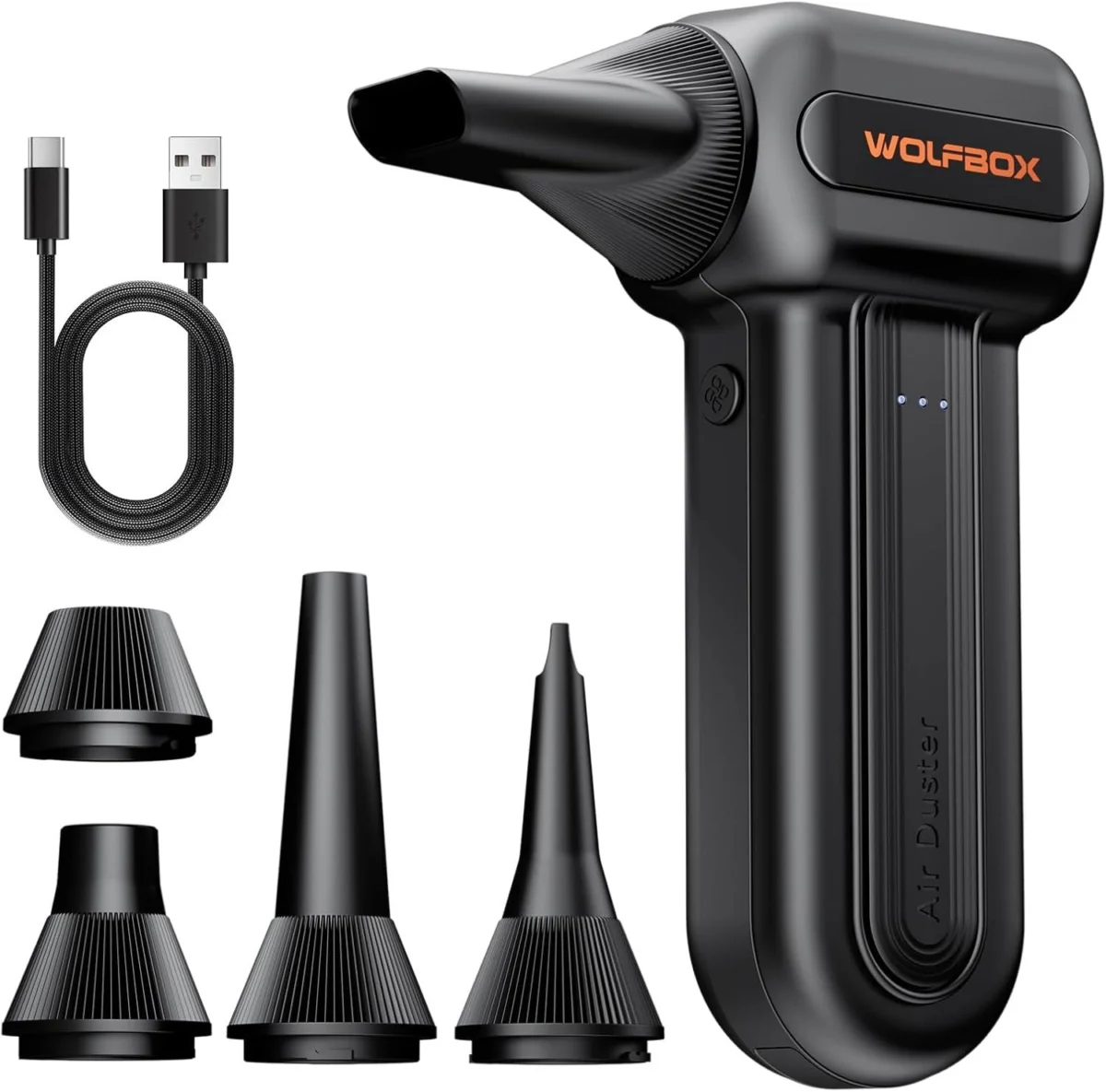
To combat this ubiquitous issue, regular PC maintenance is no longer optional for enthusiasts and everyday users alike. While traditional canned air has long been the default cleaning method for removing debris from hard-to-reach crevices, it comes with notable drawbacks, including ongoing recurring costs, freezing liquid propellants, and dwindling pressure as the can empties. In response, rechargeable electric air dusters have emerged as a sustainable and powerful alternative. Addressing this market need, the high-velocity Wolfbox MF60 electronic air duster is currently seeing a significant markdown on Amazon, discounted by 32% to bring its price down from the standard MSRP of $49.99 to an accessible $33.99.
The Mechanics of PC Thermal Throttling and Dust Accumulation
The internal environment of a modern personal computer acts much like a vacuum cleaner. As case fans pull in cool air from the room to regulate internal temperatures, they inevitably draw in microscopic dust fibers, pet hair, dead skin cells, and smoke residue. Desktop systems equipped with positive or negative air pressure configurations will experience varying degrees of particulate buildup, but no system is entirely immune.
When dust layers accumulate on radiator fins or CPU coolers, they form a thermal blanket. Heat pipes rely on unobstructed airflow to transfer thermal energy away from the silicon die. When that airflow is restricted, internal component temperatures rise rapidly. Semiconductor manufacturers design their processors to protect themselves from permanent heat damage by throttling performance when junction thresholds are breached. For gamers and content creators, this manifests as sudden drops in frame rates, extended render times, and system instability.
Preventing these issues requires periodic physical cleaning. Industry standards generally recommend thoroughly cleaning a PC’s interior every three to six months, depending on environmental factors such as living with pets, carpeting, or residing in dry, dusty climates. Neglecting this routine maintenance can permanently degrade fan bearings due to imbalance and friction from accumulated grime, leading to premature hardware failure.
The Evolution of PC Cleaning Tools: Canned Air vs. Electric Blowers
For decades, compressed gas canisters containing fluorocarbons or hydrofluorocarbons were the undisputed standard for clearing dust from electronics. However, these disposable cans present several frustrating limitations. As the user tilts the can during cleaning—a necessity when navigating tight chassis spaces—liquid propellant can escape, potentially spraying volatile chemicals onto sensitive components. Furthermore, as the contents are expelled, the pressure drops noticeably, weakening the blast radius precisely when sustained power is needed. Economically and environmentally, purchasing single-use cans repeatedly accumulates unnecessary plastic and metal waste while proving costly over the lifetime of a PC.
The rise of high-RPM brushless motors has transformed the electronic cleaning market. Devices like the Wolfbox MF60 utilize compact, rechargeable battery systems to drive impellers capable of generating hurricane-force air velocities. Unlike disposable cans, electric dusters maintain consistent pressure throughout their operational battery life. They are environmentally friendly, eliminating the need to discard pressurized metal containers, and they pay for themselves after just a few cleaning cycles compared to buying multi-packs of canned air.
Technical Specifications and Performance of the Wolfbox MF60
The Wolfbox MF60 distinguishes itself in a crowded marketplace through high-speed engineering and versatility. Capable of reaching rotational speeds of up to 110,000 RPM, the device generates a concentrated, high-velocity stream of air designed to dislodge stubborn dust stuck in tight spaces, such as dense fin stacks, power supply units, and motherboard I/O shrouds.
Unlike single-speed alternatives, the MF60 features adjustable speed settings, allowing users to modulate airflow intensity. Delicate components, such as open fan blades or delicate ribbon cables, can be cleaned safely on lower settings, while stubborn debris lodged in thick radiator arrays can be blasted away using maximum velocity. Powered by an integrated rechargeable battery, the unit eliminates the restriction of power cords, granting total mobility around large desktop setups, home entertainment centers, and automotive interiors.
Ergonomically designed for comfort during extended cleaning sessions, the lightweight chassis minimizes hand fatigue. Its multi-purpose functionality extends beyond computer hardware, making it useful for inflating air mattresses, clearing workshop debris, cleaning camera lenses, and drying hard-to-reach areas of household furniture or vehicles.
Market Context and Pricing Analysis
The current promotion on Amazon reduces the cost of the Wolfbox MF60 from $49.99 to $33.99, representing a direct savings of $16 or 32%. In the broader ecosystem of PC maintenance peripherals, this places the device firmly in the budget-friendly category while offering specifications typically reserved for higher-priced industrial models.
Rechargeable air dusters have experienced a surge in consumer demand over the past three years. Supply chain optimizations and advancements in compact brushless motor technology have driven manufacturing costs down, allowing brands to offer high-RPM performance at price points previously occupied by weak, substandard desk fans. For consumers who regularly invest hundreds or thousands of dollars in high-end graphics cards and processors, a sub-$35 maintenance tool represents a nominal investment toward protecting expensive hardware investments.
Industry analysts note that promotional pricing events on hardware accessories frequently align with seasonal cleaning trends, such as spring cleaning or back-to-school preparation, as well as major retail promotional windows. Deals of this magnitude on high-demand items like the MF60 often experience stock fluctuations depending on inventory turnover rates.
Broader Implications for Hardware Longevity
The availability of affordable, high-efficiency cleaning tools underscores a shifting philosophy in consumer technology stewardship. As PC components grow increasingly dense, power-hungry, and expensive—with flagship graphics cards frequently exceeding four figures—protecting existing hardware through proactive maintenance is more critical than ever.
Environmental considerations also play a growing role in purchasing decisions. Regulatory scrutiny on aerosol propellants and single-use packaging has accelerated consumer migration toward sustainable alternatives. By transitioning from disposable canned air to rechargeable electric blowers, individual users significantly reduce their carbon footprint and consumption of single-use metals.
Ultimately, tools like the Wolfbox MF60 bridge the gap between professional IT maintenance gear and consumer accessibility. Ensuring that everyday users have the means to properly maintain their systems mitigates unnecessary electronic waste caused by premature hardware degradation, promoting a more sustainable approach to personal computing longevity.