The open-source smart home ecosystem has officially rolled out its latest major update, Home Assistant 2026.9, bringing substantial upgrades to device connectivity, user interface dashboards, accessibility standards, and backend data processing. Spearheaded by the Open Home Foundation and core developers like Paulus Schoutsen and community contributors, this release aims to bridge the gap between complex industrial protocols and user-friendly smart home automation.
Chief among the updates is a comprehensive overhaul of Modbus protocol integration, advanced voice recognition capabilities tailored for non-English speakers, and enhanced security and network visualization tools. The rollout coincides with the Open Home Foundation’s physical presence at IFA Berlin 2026, marking an active period of growth and public engagement for the project.
Modernizing Industrial Protocols: The Modbus Overhaul
For years, Modbus has served as the silent backbone of residential energy infrastructure, powering solar inverters, heat pumps, and complex electricity meters. However, its adoption has historically been gated by the requirement to manually write custom register maps in YAML. Home Assistant 2026.9 alters this dynamic by modernizing Modbus support, transitioning from manual configuration files to native, UI-driven device selection.
The update introduces shared connection pooling, allowing multiple integrations to communicate with a single Modbus device simultaneously without connection conflicts. Initial integrations benefiting from this architecture include Fronius inverters—which now support SunSpec Modbus TCP for granular per-string solar metrics—alongside Sofar Inverter Modbus and Flexit systems. Powered by the newly adopted, fully typed Python library tmodbus, this shift significantly lowers the technical barrier for homeowners integrating heavy energy management hardware.
Next-Generation Voice Processing and Cloud Enhancements
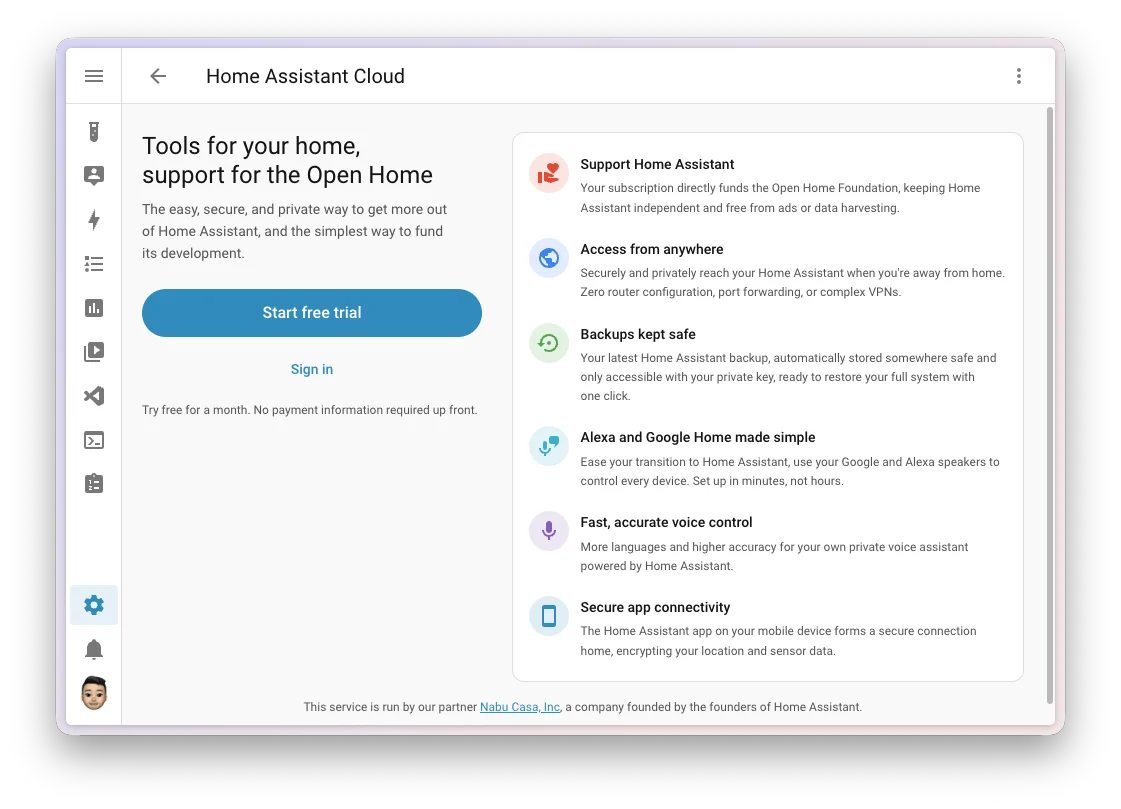
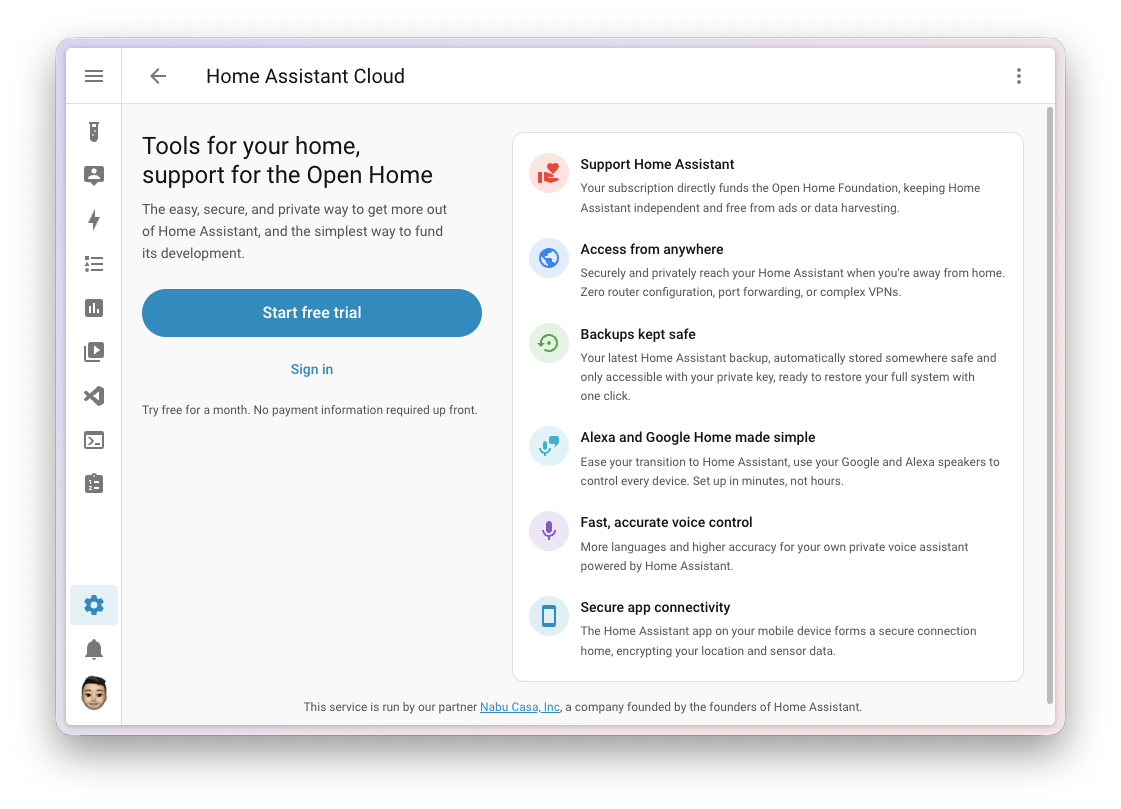
Home Assistant Cloud, operated in partnership with Nabu Casa to financially sustain the Open Home Foundation, has received critical infrastructure updates designed to improve security, sign-up flows, and speech recognition.
Addressing a longstanding pain point for multi-lingual households, the platform is launching an opt-in test phase for a new speech-to-text engine powered by Soniox via the system Labs menu. Designed specifically to overcome challenges with accents, background ambient noise, and non-English primary languages, the engine maintains the platform’s strict zero-logging privacy policy.
Furthermore, cloud-connected instances now pass true remote IP addresses rather than local loopback indicators (127.0.0.1) during login attempts. This enhancement allows administrators to effectively deploy IP-banning countermeasures and multi-factor authentication against unauthorized access attempts or automated botnets. Account creation has also been streamlined, featuring an upfront feature overview and automatic login upon email confirmation.
Security Dashboards, Activity Logs, and Network Mapping
Dashboard customization and system auditing have received significant refinements in the 2026.9 release, driven heavily by community design concepts and Open Home Foundation roadmap objectives.
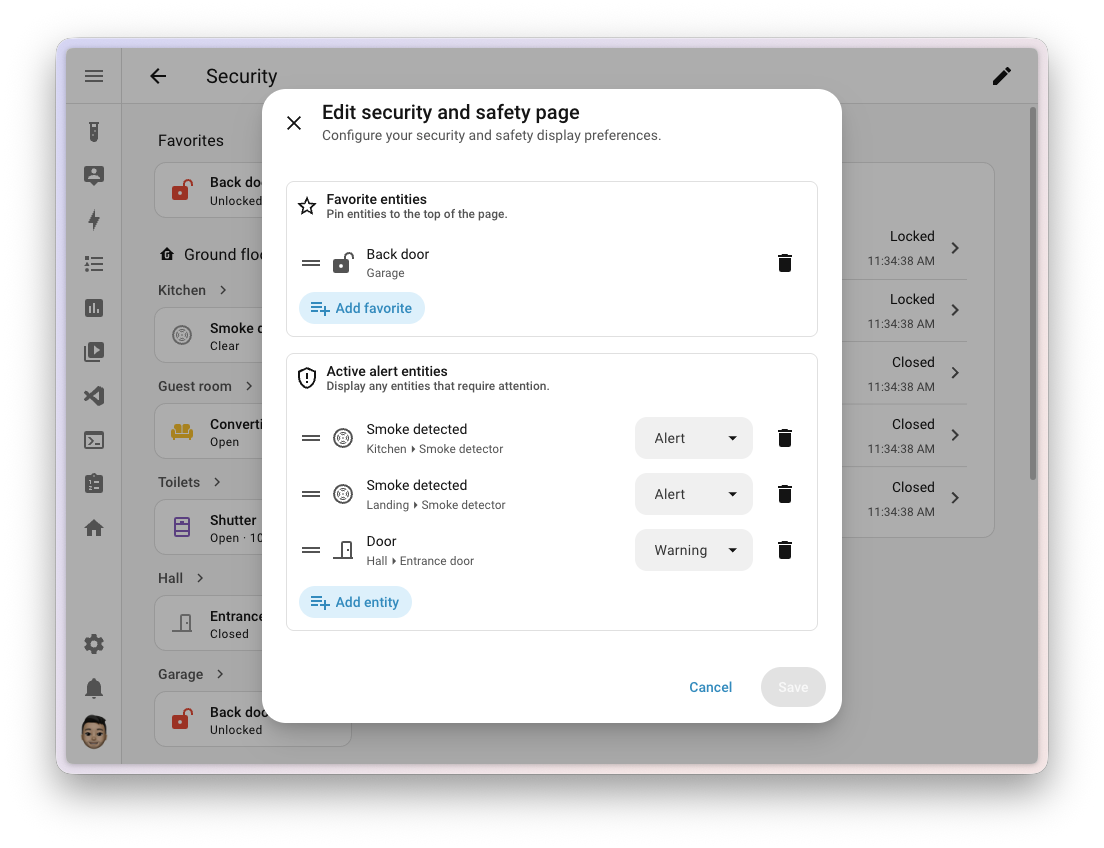
The built-in Security dashboard now incorporates a dynamic "Active alerts" section that remains hidden during normal operations but surfaces critical warnings—such as an open exterior door or triggered smoke detector—complete with adjustable severity levels and visual cues. A new "Favorites" section similarly pins high-priority entities to the top of the interface.
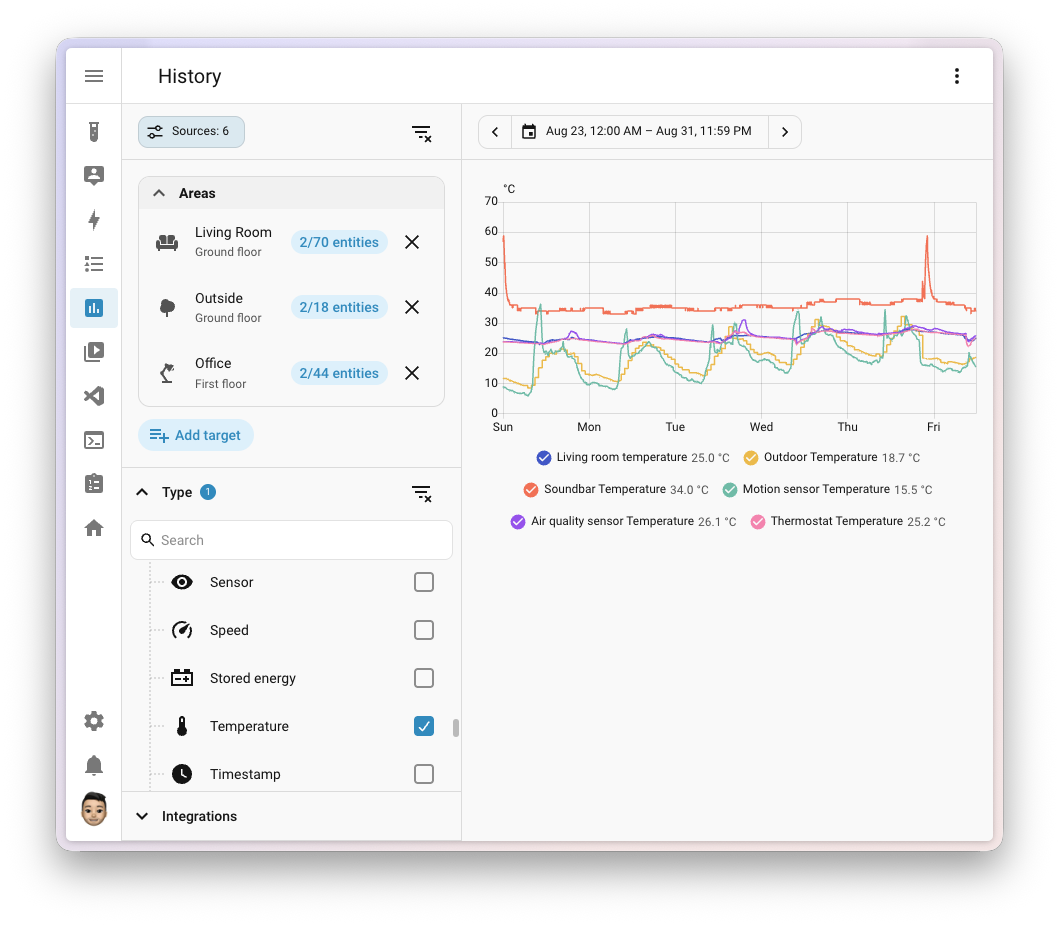
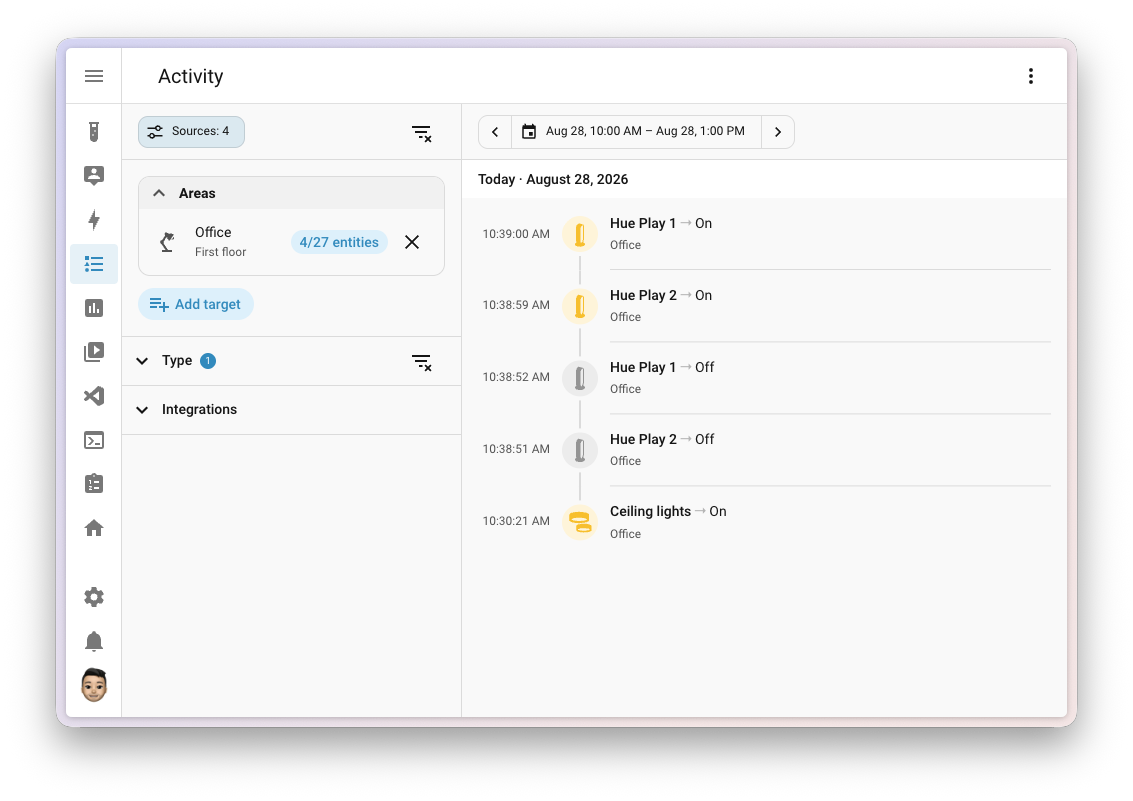
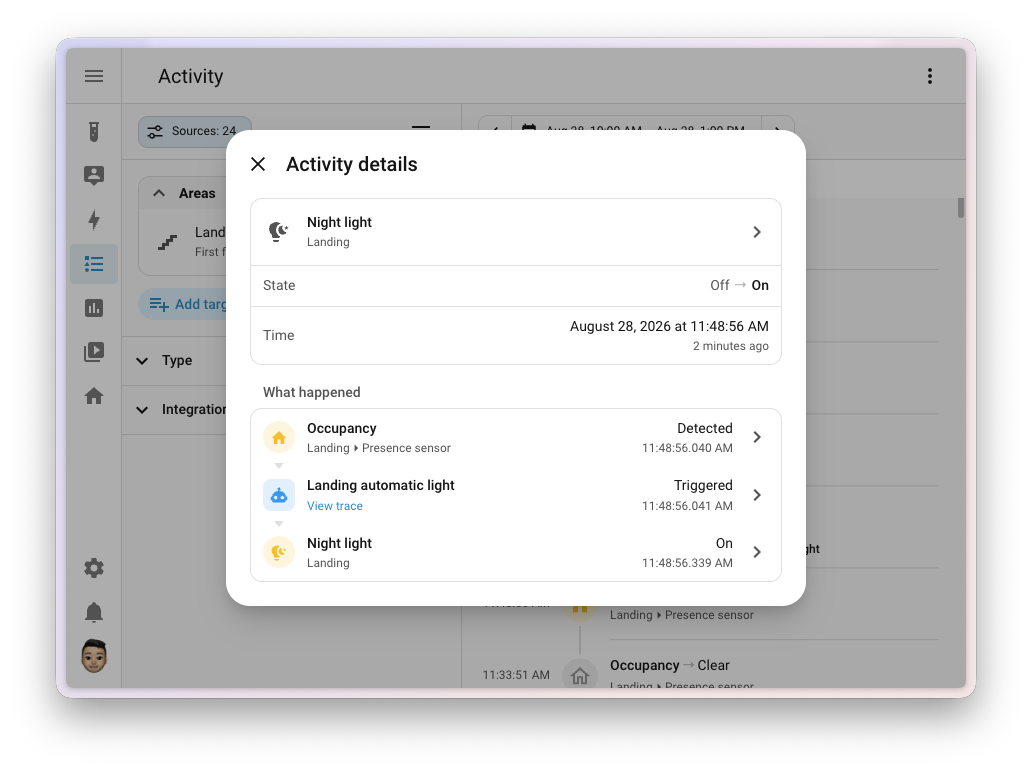
In parallel, the History and Activity logs have been unified under a shared "Sources" panel. Users can now filter historical data across floors, areas, devices, and domains. Crucially, the Activity log has evolved from tracking merely what changed to explaining why it changed. Selecting any log entry now opens a chronological trace dialog displaying the root cause, whether triggered by a human user, a schedule, a specific automation, or a system restart, complete with millisecond-precision timestamps.
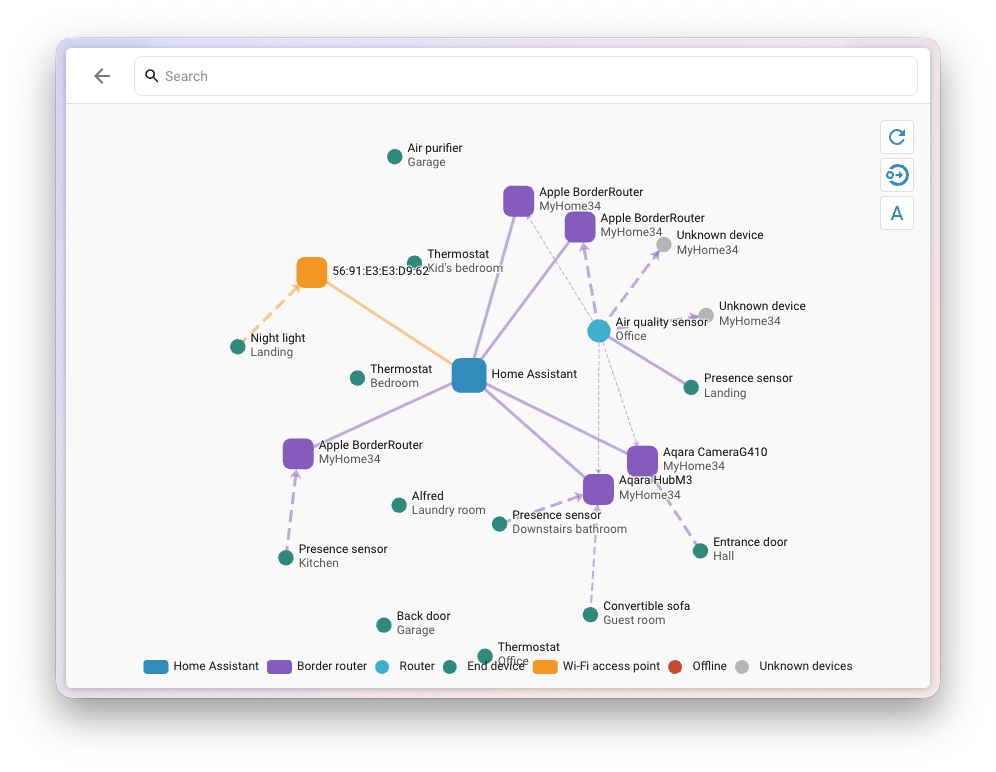
For network administrators managing complex infrastructures, the Matter panel now features a native "Show map" visualization tool. Mirroring existing maps for Zigbee, Z-Wave, and Bluetooth, the interface maps out Thread mesh networks, Wi-Fi access points, border routers, and battery-powered end devices, replacing opaque serial numbers with recognizable hostnames and signal strength indicators.
Accessibility Milestones and Environmental Automations
Demonstrating a continuous commitment to universal access, Home Assistant 2026.9 introduces comprehensive accessibility features for data charts. Historically rendered as static images, charts are now fully navigable via keyboard inputs and screen readers. As users traverse data points using arrow keys, the interface audibly announces timestamps and values while simultaneously generating dynamic audio tones that mirror the rise and fall of statistical trends.
The update also completes a multi-month overhaul of sun-based automations. Building upon previous releases, the Sun integration now incorporates dedicated triggers and conditions for "golden hour," "blue hour," "midnight sun," and "polar night," allowing advanced lighting adjustments and geographic-specific automations tailored to extreme latitudes.
Connectivity Panels and Hardware Management
To streamline hardware management, the settings menu has expanded to include a dedicated "Serial" panel under the Connectivity tab. This interface categorizes physical USB dongles and serial ports into active integrations, available spare hardware, and missing devices, alerting administrators instantly to disconnected zigbee or thread sticks. The MQTT integration has similarly received a modernized settings page featuring a live packet publishing tool and structured message formatting.
Industry Implications and Future Outlook
Home Assistant 2026.9 represents a maturation of open-source home automation, shifting focus from raw feature accumulation to system polish, protocol accessibility, and enterprise-grade reliability. By simplifying industrial hardware integration and lowering cognitive loads for network management, the Open Home Foundation continues to position its ecosystem as a viable, privacy-respecting alternative to proprietary smart home platforms.
The software update is available immediately for existing users, supported by weekly patch releases planned throughout September 2026 to address emerging bug reports.