
SpaceX’s Starship program achieved a significant milestone on Friday, July 24, 2026, with its thirteenth test flight, marking the first time both the Super Heavy booster and the Starship upper stage were successfully recovered. The mission also carried the inaugural payload of operational Starlink V3 satellites, demonstrating the vehicle’s growing capability for commercial deployment. The successful flight, lifting off at 5:51 p.m. CT from Starbase, Texas, concluded approximately an hour later with both stages performing as designed, a crucial step forward for the ambitious space program.
A Flawless Ascent and Recovery
The thirteenth iteration of Starship’s flight test program, designated as Flight 13, saw Booster 20 and Ship 40 ascend into the skies, initiating a series of critical maneuvers. Approximately a few minutes into the flight, the Super Heavy booster successfully separated from the Starship upper stage. Following separation, Booster 20 executed a controlled splashdown in the Gulf of Mexico, achieving this critical recovery phase roughly six minutes after liftoff. This success represents a notable improvement from Flight 12 in May, which encountered difficulties during its boostback burn, leading to a less controlled water landing. The precision of Booster 20’s recovery provides valuable data and reinforces confidence in the booster’s reusability potential.

Starship’s Payload Delivery and Softest Splashdown
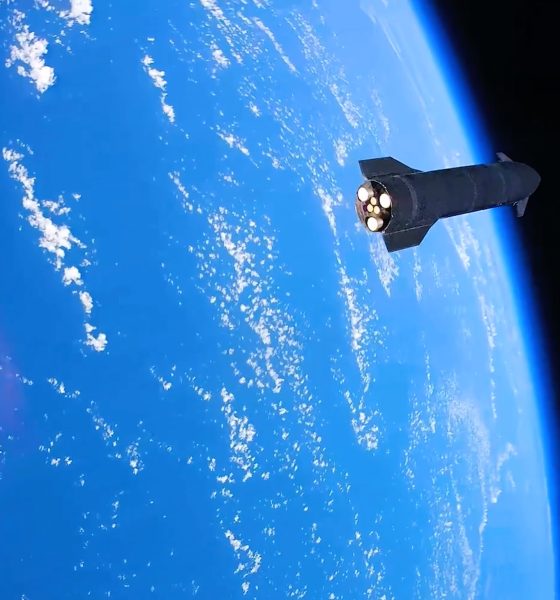
The performance of the Starship upper stage, Ship 40, was perhaps the most significant achievement of Flight 13. For the first time, the vehicle carried and successfully deployed a payload of 20 operational Starlink V3 satellites. These satellites are designed for enhanced performance and capacity within SpaceX’s global internet constellation. Following the satellite deployment, Ship 40 embarked on a suborbital trajectory, culminating in a landing in the Indian Ocean. SpaceX commentator Dan Huot described this as the company’s "softest splashdown yet," a testament to the meticulous engineering and control demonstrated during the mission.
"This is a dream scenario for this team that’s trying to get this heat shield data," Huot remarked during the live broadcast, as reported by Space.com. "I’m a little over the moon right now. Wow. Lucky number 13."
Unlike previous test flights that carried mass simulators, Flight 13’s payload consisted of production-ready Starlink V3 satellites. The successful deployment sequence, including the extension of solar arrays and antennas, is a vital step towards validating Starship’s capability for future commercial and scientific missions. This achievement is particularly crucial as it aligns with NASA’s Artemis program, which relies on Starship’s heavy-lift capacity for future lunar landings. The successful deployment of these advanced satellites keeps Starship on schedule for the payload integration work essential for lunar missions.
Strategic Importance Amidst Market Pressures
The successful completion of Starship Flight 13 arrives at a critical juncture for SpaceX and its publicly traded entity, SpaceX Corp. (SPCX). Since mid-July, SPCX shares have been trading below their initial public offering (IPO) price of $135. This period has also seen a significant increase in short interest, reaching approximately one-third of the tradable float, as reported by Teslarati.
While a single successful flight cannot instantaneously rectify a company’s balance sheet, it directly addresses a key question SpaceX needed to answer this week: the efficacy of the modifications implemented following the July 16 abort. The successful flight demonstrates that the fixes made after the redesign held up under real flight conditions for both stages, achieving desired outcomes on the first attempt. This robust performance is expected to have a positive impact on market sentiment, potentially bolstering investor confidence in the company’s long-term vision and technological advancements.
The Road Ahead: Orbital Attempts and Future Missions
SpaceX has not yet announced a target date for Flight 14. However, the company has previously indicated its intention to pursue an orbital attempt on the subsequent mission. The success of Flight 13, with its demonstrated improvements in stage recovery and payload deployment, makes this ambitious goal appear significantly more attainable.

The progress made with Starship is intrinsically linked to SpaceX’s broader ambitions, including its Starlink constellation and its role in NASA’s human spaceflight initiatives. Each successful test flight provides invaluable data that informs the development and refinement of the Starship system, paving the way for its eventual use in interplanetary exploration and resource utilization.
Background and Context: The Starship Program’s Evolution
The Starship program, spearheaded by Elon Musk, represents a paradigm shift in spaceflight. Designed as a fully reusable transportation system, Starship aims to drastically reduce the cost of access to space and enable ambitious endeavors such as lunar colonization and eventual human missions to Mars. The development process has been characterized by rapid iteration and testing, with each flight providing critical lessons learned.
Flight 13 builds upon a series of progressively ambitious test flights conducted from SpaceX’s Starbase facility. Early flights focused on basic ascent and controlled descent, with subsequent missions testing various stages of flight, including boostback burns, stage separation, and atmospheric re-entry. The inclusion of payloads, starting with Flight 13, signifies a transition from pure technology demonstration to operational capability.

The successful recovery of both the Super Heavy booster and the Starship upper stage is a monumental achievement in the pursuit of full reusability. This capability is central to SpaceX’s cost-reduction strategy, as it allows for the rapid turnaround and reuse of the most expensive components of the launch system. The controlled splashdowns in designated recovery zones, coupled with ongoing advancements in landing technology, are critical steps towards achieving routine and cost-effective space access.
Supporting Data and Analysis
The performance metrics from Flight 13, such as precise stage separation timing, booster burn durations, and Starship’s atmospheric re-entry profile, will be meticulously analyzed by SpaceX engineers. This data will be crucial for refining future flight profiles, optimizing engine performance, and further enhancing the vehicle’s structural integrity. The successful deployment of 20 Starlink V3 satellites, a significant number for a single launch, highlights Starship’s potential to revolutionize satellite deployment by enabling larger constellations to be placed in orbit more efficiently.
The comparison between Flight 12 and Flight 13 in terms of booster recovery underscores the rapid pace of improvement within the Starship program. The issues encountered in Flight 12, particularly during the boostback burn, were addressed and resolved, demonstrating SpaceX’s agile development methodology. This iterative process, where failures are viewed as learning opportunities, is a hallmark of the company’s approach to complex engineering challenges.

Official Responses and Future Outlook
While specific official statements from SpaceX regarding Flight 13 are typically released post-mission, the company’s consistent communication through social media platforms, particularly by Elon Musk, provides insights into their operational philosophy. The enthusiastic reporting by Teslarati, an outlet closely affiliated with SpaceX’s endeavors, further emphasizes the significance of this flight.
The successful execution of Flight 13 sets a strong precedent for the future of Starship. The focus now shifts to preparing for Flight 14, with the explicit goal of an orbital attempt. This would involve Starship reaching its intended orbital velocity and potentially conducting more complex maneuvers in space. Beyond orbital capabilities, the ultimate aim is to achieve a fully reusable, rapid launch and recovery cycle, enabling frequent flights for both Earth-orbiting missions and deep-space exploration.
The integration of Starship with other SpaceX initiatives, such as the Starlink constellation and its role in NASA’s Artemis program, highlights the interconnectedness of the company’s long-term strategic objectives. The success of Starship is not merely a technological achievement but a fundamental enabler of SpaceX’s broader mission to make humanity a multi-planetary species. The progress demonstrated on July 24, 2026, marks a significant stride towards realizing that vision.