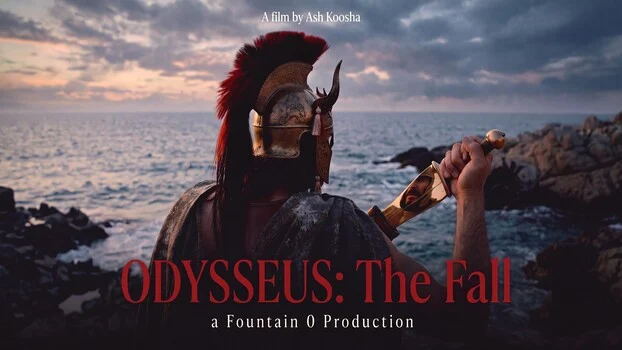
The cinematic landscape has been dramatically reshaped with the simultaneous arrival of Christopher Nolan’s highly anticipated epic, "The Odyssey," and a provocative AI-generated counterpart, "Odysseus: The Fall." Nolan’s magnum opus, reportedly costing $250 million and filmed entirely on IMAX 70mm, premiered today, promising a visceral, grand-scale experience. In a starkly contrasting debut, an AI studio unveiled its own interpretation of Homer’s timeless tale just three days prior to Nolan’s release. This AI production, "Odysseus: The Fall," boasts a runtime of 135 minutes, was largely conceived and executed by a single individual over a three-month period, and carries a budget in the "mid five figures"—a fraction of Nolan’s colossal investment.
This groundbreaking AI film originates from Fountain 0, a London-based entity positioning itself as the vanguard of AI-driven filmmaking. The project is spearheaded by director Ash Koosha, who not only helmed the production but also lent his own likeness to the character of Odysseus. Twelve additional human likenesses were reportedly sourced from individuals within Koosha’s personal network. The visual rendering of "Odysseus: The Fall" was achieved using a proprietary system referred to as Kling. The film’s substantial runtime mirrors that of a conventional feature, and it is slated for digital rental at $9.99 later this summer via Fountain 0’s proprietary platform, eschewing traditional theatrical distribution. A teaser trailer for the AI production has been released, offering a glimpse into its digitally crafted world.
Early Reactions and the AI Filmmaking Debate
The reception to "Odysseus: The Fall" has been largely predictable, marked by sharp criticism and skepticism. Online commentary has ranged from disparaging remarks such as "rancid slop" to accusations of being an "AI parasite." The prevailing criticisms echo familiar sentiments regarding AI-generated content: stilted dialogue, a perceived lack of emotional depth or "interior life" in the characters’ digital visages, and an overall texture that observers describe as being "described rather than filmed." These critiques highlight a persistent challenge in AI-driven creative endeavors – bridging the gap between technical execution and genuine artistic resonance.
Ash Koosha’s Vision: Democratizing Storytelling
Despite the often harsh critiques, Ash Koosha’s rationale behind "Odysseus: The Fall" offers a more nuanced perspective, extending beyond the initial shock value of an AI-produced feature-length film. Koosha articulates a compelling argument that AI technology is not inherently a threat to the art of filmmaking, but rather a powerful tool that "is a threat to nothing except distance, the distance between a person with a story and the means to tell it." He further elaborates, stating, "a tool has never made a film worth watching. A person with something urgent to say has made every one of them, and that won’t change." This perspective frames AI as an democratizing force, empowering individuals with compelling narratives to bring their visions to life without the prohibitive barriers of traditional filmmaking.
Koosha has also expressed a hopeful outlook regarding Nolan’s "The Odyssey," suggesting that its commercial success might, in turn, drive audiences to explore alternative interpretations, including his own AI-generated version. This symbiotic relationship between established and emergent cinematic forms is an intriguing facet of the current media landscape. Notably, Koosha’s previous feature, produced for approximately $2,000, achieved the distinction of being the first fully AI-generated film to be screened at the prestigious Tribeca Film Festival. This prior accomplishment lends credence to his claims, suggesting that his current endeavor is not merely a headline-grabbing stunt but a continuation of his exploration into the potential of AI in filmmaking.
The Uncomfortable Comparison: Craftsmanship vs. Code
The juxtaposition deliberately invited by Fountain 0 between Nolan’s "The Odyssey" and their AI counterpart is the central point of contention and contemplation. Nolan’s film represents the pinnacle of traditional cinematic craftsmanship. Its very existence is a testament to the monumental effort of a large crew meticulously transporting some of the largest film cameras ever constructed to real-world locations, meticulously capturing the nuances of genuine human expression on real faces. This tangible, physical aspect of filmmaking is, for many, the primary draw and a significant reason to experience the film on the largest screen possible.
In stark contrast, "Odysseus: The Fall" is the product of an individual’s sustained effort over three months, dictated by algorithms and computational processes. The current audience response, vociferous and immediate, underscores a significant divide. Viewers are discerning the fundamental differences in their creation and are vocalizing their opinions. The uncomfortable, yet unavoidable, question is not whether this particular AI "Odyssey" is good – by most accounts, it is not. Instead, the more pressing inquiry revolves around the future trajectory of this technological advancement. What will the discourse sound like when the next AI-generated film is not outright bad, but merely mediocre, yet costs a negligible amount to produce? This scenario poses profound questions about artistic value, market saturation, and the evolving definition of cinematic artistry.
Supporting Data and Industry Context
The film industry has been grappling with the implications of artificial intelligence for several years. While AI has been instrumental in post-production tasks such as color grading, visual effects rendering, and script analysis, its application in generating entire narrative films has been a more recent and contentious development.
- AI in Visual Effects (VFX): The global VFX market was valued at approximately $15.2 billion in 2022 and is projected to grow significantly. AI algorithms are increasingly being used to automate repetitive tasks, such as rotoscoping and motion tracking, thereby reducing production costs and timelines.
- Generative AI Advancements: The rapid evolution of generative AI models, such as those powering text-to-image and text-to-video generation, has accelerated the possibility of AI-driven content creation. Tools like DALL-E, Midjourney, and Stable Diffusion have demonstrated remarkable capabilities in generating novel visual content from textual prompts.
- Budgetary Discrepancies: The $250 million budget for Nolan’s "The Odyssey" represents the high end of blockbuster filmmaking, encompassing extensive location shooting, large cast and crew, and sophisticated post-production. The "mid five figures" for "Odysseus: The Fall" (estimated to be between $50,000 and $99,999) highlights the dramatic cost-reduction potential of AI-assisted production.
- Distribution Models: Fountain 0’s direct-to-consumer digital rental model for "Odysseus: The Fall" signifies a potential shift in distribution, bypassing traditional gatekeepers like cinemas and streaming platforms, and directly engaging with a niche audience.
Timeline and Chronology
- Early 2020s: Increasing integration of AI tools in film post-production.
- 2023: Ash Koosha’s "The Last Movie Ever Made" becomes the first fully AI-generated film to screen at Tribeca Film Festival.
- Early 2024: Fountain 0 develops and produces "Odysseus: The Fall."
- Mid-2024 (Present): Christopher Nolan’s "The Odyssey" is released in theaters.
- Three days prior to Nolan’s release: Fountain 0 announces and releases a teaser for "Odysseus: The Fall."
- Later Summer 2024: "Odysseus: The Fall" is scheduled for digital rental release.
Broader Impact and Implications
The emergence of "Odysseus: The Fall" alongside Nolan’s "The Odyssey" serves as a potent case study in the evolving relationship between human creativity and artificial intelligence in the realm of filmmaking.
Democratization vs. Devaluation of Art
Koosha’s argument for AI as a democratizing tool holds significant weight. It offers a pathway for aspiring filmmakers and storytellers who lack the financial resources for traditional production to bring their narratives to life. This could lead to a diversification of voices and perspectives in cinema, challenging the dominance of established studios and their often-formulaic outputs. However, the immediate critical response to "Odysseus: The Fall" raises concerns about the potential devaluation of artistic craftsmanship. If a film can be generated with minimal human effort and cost, how will audiences and critics differentiate between genuine artistic expression and technically proficient, yet soulless, algorithmic output?
The Future of Film Labor
The implications for film industry labor are substantial. While AI can automate certain tasks, potentially displacing some roles, it also creates new opportunities in areas such as AI prompt engineering, model training, and ethical AI oversight in creative contexts. The debate will likely shift from whether AI can replace human artists to how humans and AI can collaborate to create compelling cinematic experiences. The current "bad" AI film may evolve into a "mediocre" AI film, raising questions about market saturation with low-cost, algorithmically generated content, and the potential impact on the economic viability of traditional filmmaking.
Redefining "Filmmaking"
The existence of "Odysseus: The Fall" compels a re-examination of what constitutes "filmmaking." Is it solely the act of capturing reality with cameras and directing actors, or does it encompass the conceptualization, generation, and curation of a narrative through any available technological means? The debate will likely become more complex as AI tools become more sophisticated, blurring the lines between human-authored and machine-generated content. The ultimate success of AI in filmmaking may depend not on replicating human artistry but on finding unique narrative and aesthetic avenues that leverage the distinct capabilities of AI. The success of Nolan’s "The Odyssey" in IMAX theaters highlights the enduring appeal of tangible, immersive cinematic experiences, while the existence of "Odysseus: The Fall" signals a nascent, and at times controversial, frontier in digital storytelling. The interplay between these two poles will undoubtedly shape the future of cinema.