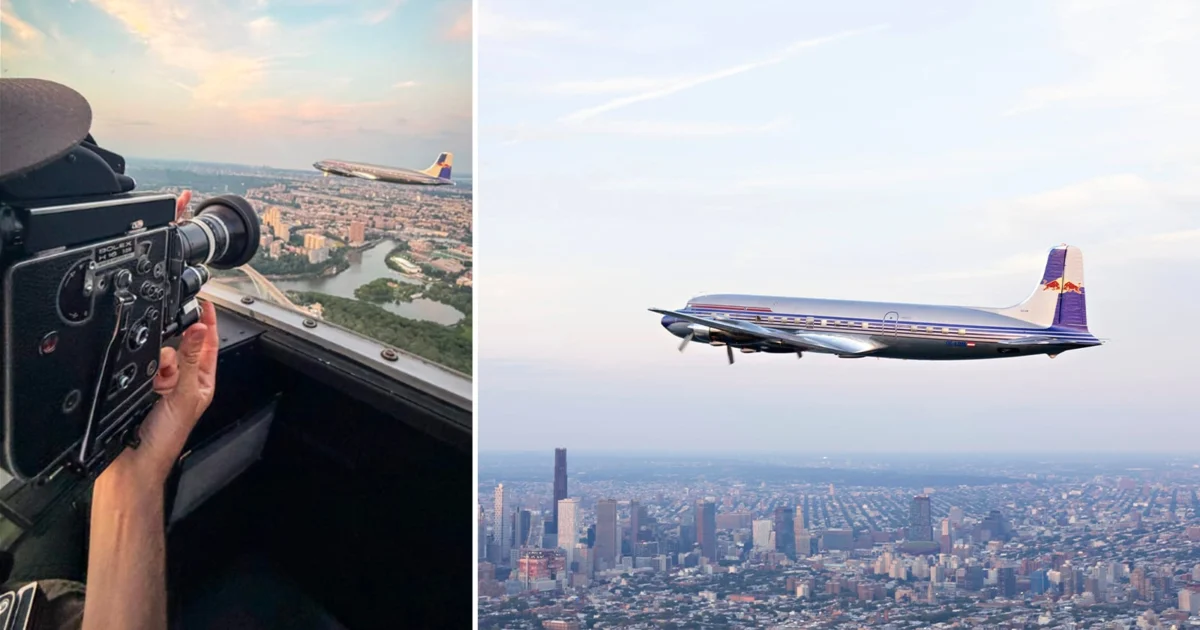
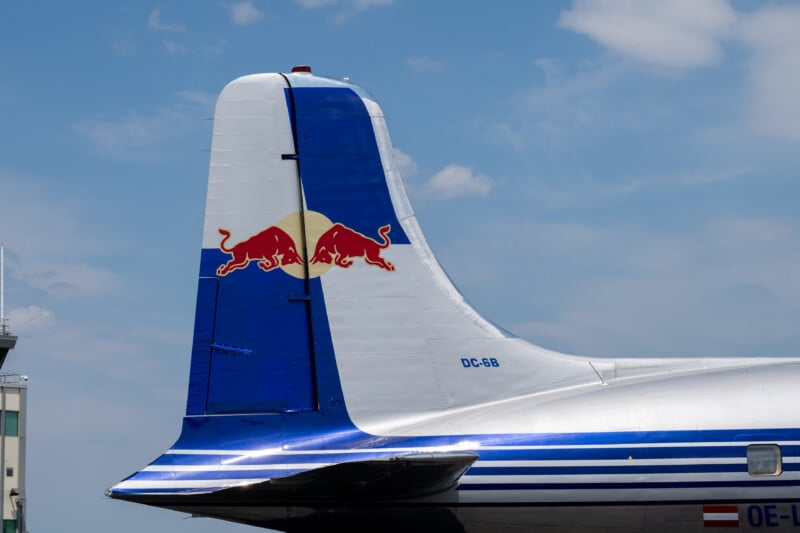
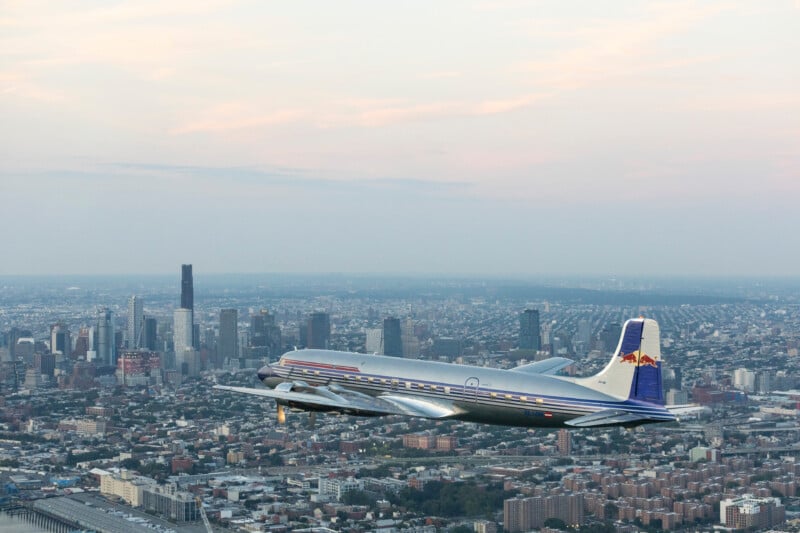
For the first time since its manufacture in Santa Monica, California, in 1958, the iconic DC-6B aircraft from Red Bull’s esteemed aviation collection has soared once more over United States airspace. Its triumphant return began with a series of captivating flights over New York City, a landmark occasion meticulously documented through an equally historic lens: the use of vintage Bolex motion picture cameras from the same era as the legendary aircraft. This ambitious project, aptly titled "DC-6 x Bolex," sought to bridge the gap between contemporary aviation storytelling and the distinct visual character of analog film, forging a unique dialogue between two distinct eras of image-making. Eschewing a solely digital approach, the production team strategically employed two Bolex cameras to capture the grandeur of the DC-6B as it ferried passengers across the New York skyline, creating a visual narrative that resonated with the aircraft’s storied past.
The deliberate choice to utilize vintage filmmaking equipment was rooted in a profound desire to forge a palpable connection between the DC-6B’s historical significance and the tools used to chronicle its modern-day revival. The objective was not merely to record the aircraft’s flight but to imbue the visual language of the footage itself with the spirit of the period in which the DC-6B was originally conceived and constructed. By embracing Bolex film cameras, a direct contemporary of the DC-6B, the production achieved an authentic aesthetic that not only honored the aircraft’s legacy but also celebrated the enduring allure of analog filmmaking.
"The decision to film the DC-6B on Bolex cameras stemmed from a deep love and appreciation for film photography and motion pictures," a representative from the Red Bull Aviation team exclusively shared with PetaPixel. "It offers a unique, authentic way to present a subject, truly setting the tone for the DC-6B’s visit and acknowledging that it had not flown over American soil since its construction in 1958 in Santa Monica. We aimed to celebrate the plane by capturing it with cameras from the same era it was built."
A Timeless Pairing: The DC-6B and Analog Cinematography
To authentically evoke the atmosphere of the DC-6B’s original era, the production team meticulously selected two Bolex cameras whose manufacturing dates closely aligned with the aircraft’s timeline: a Bolex H16 Rex 3, manufactured in 1963, and a Bolex H16 SBM, produced in 1970. These choices were deliberate, aiming for the closest possible temporal resonance with the 1958 DC-6B.
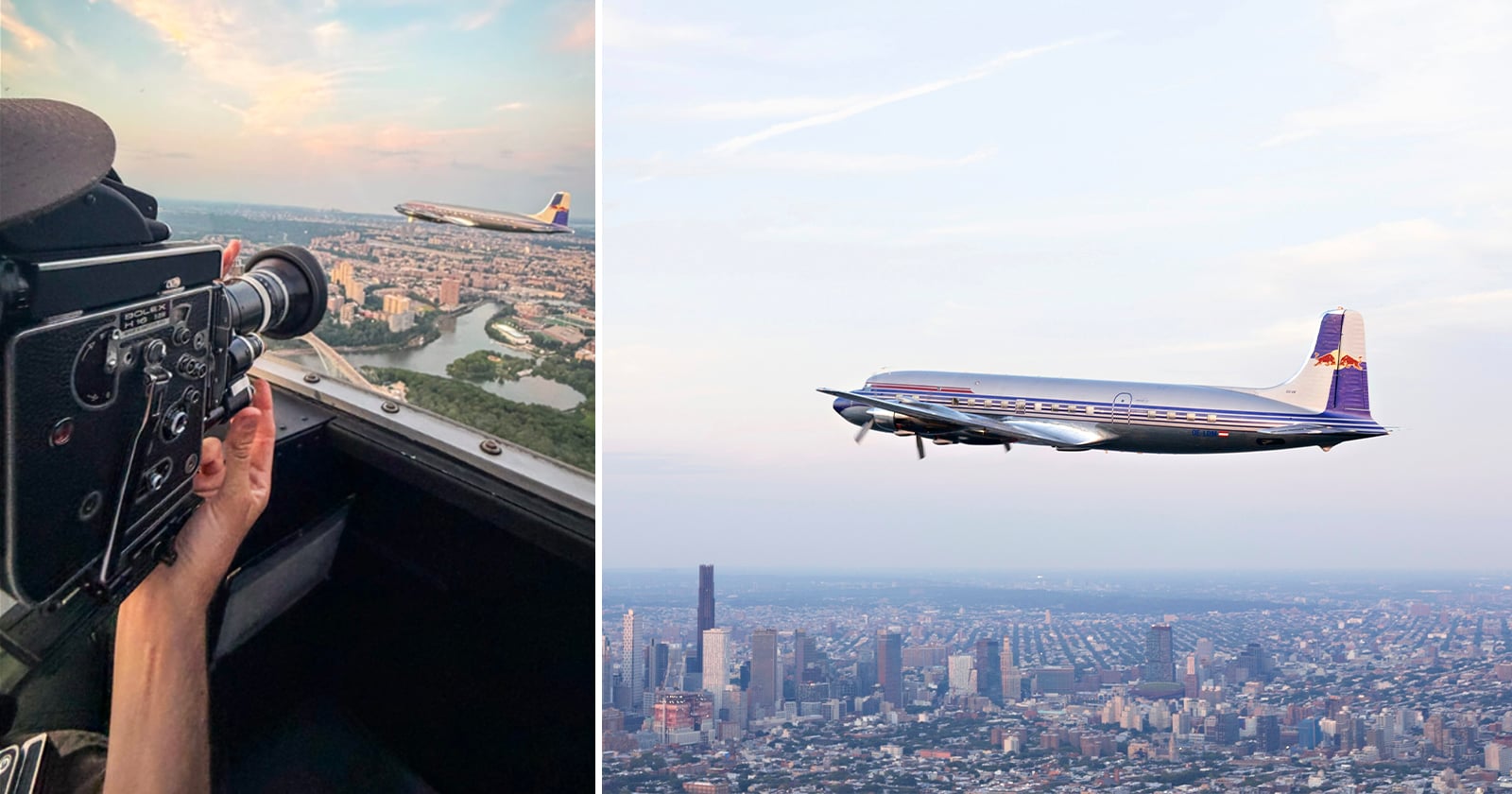
"The Bolex cameras we utilized were a Bolex H16 Rex 3 from 1963 and a Bolex H16 SBM from 1970, representing the closest years we could find to 1958 when the DC-6B was built," confirmed the Red Bull Aviation team.
These venerable cameras were paired with Kodak VISION3 50D and 250D film stocks. The selection of these specific film stocks was dictated by the prevailing lighting conditions during the flights, particularly the extensive footage captured during an evening flight over New York City. These films were chosen for their ability to expertly handle dynamic light changes while preserving the inimitable character of analog motion picture film.
"We paired the Bolex cameras with Kodak VISION3 50D and 250D film stocks. These film types were best suited to the available sunlight and ambient light, as the majority of our footage was captured during an 8 PM evening flight around the city," the Red Bull Aviation team explained. "We felt this was the most fitting way to document and celebrate the iconic DC-6B aircraft."
Aerial Cinematography Challenges and Triumphs
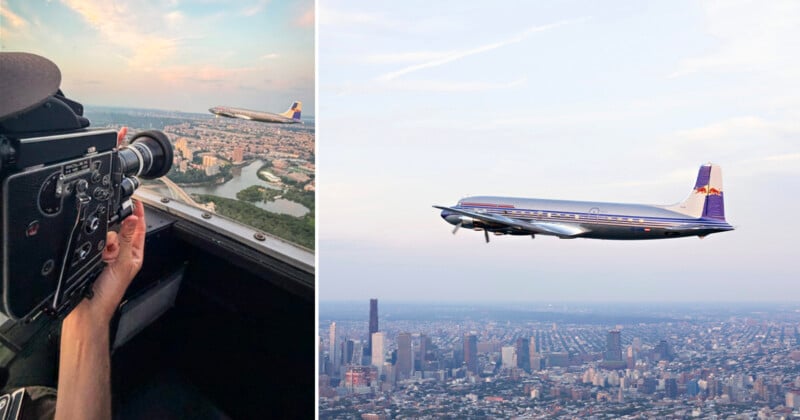
The endeavor to capture footage from a separate aircraft flying in close proximity to the DC-6B presented a complex array of both creative and technical hurdles. The production team positioned themselves within the nose of a historic aircraft, navigating the inherent challenges of aerial cinematography while simultaneously operating cameras that were decades old.
"One of the most significant challenges was overcoming the inherent fear of flying in the nose of a World War II-era plane and adjusting to filming with a decades-old camera in rather bumpy conditions," admitted the Red Bull Aviation team.
While the seasoned pilots from Million Air instilled confidence throughout the flights, the team revealed that their primary obstacle was conquering their own internal anxieties about filming in such an unconventional and potentially unnerving environment. Ultimately, the vintage cameras themselves became an integral element of the creative process, acting as a conduit for overcoming these apprehensions.
"We had complete confidence in the pilots from Million Air, the company operating the camera planes. However, the main challenge was more internal – our own apprehension," the Red Bull Aviation team elaborated. "In the end, the camera served as our ‘shield,’ allowing us to set aside our nervousness and fully immerse ourselves in documenting the DC-6B over New York City in the most impactful way possible."
The Art of Analog in a Digital Age
While the project wholeheartedly embraced the aesthetic and tactile experience of analog filmmaking, the crucial task remained to present this captured footage in a manner that would resonate with contemporary audiences. The resultant social media presentation skillfully integrated the finished film footage with a comprehensive behind-the-scenes look at cinematographer Khyber Jones’s process of capturing the aircraft in flight.
"The social media piece that was released remained true to the original footage by incorporating a behind-the-scenes perspective, illustrating how cinematographer Khyber Jones managed to capture the aerial shots over New York City," stated the Red Bull Aviation team.
The final visual output underwent only a subtle color grading. The production team prioritized preserving the inherent character of the film as it was returned from the Kodak laboratory in New York City, ensuring that the footage retained its authentic analog texture.
"Beyond a slight color grade, the footage is presented as we received it from the Kodak Lab in NYC," confirmed the Red Bull Aviation team. "Our overarching goal was to remain faithful to the art form of film and to genuinely honor that tradition, just as we honored the DC-6B."
A Unique Perspective on the New York Skyline
Among the myriad of memorable moments captured during the flights, the aircraft’s passage over Central Park emerged as a particularly striking sequence for the production team.
"Flying over Central Park was surreal, and capturing that specific moment was incredible," remarked the Red Bull Aviation team. "It’s such an iconic landmark in NYC, and we were absolutely giddy in the nose of the A26 Invader plane while filming the DC-6B flying overhead."
This unique formation flight provided the filmmakers with an unparalleled vantage point, allowing them to capture the DC-6B from a distance and perspective that masterfully accentuated both the aircraft’s imposing scale and its symbiotic relationship with the sprawling urban landscape.
"We maintained the perfect distance, which allowed our framing to work out exceptionally well. Those moments truly encapsulated the spirit of the flyover and the Flying Bulls’ visit to New York City," the Red Bull Aviation team concluded.
The Enduring Relevance of Film-Based Creation
While the "DC-6 x Bolex" project was intrinsically linked to the resurgence of a historic aircraft, the Red Bull Aviation team expressed a broader aspiration: to inspire creators to shift their focus from chasing ephemeral trends to pursuing endeavors that genuinely ignite their passion. For the team, the decision to employ vintage film cameras transcended mere stylistic preference; it served as a potent reminder that the creative process itself holds as much intrinsic value as the final product.
"Honestly, don’t hesitate to create. Whatever you intend to shoot, just go and do it for yourself. Capture life, your surroundings, and let them be your inspiration," advised the Red Bull Aviation team. "More people simply need to create because they desire to, not because they feel obligated to. Stay true to yourself."
This guiding philosophy permeated the entirety of the "DC-6 x Bolex" project, leading the team to deliberately adopt a less conventional approach to document an aircraft already steeped in decades of history. By juxtaposing a vintage aircraft with vintage filmmaking equipment, the production successfully forged a compelling visual link between the past and the present, demonstrating the enduring power of older creative tools to offer unique perspectives.
"Be different. Strive to think outside the box. Create for yourself, not for others. Take a path less traveled than everyone else and remain authentic to your own vision," urged the Red Bull Aviation team.
Ultimately, the "DC-6 x Bolex" project stands as a powerful testament that compelling storytelling is not solely defined by the latest technological advancements but is fundamentally shaped by the vision and intent behind the camera. Whether working with the tactile medium of film or the ubiquitous tools of digital cinematography, creators possess the capacity to discover novel approaches to familiar subjects by embracing experimentation and producing work that resonates with their genuine perspective. The project underscores the timeless principle that innovation in storytelling often lies in re-examining established methods and finding new meaning within them. The success of this initiative highlights the potential for hybrid approaches, blending historical artifacts with contemporary narrative techniques to create something profoundly resonant and visually distinctive.