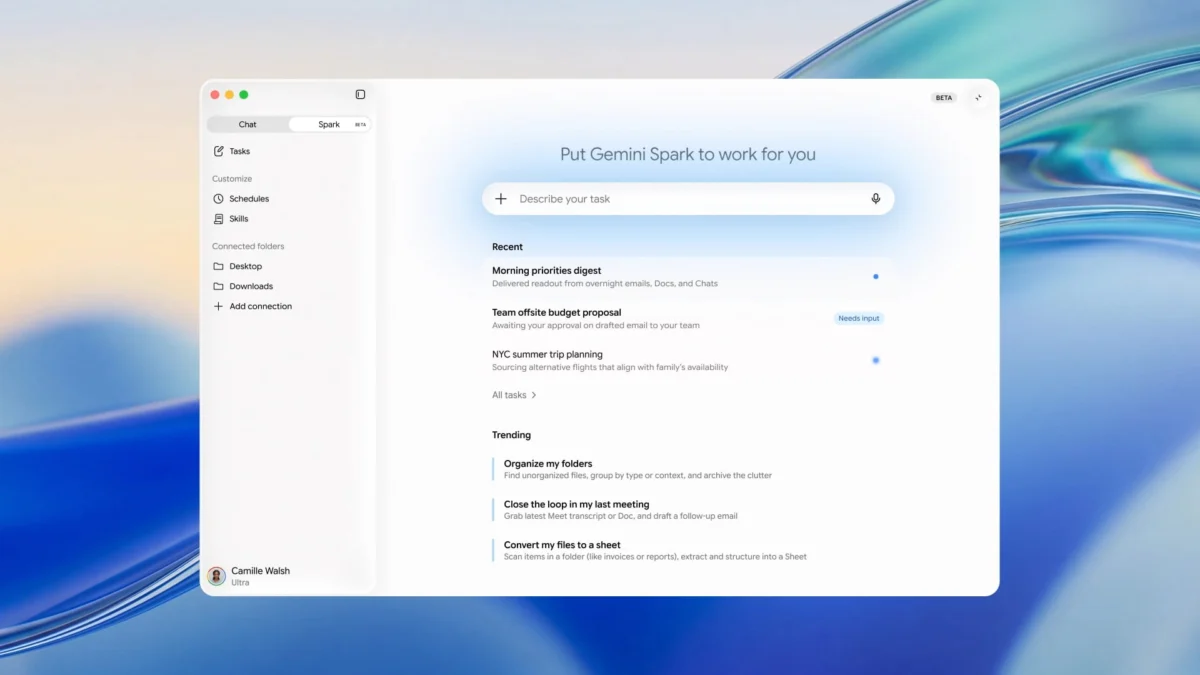
Google’s ambitious personal AI agent, Gemini Spark, is now extending its reach to Google AI Pro subscribers in the United States, marking a significant milestone in the broader rollout of Google’s advanced artificial intelligence capabilities. Following its initial debut in May exclusively for users with AI Ultra, this expansion heralds a new era of sophisticated task automation. The company has also indicated that availability for AI Pro members in other countries will commence "soon," signaling a global push for this transformative technology.
The Dawn of Agentic AI: Understanding Gemini Spark
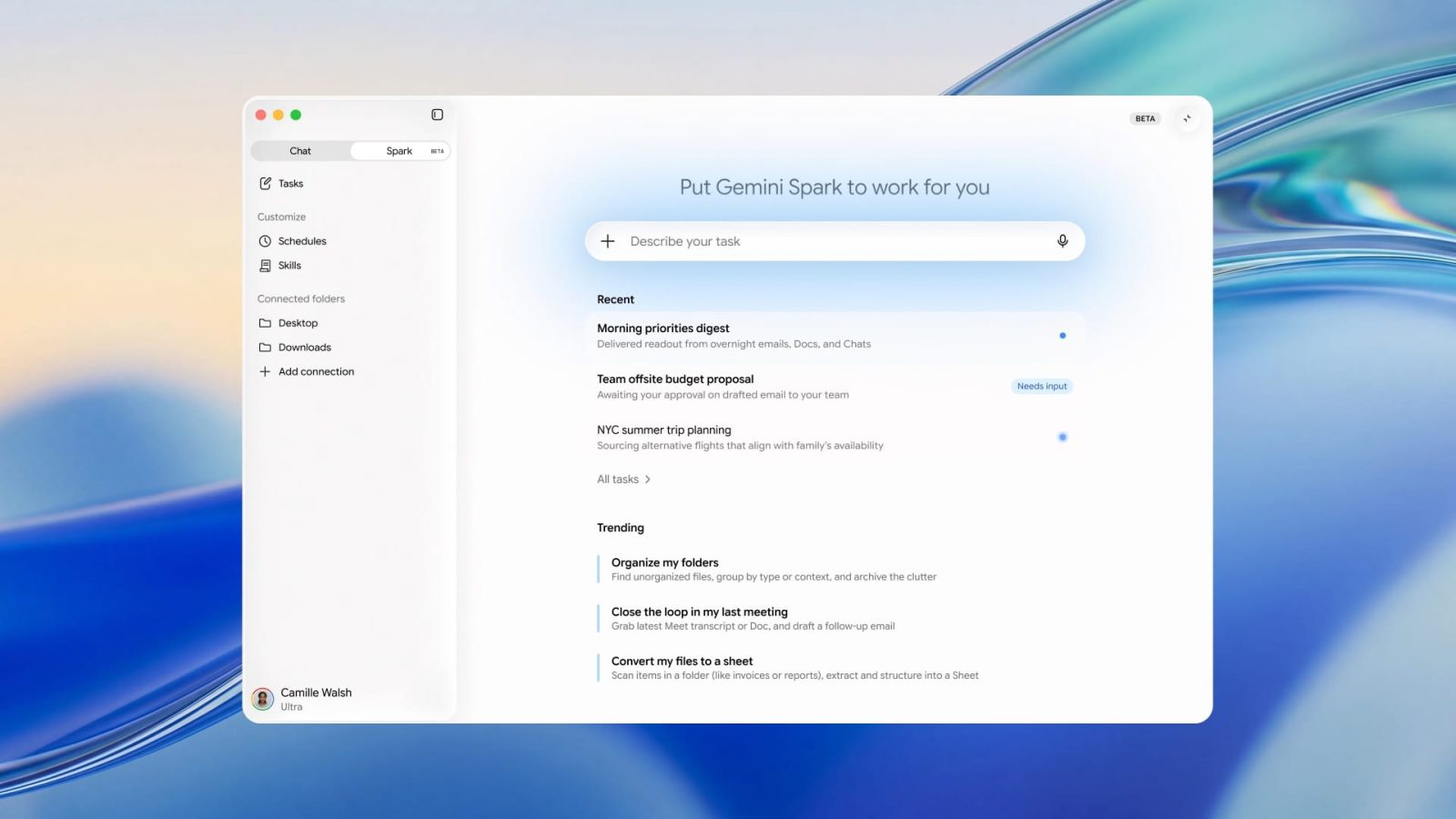
Gemini Spark represents Google’s foray into "agentic AI," moving beyond conversational chatbots to create an intelligent agent capable of autonomously executing complex, multi-step tasks. Designed to act as a personal AI orchestrator, Spark integrates deeply with Google’s extensive ecosystem, leveraging Connected Apps such as Google Workspace and Search, alongside Personal Intelligence capabilities. Its architecture also incorporates a remote web browser and computer with code execution, empowering it to navigate and interact with the digital world, perform calculations, and process information in ways previously confined to human intervention. The platform supports a variety of interaction modalities, including chats, a visual "Canvas" for task management, and location-based triggers, all designed to streamline workflows and enhance user productivity.
At the heart of Gemini Spark’s operational framework are two innovative concepts: Skills and Schedules. Skills are essentially reusable, context-aware instructions that define how Spark should approach a particular type of task. For instance, a "Meeting Preparation Skill" might involve summarizing recent emails, drafting an agenda, and compiling relevant documents. Schedules, conversely, are automated triggers that dictate when a Skill or Task should be initiated, based on factors like time, specific conditions, or incoming data. A Task itself is the overarching goal the user wishes to achieve, with Spark orchestrating the necessary Skills and Schedules to reach that objective. Users are permitted to have up to 15 tasks running concurrently, with Spark’s resource consumption managed under the same compute-based usage limits applicable to the broader Gemini platform.

A Strategic Leap: Google’s AI Journey and Market Context
The introduction and phased expansion of Gemini Spark are part of a larger strategic imperative for Google in the fiercely competitive artificial intelligence landscape. For years, AI assistants like Apple’s Siri, Amazon’s Alexa, and Google’s own Assistant have offered voice-activated commands and basic information retrieval. However, the advent of generative AI and large language models (LLMs) has fundamentally shifted expectations, ushering in an era where AI can generate content, synthesize information, and understand complex prompts.
Google’s response has been the consolidation of its AI efforts under the Gemini brand, aiming to deliver a multimodal, powerful AI experience that can understand and operate across text, images, audio, and video. Gemini Spark builds directly on this foundation, addressing a critical gap in the market: the ability to automate intricate, context-dependent workflows that require more than simple command execution. Competitors such as OpenAI with its custom GPTs and emerging "agents," Microsoft with its Copilot integrated deeply into Windows and Microsoft 365, and Apple’s own evolving on-device AI capabilities are all vying for supremacy in this rapidly expanding domain. Google’s strategy with Spark is to differentiate by offering a deeply integrated, highly autonomous agent that leverages its unparalleled ecosystem of services.
Chronology of Gemini Spark’s Rollout and Evolution
The journey of Gemini Spark, while relatively brief, has been marked by strategic, phased releases and continuous enhancement:
- Pre-Launch Development (Early 2020s – Early 2026): Google’s internal teams worked on the foundational agentic AI technologies, conceptualizing a system that could not only understand but also act on complex instructions across various digital environments. This period likely involved extensive research into AI planning, execution monitoring, and safe deployment.
- May 2026 – Initial Launch: Gemini Spark was first introduced to a select group of premium users subscribed to AI Ultra. This initial phase served as a crucial testing ground, allowing Google to gather feedback from early adopters and refine the platform’s core functionalities. The focus was on demonstrating its capabilities in automating tasks within the Google ecosystem.
- June 2026 – Feature Expansion and macOS Integration: A significant update in June expanded Spark’s capabilities, particularly within Google Workspace. This period also saw the introduction of a dedicated macOS application, which, crucially, allowed users to initiate Spark tasks, such as browsing local files, directly from their mobile devices. This cross-platform interoperability highlighted Google’s commitment to a seamless user experience across different operating systems.
- Current Rollout (Late June/Early July 2026): The current phase sees Gemini Spark becoming available to Google AI Pro subscribers in the US. This broader release to a larger, though still premium, user base indicates growing confidence in the platform’s stability and utility. The "soon" promise for international AI Pro subscribers suggests further geographic expansion is imminent.
- Future Outlook: Google is expected to continue enhancing Spark, integrating more third-party applications, expanding its Skill library, and refining its Personal Intelligence capabilities to offer even more personalized and proactive assistance. The long-term vision likely includes making Spark accessible to a wider audience, potentially through different subscription tiers or even a free, albeit limited, version.
Deep Dive into Functionality: Empowering Users with Automated Workflows
Gemini Spark’s power lies in its deep integration with Google’s suite of applications, transforming them from passive tools into active participants in automated workflows.
- Google Workspace Integration: This is arguably the most impactful area of Spark’s current functionality.
- Calendar: Spark can manage schedules, automatically book meetings based on availability and participant preferences, send invitations, and even re-schedule conflicting events. For example, a "Meeting Scheduler Skill" could automatically find the best time for a team meeting, send out invites, and add a video conferencing link.
- Gmail: From drafting comprehensive email responses by pulling information from various sources to summarizing lengthy email threads and organizing inboxes, Spark significantly reduces email management overhead. Users could create a "Client Follow-up Skill" that drafts personalized emails to clients after a meeting, attaching relevant documents.
- Docs, Sheets, Slides, & Drive: Spark can create, edit, and analyze documents, spreadsheets, and presentations. It can extract data from a Google Sheet to generate a summary report in Google Docs or even populate a Google Slides presentation with key findings. A critical safeguard is in place for shared documents: to edit shared content, users must review and confirm Spark’s planned edits, ensuring collaboration remains intentional and secure. This balance between automation and human oversight is crucial for enterprise adoption.
- Google Keep: Spark can manage notes and lists, allowing users to automate the creation of shopping lists based on calendar events or generate daily to-do lists from project documents.
- Google Tasks: For personal and professional task management, Spark offers powerful automation. It can create, organize, and prioritize tasks based on incoming emails, meeting outcomes, or project deadlines. A significant caveat here is that Gemini can perform bulk actions on private tasks without explicit confirmation. Google advises users to review requests carefully before submission or manage tasks directly in Google Tasks, highlighting the need for user vigilance when granting broad permissions.
- Google Search: As an underlying capability, Search allows Spark to gather real-time information, research topics, and fact-check data, integrating external context into its automated tasks. This is vital for tasks requiring up-to-date information, such as market analysis or travel planning.
- Personal Intelligence: While not explicitly detailed, "Personal Intelligence" implies Spark’s ability to learn from user behavior, preferences, and past interactions to offer more relevant and predictive automation. Over time, it could anticipate needs, suggest optimal workflows, and refine its task execution based on individual habits.
- Remote Web Browser and Computer with Code Execution: This advanced capability elevates Spark beyond simple API integrations. It allows the AI to interact with websites and applications much like a human, filling out forms, extracting complex data (web scraping), and even executing code (e.g., Python scripts for data processing or automation) on a remote environment. This opens doors for highly specialized and customized automation, far exceeding the scope of typical consumer AI assistants.
User Experience and Interface:
Accessing Spark is designed to be intuitive across platforms. On the web interface, users will find a dedicated new tab within the navigation drawer, providing a centralized hub for managing tasks and skills. On Android and iOS devices, Spark manifests as a new page, ensuring mobile accessibility and continuity of workflow. The integration with the macOS app further enhances this cross-device experience, enabling users to trigger tasks from their phones that might involve local files on their Mac, demonstrating Google’s commitment to a truly interconnected AI agent.
Broader Implications and Market Impact
The rollout of Gemini Spark carries significant implications across various domains:

- Transforming Productivity: For individuals and businesses, Spark holds the potential to dramatically enhance productivity by offloading repetitive, time-consuming tasks. Professionals can dedicate more time to strategic thinking and creative problem-solving, while students can automate research and organizational tasks. This shift could redefine how knowledge workers interact with their digital tools.
- Reshaping the AI Assistant Market: Spark’s agentic capabilities position Google as a frontrunner in the next generation of AI assistants. While Microsoft’s Copilot offers strong integration with its productivity suite, Spark’s remote computing and code execution capabilities, combined with its deep hooks into Google’s ecosystem, provide a distinct competitive edge. The market is moving towards more autonomous and proactive AI, and Spark is a clear indicator of this trend.
- Ethical Considerations and Trust: The power of an autonomous AI agent necessitates a strong focus on ethical deployment, privacy, and security. Google’s explicit warnings regarding bulk actions on private tasks and the requirement for confirmation on shared document edits underscore the delicate balance between automation and user control. Data privacy will remain a paramount concern, especially as Spark gains access to sensitive personal and professional information across connected apps. Users will need assurances regarding data handling, encryption, and compliance with regulations like GDPR and CCPA.
- Workforce Adaptation: As AI agents become more prevalent, the nature of work itself may evolve. Instead of performing mundane tasks, human workers might increasingly focus on managing, optimizing, and training AI agents, requiring a new set of skills centered around prompt engineering, AI workflow design, and oversight.
- Future Potential and Vision: The current iteration of Gemini Spark is likely just the beginning. Future developments could include integration with a wider array of third-party applications, more sophisticated "Skills" that can learn and adapt independently, and even more proactive problem-solving capabilities. The ultimate vision is an AI agent that acts as a true extension of the user, anticipating needs and executing complex operations seamlessly.
Industry Reactions and Future Outlook
While Google has not released specific official statements beyond the rollout announcements, industry analysts generally view Gemini Spark as a critical step in Google’s AI strategy. "Google is clearly pushing the boundaries of what a personal AI can achieve, moving beyond simple conversational interfaces to genuine task automation," noted one prominent tech analyst. "The deep integration with Workspace is a game-changer for enterprise users, provided Google can instill sufficient trust regarding data privacy and control."
Early feedback from AI Ultra subscribers has been largely positive, highlighting the significant time savings achieved through automated email management, scheduling, and document preparation. However, some users have also pointed to a potential learning curve in setting up complex "Skills" and "Schedules," indicating that user-friendly interface design will be crucial for broader adoption.
As Gemini Spark rolls out to more AI Pro subscribers and eventually expands internationally, Google will undoubtedly continue to refine its capabilities, address user feedback, and navigate the complex ethical and privacy landscape of advanced AI. This ongoing evolution positions Gemini Spark not just as a new product, but as a foundational element in Google’s vision for a future where AI seamlessly integrates into and enhances every aspect of our digital lives, moving us closer to the era of truly intelligent and autonomous digital assistants.