The subtle nuances of language can often illuminate cultural perspectives, and in the realm of extreme sports, the French have a term that encapsulates a unique blend of grace, risk, and intrinsic joy: glisse. This single word, derived from the verb glisser meaning "to glide," has been adopted by enthusiasts worldwide to describe the exhilarating act of moving with fluidity and control across snow, water, or any surface that allows for a seamless flow. For many in the North American action sports scene, glisse arrived as a revelation, a foreign yet resonant descriptor that captured the essence of their pursuits in a way that English terms often failed to articulate.
The term gained prominence in the late 1980s, largely through the observations of photographer and writer Chris Noble. While immersed in the vibrant extreme sports culture of Chamonix, France—a legendary hub for pioneers like Jean-Marc Boivin, Bruno Gouvy, and Patrick Vallençant—Noble encountered this evocative word. Chamonix, nestled at the foot of Mont Blanc, was then, and remains, a crucible of innovation in snow sports. It was here that athletes were not just skiing or snowboarding, but were redefining the very act of descending mountains, pushing the boundaries of what was thought possible. Noble brought glisse back to the United States, sharing it as a term that seemed to perfectly capture the "high-angle energy" he witnessed.
For a burgeoning generation of athletes and enthusiasts in North America, glisse resonated deeply. It offered an alternative to existing American terminology, which often focused on the aggressive or competitive aspects of these activities. Glisse, with its inherent suggestion of effortless movement and an almost philosophical approach to motion, felt both sophisticated and aspirational. It spoke to the aesthetic of the ride, the feeling of being one with the elements, and the sheer pleasure derived from the act itself, often detached from overt commercialization or the relentless pursuit of victory. This was particularly true in disciplines like extreme skiing and snowboarding, where the descent itself, regardless of outcome, was the primary achievement.
The Genesis of Glisse: A Cultural Linguistic Bridge
The adoption of glisse reflects a broader tendency in Western culture to borrow and adapt terminology from other languages to fill conceptual gaps. French, with its rich history and its association with art, fashion, and refined culture, has often been a source of such linguistic enrichment. In the context of sports, glisse offered a more poetic and encompassing descriptor than a direct translation might suggest. While "gliding" is part of its meaning, glisse implies a deliberate, skilled, and often aesthetically pleasing movement. It is a word that evokes the sensation of flow, the mastery of friction, and the harmonious interaction between athlete and environment.
In the late 1980s and early 1990s, the extreme sports landscape was rapidly evolving. Disciplines like freestyle skiing, snowboarding, big-wave surfing, and aggressive inline skating were gaining traction, often outside the mainstream sports establishment. These activities shared a common thread: a focus on individual expression, technical prowess, and a willingness to embrace risk. While American media and marketing often categorized these as "action sports," the term glisse offered a more nuanced perspective, emphasizing the intrinsic enjoyment and fluid motion at their core.
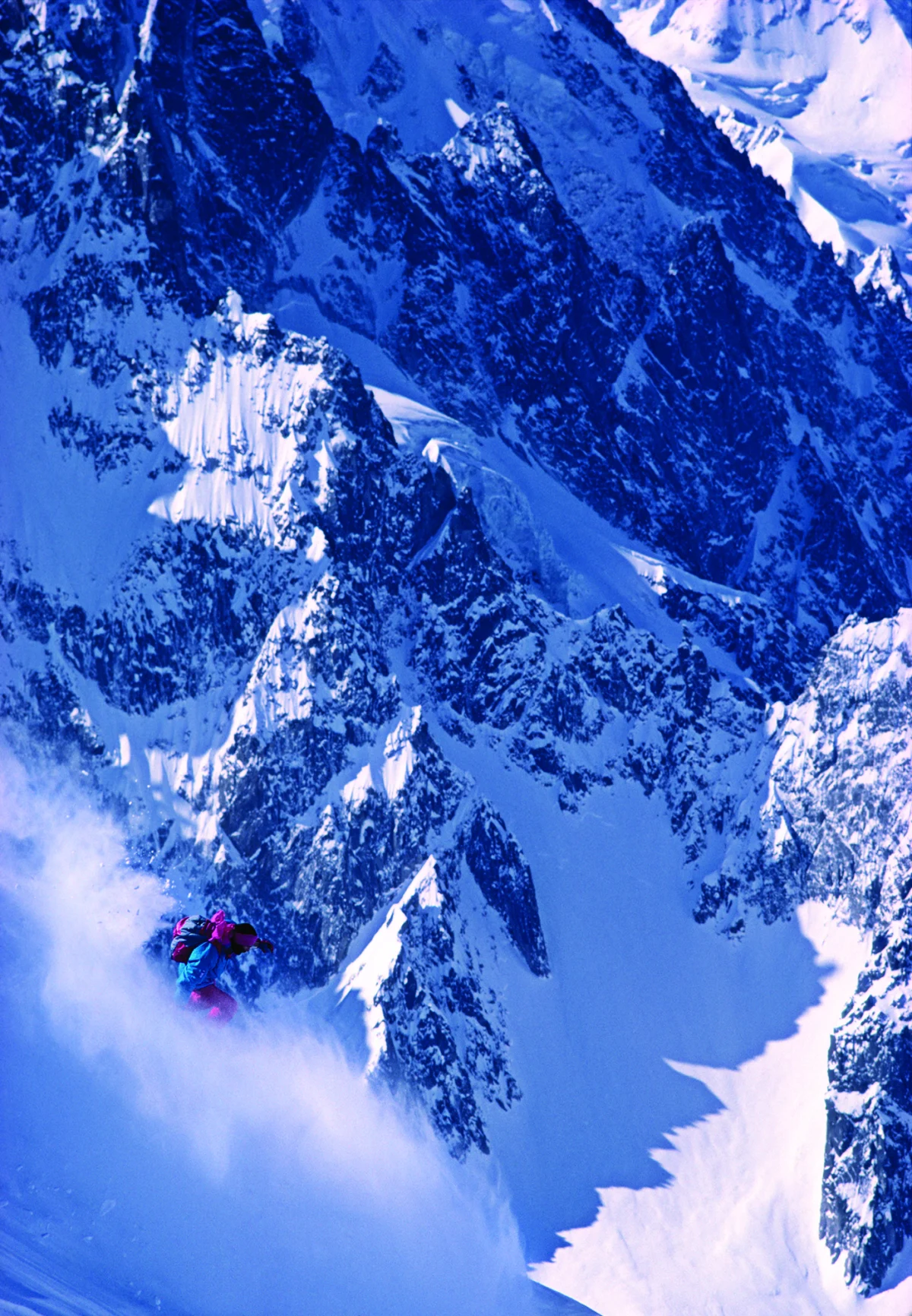
Patrick Vallençant, the late extreme skier featured in the accompanying photograph, epitomized the spirit of glisse. His daring descents, such as tackling the formidable Pas de Chevre on the Grandes Montets in Chamonix, were not merely feats of athleticism but acts of profound connection with the mountain. His image, captured by Chris Noble, embodies the very essence of glisse—a dancer on snow, navigating a challenging terrain with apparent ease and grace. Vallençant’s career, tragically cut short in 1989, became a symbol of this audacious approach to snow sports, a testament to the pursuit of the perfect line and the sublime experience of the descent.
Supporting Data and the Evolution of Extreme Sports
The late 20th century witnessed a significant surge in the popularity and innovation of sports characterized by gliding. By the mid-1990s, snowboarding had transitioned from a niche counter-culture activity to a mainstream Olympic sport, first appearing at the Nagano Games in 1998. This integration brought increased visibility and commercial investment, but it also sparked debate about whether the core spirit of glisse—the unadulterated joy of riding—was being overshadowed by competitive pressures and corporate interests.
Similarly, extreme skiing, which often involved navigating challenging natural terrain such as couloirs, cliffs, and vast powder fields, saw a parallel rise. Events like the X Games, launched in 1995, provided a platform for these athletes, showcasing their skills to a global audience. While the X Games amplified the reach of these sports, they also sometimes emphasized the more spectacular and risky elements, which could be seen as a departure from the more introspective and fluid ideal of glisse.
The rise of water-based gliding sports also contributed to the broader understanding of glisse. Windsurfing, kitesurfing, and later stand-up paddleboarding (SUP) all rely on the principle of gliding across water. These activities, too, have their own subcultures and terminology, but the underlying concept of effortless movement across a surface connects them. The development of specialized equipment—lighter skis, more responsive snowboards, advanced sail designs, and hydrofoil technology—has consistently enabled greater speed, control, and a more profound sense of gliding.
Broader Impact and Cultural Resonance
The concept of glisse extends beyond mere physical activity; it represents a mindset. It suggests an appreciation for the aesthetic qualities of motion, a focus on harmony with the environment, and a rejection of purely utilitarian approaches. This philosophy has found echoes in various fields, from dance and martial arts to design and even approaches to problem-solving. The idea of finding the most efficient, elegant, and enjoyable path—the "glide"—is a universally appealing concept.
The sustained appeal of glisse can be attributed to its inherent inclusivity. While the technical mastery required for extreme sports is undeniable, the fundamental feeling of gliding is accessible to a wide range of skill levels. A beginner on a gentle slope or a calm lake can experience a rudimentary form of glisse, a taste of the freedom and joy that seasoned athletes pursue with greater intensity.
The Enduring Legacy of a Single Word
The word glisse, though originating in French, has become a touchstone for a global community that values the fluid, graceful, and exhilarating act of movement. It reminds us that sometimes, a single word from another culture can offer a profound and resonant way to understand and articulate a shared human experience. Chris Noble’s observation and subsequent sharing of glisse served as a linguistic catalyst, providing a richer vocabulary for appreciating the art and science of motion across diverse landscapes. It stands as a testament to the power of language to shape our perception and deepen our connection to the activities we love. The enduring popularity of sports that embody glisse—from the pristine slopes of Chamonix to the sun-drenched coastlines of the world—underscores the universal human desire to move with grace, control, and an intrinsic sense of joy. The legacy of glisse is not just in the sports it describes, but in the philosophy of elegant motion it promotes, a philosophy that continues to inspire athletes and enthusiasts across generations and continents.