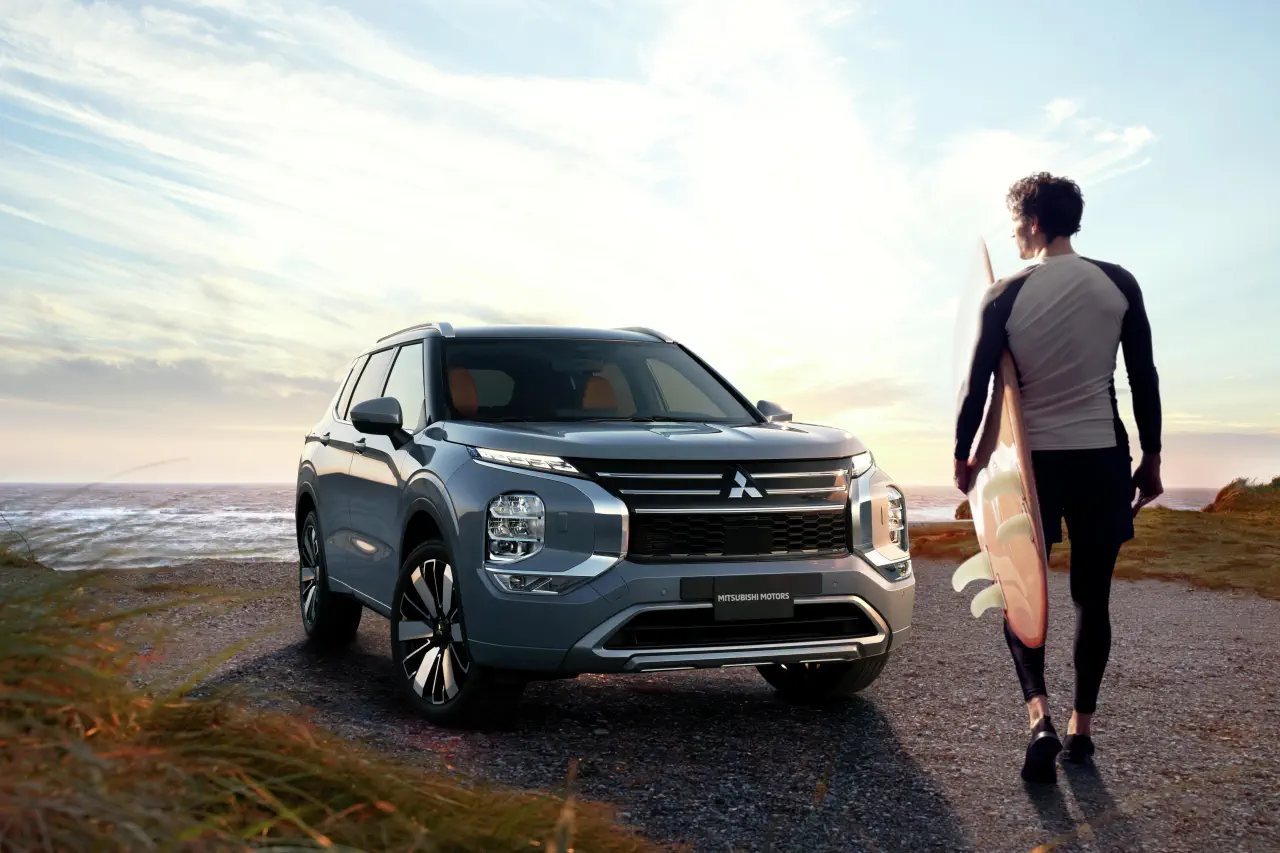
Colmobil, the official importer for Mitsubishi in Israel, has officially unveiled the 2026 model year Mitsubishi Outlander Mild Hybrid, signaling a significant evolution for the brand’s popular SUV. This launch introduces a new powertrain option to the Israeli market, blending efficiency with Mitsubishi’s renowned reliability and practicality. The seven-seater SUV, featuring a 1.5-liter engine paired with a 6-speed CVT, will be available starting from 189,990 NIS, positioning it as a competitive offering in the burgeoning hybrid SUV segment. The move underscores Mitsubishi’s commitment to providing advanced, eco-conscious vehicles while maintaining its reputation for robust and family-friendly designs.
A New Era for the Outlander: Design and Exterior Enhancements
The Mitsubishi Outlander has long been a cornerstone of the brand’s global sales, celebrated for its versatility and value. The 2026 model year builds upon this legacy with a striking new design that blends modern aesthetics with a commanding road presence. The exterior boasts a bold, muscular stance, characterized by Mitsubishi’s distinctive "Dynamic Shield" front fascia, which has been refined for this iteration. This design language creates a powerful visual identity, incorporating sleek lines and sculpted surfaces that project both sophistication and rugged capability.
Drivers will have a choice of either 18-inch or 20-inch alloy wheels, which not only enhance the vehicle’s visual appeal but also contribute to its stable handling and ride comfort. The lighting system is entirely LED, ensuring superior illumination and energy efficiency. A notable design feature is the distinctive T-shaped headlight configuration, which seamlessly integrates into the front grille, giving the Outlander a unique and recognizable signature, especially at night. The rear design complements the front with modern LED taillights and a robust bumper, completing a cohesive and contemporary look that is sure to turn heads. These exterior enhancements are not merely cosmetic; they contribute to the vehicle’s aerodynamic efficiency and overall appeal, aligning with contemporary automotive design trends.
Interior Refinement and Technological Advancements
Stepping inside the 2026 Outlander reveals a cabin that prioritizes comfort, connectivity, and sophisticated technology. The interior has undergone a comprehensive overhaul, featuring high-quality materials and a layout designed for intuitive use and passenger well-being. A standout feature is the large digital driver display, offered in either a 12.3-inch or a more compact 7-inch version for the base model, providing essential driving information with clarity and customization options. Complementing this is a prominent 12.3-inch multimedia touchscreen infotainment system, serving as the central hub for navigation, entertainment, and vehicle settings.
Connectivity is paramount in modern vehicles, and the new Outlander delivers with full support for both Apple CarPlay and Android Auto, allowing seamless smartphone integration. Additionally, the cabin is equipped with wireless charging capabilities and multiple USB Type-C ports, ensuring that all occupants can keep their devices powered and connected on the go. For an elevated audio experience, the Outlander features a premium sound system from Yamaha, with 8 speakers as standard. The Luxury TTH trim further enhances this with a 12-speaker configuration, promising an immersive and rich soundscape for all journeys. The 7-seater configuration remains a key selling point, offering flexible seating arrangements and making the Outlander an ideal choice for larger families or those requiring extra passenger capacity. The thoughtful design of the third row ensures reasonable comfort for occasional use, underscoring the vehicle’s practical focus.
Dimensions and Practicality: Built for Families

The Outlander’s dimensions reflect its commitment to spaciousness and practicality, making it a highly appealing option for families and adventurers alike. The vehicle measures 4,720 mm in length, providing a substantial footprint on the road. Its width of 1,862 mm contributes to a stable and confident driving experience, while the generous 2,705 mm wheelbase translates directly into an expansive and comfortable cabin, particularly for second-row passengers.
Cargo versatility is a hallmark of the Outlander. With all seven seats in use, the trunk offers a respectable 197 liters of space, sufficient for daily errands or smaller luggage. For increased capacity, folding down the third row expands the cargo area to a substantial 640 liters, easily accommodating larger items, groceries, or sports equipment. When maximum cargo volume is required, folding both the second and third rows unlocks an impressive 1,477 liters, transforming the Outlander into a highly capable hauler. This flexible cargo management system is a significant advantage for active families. Furthermore, the vehicle is equipped with a 55-liter fuel tank, providing a decent range for long-distance travel, reducing the frequency of refueling stops. These practical dimensions and thoughtful cargo solutions underscore the Outlander’s design philosophy as a truly versatile family SUV.
The Heart of the Beast: Mild Hybrid Powertrain Explained
At the core of the 2026 Mitsubishi Outlander’s enhanced efficiency is its new Mild Hybrid powertrain. This system combines a robust 1.5-liter MIVEC 4-cylinder gasoline engine with a 48V Mild Hybrid (MH) system, featuring a Belt Starter Generator (BSG). This setup is designed to optimize fuel consumption and reduce emissions without requiring the larger battery packs and external charging infrastructure of a full hybrid or plug-in hybrid (PHEV).
The 1.5-liter MIVEC engine is a well-regarded unit, known for its balance of power and efficiency. In conjunction with the Mild Hybrid system, it produces a total of 174 horsepower. This power enables the Outlander to accelerate from 0 to 100 km/h in a respectable 9.7 seconds for the 2WD variant, while the 4WD version completes the sprint in 10 seconds. Both configurations achieve a top speed of 190 km/h, providing ample performance for highway driving and overtaking maneuvers.
The 48V Mild Hybrid system plays a crucial role in improving the vehicle’s overall efficiency. The BSG unit assists the engine during acceleration, providing a small power boost that reduces the load on the gasoline engine, thereby saving fuel. It also enables a smoother and more aggressive Start/Stop system, turning off the engine when the vehicle comes to a halt and restarting it almost imperceptibly when the driver lifts their foot off the brake. Crucially, the BSG recovers kinetic energy during deceleration and braking, converting it into electrical energy to recharge the small 48V battery. This recovered energy is then used to power the vehicle’s electrical systems and assist the engine, creating a virtuous cycle of efficiency.
The practical benefits of this Mild Hybrid system are evident in its fuel consumption figures. The 2WD Outlander achieves a combined fuel economy of approximately 8.4 liters per 100 kilometers (or 11.9 km/L), while the 4WD model manages 8.7 liters per 100 kilometers (or 11.5 km/L). These figures represent a notable improvement over conventional gasoline-only powertrains of similar size, offering tangible savings at the pump and a reduced environmental footprint. The Mild Hybrid system thus represents a smart, cost-effective step towards electrification, offering immediate benefits in urban driving conditions and contributing to a more sustainable automotive landscape.
Safety First: Comprehensive Driver Assistance Systems
Mitsubishi has equipped the 2026 Outlander Mild Hybrid with a comprehensive suite of advanced safety features and driver assistance systems, reflecting the brand’s unwavering commitment to occupant protection. While specific details for all trims were not exhaustively provided, the inclusion of modern ADAS (Advanced Driver-Assistance Systems) is standard practice for a contemporary SUV targeting family buyers. We can expect the Outlander to come with features designed to prevent accidents and mitigate their severity.

Key safety technologies likely include Adaptive Cruise Control (ACC), which maintains a set distance from the vehicle ahead, and Lane Keeping Assist (LKA) or Lane Departure Warning (LDW), which help keep the vehicle centered in its lane or alert the driver if it drifts. Forward Collision Mitigation (FCM) with pedestrian and cyclist detection is also a probable inclusion, automatically applying the brakes if a potential collision is detected. Blind Spot Warning (BSW) with Lane Change Assist (LCA) would enhance safety during lane changes by alerting the driver to vehicles in blind spots. Rear Cross Traffic Alert (RCTA) is invaluable when backing out of parking spaces, warning of approaching vehicles.
Furthermore, features such as a 360-degree multi-view camera system would provide an all-around view of the vehicle, making parking and maneuvering in tight spaces significantly easier and safer. Automatic High Beams (AHB) would automatically switch between high and low beams, improving night visibility without dazzling oncoming drivers. Driver Attention Alert (DAA) could monitor driver behavior for signs of fatigue or distraction. Electronic Stability Control (ESC), Traction Control System (TCS), and a full complement of airbags (including knee airbags for the driver) would be standard, providing passive safety in the event of a collision. These combined systems work synergistically to create a safer driving environment, actively assisting the driver and providing peace of mind for all occupants.
Pricing and Trim Levels: Tailored for Every Need
The 2026 Mitsubishi Outlander Mild Hybrid is introduced to the Israeli market with a structured pricing strategy across several trim levels, designed to cater to a broad spectrum of preferences and budgets. The starting price of 189,990 NIS for the entry-level 7-seater model makes it an attractive proposition in its segment.
The available trim levels include:
- Intense: This base model offers a strong foundation of features, making the new Outlander accessible. It comes with 18-inch wheels and a 2WD configuration.
- Executive: Building on the Intense, the Executive trim likely adds more comfort and convenience features, potentially including upgraded interior materials or additional tech. It features 20-inch wheels and 2WD.
- Instyle: The Instyle trim further enhances the driving experience with additional stylistic elements and technological upgrades, maintaining the 20-inch wheels and 2WD.
- Luxury: As the name suggests, the Luxury trim introduces premium features, advanced comfort options, and refined aesthetics, still in 2WD with 20-inch wheels.
- Luxury TTH: This top-tier 2WD variant, featuring 20-inch wheels, is expected to offer the ultimate in luxury and technology, including the upgraded 12-speaker Yamaha sound system and potentially more advanced interior finishes and safety features.
- Luxury 4X4 S-AWC: For those requiring superior traction and off-road capability, this variant comes with Mitsubishi’s renowned Super All-Wheel Control (S-AWC) system and 20-inch wheels. While it shares many luxury features with the 2WD Luxury TTH, its 4WD system provides enhanced performance and safety in challenging conditions, albeit with a slight increase in 0-100 km/h time and fuel consumption due to the added weight and drivetrain complexity.
The pricing structure ensures that customers can choose an Outlander that fits their specific needs, whether they prioritize affordability, advanced technology, luxurious comfort, or enhanced off-road prowess. This tiered approach allows Mitsubishi to effectively compete across various sub-segments within the mid-size SUV market.
Strategic Launch in Israel: Colmobil’s Vision
The introduction of the 2026 Mitsubishi Outlander Mild Hybrid in Israel is a carefully calculated strategic move by Colmobil, Mitsubishi’s long-standing importer. Israel’s automotive market has shown a robust and growing appetite for SUVs, particularly those offering fuel efficiency and lower emissions. The Outlander, with its Mild Hybrid powertrain, is perfectly positioned to capitalize on this demand.
Colmobil’s decision to launch this specific model reflects a deep understanding of local consumer preferences, which increasingly lean towards vehicles that balance family practicality with environmental consciousness and reduced running costs. The previous generation Outlander PHEV (Plug-in Hybrid Electric Vehicle) was a significant success in Israel, establishing a strong reputation for Mitsubishi in the electrified vehicle space. While the new Mild Hybrid variant offers a different level of electrification, it builds on this positive perception, providing a more accessible entry point into hybrid technology for many buyers.

The launch is also timely, aligning with global automotive trends shifting away from purely internal combustion engines towards various forms of electrification. By offering a Mild Hybrid, Colmobil is providing an intermediate solution that allows consumers to experience the benefits of hybridization—such as improved fuel economy and smoother operation—without the higher purchase price or the need for charging infrastructure associated with full EVs or PHEVs. This strategy helps Mitsubishi maintain its competitive edge against rivals in a market saturated with diverse SUV options. Colmobil’s commitment to supporting the brand with comprehensive after-sales service and a strong dealer network further solidifies the Outlander’s position for success in the Israeli market.
The Broader Impact: Mitsubishi’s Hybrid Future
The launch of the 2026 Mitsubishi Outlander Mild Hybrid extends beyond the Israeli market, representing a broader commitment by Mitsubishi Motors to sustainable mobility and a diversified powertrain strategy. For Mitsubishi, a brand historically known for its robust SUVs and pioneering PHEV technology, the introduction of a Mild Hybrid Outlander signifies an important step in its global electrification roadmap. It demonstrates a pragmatic approach to meeting varied consumer needs and regulatory requirements across different markets.
The implications for Mitsubishi’s brand image are positive. It reinforces the company’s dedication to innovation and environmental responsibility, showing that it can offer a range of electrified options. The Mild Hybrid variant allows Mitsubishi to reach a wider audience, particularly those who may not be ready for a full PHEV or EV due to cost, range anxiety, or charging infrastructure concerns. This broader appeal can help Mitsubishi regain market share in regions where it has faced stiff competition.
Economically, the Outlander Mild Hybrid offers a compelling value proposition. Its competitive pricing, coupled with improved fuel efficiency, translates to lower running costs for consumers. This affordability, combined with the proven reliability of the Mitsubishi brand, positions the Outlander as a smart investment for families. Environmentally, while not as impactful as a full EV or PHEV, the Mild Hybrid system contributes to reduced CO2 emissions and improved air quality, especially in urban environments. It acts as a bridge technology, familiarizing consumers with hybrid concepts and paving the way for greater adoption of more advanced electrified vehicles in the future.
In conclusion, the 2026 Mitsubishi Outlander Mild Hybrid is more than just a new model launch; it is a strategic statement. It combines a refreshed, modern design with a practical, family-oriented interior, advanced safety features, and an efficient Mild Hybrid powertrain. Its introduction in Israel, facilitated by Colmobil, is poised to strengthen Mitsubishi’s presence in a critical market segment, offering consumers a compelling blend of performance, efficiency, and Mitsubishi’s enduring legacy of durability and innovation. This vehicle is set to play a pivotal role in shaping Mitsubishi’s future, both in Israel and on the global stage, as the automotive industry continues its journey towards a more electrified and sustainable future.