The international knife community is preparing for its premier annual gathering, Blade Show Atlanta, scheduled for June 5–7. As enthusiasts, manufacturers, and metallurgists converge, the focus remains sharply fixed on the rapid advancements in high-performance steel technology. A central figure in this dialogue is the recent development and testing of MagnaMax, a steel designed to push the boundaries of edge retention and toughness. Among the highlights of the upcoming event are technical seminars titled “Factors that Affect Edge Retention” and “What is Coming Next for Knife Steel?” which aim to bridge the gap between theoretical metallurgy and practical cutlery application. These sessions come at a pivotal time as new data emerges comparing the effectiveness of industrial-scale heat treating against custom, small-batch methods.
The Metallurgical Foundation of MagnaMax
MagnaMax represents a significant milestone in the evolution of powder metallurgy steels. Following the widespread success of MagnaCut, the development of MagnaMax sought to further optimize the balance between hardness, wear resistance, and toughness. However, achieving these theoretical properties in a finished blade depends almost entirely on the heat treatment process. Heat treatment is the sequence of heating and cooling that determines the final microstructure of the steel, specifically the transformation of austenite into martensite and the precipitation of carbides.
In custom knifemaking, the most common method for heat treating air-hardening steels like MagnaMax involves the use of small electric furnaces followed by plate quenching. Plate quenching involves pressing the hot steel between two thick aluminum plates, which rapidly draws heat away from the blade. This method is highly effective for thin sections like knife blades, providing a fast cooling rate that minimizes the formation of undesirable carbides at the grain boundaries.
Conversely, large-scale knife manufacturers and commercial heat treaters utilize vacuum furnaces capable of processing hundreds of blades simultaneously. These industrial systems typically employ a pressurized gas quench—often using nitrogen or argon—measured in "bars" of pressure. While efficient for high-volume production, the cooling rate of a gas quench is generally slower than that of a plate quench. This discrepancy in cooling speed is the primary variable currently under investigation by metallurgists seeking to standardize MagnaMax’s performance across the industry.
The Role of Hardenability and Molybdenum
The ability of a steel to reach its maximum potential hardness during a slower cooling process is known as "hardenability." To combat the slower cooling rates inherent in industrial vacuum furnaces, MagnaMax was formulated with approximately 2% molybdenum. Molybdenum is a critical alloying element that shifts the "nose" of the Time-Temperature-Transformation (TTT) curve to the right, allowing the steel more time to cool to the martensite start temperature without forming pearlitic or bainitic structures.
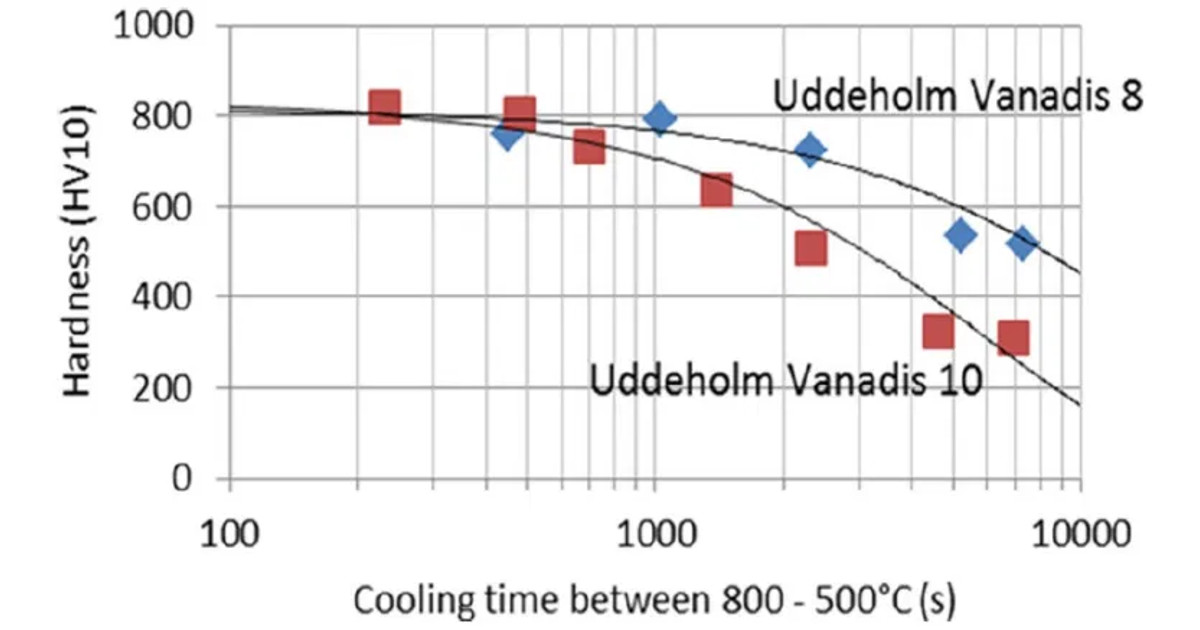
Historical data from Uddeholm, specifically comparing their Vanadis 8 and Vanadis 10 grades, illustrates this principle. By increasing molybdenum content from 1.5% to 3.6%, researchers demonstrated that the steel could maintain high hardness even at significantly slower cooling rates. In the context of MagnaMax, the 2% molybdenum serves as a safeguard, ensuring that even when quenched in a 2-bar industrial furnace, the steel can achieve a competitive Rockwell C (HRC) hardness. However, as recent experiments show, "competitive" does not always mean "identical" to the results achieved through custom plate quenching.
Experimental Methodology: Custom vs. Industrial Trials
To quantify the differences between these two methodologies, a series of controlled experiments were conducted in collaboration with Peters’ Heat Treating, a prominent name in industrial tool steel processing. The objective was to determine how a 2-bar pressurized gas quench affects the final hardness and toughness of MagnaMax compared to the previously established benchmarks of custom plate quenching.
The study utilized 1 x 3 inch coupons for hardness testing and Charpy C-notch specimens for toughness testing. The variables included:
- Austenitizing Temperatures: 2050°F, 2100°F, and 2150°F.
- Cryogenic Processing: Tests were performed both with and without sub-zero treatments to determine the extent of retained austenite.
- Tempering Ranges: A broad spectrum of tempering temperatures from 300°F to 950°F.
The coupons were processed in a large vacuum furnace to simulate a real-world manufacturing environment. Following the quench, hardness was measured across all samples to generate a comprehensive tempering chart.
Analysis of Hardness and Tempering Data
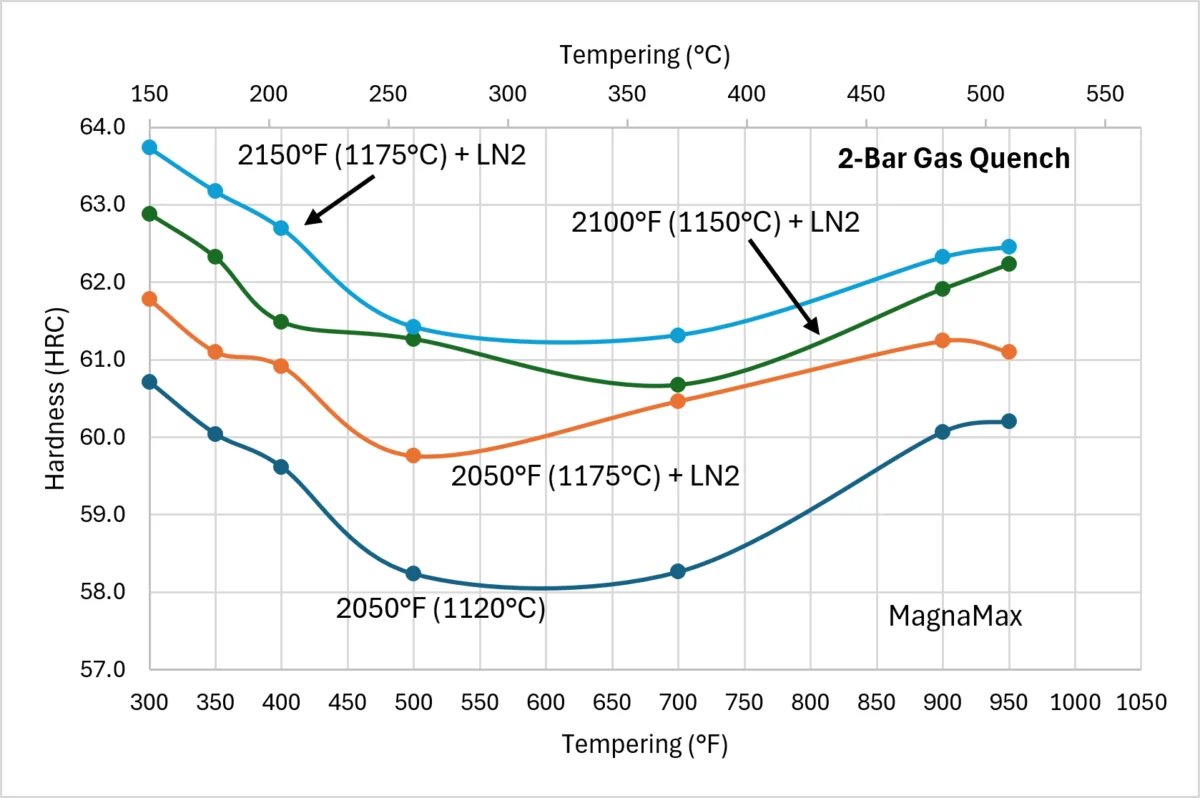
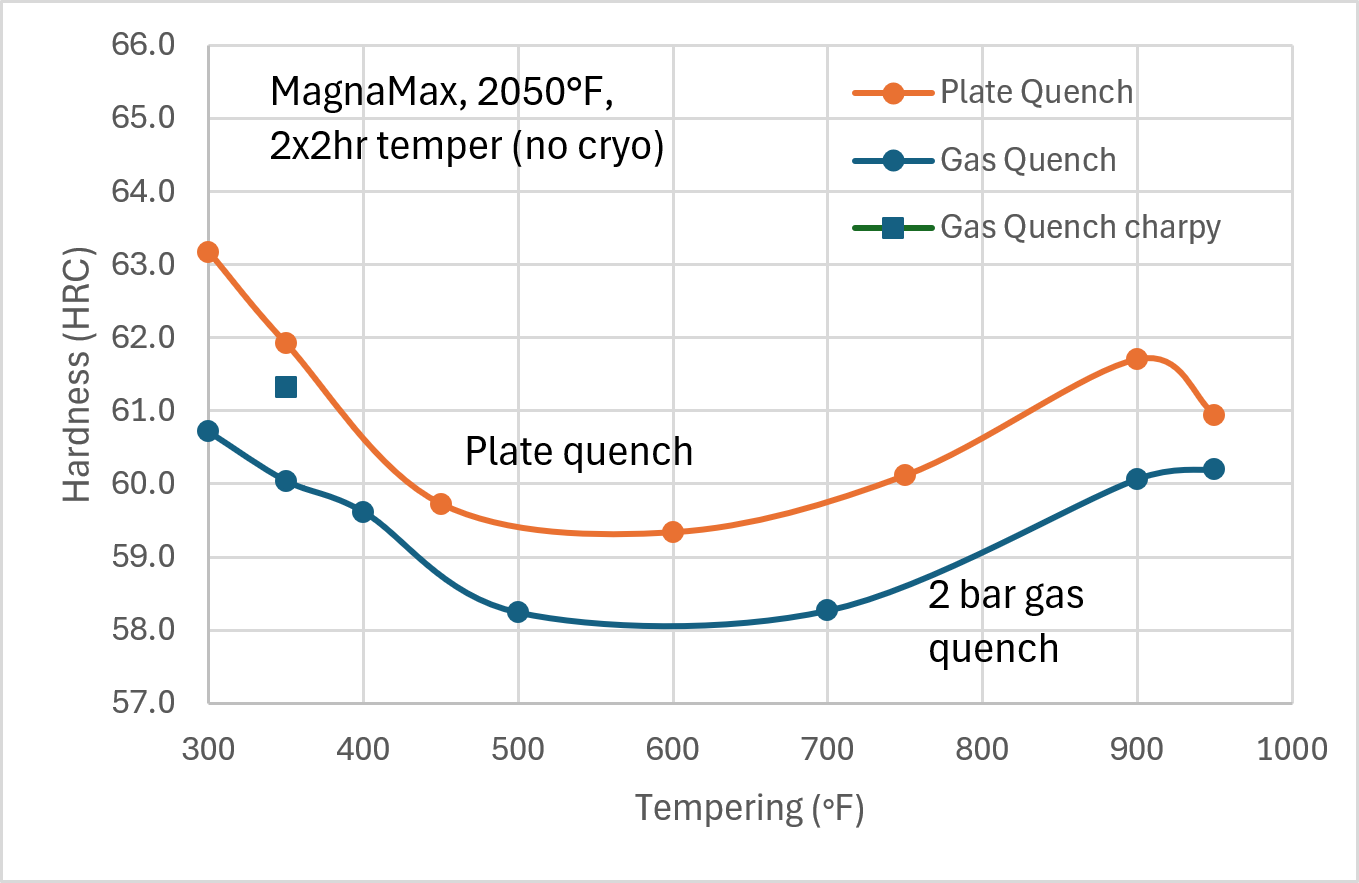
The data revealed a consistent trend: the industrial gas quench resulted in slightly lower hardness values than the plate quench across almost all temperature profiles. For instance, at an austenitizing temperature of 2050°F without cryogenic treatment, the gas-quenched samples lagged behind the plate-quenched samples by approximately 0.5 to 1.0 HRC.
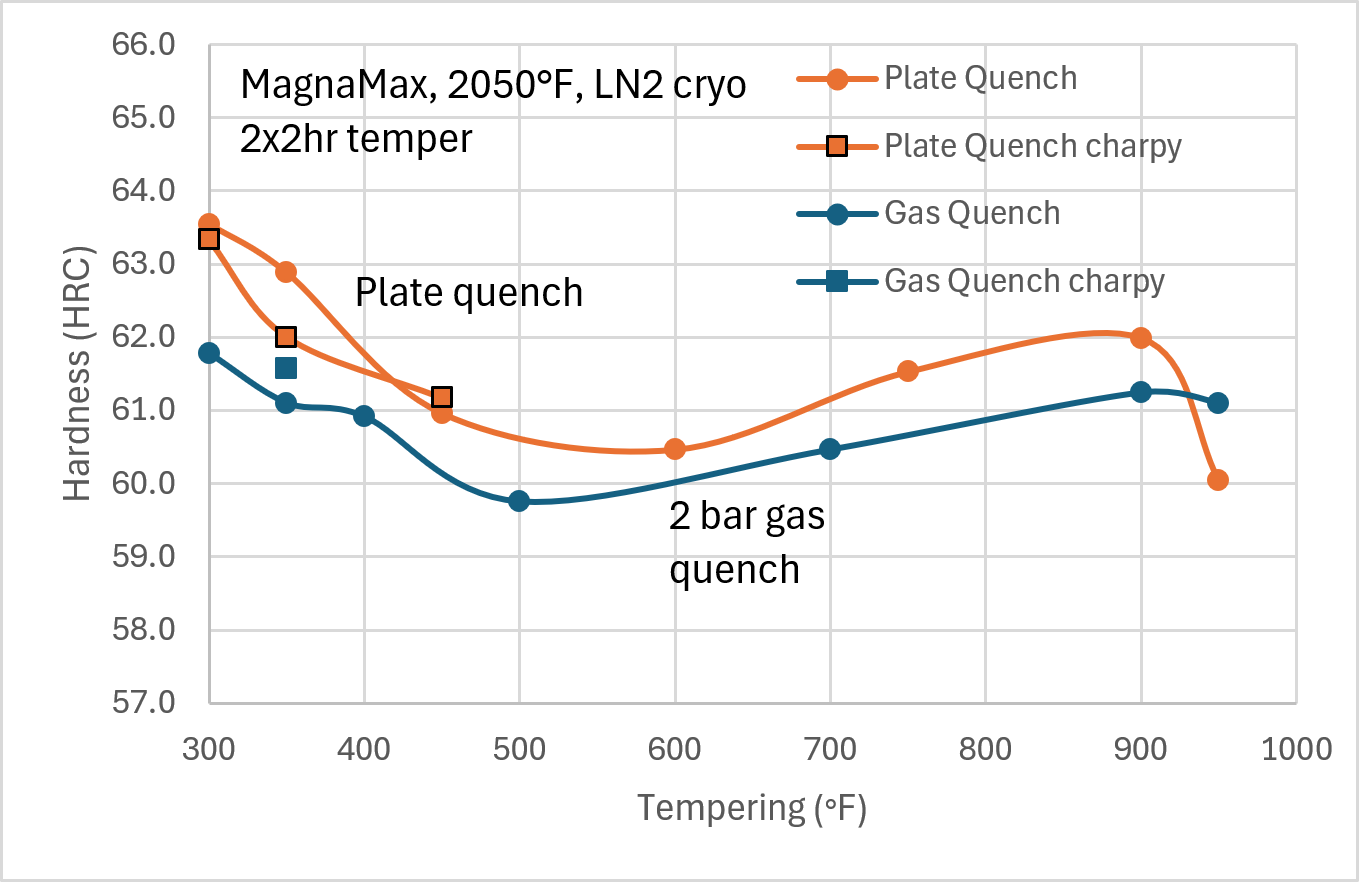
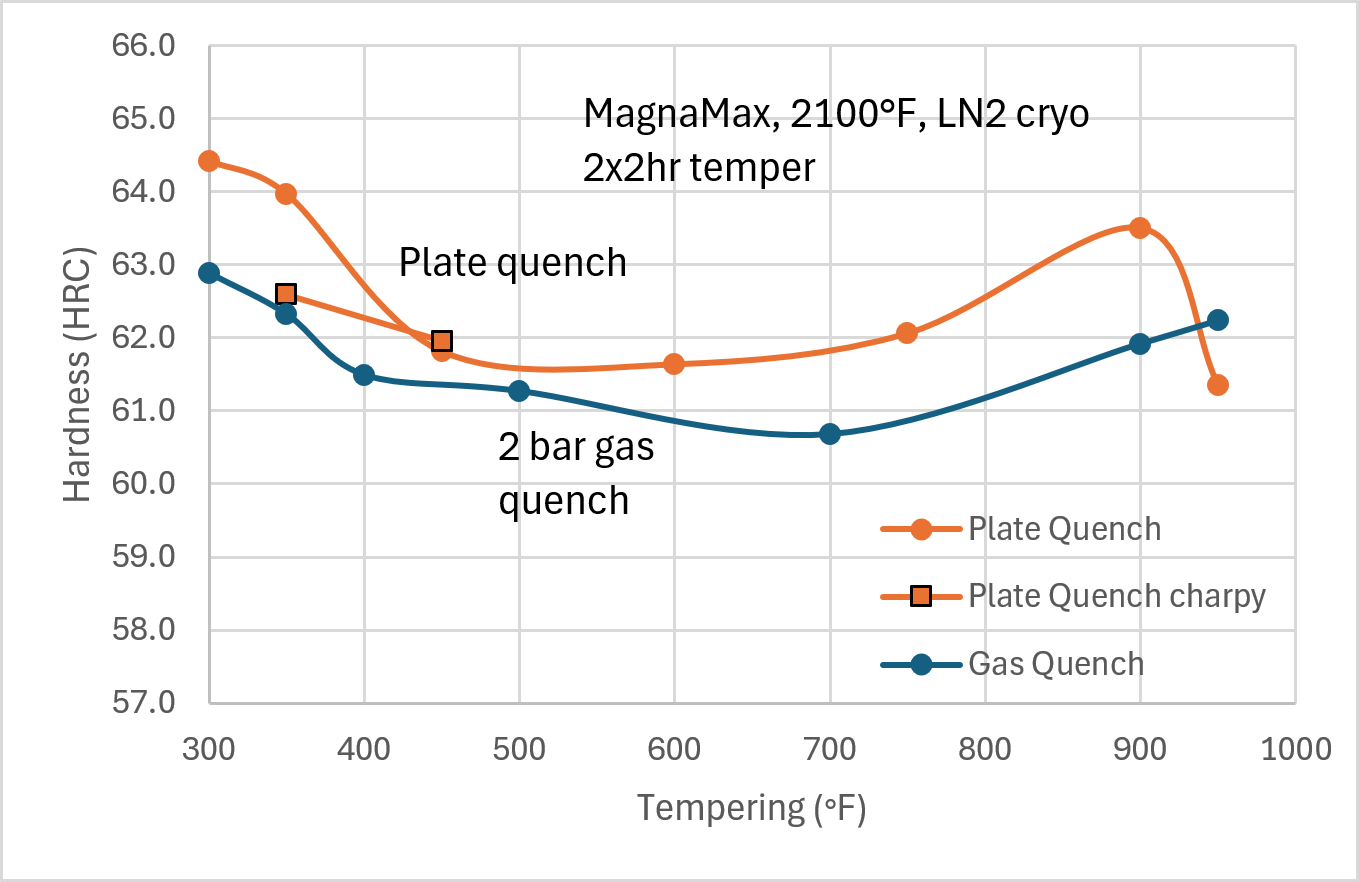
When cryogenic treatment was introduced at the same 2050°F temperature, the gap narrowed but remained present. At the higher end of the spectrum—2150°F—the gas quench still showed a marginal deficit in peak hardness. This phenomenon is largely attributed to the slower cooling rate through the critical temperature range (roughly 1300°F to 900°F), where pro-eutectoid carbides can begin to precipitate if the cooling is not sufficiently rapid.
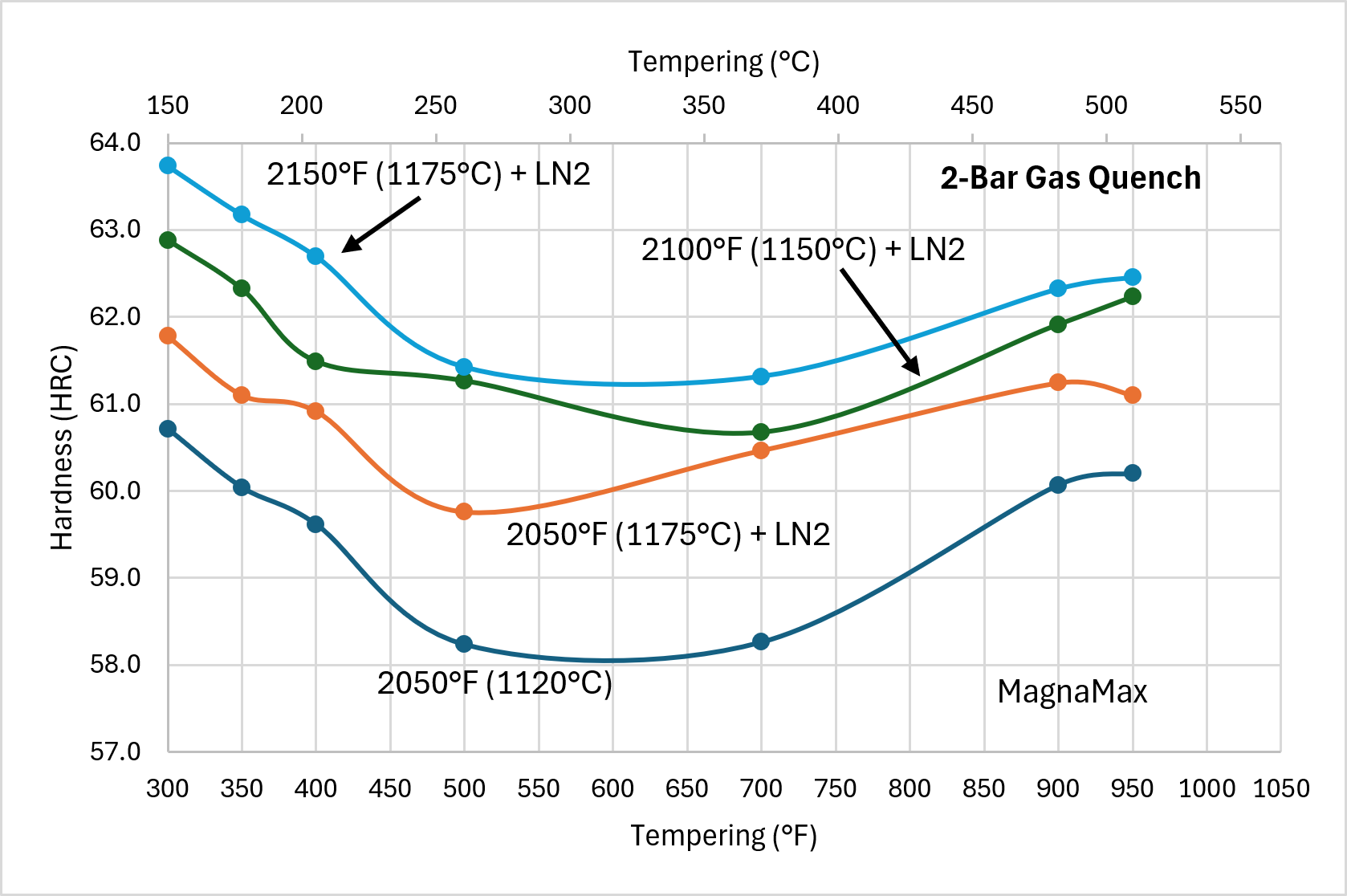
An interesting anomaly occurred during the testing of the Charpy toughness coupons. These specimens, which are smaller than the standard hardness coupons, actually tested slightly higher in hardness than their larger counterparts. This highlights a critical factor in industrial heat treating: the "mass effect." The size and thickness of the parts, as well as how densely the furnace is loaded, can significantly alter the effective cooling rate of the gas quench.
Impact on Material Toughness
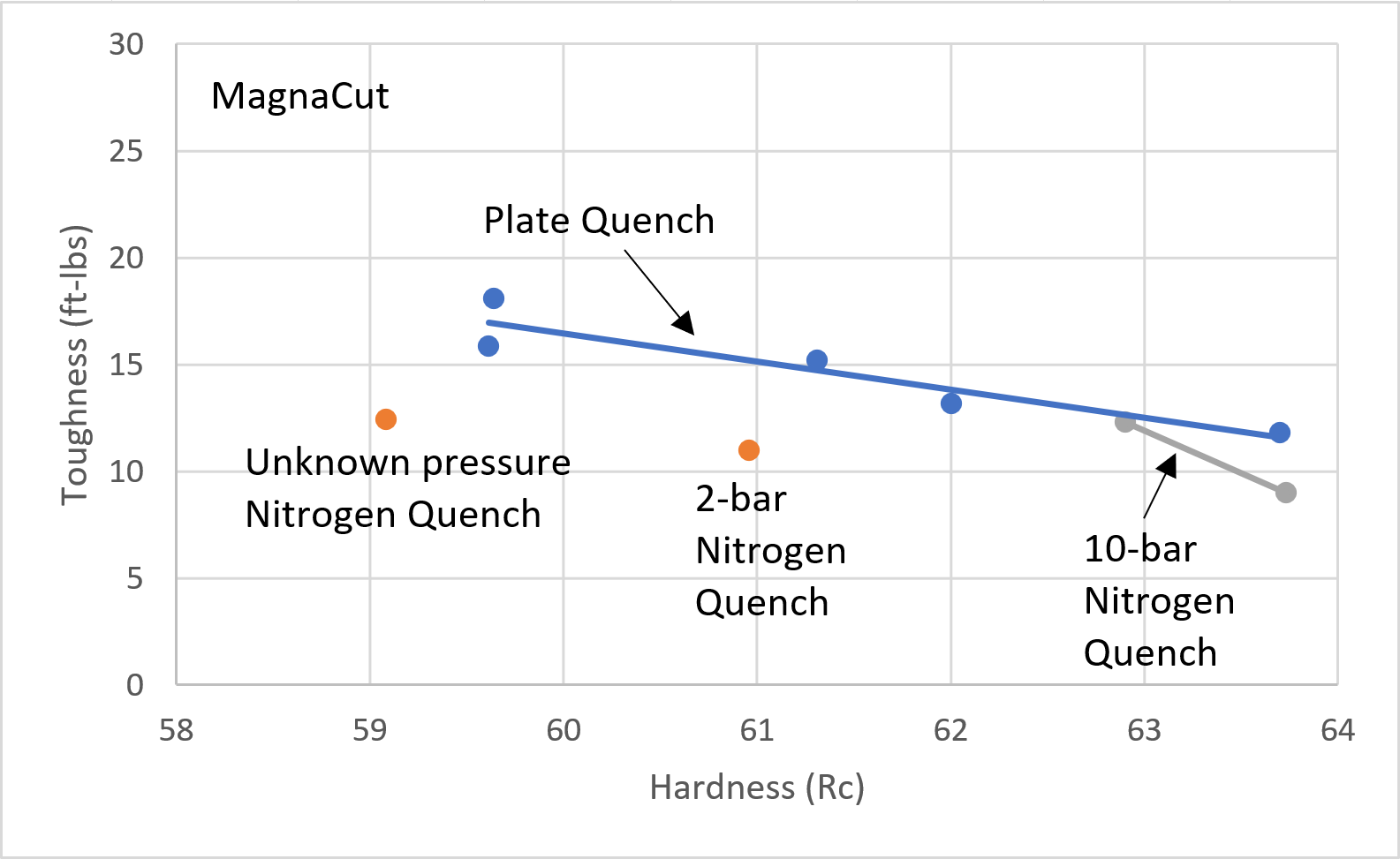
Hardness is only one side of the metallurgical coin; toughness—the ability of the steel to resist fracturing under impact—is equally vital for a knife. The experiment confirmed that toughness in MagnaMax decreases linearly as hardness increases. However, the cooling rate also plays a direct role in the toughness-to-hardness ratio.
Comparison charts between plate-quenched and gas-quenched MagnaMax showed that the gas-quenched samples exhibited slightly lower toughness at equivalent hardness levels. This suggests that the slower cooling rate of the industrial process allows for micro-precipitations that embrittle the grain boundaries, even if the bulk hardness remains high. While the difference is marginal for most general-use applications, it represents a critical consideration for manufacturers producing high-end hard-use tools or competition choppers where every foot-pound of impact resistance matters.
The Reality of Commercial Production Standards
One of the most significant takeaways from this research is the explanation it provides for why commercial knife companies often advertise a hardness range (e.g., 61–63 HRC) rather than a specific number. Several factors contribute to this necessity:
- Furnace Uniformity: In a large industrial vacuum furnace, there can be slight temperature variations between the center of the load and the edges.
- Quench Shadowing: Blades positioned in the middle of a dense rack may cool more slowly than those on the outside, as the pressurized gas cannot circulate as freely.
- Batch Variability: Large-scale manufacturers may use steel from different production heats (batches) over several years, each with minor allowable variations in chemical composition.
- Statistical Deviation: Hardness testing itself has an inherent margin of error and statistical variability.
For a custom knifemaker treating one blade at a time with aluminum plates, these variables are almost entirely eliminated, allowing for a much tighter "dialed-in" result.
Chronology of MagnaMax Development and Testing
The journey of MagnaMax from concept to industry standard has followed a rigorous timeline:
- Phase 1: Laboratory Development: Initial alloy design focused on increasing vanadium and molybdenum content to enhance wear resistance beyond the levels seen in MagnaCut.
- Phase 2: Custom Baseline Testing: Early 2024 saw the first series of tests using small-batch furnaces and plate quenching. These tests established the "optimal" parameters of 2150°F austenitizing and 350°F tempering.
- Phase 3: Industrial Scalability Trials: In early 2025, the collaboration with Peters’ Heat Treating began to determine how the steel would behave in a production environment.
- Phase 4: Data Consolidation: The current release of the MagnaMax Data Sheet summarizes these findings, providing a roadmap for both manufacturers and custom makers.
- Phase 5: Public Education: The upcoming Blade Show Atlanta seminars represent the final step in the current cycle—bringing this high-level metallurgical data to the end-users and makers.
Implications for the Knife Industry
The findings presented in the new MagnaMax data sheet have broad implications for the future of cutlery. For the consumer, it clarifies that a production knife and a custom knife made from the same steel may perform differently due to the "hidden" variable of heat treatment methodology. This does not necessarily mean production knives are inferior; rather, it highlights the engineering trade-offs required for mass manufacturing.
For manufacturers, the data provides a clear incentive to optimize their vacuum furnace cycles. High-pressure gas quenches (up to 6 or 10 bar) or specialized furnace loading techniques could potentially close the gap between industrial and custom performance. Furthermore, the recommendation of a 2150°F austenitizing temperature with a 350°F temper and cryogenic processing remains the gold standard for those seeking to maximize the potential of this specific grade.
Future Outlook and Professional Consultation
As the industry moves forward, the role of the "Steel Nerd"—the metallurgical consultant—becomes increasingly vital. The complexity of modern powder metallurgy steels like MagnaMax requires a level of precision that was unnecessary for the simpler carbon steels of the past. Professional consultation allows knife companies to test the hardness-toughness balance of their specific heat treatments and adjust their factory settings to meet the demands of their target market.
The upcoming sessions at Blade Show Atlanta will likely serve as a catalyst for further innovation. As more makers adopt MagnaMax and more data is collected from field use, the metallurgical community will continue to refine the processes that turn a raw slab of high-tech alloy into a world-class cutting tool. The pursuit of the perfect blade continues, driven by data, tested by science, and proven in the hands of users worldwide.