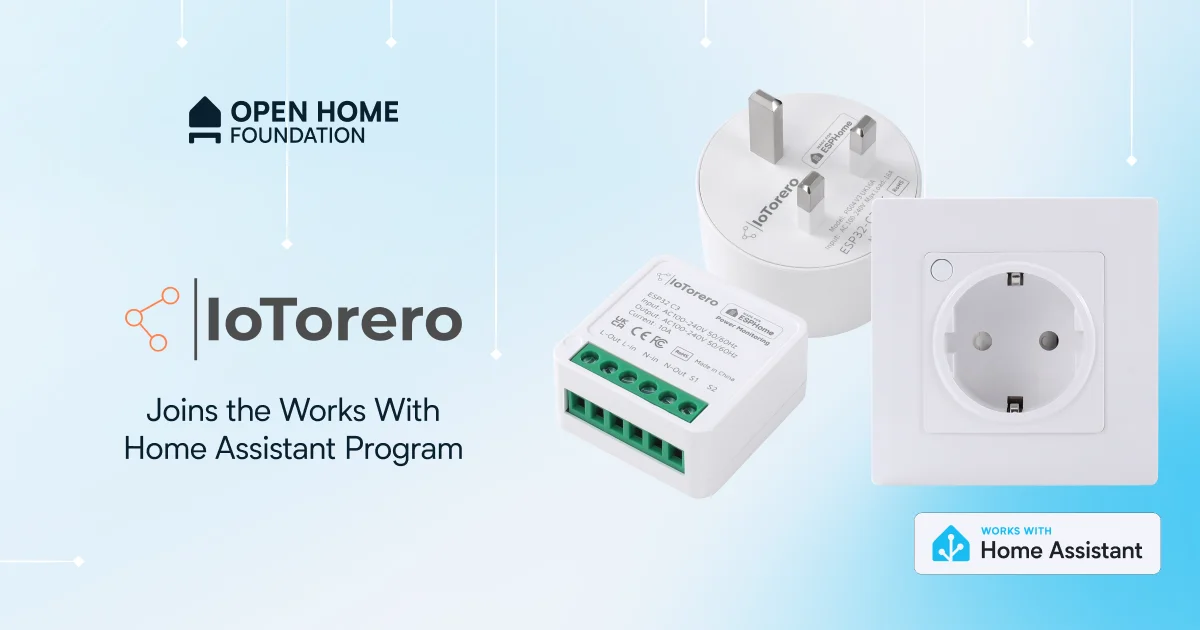
The smart home landscape is witnessing a significant shift toward local control and open-source transparency as IoTorero, a prominent manufacturer formerly known as Athom Technology, officially joins the Works with Home Assistant program. This partnership marks a milestone for the home automation community, as IoTorero becomes the first provider to introduce ESPHome-ready smart plugs and relays into the certification ecosystem. The move is designed to streamline the user experience for enthusiasts and newcomers alike, offering hardware that functions natively within the Home Assistant environment without the need for cloud-based intermediaries or complex firmware flashing procedures.
Founded in 2020, IoTorero has built its reputation on the philosophy of "open hardware for an open home." By rebranding from Athom Technology to IoTorero—a name that blends the "Internet of Things" (IoT) with the agility and precision of a "Torero"—the company has signaled its intent to lead the charge against the industry’s reliance on proprietary, cloud-dependent ecosystems. The certification of seven core devices under the Works with Home Assistant banner ensures that these products meet rigorous standards for privacy, local connectivity, and long-term reliability.
A Chronology of Open Source Commitment
The journey toward this partnership began four years ago when the founders of Athom Technology recognized a growing frustration among smart home users regarding "cloud graveyards"—the phenomenon where functional hardware becomes electronic waste because a manufacturer ceases operations or shuts down its servers. From its inception in 2020, the company chose to bypass the standard industry practice of developing closed, manufacturer-specific applications. Instead, they focused on ESPHome, an open-source system that allows users to create custom firmware for ESP8266 and ESP32 microcontrollers.
In 2023, the company demonstrated its commitment to the community during the Home Assistant Community Day, where it provided hardware samples and engaged directly with developers to refine its product configurations. This collaboration culminated in the creation of a public GitHub repository maintained by IoTorero, which hosts configurations for all their devices. This transparency allows the community to audit the code, suggest improvements, and ensure that the hardware remains functional regardless of the company’s future business status.
The official entry into the Works with Home Assistant program in mid-2026 follows a period of intense hardware refinement. The partnership aligns with the Open Home Foundation’s mission to promote a smart home that is private, sustainable, and interoperable. By meeting the "Made for ESPHome" prerequisites, IoTorero has solidified its position as a hardware manufacturer that prioritizes the user’s right to own and control their data.
Technical Specifications and Certified Hardware
The certified product lineup includes a range of smart plugs tailored for international markets, including the United States, United Kingdom, European Union, and Australia. These devices utilize the ESP32-C3 chipset, a modern, cost-effective, and power-efficient microcontroller that supports both Wi-Fi and Bluetooth Low Energy (BLE).
One of the standout features of the IoTorero smart plugs is their integrated power monitoring capabilities. Unlike entry-level smart plugs that only offer basic on/off functionality, these units monitor voltage, current, and total power consumption in real-time. Within the Home Assistant Energy Dashboard, this data allows homeowners to track the carbon footprint of individual appliances and identify "energy vampires"—devices that consume significant power even when in standby mode.
In addition to the smart plugs, IoTorero has certified its Power Monitoring Mini Relay. Measuring approximately the size of a matchbox, this device is designed for hardwired installations. It can be tucked behind existing wall switches or inside appliance cabinets, enabling users to modernize traditional lighting or garage door openers while maintaining manual switch control. The relay serves as a bridge between "dumb" appliances and a sophisticated automated ecosystem, all while operating entirely on a local network.
The Strategic Importance of Bluetooth Proxies
A critical technical advantage of the IoTorero hardware suite is the inclusion of Bluetooth proxy functionality. In a typical smart home, Bluetooth devices such as temperature sensors, toothbrushes, or plant monitors often suffer from limited range, requiring a central hub to be within a few meters of the device.
By utilizing the ESP32-C3 chip, IoTorero devices act as Bluetooth proxies. They intercept signals from nearby BLE devices and relay them to the Home Assistant server via Wi-Fi. This creates a distributed network of receivers throughout the home, effectively extending the range of the Bluetooth mesh without the need for dedicated, single-purpose range extenders. This "proxy all the things" approach, championed by the Open Home Foundation, reduces the need for additional hardware, thereby minimizing e-waste and lowering the total cost of ownership for a comprehensive smart home setup.
Official Responses and Industry Impact
The partnership has been met with enthusiasm from both the hardware and software sides of the open-source community. Aiden Tang, CTO and Co-Founder of IoTorero, emphasized the company’s dedication to quality and confidence. "Since our inception, we have been dedicated to the research, development, and manufacturing of open-source smart home hardware," Tang stated. "By joining the Works with Home Assistant program, we ensure that customers can select and purchase our products with complete confidence, knowing they are getting high-quality devices pre-flashed with ESPHome firmware."
Industry analysts view this partnership as a direct challenge to the "walled garden" approach of major tech conglomerates. While platforms like Amazon Alexa and Google Home have dominated the market through sheer scale, Home Assistant has grown to support over 1,000,000 installations by focusing on the power user and the privacy-conscious consumer. The inclusion of IoTorero provides these users with a "plug-and-play" experience that was previously reserved for closed ecosystems.
The timing of the announcement coincides with the release of ESPHome version 2026.6.0, which introduced a revamped user interface and a visual "Device Builder." This software update, combined with IoTorero’s pre-flashed hardware, significantly lowers the barrier to entry for local-only smart homes. Users who may have been intimidated by coding or firmware flashing can now adopt ESPHome-powered devices with the same ease as a standard consumer product.
Sustainability and Long-Term Implications
Sustainability is a core pillar of the Works with Home Assistant program. By certifying devices that do not require cloud connectivity, the program ensures that hardware remains functional for the duration of its physical life, rather than being tied to the lifespan of a software service. IoTorero’s use of the ESP32-C3 chip also reflects a move toward more sustainable silicon, offering lower power consumption during idle states compared to older ESP8266 models.
Furthermore, the local-only nature of these devices enhances home security. Because the devices do not need to "phone home" to a manufacturer’s server, the attack surface for potential hackers is significantly reduced. Data regarding a user’s daily routines, captured through power monitoring and switch usage, remains within the confines of the home network.
As the smart home market continues to mature, the success of the IoTorero and Home Assistant partnership may serve as a blueprint for other manufacturers. The "Works with Home Assistant" badge is increasingly seen as a mark of quality for a growing segment of consumers who value sovereignty over their digital lives. With plans to add more devices to the certified list in the coming months, IoTorero is positioned to become a primary hardware partner for the next generation of private, open-source homes.
The certification process for these devices involved rigorous testing using the Home Assistant Green hub, the platform’s flagship hardware. By standardizing the testing environment, the Home Assistant team ensures that every certified IoTorero device provides a seamless "unbox-to-automation" workflow. This collaboration signifies a maturing of the open-source IoT market, moving from a niche hobbyist interest to a viable, professional-grade alternative for the mainstream consumer.