










Global artificial intelligence systems are projected to generate an astronomical volume of data in the coming years, according to a newly published internal market outlook from flash memory manufacturer SanDisk. Titled the Tokenomics 2030 outlook, the report estimates that AI frameworks worldwide will produce roughly 150 quadrillion tokens this year, equating to an astonishing five billion tokens every single second. Looking ahead to the end of the decade, the company’s internal model suggests that annual global token output could surge toward an unprecedented 10 quintillion tokens, representing a throughput of approximately 317 billion tokens per second.
While these staggering figures underscore the exponential trajectory of the generative AI sector, industry analysts note an important caveat: the data stems entirely from SanDisk’s proprietary internal analysis. The company explicitly states that these projections are intended for illustrative purposes, and the outlook relies on no publicly cited external data sources. This methodology requires careful interpretation, particularly given that SanDisk is an enterprise solid-state drive (SSD) manufacturer actively pitching its hardware infrastructure as the essential backbone for future AI compute environments.
Understanding the Methodology Behind the Projections
To arrive at these high-magnitude figures, SanDisk’s product management leadership—headed by senior vice president Eric Spanneut and detailed in a companion analysis by Jeff Fochtman—took a unique analytical approach. Rather than relying on traditional demand-side forecasts that attempt to predict consumer and enterprise software adoption rates, SanDisk’s model evaluates infrastructure capacity constraints.
The framework assesses how many tokens the world’s physical and technical infrastructure could realistically support by 2030. Key inputs include the total electrical power directed toward AI inference tasks, the scale and processing capability of the global hardware accelerator fleet, compute and memory bandwidth limits, advanced networking capabilities, storage architectures, and anticipated efficiency gains in software optimization.
Consequently, the estimated benchmark of 317 billion tokens per second functions more closely as a theoretical capacity ceiling rather than a guaranteed demand forecast. Furthermore, SanDisk has not disclosed the granular assumptions built into the model—such as the exact number of gigawatts expected to power AI inference pipelines by 2030. Mathematically, the headline figure is a direct conversion of a round annual estimate: 10 quintillion tokens divided by the approximately 31.5 million seconds in a calendar year yields 317 billion. Achieving this milestone requires a more than 60-fold expansion in global token output over a four-year window, necessitating a near-tripling of capacity year-over-year through the end of the decade.
Contextualizing the Baseline: Industry Growth and Competing Forecasts
Evaluating SanDisk’s baseline year of 2026 reveals context that aligns closely with disclosures from major technology leaders. During the Google I/O conference in May 2026, Alphabet CEO Sundar Pichai reported that Google’s systems alone were processing 3.2 quadrillion tokens per month, a substantial leap from the 480 trillion tokens recorded annually just a year prior. Converted to a per-second metric, Google’s internal operations account for roughly 1.2 billion tokens per second—amounting to nearly a quarter of SanDisk’s entire global estimate from a single corporate entity.
Alphabet’s subsequent Q3 2026 earnings reports reinforced this rapid momentum, noting that first-party model APIs were handling nearly 32 billion tokens per minute. This marked a 40% quarter-over-quarter increase and quadrupled the rate observed during the same period in the previous year. Independent tracking organizations have reported similar metrics; in July, the I/O Fund highlighted industry-wide volume tracking near 370 trillion tokens daily, translating to roughly 135 quadrillion tokens annually.
Paradoxically, some analysts argue that SanDisk’s multi-year projection may actually be conservative. Google’s sevenfold year-over-year growth trajectory outpaces the roughly 2.8-fold annual growth rate implied by SanDisk’s 2030 model, suggesting that the forecast assumes a cooling of the current hyper-growth phase. Conversely, other financial institutions present vastly different scopes. In May 2026, Goldman Sachs Research projected that global token consumption would expand 24-fold between 2026 and 2030, reaching 120 quadrillion tokens per month—driven heavily by the proliferation of autonomous AI agents. Converted to a monthly rate, SanDisk’s 10-quintillion annual projection equates to roughly 833 quadrillion tokens per month, outstripping the Goldman Sachs forecast by a factor of seven.
Defining the Metric: What Do Tokens Actually Measure?
A central debate surrounding these projections involves the definition and utility of a "token." SanDisk’s research acknowledges that tokens serve primarily as a practical gauge of computational work rather than an inherent measure of intelligence, utility, or economic value. There is currently no universal standard for converting raw token output into tangible enterprise storage demand.
Token counts frequently spike due to inefficiencies or operational patterns within AI architectures. For example, modern reasoning models generate extended chains of thought during complex problem-solving tasks, and human users frequently execute iterative prompt refinement—a habit recently dubbed "tokenmaxxing" by industry observers. While a global infrastructure producing 317 billion tokens per second undeniably represents a massive surge in raw computational output, it does not automatically translate to a proportional increase in productive, high-value economic output.
The Commercial Imperative: Why Flash Memory Vendors Are Focusing on AI
The commercial logic propelling SanDisk and competing hardware vendors into this space centers on the Key-Value (KV) cache. As large language models process user prompts and maintain context across multi-step agent interactions, they build an attention state known as the KV cache. Retaining this cache across extended sessions is vital for reducing latency and preventing systems from redundantly recomputing previously processed text.
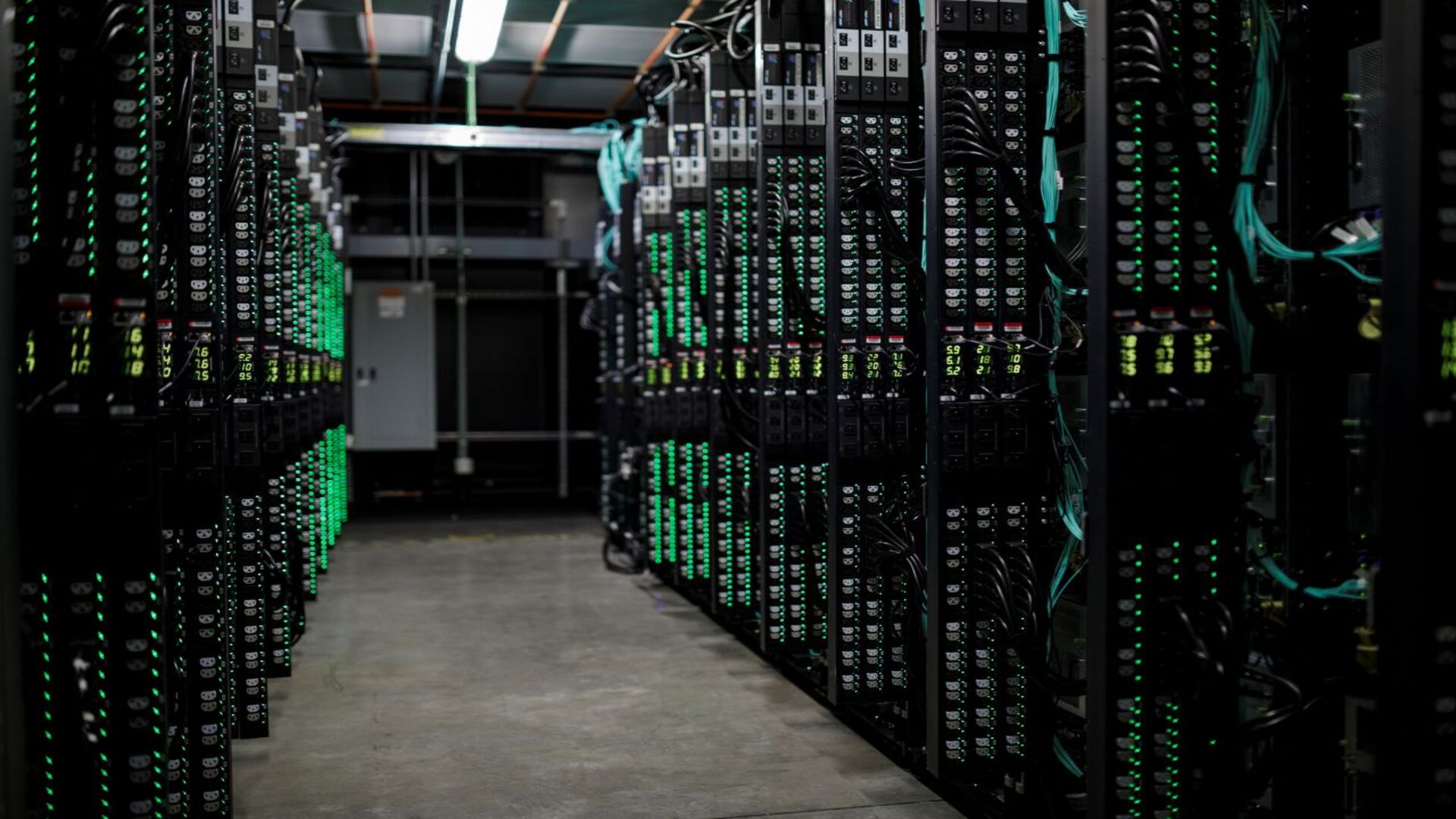
However, keeping the entire KV cache within scarce, high-bandwidth system memory (such as DRAM) is neither economically viable nor physically practical at scale. SanDisk’s outlook argues that enterprise-grade solid-state drives can function as a secondary, high-capacity storage tier for cached data, effectively acting as "token batteries" that allow systems to retain context efficiently.
This engineering strategy is gaining widespread traction across the hardware and software ecosystem. Frameworks such as LMCache, Nvidia’s Dynamo framework and BlueField-4 CMX platform, alongside infrastructure solutions from WEKA and Phison, are actively integrating persistent KV cache storage into data center architectures. Industry discussions, including panels at the Future of Memory and Storage conference, emphasize that storage performance is now just as critical as silicon processing power. Serving KV cache data from high-performance flash storage rather than expensive DRAM enables GPUs to support larger context windows and handle significantly higher volumes of concurrent users.
Infrastructure Bottlenecks and Potential Roadblocks
Despite the compelling engineering rationale, the realization of SanDisk’s 2030 vision hinges on overcoming severe physical bottlenecks. The most prominent constraint highlighted in SanDisk’s own analysis is electrical power availability. Gartner analyst Linglan Wang has repeatedly warned that global data center expansion faces a looming ceiling dictated by local electrical grid capacities, which could severely throttle AI infrastructure growth before the end of the decade.
Simultaneously, the supply chain for advanced hardware remains under intense pressure. Financial analysts from firms like Goldman Sachs anticipate that semiconductor shortages will persist well into the future. Furthermore, the memory and storage sector faces its own supply challenges; executives such as Phison CEO Pua Khein-Seng have noted that establishing new NAND flash manufacturing capacity requires approximately four years from planning to mass production, pointing toward prolonged pricing pressures and tight inventory availability through 2030.
Broader Implications for Enterprise IT
SanDisk’s Tokenomics 2030 outlook provides a fascinating window into how hardware manufacturers are planning for the next phase of the artificial intelligence revolution. While the headline figure of 317 billion tokens per second serves as an ambitious capacity ceiling rather than a definitive demand target, it clearly illustrates the immense scaling challenges facing global data centers.
As enterprises increasingly adopt agentic AI workflows and long-context models, the pressure on memory and storage hierarchies will intensify. Whether the market reaches the heights projected by SanDisk or experiences a plateau constrained by power and hardware availability, the transition of enterprise SSDs from traditional data repositories to active, high-speed computational caching tiers is well underway. For IT leaders and infrastructure architects, preparing for this token-driven economy will require balancing compute density, power availability, and intelligent multi-tiered storage strategies to ensure sustainable growth in the years leading to 2030.