







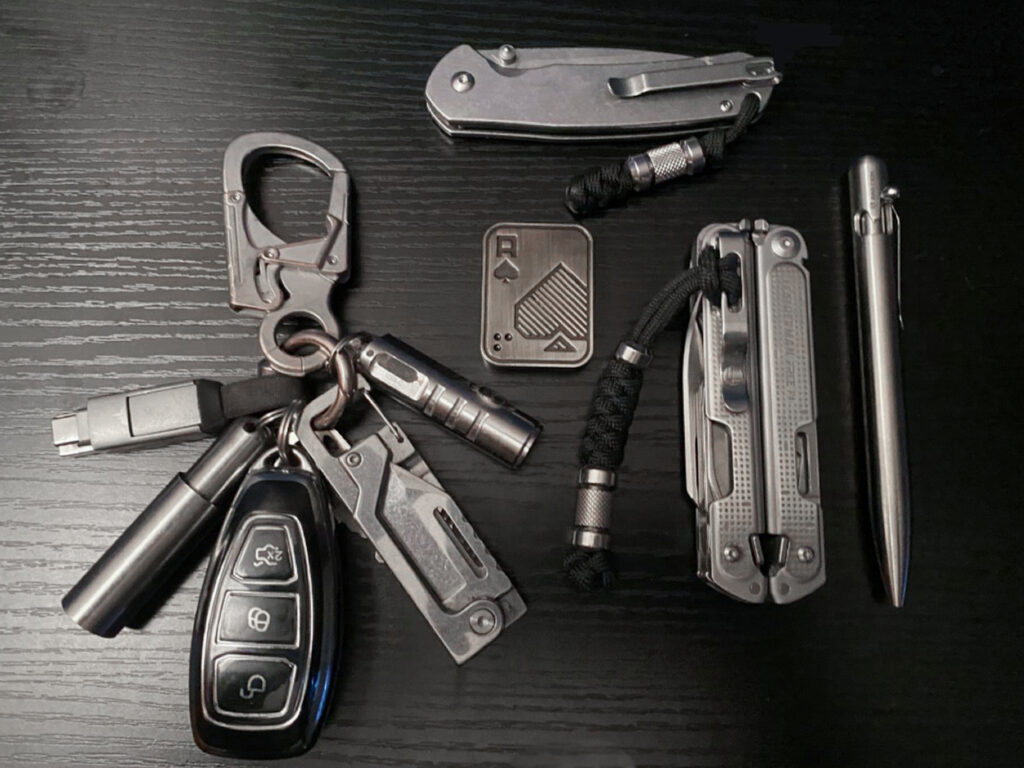
The culture of Everyday Carry (EDC) has evolved from a niche hobby into a functional lifestyle choice for professionals across various sectors. For those working in industrial environments, such as factory workers, the EDC kit represents a crucial intersection of occupational safety, maintenance readiness, and personal preparedness. A recent submission from a factory worker named Kamren offers a lens into how modern, high-utility tools are curated to meet the dual requirements of a demanding industrial workplace and the spontaneous, varied needs of being a parent. This analysis examines the components of this specific kit, the reasoning behind the selection of specialized tools, and the broader implications of carrying a functional, modular loadout in the modern era.
The Industrial EDC Philosophy
At its core, EDC is about the strategic selection of items that enhance an individual’s capability to solve problems in their immediate environment. In a factory setting, the physical requirements are rigorous. Workers often encounter obstacles related to material processing, equipment maintenance, and routine repairs. Kamren, who operates in an environment involving constant pipe work and plastic fabrication, identifies the necessity for tools that are durable, accessible, and multi-functional.
The selection of his kit emphasizes a "monochrome metal" aesthetic, which is not merely stylistic but also indicative of material durability. Stainless steel, titanium, and high-grade aluminum are favored in industrial EDC for their resilience against the heat, chemical exposure, and mechanical stress typical of a factory floor. The inclusion of paracord attachments serves a dual purpose: it allows for rapid retrieval of tools while wearing gloves and provides a measure of customization that helps distinguish one’s equipment in a shared workspace.
Core Components and Functional Rationale
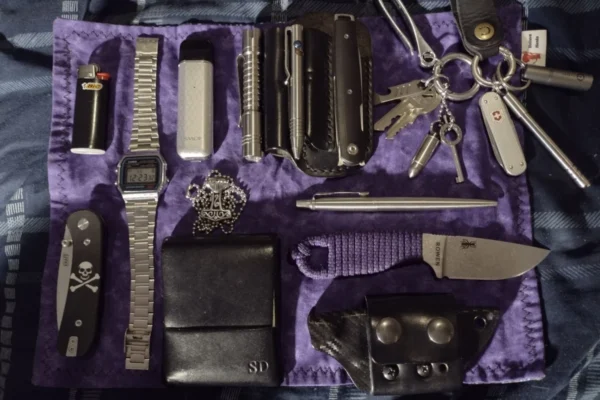
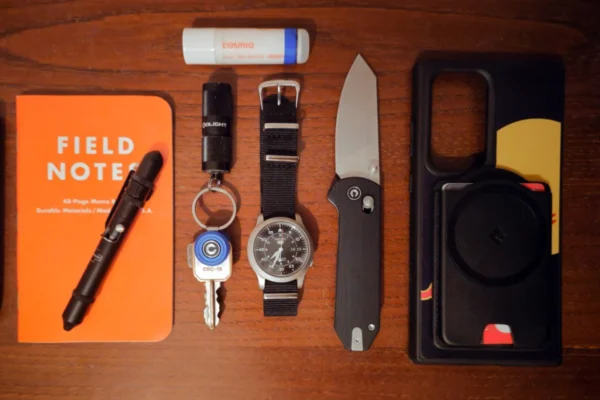
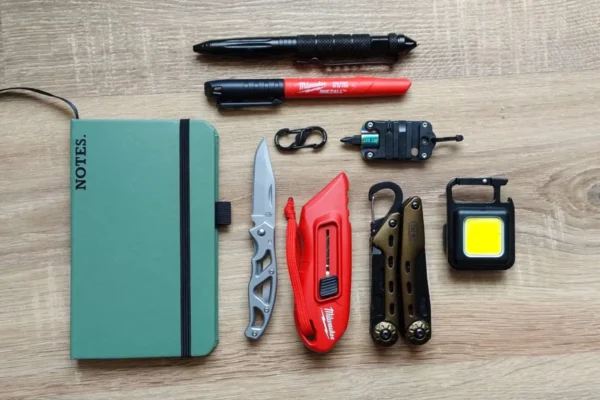
A review of the items featured in the collection reveals a reliance on industry-standard brands known for their reliability in high-stakes environments. The integration of the CJRB Pyrite, the Leatherman FREE, and the RovyVon A4 provides a comprehensive range of utility.
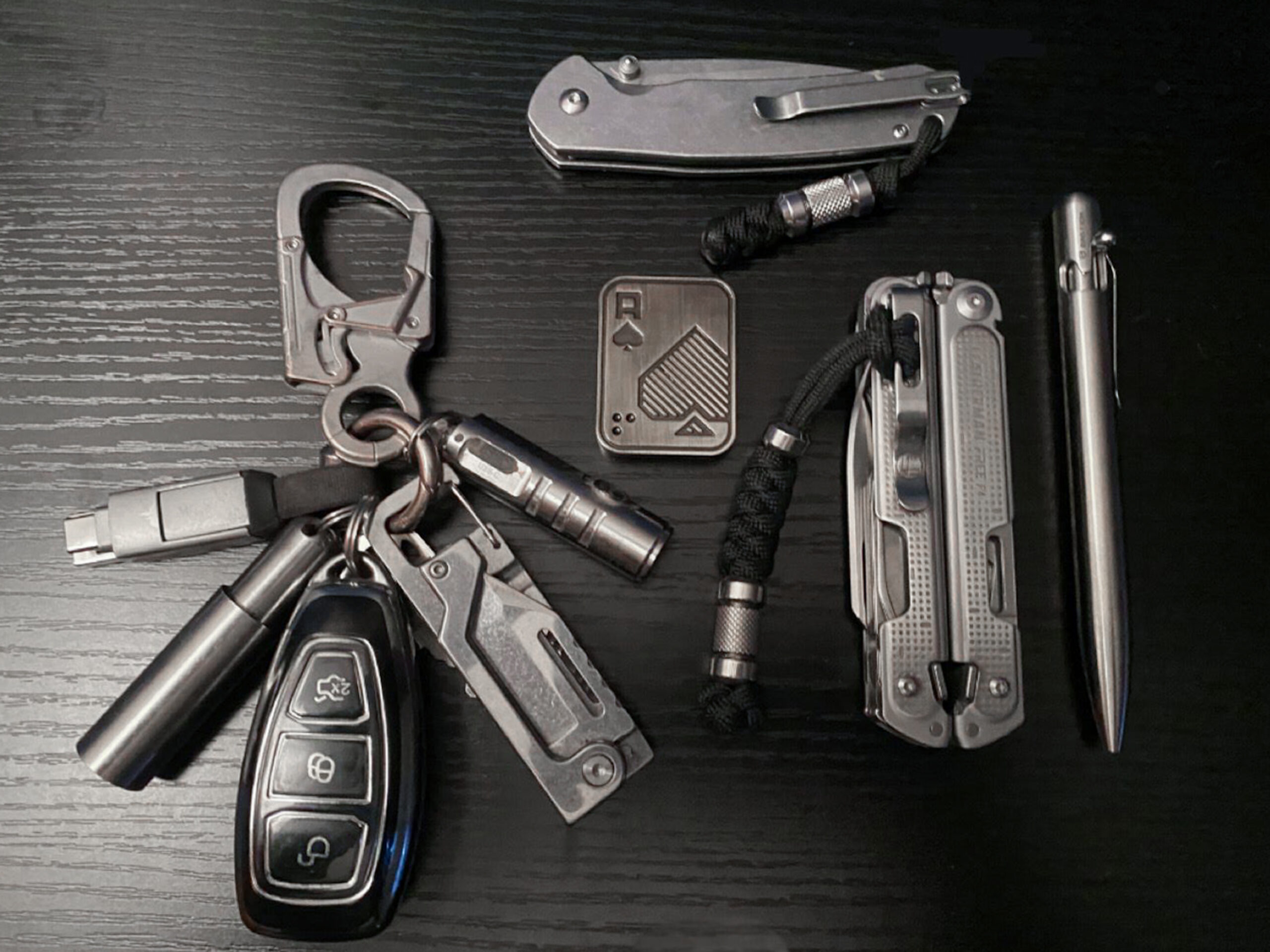
The CJRB Pyrite has gained significant traction in the knife community due to its ergonomic design and high-quality blade steel, which is essential for the repetitive cutting of plastic and pipe materials. The Leatherman FREE series represents a shift in multi-tool design, utilizing magnetic architecture to allow for one-handed operation. In a factory setting where a worker might be holding a pipe in one hand while operating a tool with the other, this capability is not a luxury—it is a significant efficiency factor.
The RovyVon A4 flashlight provides high-lumen output in a compact form factor, essential for inspecting machinery in dimly lit or obstructed areas. Furthermore, the inclusion of the Mordeco Nanosprayer—often used for cologne or sanitizing agents—on a keychain demonstrates the modern "modular" approach to EDC. By utilizing the keychain as an extension of one’s pocket space, users can carry essential items that do not necessarily require a full-sized chassis, effectively increasing the "payload" of the EDC kit without adding bulk to the primary pockets.
The Role of the "Girl Dad" in Modern EDC
The intersection of professional industrial work and the role of a parent introduces a unique dynamic to the EDC conversation. While the industrial tools are chosen for mechanical tasks, the "girl dad" aspect of the kit highlights a shift toward preparedness for unpredictable situations. Modern parenting often requires a degree of versatility—having a charging cable readily available for a device, a quick-access light for late-night emergencies, or a personal grooming tool for professional presentation during school runs or extracurricular activities.
This synthesis of roles suggests that the modern worker is increasingly moving away from compartmentalization. The tools used to fix a plastic pipe at 2:00 PM are often the same tools that, in a secondary capacity, provide peace of mind during family activities. This convergence of utility reflects a broader trend in consumer behavior: the demand for products that are "multi-hyphenate" in nature.
Chronology of EDC Evolution
The EDC movement has seen three distinct phases of development over the last decade:
- 2015–2018: The Minimalist Era. During this period, the focus was heavily on aesthetics and weight reduction. Small, lightweight folding knives and single-cell batteries were the standard.
- 2019–2022: The Tactile and Modular Era. This period saw the rise of magnetic multi-tools and standardized mounting systems. Gear began to be designed with modularity in mind, allowing users to swap attachments depending on the daily mission.
- 2023–Present: The Integrated Utility Era. Currently, the focus has shifted toward high-performance materials and "invisible" utility—tools that are seamlessly integrated into the user’s attire or keychain, designed to be used without interrupting the flow of a professional or personal task.
Supporting Data and Industry Trends
Market research into the EDC industry indicates a steady annual growth rate of approximately 5% to 7% over the last five years. This growth is largely driven by the increasing availability of "premium-entry" level tools. Brands like CJRB and RovyVon have successfully bridged the gap between affordable entry-level gear and high-end collector pieces, making it easier for factory workers and tradespeople to invest in reliable equipment without prohibitive costs.
Data suggests that durability and weight are the two primary factors influencing consumer purchasing decisions in this sector. For an average factory worker, a tool that fails after six months of heavy use is considered a liability. Consequently, the market has seen a decline in "gadget-heavy" EDC in favor of "utility-heavy" EDC, where the focus is on the quality of the steel and the reliability of the locking mechanisms.
Implications for Workplace Safety and Productivity
The professionalization of EDC has direct implications for workplace efficiency. When a worker is equipped with the correct tools, the "downtime" associated with searching for equipment or waiting for maintenance teams is significantly reduced. By carrying a high-quality multi-tool and a reliable light, workers can perform "first-line" maintenance, which refers to the immediate, minor repairs that prevent larger equipment failures.
However, safety remains a critical consideration. Employers must balance the benefit of individual preparedness with the potential risks associated with carrying bladed tools in an industrial environment. Most modern workplaces have implemented specific policies regarding the length and type of blades permitted, forcing users to be more intentional about their gear selection. The popularity of the CJRB Pyrite and similar locking-blade tools reflects an awareness of these safety standards, as they offer secure locking mechanisms that minimize the risk of accidental deployment.
Broader Context and Final Analysis
The case of this particular EDC setup illustrates that the "everyday carry" is more than a social media trend—it is a functional response to the complexities of modern life. Whether it is the industrial requirement of cutting plastic piping or the logistical requirements of managing life as a parent, the tools chosen are a testament to the user’s desire to be prepared.

The inclusion of non-standard items like a charging cable and a fragrance atomizer on a keychain serves as a reminder that EDC is a personal journey. There is no "perfect" kit, only the kit that functions best for the individual’s specific set of circumstances. As manufacturing and material science continue to advance, we can expect to see even more compact, high-performance tools that blur the line between professional utility and personal necessity. The "monochrome metal" aesthetic is likely to remain popular, as it provides a clean, professional look that is as suitable for the factory floor as it is for the home, ensuring that the transition between roles is seamless and efficient.
As the EDC community continues to grow, the emphasis will likely remain on this balance: high-grade utility, intentional modularity, and the practical application of tools to solve the multifaceted problems of daily life.