









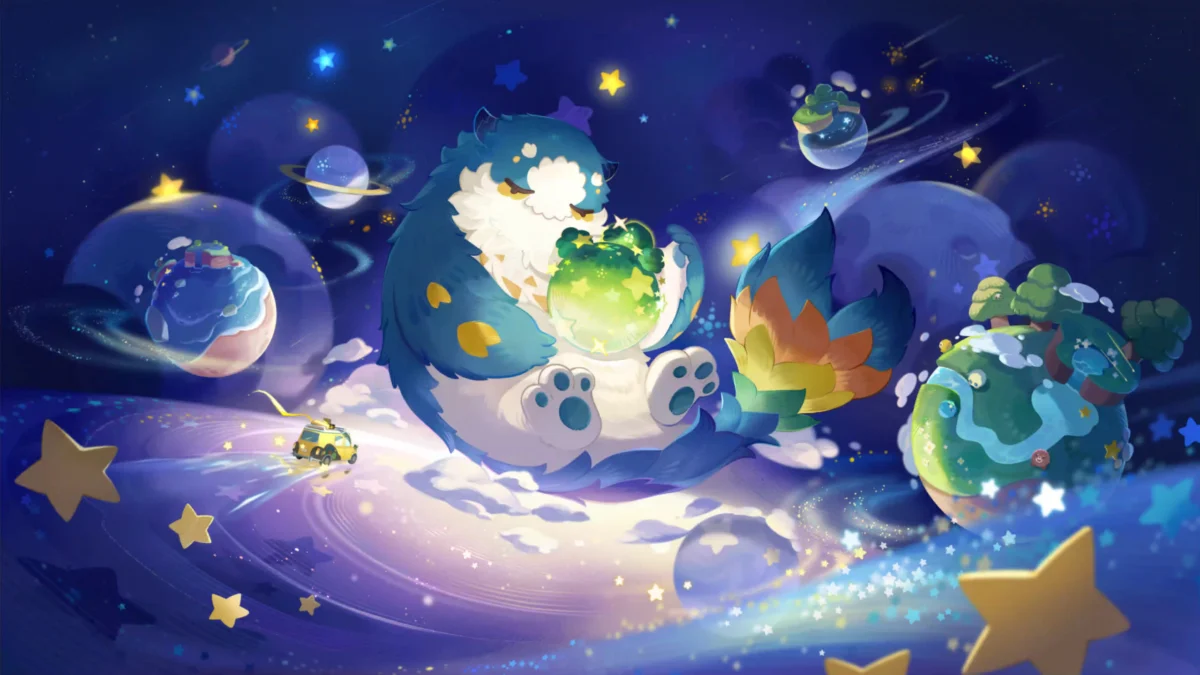
The modern interactive entertainment landscape continues to experience a saturation of island-based management and community simulation titles, a trend significantly accelerated by the global proliferation of Nintendo’s Animal Crossing: New Horizons during the early 2020s. Following the massive commercial success of that platform-defining release, major studios and independent developers alike have sought to capture the lucrative market share associated with low-stress, real-time social sims. Among these recent market entrants is HoYoverse, globally recognized for its open-world action role-playing franchises such as Genshin Impact and Honkai: Star Rail. With the second closed beta test for its upcoming title, Petit Planet, the developer has officially signaled its intent to pivot toward the family-friendly life-simulation genre. However, early technical and structural evaluations of the build suggest that while the title offers high visual fidelity and a distinct science-fantasy framing, it largely adheres to well-established genre conventions without introducing substantial mechanical innovations.
Background and Chronology of Development
The conceptual framework for Petit Planet first leaked to public forums several years ago, immediately drawing comparisons to established fixtures within the cozy gaming sector, most notably Animal Crossing. True to its corporate strategy—exemplified by Genshin Impact drawing significant inspiration from Nintendo’s The Legend of Zelda: Breath of the Wild—HoYoverse has made no concerted effort to distance its new intellectual property from these genre comparisons.

The developmental timeline of Petit Planet has progressed through controlled beta testing phases designed to evaluate network stability, user interface responsiveness, and core gameplay loops. The recent Stardrift Test, which commenced on April 21, provided invited participants with a more comprehensive look at the game’s core progression systems, resource gathering mechanics, and interactive non-player character (NPC) ecosystems. Unlike HoYoverse’s flagship titles, which traditionally feature combat-heavy ARPG frameworks supported by monetization systems centered around character and weapon gacha mechanics, Petit Planet focuses entirely on domestic management, ecological collection, and interpersonal social simulation within a spherical planetary environment.
Mechanics and Gameplay Comparison
At its core, Petit Planet tasks players with cultivating a small celestial body, harvesting resources, catching regional fauna, and interacting with anthropomorphic residents. These mechanical loops closely mirror those popularized by long-running franchises like Harvest Moon (now Story of Seasons) and Animal Crossing.
While the game substitutes the traditional tropical archipelago or rural village with a planetary, space-faring aesthetic, the minute-to-minute gameplay relies heavily on familiar mechanics. Players shake trees for materials, capture insects and marine life to populate local museums or display areas, and assist quirky animal neighbors with daily administrative chores.

Industry observers have noted that Petit Planet enters a crowded marketplace. Competitors such as XD’s Heartopia—which launched its final closed beta and subsequent global releases earlier in the year—occupy a similar socio-demographic space. Heartopia established a distinct unique selling proposition (USP) by implementing fully multiplayer-driven neighborhoods, whereas Petit Planet’s structural reliance on single-player progression within localized planetary hubs remains more traditional. Consequently, critics and genre enthusiasts alike have questioned whether Petit Planet offers enough distinct mechanics to retain player engagement over prolonged periods, particularly given the multitude of alternative life-sim titles currently available across mobile and PC platforms.
Integration of Generative Artificial Intelligence
A notable element surrounding the development and deployment of Petit Planet is HoYoverse’s integration of generative artificial intelligence (GenAI) technologies. Unlike many contemporary studios that attempt to obscure their use of automated tools, HoYoverse has opted for transparency within the beta testing environment, explicitly flagging content and systems assisted by generative models.
The inclusion of GenAI has primarily manifested in NPC conversation systems, aimed at generating dynamic, real-time responses to player input. However, initial user feedback suggests that the practical execution yields conversational results comparable to early text-simulation experiments from decades past, such as the 2005 independent title Façade.

This technological integration has sparked broader industry discussions regarding ethics, labor practices, and the environmental footprint of automated narrative generation. While younger demographics—who form a primary target audience for the title—may prioritize accessibility and visual charm over underlying developmental methods, industry analysts maintain that the public normalization of GenAI in consumer software products carries significant economic and creative implications.
Target Demographic and Monetization Uncertainty
Petit Planet represents a strategic shift for HoYoverse by explicitly targeting a younger, family-oriented demographic. While the studio’s previous portfolio successfully captured adolescent and adult audiences through complex narrative structures and high-risk monetization models, Petit Planet adopts a softer, universally accessible tone.
One of the most prominent talking points arising from the current beta test is the conspicuous absence of traditional gacha-based monetization systems. Across HoYoverse’s existing five-game roster—including Genshin Impact, Honkai: Star Rail, Zenless Zone Zero, Honkai Impact 3rd, and Tears of Themis—randomized acquisition mechanics serve as the primary source of revenue. Yet, the Petit Planet beta features no visible gacha mechanics, leading analysts to speculate that the final product may rely on alternative revenue models, such as seasonal battle passes, cosmetic microtransactions, or a flat-rate purchase structure.

This potential departure from aggressive monetization strategies may be a calculated maneuver to reassure parents and guardians regarding child-directed digital media, especially as the title positions itself as a safe digital environment for primary school-aged children. Nevertheless, the involvement of a major live-service publisher in the children’s entertainment sector continues to attract scrutiny from consumer advocacy groups monitoring digital consumption habits among minors.
Broader Impact and Industry Implications
The introduction of Petit Planet demonstrates HoYoverse’s capability to diversify its development portfolio beyond combat-oriented action titles, building upon the structural divergence previously seen with the romance detective title Tears of Themis.
While the title does not reinvent the social simulation genre, its polished execution, high-fidelity art style, and seamless multi-platform optimization showcase the studio’s technical competence. Whether Petit Planet can carve out a permanent niche in a saturated market alongside established giants like Animal Crossing and Stardew Valley remains contingent upon how HoYoverse resolves its monetization strategy, refines its AI-driven narrative features, and introduces long-term content updates following its official global launch.