









Systems Poses New Electronic Warfare Challenges for Ukraine
The landscape of modern warfare continues to be defined by a rapid, continuous cycle of technological innovation and countermeasures, particularly within the airspace over Ukraine. As defense technologies evolve to meet the demands of protracted conflict, both sides are heavily investing in electronic warfare (EW) and counter-EW systems. Recently, intelligence reports and battlefield observations have highlighted a significant tactical adaptation by Russian military forces: the systematic integration of expanded antenna arrays into attack drones and guided munitions. By increasing the number of patch antenna elements in satellite navigation modules, Russia aims to neutralize the disruptive impact of Ukrainian electronic jamming, threatening to degrade the effectiveness of Kyiv’s defensive umbrella.
The core of this technological upgrade centers on the Kometa satellite navigation equipment, manufactured by VNIIR-Progress. Traditionally, these anti-jamming antenna arrays utilize multiple receiving elements to filter out intentional electronic interference, allowing guided weapons to maintain a fix on satellite positioning constellations despite regional jamming efforts. Historically deployed in configurations featuring four or eight elements, these systems have seen a steady upward scaling in capacity. Recent battlefield analyses indicate that Russian forces have heavily deployed 16-element versions and are actively expanding manufacturing capacity for 20-element configurations. More alarmingly for Ukrainian air defense operators, electronic warfare specialists have identified Shahed-series attack drones utilizing massive 32-element arrangements during long-range strikes against targets in Kyiv and other major urban centers.
To understand the tactical significance of these upgrades, one must examine the fundamental mechanics of patch antennas and electronic suppression. Serhii Beskrestnov, a prominent electronic warfare specialist and defense technology adviser to Ukrainian President Volodymyr Zelenskyy, has elucidated the mechanics governing these arrays. According to Beskrestnov, the operational principle is straightforward: the greater the number of individual receiving elements integrated into the antenna module, the higher the capacity of the system to isolate legitimate satellite signals from localized electronic interference sources. The newly identified 32-element configuration typically achieves its high capacity by combining two distinct 16-element arrays, granting the onboard navigation system the ability to operate seamlessly across multiple satellite navigation frequencies, such as the L1, L2, and L5 bands.
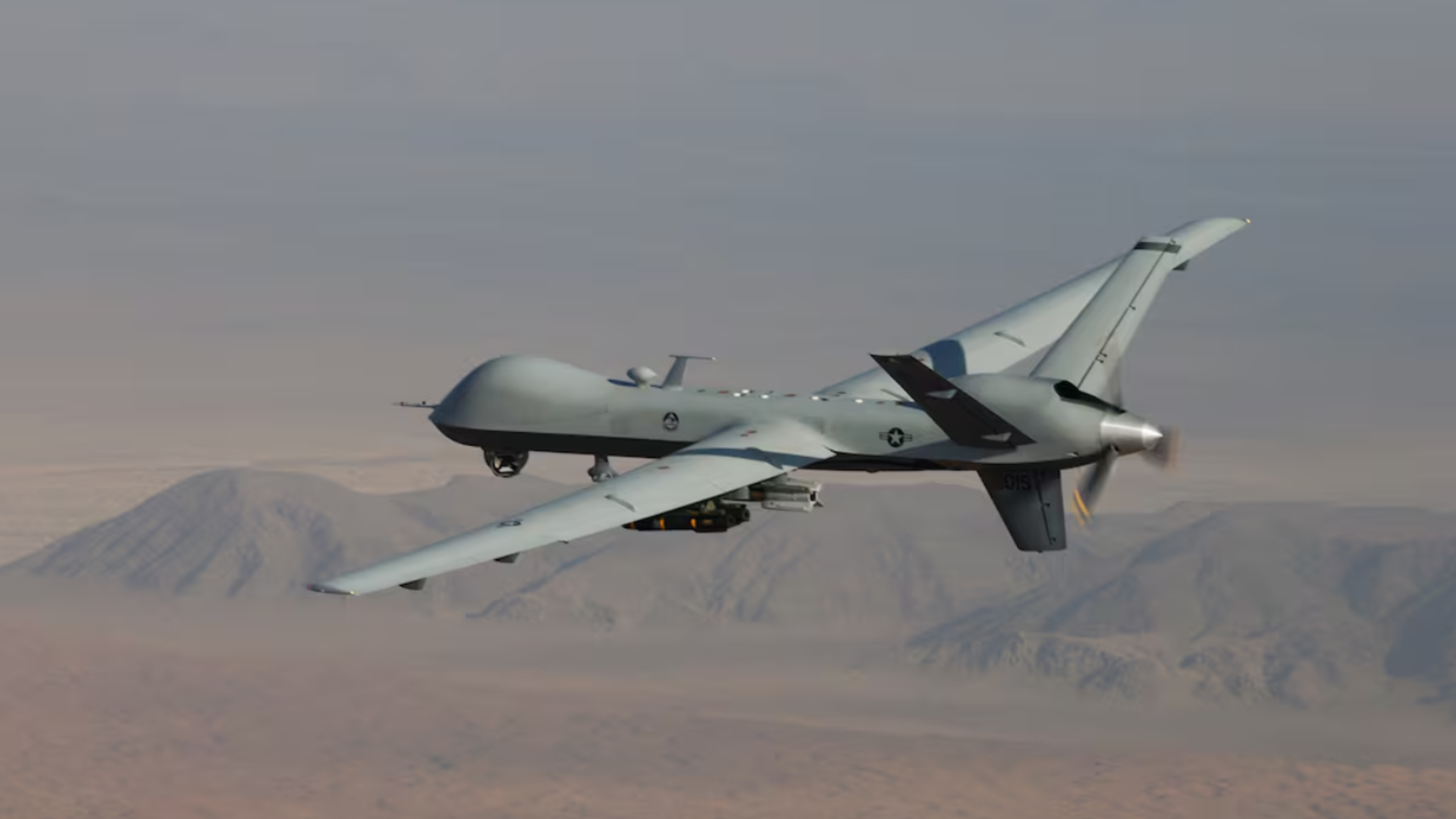
The proliferation of these advanced navigation modules extends far beyond basic one-way attack drones. Intelligence gathered by Ukrainian defense agencies indicates that Russian manufacturers have placed orders for over 100,000 modules spanning various configurations. This massive procurement pipeline underscores a strategic intent to integrate enhanced navigation protection across a diverse spectrum of precision-guided weapons. Alongside the Iranian-designed Shahed series and their domestically produced Russian counterparts, known as Geran drones, the Kometa technology has been identified in guided aerial bombs, Iskander-M and Kinzhal ballistic and hypersonic missiles, and the newer Filin cruise missile. The sheer volume of these acquisitions highlights an institutional commitment to hardening the entire arsenal of Russian precision strike assets against electromagnetic interference.
The historical context of electronic warfare in the Russo-Ukrainian conflict reveals a dynamic tug-of-war. In the early phases of the invasion, basic GPS-jamming systems deployed by Ukrainian forces proved highly effective at throwing incoming munitions off course, causing them to miss their intended targets or crash harmlessly in open fields due to a loss of positional data. Recognizing this vulnerability, the Russian military accelerated the deployment of adaptive antenna arrays to restore precision guidance. In response, Ukrainian military engineers and private defense tech companies have been forced to innovate continuously, developing sophisticated multi-frequency jamming architectures and signal-spoofing techniques to outmaneuver the hardened Kometa systems.
Despite the formidable nature of Russia’s upgraded antennas, Ukrainian military technologists maintain that these systems do not render incoming weapons completely immune to electronic interdiction. The operational effectiveness of any given Kometa configuration remains contingent upon its specific physical arrangement, the number of active receiving elements, and the computational power of the processing algorithms tasked with distinguishing authentic satellite signals from artificial noise. Capitalizing on these vulnerabilities, Ukrainian specialists have analyzed physical samples of 32-element antennas acquired through secondary weapons markets and secondary recovery channels, yielding new insights into potential blind spots.
Commanders on the ground are already translating these technical insights into operational countermeasures. Alkhimik, commander of Ukraine’s Night Watch electronic warfare unit, outlined the tactical roadmap for neutralizing the 32-element arrays. By engineering synchronized jamming networks—specifically deploying one system operating in the L1 frequency band and a secondary system covering the L2 and L5 bands—Ukrainian forces believe they can effectively saturate and suppress the upgraded antennas. This multi-band approach seeks to overwhelm the signal-processing algorithms of the navigation modules, denying the weapons the clean data streams they require for course correction.
Complementing brute-force jamming are more nuanced, deceptive methodologies known collectively as satellite spoofing. Rather than attempting to overpower incoming signals with overwhelming electronic noise, these alternative countermeasures manipulate the navigation information ingested by the drone’s autopilot. Fly Group Ukraine, a domestic defense technology developer, has pioneered systems that transmit fabricated geographic coordinates to approaching Russian aerial vehicles. This technique exploits the fundamental design of autonomous flight systems: the drone continues to operate under the assumption that it is flying along its pre-programmed trajectory, while its internal navigation computer quietly adjusts its heading based on the falsified data. Consequently, the aircraft gradually steers itself away from populated urban areas and safely into uninhabited zones without triggering defensive evasion alerts.

Anatoliy Khrapchynskyi, development director at Fly Group Ukraine, emphasized the strategic value of this approach, noting that it minimizes collateral damage and reduces the expenditure of kinetic interceptors. However, military analysts caution that the long-term viability of these countermeasures remains uncertain. As Russia continues to refine the hardware and software architecture of its drone guidance systems, the margin for error narrows. The ongoing technological arms race suggests that electronic warfare alone may soon face diminishing returns against increasingly autonomous, AI-assisted flight control systems that rely less heavily on continuous external satellite connectivity.
The broader implications of this technological escalation extend far beyond the immediate tactical sphere, carrying profound consequences for the allocation of national resources and the future design of air defense doctrines. If Ukrainian electronic warfare systems and spoofing techniques lose their ability to reliably disrupt incoming loitering munitions and cruise missiles, the burden on Ukraine’s layered air defense network will increase dramatically. Under such a scenario, defending strategic infrastructure and population centers would require an expanded reliance on expensive kinetic interceptors, specialized counter-drone aircraft, and advanced surface-to-air missile systems—resources that remain perpetually scarce and economically demanding.
Furthermore, the adaptation of Russian drone technology serves as a real-world laboratory for modern great-power competition. Militaries worldwide are closely monitoring the electronic warfare developments unfolding in Ukraine, recognizing that the lessons learned regarding anti-jamming navigation, decentralized manufacturing, and electromagnetic resilience will shape the future of military doctrine globally. As defense contractors and engineers on both sides push the boundaries of signal processing and counter-measures, the skies over Eastern Europe remain the primary testing ground for the next generation of autonomous military technology, ensuring that the cat-and-mouse game between guidance and jamming will continue to evolve at an unprecedented pace.