










The Porsche brand, an icon of German engineering, has evolved from a small consulting firm founded in 1931 by Ferdinand Porsche into a global benchmark for automotive performance, luxury, and design. While many enthusiasts identify the marque primarily through the silhouette of the 911, the company’s history is defined by a strategic expansion that bridges the gap between high-performance sports cars and modern, versatile vehicles. Understanding the Porsche lineup requires navigating decades of technical innovation, market adaptation, and the company’s transition into the era of electrification.

The Historical Foundation of Porsche
The origins of the Porsche enterprise are inextricably linked to the development of the Volkswagen Beetle. Ferdinand Porsche’s early work laid the foundation for the rear-engine architecture that would define the brand for the better part of a century. Following the success of the Type 64, Porsche formally introduced the 356 in 1948, marking the company’s debut as an independent manufacturer.
The 1950s solidified the brand’s reputation on the racetrack, most notably with the 550 Spyder, a lightweight racing car that proved displacement was not the only factor in speed. By the 1960s, the company reached a major milestone with the launch of the 911, a vehicle that would supersede the 356 and establish the definitive aesthetic and mechanical language of the brand. Throughout the 1970s, the introduction of turbocharging in the 911 Turbo demonstrated the company’s commitment to pushing the boundaries of internal combustion technology.

The Flagship: Porsche 911
The Porsche 911 remains the company’s most significant vehicle, serving as the core around which the brand’s identity is built. Over its 60-year production history, the 911 has undergone continuous refinement. The model hierarchy is vast: the Carrera serves as the entry-level point, while the GTS and Turbo models occupy the higher performance tiers. The GT3 and GT3 RS variants represent the pinnacle of track-focused engineering, stripping away excess luxury to maximize lap times.
The 911’s diversity is further categorized by body styles, including the classic Coupe, the open-top Cabriolet, and the Targa, which features a distinctive roll bar and removable roof section. From an investment perspective, the 911 range is remarkably broad. Collectors often seek out rare, race-derived models like the 911 GT1 Strassenversion—a road-legal iteration of a race car that has fetched upwards of $5 million at auction—while the 996 generation remains a gateway for enthusiasts seeking a 911 experience at a significantly lower price point, often found in the secondary market for approximately $20,000.

The Mid-Engine Evolution: Boxster and Cayman
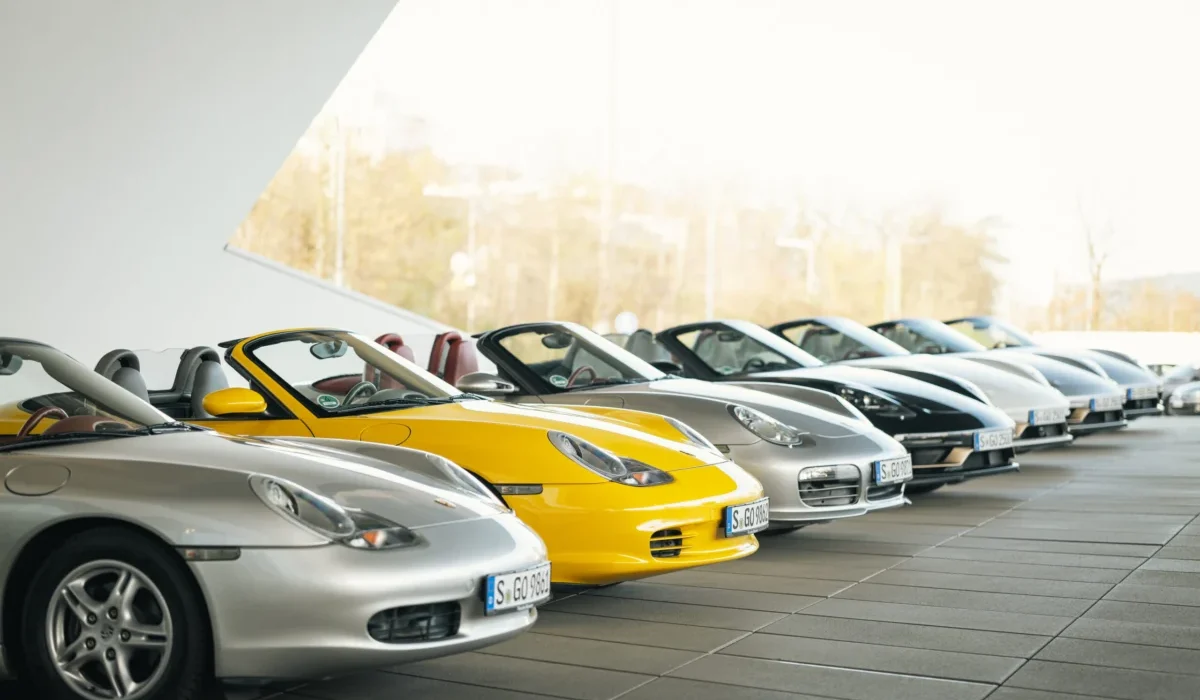
In the 1990s, Porsche faced significant financial instability. The introduction of the Boxster, a mid-engine roadster, was a pivotal move to diversify the portfolio and appeal to a broader consumer base. While early critics dismissed the Boxster as an entry-level compromise, its mid-engine layout provided superior weight distribution compared to the rear-engine 911, garnering praise from handling enthusiasts.
The Cayman, introduced as the hardtop sibling to the Boxster, eventually occupied the space between the roadster and the flagship 911. Modern iterations of the 718 Cayman and 718 Boxster—which utilize the 982 chassis designation—are frequently cited by automotive journalists as some of the most balanced sports cars on the market. These models have effectively challenged the notion that a lower price point equates to a lack of "proper" Porsche performance.

Transaxle Models: 924, 944, 968, and 928
Porsche’s history includes a significant departure from the rear-engine configuration in the form of front-engine, water-cooled models. The 928, launched in 1977, was intended to be a sophisticated grand tourer equipped with a powerful V8 engine. Though it did not replace the 911 as the company’s flagship, it remains a cult classic for its comfort and unique design.
In the entry-level segment, the 924 and its successor, the 944, were instrumental in sustaining the brand during the 1980s. The 944, in particular, is now highly regarded for its handling dynamics and period-correct aesthetic. The 968 followed in the early 1990s, serving as a refinement of the transaxle concept before the brand shifted its focus toward the Boxster. Today, these models are viewed as significant transitional pieces that highlight Porsche’s willingness to experiment with architecture outside of its traditional racing roots.

Diversification: The SUV and Saloon Era
The early 2000s marked the most dramatic shift in Porsche’s history with the introduction of the Cayenne SUV. Despite skepticism from purists, the Cayenne became a commercial powerhouse, providing the capital necessary for the company to continue developing its high-performance sports cars. Its off-road capability, bolstered by success in the Rally Transsyberia, proved that Porsche could translate its engineering precision into the SUV segment.
The Macan, a compact SUV, followed and quickly became one of the brand’s best-selling vehicles in North America. By blending daily utility with a driver-focused chassis, the Macan successfully captured a demographic that required practicality without sacrificing the driving experience.

The Panamera, launched in 2009, expanded the brand into the luxury sports sedan market. Positioned against established rivals like the Mercedes-Benz S-Class and the Audi A8, the Panamera emphasized performance over pure chauffeured comfort, offering a unique "four-door sports car" proposition.
The Electric Transition: Taycan
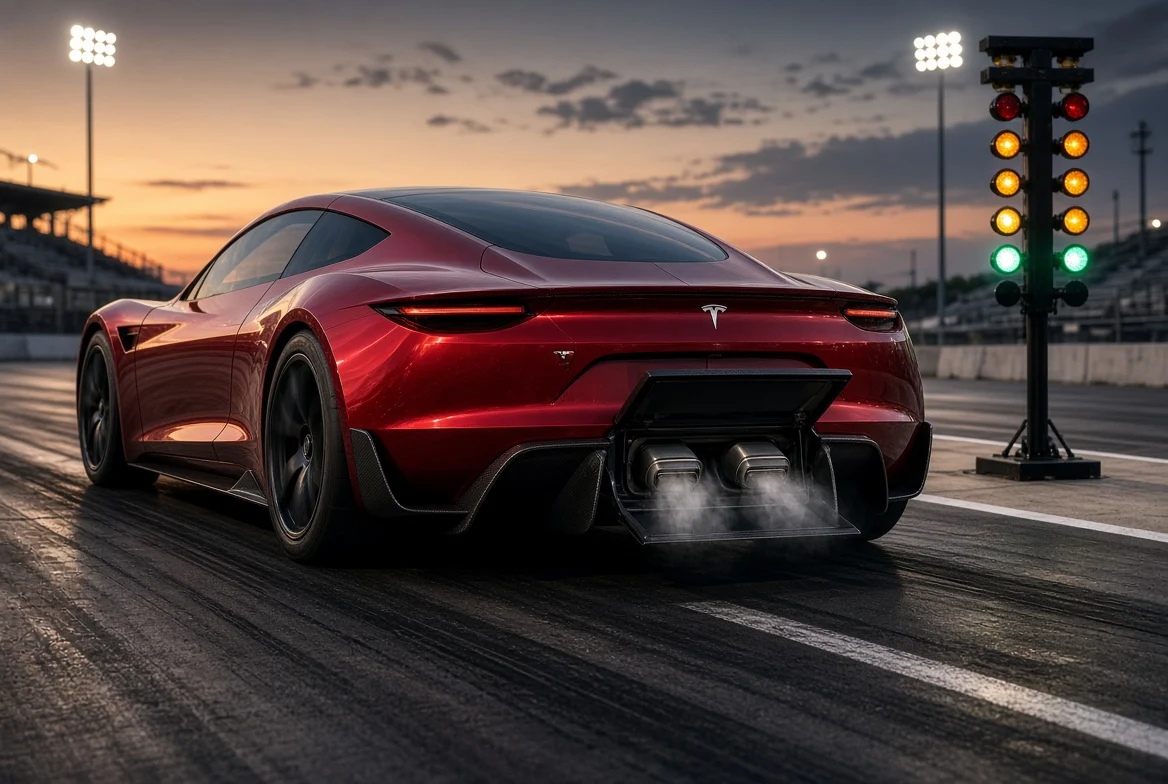
The launch of the Taycan represents the most significant technological leap in Porsche’s modern era. As the company’s first all-electric sports car, the Taycan demonstrates that high-performance, instantaneous torque, and luxury interiors can exist within an EV platform. While competitors such as Tesla have achieved faster 0-60 mph times on paper, Porsche has focused on consistency, cooling efficiency for repeated track performance, and build quality, aiming to maintain the "Porsche feel" in an electrified package.

Market Impact and Future Outlook
Porsche’s business model has proven to be one of the most resilient in the automotive industry. By balancing the production of high-volume, profitable SUVs like the Cayenne and Macan with the low-volume, high-margin prestige of the 911 and its GT variants, Porsche has successfully insulated itself from market volatility.
The integration of hybrid and electric powertrains, such as those found in the latest Cayenne E-Hybrids and the full-electric Taycan, indicates a clear path toward long-term sustainability. Porsche has signaled that its future will be defined by an aggressive shift toward electrification, with a target of making more than 80% of its new vehicles electric by 2030, though the company continues to maintain the combustion engine in specific performance applications, such as the 911, to cater to its traditional enthusiast base.

Chronology of Key Porsche Milestones
- 1931: Ferdinand Porsche establishes his consulting firm in Stuttgart.
- 1948: The Porsche 356 is introduced, the first production car bearing the Porsche name.
- 1963: The Porsche 911 is unveiled, replacing the 356.
- 1977: The 928 grand tourer is launched, featuring a front-mounted V8.
- 1996: The Boxster enters production, helping to stabilize the company financially.
- 2002: The Cayenne SUV is introduced, fundamentally changing the brand’s market reach.
- 2009: The Panamera luxury saloon makes its debut.
- 2014: The Macan compact SUV is launched, becoming a volume leader.
- 2019: The Taycan, Porsche’s first mass-produced all-electric vehicle, is revealed.
- 2024: Introduction of the electric Macan, signaling the next phase of the brand’s EV transition.
As Porsche navigates the transition toward a post-combustion future, the core of its philosophy remains unchanged: a commitment to the "Autobahn-ready" standard of performance, regardless of whether the vehicle is a track-focused coupe or a family-oriented SUV. The brand’s ability to reconcile its heritage with the demands of a changing global market suggests that its influence on automotive engineering will persist for the foreseeable future.