




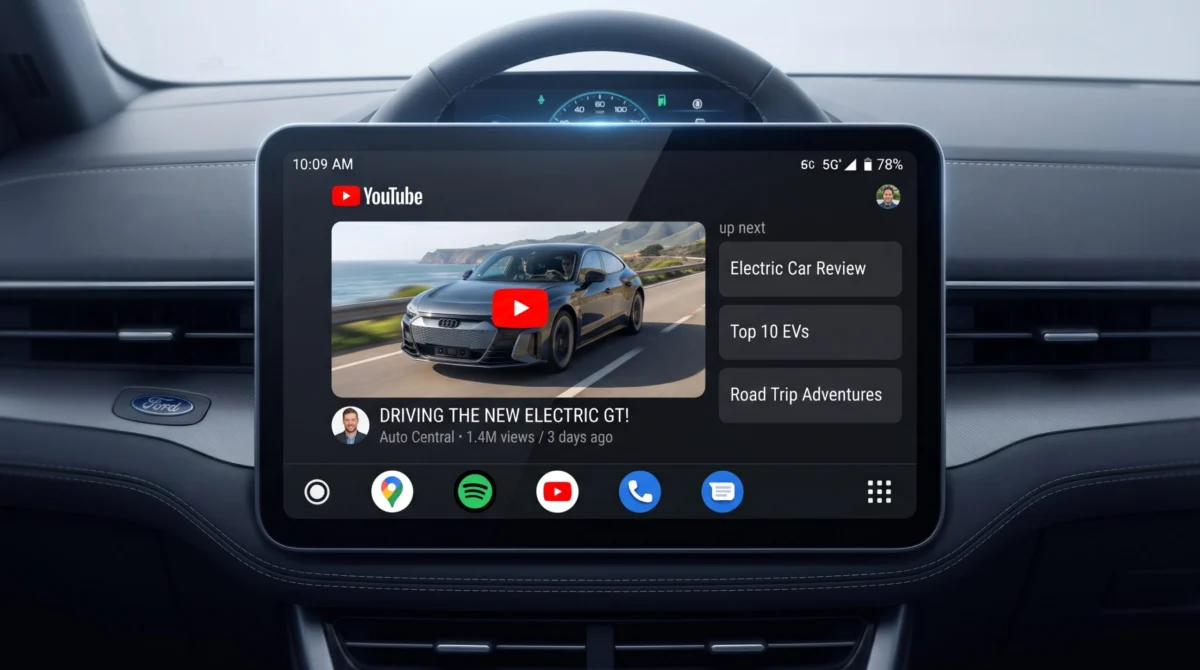
During the recent Android Dev Summit, Google officially confirmed that the YouTube application is slated to arrive on the Android Auto platform. While the announcement provided a long-awaited confirmation for a feature frequently requested by the community, it notably lacked a concrete release timeline. As October draws to a close without the appearance of a beta version or a definitive launch date, it has become increasingly clear that the integration is still undergoing significant internal refinement. Despite earlier industry speculation suggesting a potential rollout before the end of the year, drivers are now being asked to exercise further patience as the development team balances feature parity with strict safety protocols.
A Tale of Two Platforms: Android Auto vs. Android Automotive
To understand why the rollout of YouTube on Android Auto has been slower than some might expect, it is essential to distinguish between Google’s two primary in-vehicle initiatives: Android Auto and Android Automotive OS (AAOS).
Android Auto functions as a projection-based system. It relies on the user’s smartphone to do the heavy lifting, streaming the interface to the vehicle’s infotainment display via a wired or wireless connection. This architecture creates inherent limitations, as the system must remain compatible with a vast, fragmented ecosystem of smartphones, each with varying processing power and screen resolutions.
Conversely, Android Automotive OS is a native, embedded operating system that runs directly on the vehicle’s hardware. Because it is integrated into the car’s ecosystem at the factory level, Google has more granular control over the software environment. It is within the AAOS ecosystem that developers have been able to test video apps and browsers more effectively, as the OS can interact directly with the vehicle’s telematics and safety systems. Consequently, Google’s development efforts have appeared heavily weighted toward the native OS, leaving the projection-based Android Auto further down the development pipeline.
The Safety Protocol: Parked-Only Playback
Google has been explicit regarding the functional constraints of the YouTube integration. When the application eventually arrives, playback will be strictly limited to stationary vehicles. This design philosophy aligns with the broader industry trend of prioritizing driver attention and minimizing cognitive load while operating a motor vehicle.
The application is intended to serve as a companion for "downtime" scenarios—specifically when a vehicle is parked for charging or waiting in transit lines. Once the vehicle’s gear selector is moved out of "Park" or the parking brake is released, the video feed will immediately cease. For those with a YouTube Premium subscription, the system is expected to transition seamlessly into background audio playback, allowing the driver to continue listening to content without the distraction of a visual feed. This "safety-first" approach is a critical component of Google’s ongoing discussions with automotive manufacturers, who remain highly sensitive to the liability concerns associated with in-car entertainment.
Chronology of Development and Public Expectations
The journey toward bringing full video capabilities to Android Auto has been a lengthy one. For years, the platform was strictly limited to navigation, communication, and audio streaming apps. The shift began when Google introduced the "Cars App Library," an evolution of the Android for Cars App Library that allows third-party developers to create more diverse experiences within the Android Auto framework.
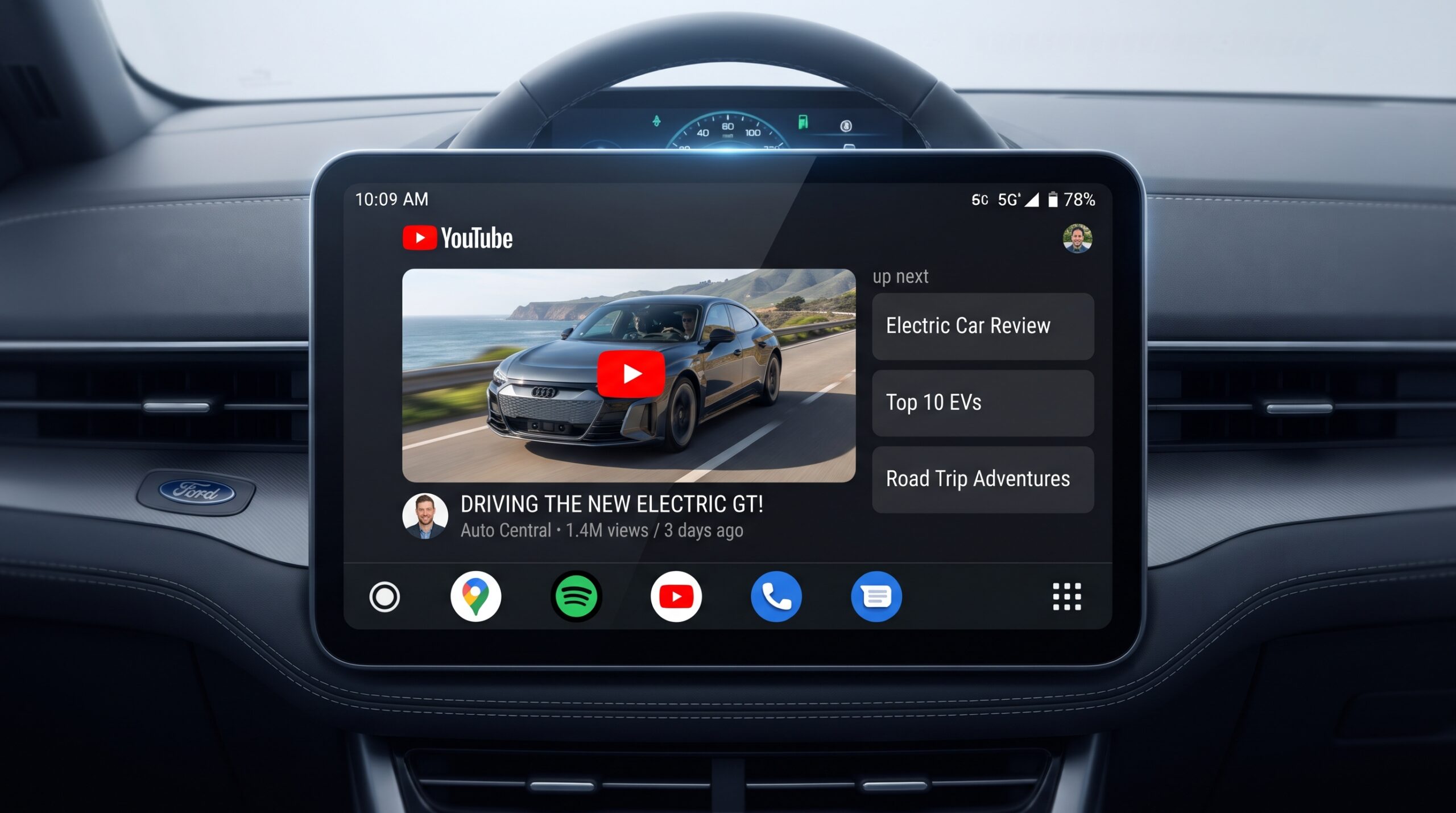
Throughout 2025 and into late 2026, user demand for video streaming reached a fever pitch, driven largely by the proliferation of electric vehicles (EVs) that feature large, high-resolution center consoles. As EV charging times have become a focal point of the ownership experience, the demand for "in-car cinema" grew, leading to the development of workarounds. Many tech-savvy users turned to third-party software like Fermata Auto—a custom media player that bypasses standard restrictions to allow video playback. However, these solutions are notorious for system instability, potential security vulnerabilities, and the risk of breaking integration with the vehicle’s native infotainment system. Google’s official push to include YouTube is, in many ways, an acknowledgment that the market prefers a stable, officially sanctioned solution over unofficial "hacks."
Broader Implications for the Automotive Industry
The integration of YouTube into Android Auto represents a broader shift in the automotive industry: the vehicle is increasingly viewed as a "third living space." As software-defined vehicles (SDVs) become the standard, the infotainment system is no longer just a peripheral tool; it is the primary interface for the user’s digital life.
Industry analysts suggest that the delay in the YouTube rollout is indicative of the complex negotiations between Google and automotive OEMs (Original Equipment Manufacturers). Manufacturers are often hesitant to allow full-screen video apps in the dashboard, fearing that if a driver were to find a way to bypass the "parked-only" restriction, the OEM could face massive regulatory scrutiny from agencies like the National Highway Traffic Safety Administration (NHTSA).
Furthermore, the data collected from this rollout will likely influence future updates to the Cars App Library. By observing how users interact with YouTube in a parked state, Google will be able to refine the UX/UI guidelines for future video-centric applications, such as streaming services or gaming platforms, which are likely to follow in the coming years.
What Lies Ahead: The Cars App Library
Beyond the YouTube integration, the tech community is watching the development of the Cars App Library closely. Recent reports from 9to5Google indicate that Google is finalizing new tools for audio, calling, and messaging that aim to make the Android Auto interface more responsive and feature-rich. These updates are expected to improve the "at-a-glance" readability of messages and streamline the process of initiating calls, reducing the number of taps required to complete common tasks.
While these updates have yet to reach the general public in a stable release, they signal that the platform is moving toward a more mature state. The goal is to provide an experience that rivals the seamlessness of smartphone OS integration while maintaining the rigorous safety standards required for the road.
For now, the automotive world remains in a holding pattern. The Android Dev Summit served as a confirmation of intent, but for the average driver, the "soon" promised by Google remains an ambiguous target. As the industry moves into the final weeks of the year, stakeholders will be monitoring the Google Play Store for the first official beta release of YouTube for Android Auto. Until then, users are encouraged to remain cautious of third-party software, as the official, optimized, and safety-validated solution is clearly the priority for the software giant.
The integration of video streaming into the vehicle is not merely a feature addition; it is a fundamental evolution of the dashboard. Whether this transition will be met with widespread adoption by manufacturers or skepticism from safety regulators remains a point of contention. Nevertheless, Google’s commitment to this feature ensures that, eventually, the vehicle will become a full-fledged media consumption hub, fundamentally altering how we spend our time behind the wheel.