










For decades, the high-altitude eyewear market has been dominated by ultra-aerodynamic, plastic-framed wraparound sunglasses designed to mimic the aesthetics of professional velodrome cyclists and marathon runners. While these modern athletic shades excel at providing peripheral coverage and shedding sweat, they have increasingly faced a counter-movement from outdoor enthusiasts seeking gear with tangible heritage, durability, and character. Enter the timeless category of traditional glacier glasses—an iconic design language defined by metallic frames, leather side shields, and round lenses that trace their lineage back to the golden age of Alpine exploration in the mid-20th century.
Leading this retro-functional renaissance is the Julbo Vermont Classic Glacier Sunglasses, a piece of mountaineering history that continues to spark polarizing debates among modern backpackers, mountaineers, and style-conscious outdoor adventurers. Currently available at a promotional price of $115 through outdoor retailer REI—representing a 30 percent discount off their standard retail value—these distinctive spectacles bridge the gap between vintage mountaineering aesthetics and contemporary optical safety standards. As outdoor brands increasingly look to archive diving to capture consumer interest, the Vermont Classic offers a fascinating case study in how heritage gear survives and thrives in a market obsessed with lightweight synthetics.
Main Facts and Product Architecture
The Julbo Vermont Classic is immediately recognizable by its unapologetically bold silhouette, which neatly divides the outdoor community into two distinct camps: traditionalists who view the frames as the pinnacle of alpine cool, and minimalists who find the vintage aesthetic overly dramatic. Beyond the surface-level styling, the engineering of the sunglasses is deeply rooted in the rigorous demands of high-altitude environments, where extreme ultraviolet (UV) radiation and blinding snow glare pose severe threats to ocular health.
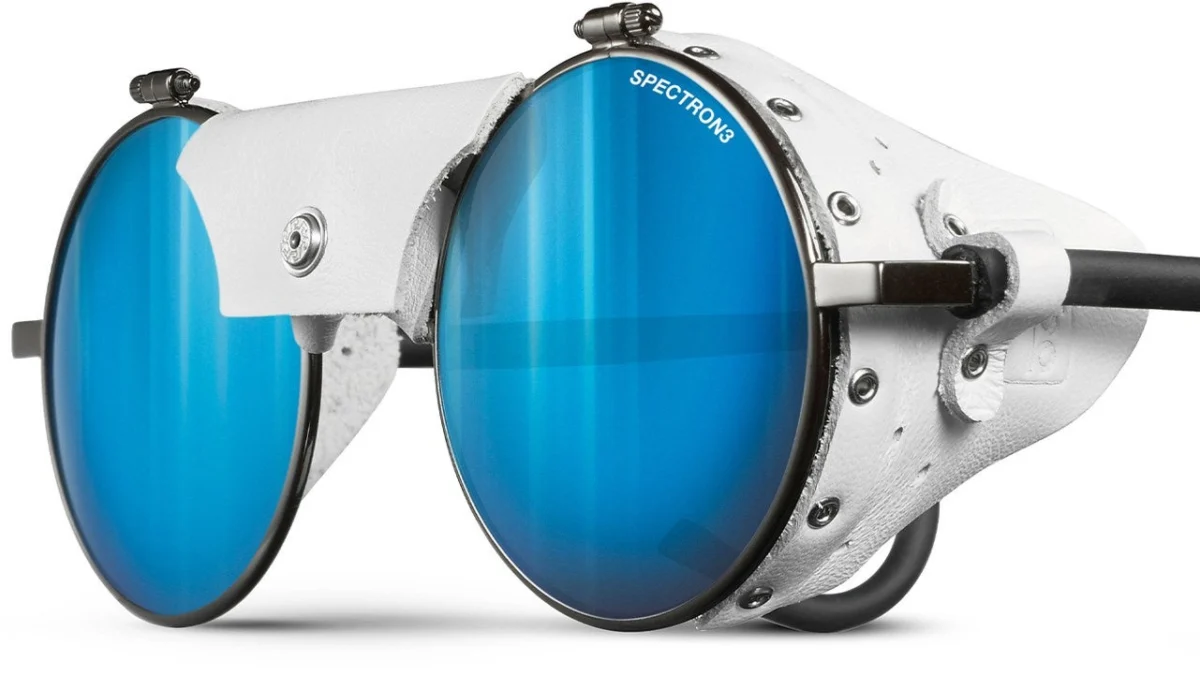
At the core of the Vermont Classic’s design are its signature leather components. Soft, supple leather side shields are affixed to the hinges to block peripheral light, wind, and blowing ice particles from entering the sides of the eye—a crucial feature for climbers traversing exposed snowfields or glaciers above the treeline. Additionally, a matching leather bridge guard covers the upper nose piece, preventing harsh sunlight from reflecting upward off snowpacks directly into the wearer’s eyes.
Securing the glasses to the face is another hallmark of traditional mountaineering design: the 360-degree adjustable temple arms. The terminal ends of the metal arms are shaped like a shepherd’s crook, designed to loop entirely around the back of the ear. This mechanical retention system ensures that the sunglasses remain locked securely in position even during high-intensity scrambles, strong alpine gales, or unexpected slips, eliminating the risk of the eyewear sliding off and tumbling down a crevasse.
While the exterior appearance remains fiercely loyal to 1950s design codes, Julbo has updated the interior technology to meet modern safety expectations. The historical glass lenses of mid-century iterations have been replaced with advanced, lightweight polycarbonate lenses. This modern material delivers complete 100 percent protection against UVA, UVB, and UVC rays, while offering significantly improved impact resistance and a reduction in overall weight compared to traditional mineral glass.
Chronology and Evolution of Alpine Eyewear
To understand the cultural and functional significance of the Julbo Vermont Classic, one must examine the historical trajectory of alpine eyewear. In the early days of serious mountaineering in the Alps during the late 19th and early 20th centuries, climbers recognized that the intense glare reflected off snow and ice could cause severe photokeratitis, commonly known as "snow blindness," alongside long-term retinal damage. Early solutions were crude, often consisting of primitive leather masks with narrow horizontal slits or rudimentary tinted glass panes held together with twine or fabric.
By the 1950s, specialized eyewear manufacturers began engineering dedicated glacier glasses to support the burgeoning golden age of Himalayan and European peak bagging. Julbo, a company founded in the Jura mountains of France by Jules Baud in the late 19th century, emerged as a pioneer in this space. The brand developed specialized frames equipped with side shields to protect mountaineers conquering high-altitude giants like Mont Blanc, Annapurna, and Everest. The predecessor designs to the modern Vermont layout quickly became standard-issue equipment for elite expeditions, photographed on the faces of legendary mountaineers scaling vertical ice walls in harsh, sub-zero conditions.
Over the subsequent decades, the outdoor industry shifted dramatically toward injection-molded plastics, single-piece wraparound shields, and polarized polymer lenses tailored for fast-and-light pursuits. Traditional metal-framed glacier glasses were largely relegated to niche historical displays or vintage gear collector markets. However, Julbo maintained the Vermont in its active product catalog, recognizing a persistent demand from purists, expeditions operating in extreme polar and high-altitude regions, and fashion-forward outdoor enthusiasts seeking authentic retro gear.
Supporting Data and Market Reception
The enduring appeal of the Julbo Vermont Classic is supported by its unique market positioning. While standard technical sunglasses often prioritize weight savings—frequently tipping the scales below 25 grams—the Vermont Classic embraces a heavier, more substantial construction utilizing metal alloys and genuine leather. Despite this, the integration of modern polycarbonate lenses has successfully lightened the load compared to vintage models, making them surprisingly wearable for multi-day trekking trips.
Consumer reception, as tracked by retail platforms and outdoor gear review publications like Backpacker, reveals a distinct sociological divide among buyers:
- The Traditionalist Camp: Approximately 50 percent of reviewers and outdoor writers champion the sunglasses for their unmatched functionality in extreme alpine conditions. The full-coverage architecture effectively eliminates light leakage, a common failure point for standard sport sunglasses that leave gaps at the temples and brow line.
- The Aesthetic Skeptics: The remaining demographic approaches the frames with caution, noting that wearing glacier glasses in urban environments or low-altitude settings can cross the line from functional gear into ironic fashion territory.
Despite these divergent opinions, promotional price points—such as the recent markdown to $115 at REI—frequently trigger surges in demand, indicating that consumers are eager to acquire iconic pieces of outdoor heritage at an accessible entry point.
Official Responses and Industry Perspectives
Representatives from technical outdoor apparel and equipment manufacturers note that the resurgence of heritage gear aligns with a broader consumer fatigue regarding hyper-futuristic, disposable product cycles. According to industry analysts, outdoor participants are increasingly investing in "buy-it-for-life" items that carry historical narratives and timeless visual identities.
While high-altitude gear brands typically focus their marketing on elite athletes breaking speed records on 8,000-meter peaks, the enduring success of products like the Vermont Classic demonstrates the commercial viability of blending nostalgia with baseline utility. Commentators within the gear-testing community have pointed out that while a modern wraparound pair of shades may feel more natural on a casual trail run, true alpine environments—characterized by intense UV exposure, high-angle glare, and biting winds—still demand the uncompromising physical barrier that only leather side shields and full-coverage metal frames can provide.
Broader Impact and Implications for the Outdoor Market
The continued relevance of the Julbo Vermont Classic underscores a significant trend in the modern outdoor retail landscape: the rehabilitation of classic designs through targeted material upgrades. By retaining the iconic 1950s chassis while quietly substituting the fragile glass lenses of the past with shatter-resistant, high-clarity polycarbonate, manufacturers have successfully insulated heritage products from obsolescence.
As climate change and shifting weather patterns alter the topography of high-alpine routes, making rockfall and variable snow conditions more prevalent, the need for reliable, robust protective equipment remains as critical as ever. Whether worn by a high-altitude mountaineer scaling technical ice routes in the Himalayas or an urban commuter making a bold stylistic statement on a city sidewalk, the Julbo Vermont Classic proves that functional design, when executed with authenticity and uncompromising purpose, transcends generational trends. The ongoing popularity of these glasses suggests that outdoor consumers will continue to value gear that tells a story, honors the pioneers of the past, and delivers uncompromised performance when the elements turn severe.