







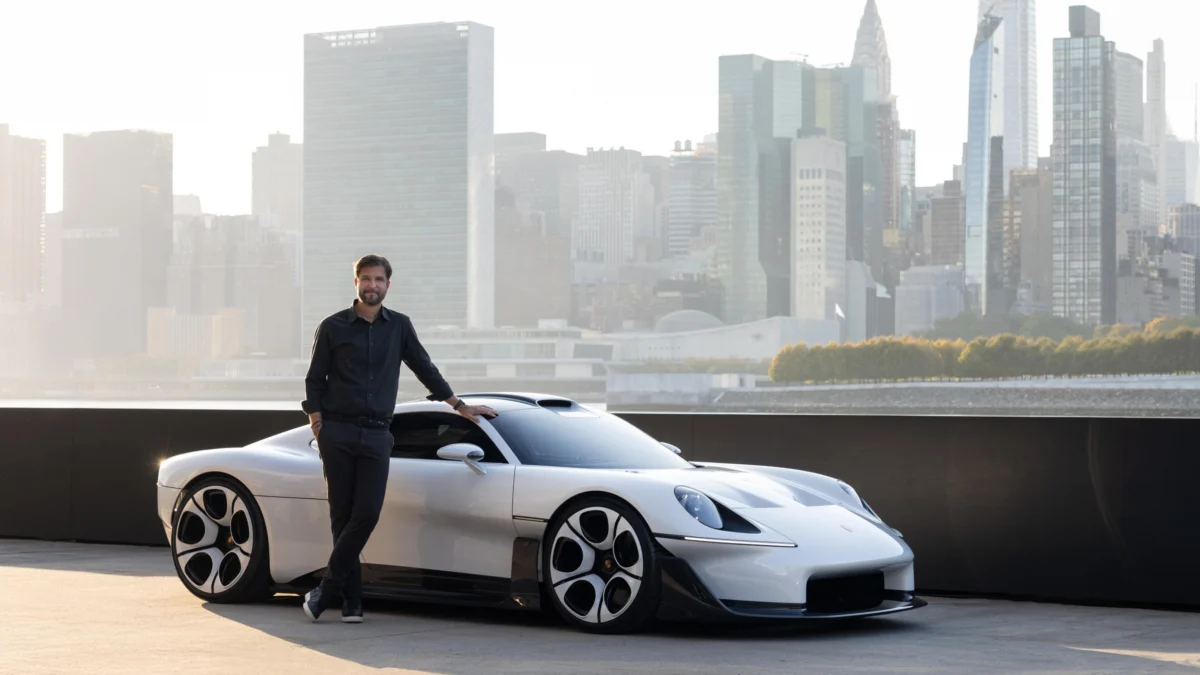
In a decisive move to redefine the future of high-performance automotive engineering, Porsche has unveiled the Mission S, a vision model that serves as the cornerstone of its new "Sportwagenschmiede 35" strategic realignment. This initiative marks a pivot for the Stuttgart-based manufacturer, shifting its focus away from volume-based production toward a model of extreme exclusivity, high-margin craftsmanship, and a return to the foundational principles that established Porsche as a global titan of the sports car segment.
The Mission S is not merely a design study; it is a declaration of intent. By positioning the platform above the iconic 911, Porsche is carving out a new tier in its product portfolio—a permanent, versatile mid-engined super sports car architecture designed to bridge the gap between traditional combustion-engine heritage and the necessity for modern, driver-centric innovation.

The Strategic Shift: Sportwagenschmiede 35
The "Sportwagenschmiede 35" strategy—the name translating to "Sports Car Forge 35"—represents a fundamental restructuring of Porsche’s long-term business model. For decades, the automotive industry trended toward mass-market saturation, prioritizing volume and accessibility. Porsche, however, is now signaling a return to the ethos of a specialized atelier. This strategy acknowledges that the modern consumer, matured by decades of economic fluctuations and shifting social values, no longer prioritizes status symbols for the sake of prestige. Instead, the focus has shifted toward "authenticity"—the emotional resonance of the driving experience and the integrity of the vehicle’s design.
Industry analysts observe that this realignment is a response to the "democratization of luxury." As luxury vehicles have become more common, true high-end buyers are seeking exclusivity and a deeper connection to mechanical engineering. By limiting production and focusing on high-margin, bespoke-style vehicles, Porsche aims to insulate its brand from the volatility of the general automotive market while reinforcing its position as a purveyor of "real" driving experiences.
Chronology of the Mission S Development
The genesis of the Mission S can be traced back to the broader challenges Porsche faced in balancing electrification mandates with the purist expectations of its core enthusiast base.

- Early 2024: Internal planning begins for a new platform to succeed the current mid-engine architecture, with a mandate to emphasize mechanical purity.
- Late 2025: The "Sportwagenschmiede 35" project is finalized, outlining the goal to move beyond the constraints of the 911’s rear-engine layout for the new flagship platform.
- October 2026: Official unveiling of the Mission S vision model. This reveal serves as the first public demonstration of the brand’s evolved design language, which integrates historical styling cues with next-generation ergonomics.
- 2027 and Beyond: The anticipated rollout of production variants based on the Mission S platform, marking the official shift in the brand’s manufacturing strategy.
Design Philosophy and Technical Execution
The Mission S draws inspiration from Porsche’s storied history, specifically the legendary mid-engine platforms that defined the brand’s success in endurance racing. However, the design is distinctly modern. Tobias Sühlmann, Head of Style Porsche, describes the vehicle as a "holistic design strategy," wherein every aesthetic choice serves a functional purpose.
The exterior of the Mission S adheres to the "recognizable at first glance" mandate issued by Dr. Michael Leiters, Chairman of the Executive Board. It features a low, aerodynamic silhouette that prioritizes downforce and cooling for a high-performance mid-engine setup.
Inside, the cabin represents a rejection of the "screen-heavy" trend currently plaguing the luxury car segment. Instead, the Mission S employs a minimalist, driver-oriented cockpit. The goal is to maximize the interaction between the pilot and the machine. Analog controls are prioritized for critical inputs—steering, braking, and throttle response—while digital elements are reserved for essential telemetry. This "symbiosis of analogue and digital" is designed to reduce cognitive load, allowing the driver to focus entirely on the tactile feedback provided by the road.

Data-Driven Market Positioning
To understand the weight of this decision, one must look at Porsche’s current market standing. As of the latest fiscal reporting, the brand’s high-margin strategy has been successful, with operating returns consistently outperforming the industry average of 6-8%. By pivoting to the "Sportwagenschmiede 35" model, Porsche expects to further insulate itself from the risks associated with the mass-market EV transition.
Market research indicates that the "super sports car" segment—defined as vehicles priced above the $200,000 threshold—has seen a compound annual growth rate (CAGR) of approximately 5.4% over the last five years. By entering this space with a permanent platform rather than a limited-run hypercar, Porsche is positioning itself to capture a larger share of this high-net-worth demographic. Unlike a "one-off" project, which serves as a marketing halo, the Mission S platform is designed for longevity and iterative improvement, ensuring it remains relevant for the next decade of performance engineering.
Official Responses and Industry Reaction
Dr. Michael Leiters has been clear about the philosophy behind this move. In his recent statements, he emphasized that the Mission S is the blueprint for all future Porsche sports cars. "The Mission S provides a glimpse of the ideas and design features that will shape Porsche in the coming years," Leiters stated. "It represents a platform positioned above the 911, not as a vanity project, but as a core pillar of our future customer offering."

Industry experts suggest that this move is a calculated response to the brand’s competition, specifically Ferrari and McLaren, who have long dominated the mid-engine super sports car space. By bringing the "Porsche touch"—characterized by legendary build quality, daily usability, and exceptional track performance—to a new, higher-tier platform, Porsche is effectively challenging the incumbents in a way it has not done since the Carrera GT.
Broader Impact and Implications
The shift toward the Mission S platform carries significant implications for the automotive industry at large. First, it signals that the era of "feature creep"—where vehicles are defined by the complexity of their infotainment systems—may be nearing its end among performance-focused manufacturers. The move toward "purism" is a reaction to the digital fatigue felt by many drivers.
Second, the "Sportwagenschmiede 35" strategy highlights the importance of internal combustion (or hybrid-assisted combustion) as a legacy technology that still holds immense value for enthusiasts. While Porsche remains committed to its electrification goals, the Mission S proves that the company recognizes the irreplaceable nature of a traditional, visceral driving experience.

Finally, the impact on Porsche’s brand equity cannot be overstated. By leaning into its heritage while simultaneously pushing the boundaries of mid-engine performance, Porsche is effectively bridging the generational divide between collectors who value the 1960s-era mechanical engagement and modern buyers who demand state-of-the-art materials and precision.
Conclusion
As the automotive world moves toward a future defined by automation and software, the Porsche Mission S stands in stark contrast. It is a vehicle that asks for engagement, demands skill, and rewards the driver with an experience that feels intentionally crafted. Through the "Sportwagenschmiede 35" strategy, Porsche is not just redesigning a car; it is preserving the soul of the sports car for a new generation.
The Mission S is, in essence, a promise: that while the world around us may be changing, the fundamental joy of driving—the connection between the driver, the road, and a perfectly balanced machine—will remain the centerpiece of the Porsche identity. As the company transitions into this new phase of its history, the Mission S will serve as the benchmark by which all future high-performance vehicles will be measured, ensuring that the legacy of the "Sportwagenschmiede" continues for decades to come.