









For the millions of fitness enthusiasts who frequent local gyms or engage in specialized sports training, the pursuit of optimal performance is often hindered by a persistent obstacle: the lack of real-time, professional-grade feedback. While personal trainers offer invaluable guidance, their services are often cost-prohibitive for the average individual. Consequently, many gym-goers turn to digital tutorials or informal peer advice, methods that lack the precision necessary to prevent injury or maximize mechanical efficiency. A research team at the Indian Institute of Technology Gandhinagar (IITGN), led by Dr. Biswajit Saha, has unveiled a promising technological intervention designed to bridge this gap: a flexible, wearable sensor patch that tracks exercise biomechanics with high precision.
The Engineering Behind the Patch
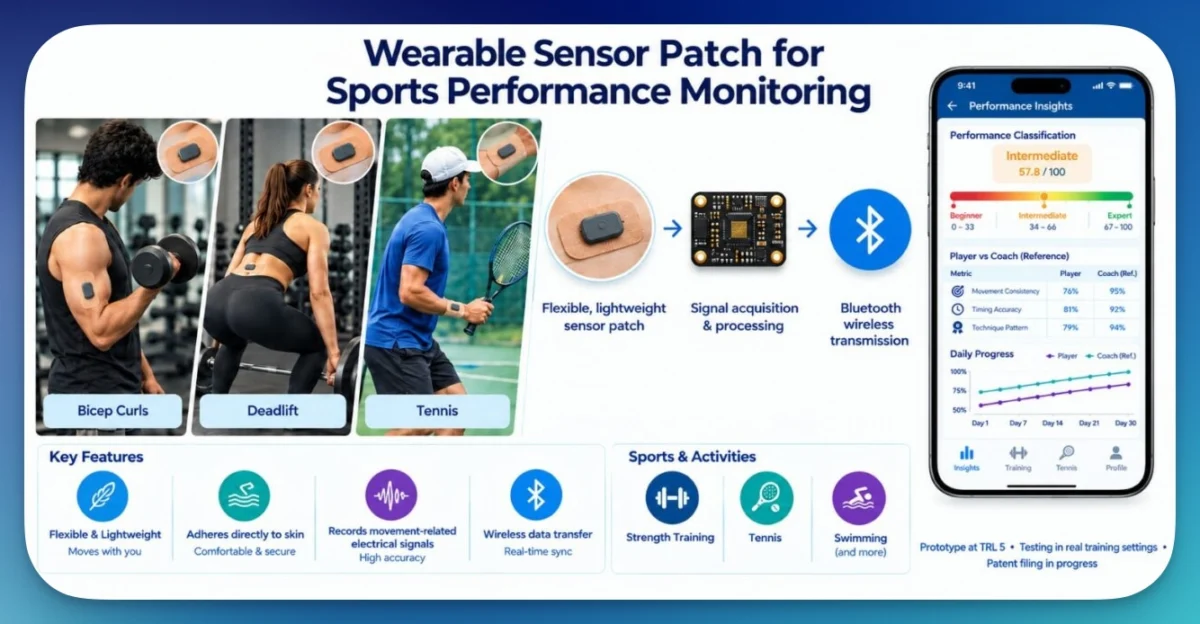
The core of the IITGN innovation lies in its unique material composition. Unlike rigid, bulky sensors that often impede natural movement or require complex calibration, this device is designed to be lightweight and highly conformable. The patch is engineered to adhere to critical physiological landmarks on the user’s body. As the wearer performs physical movements—ranging from the repetitive lifting of weights to the fluid strokes of a swimmer or the high-intensity swings of a tennis player—the patch flexes accordingly.
This physical deformation is the mechanism of action. As the patch bends, it alters its internal electrical resistance. These subtle shifts in resistance are converted into high-fidelity data signals, which are then transmitted via Bluetooth to a paired smartphone or computing device. Once the raw data is captured, it is processed through a proprietary machine-learning algorithm. The model compares the user’s movement patterns against a robust repository of reference data, which has been curated using input from certified trainers, professional coaches, and elite athletes at the state and national levels.

A Chronology of Development
The project at IITGN represents a significant milestone in the field of human-computer interaction and sports science. While the exact timeline of the research has not been publicly detailed, the prototype has officially reached Technology Readiness Level (TRL) 5. This designation indicates that the technology has been validated in a relevant environment, moving beyond the laboratory setting into real-world testing.
Currently, the research group is conducting multi-disciplinary pilot studies. The testing cohort comprises approximately 50 gym-goers focusing on strength and weight-based training, alongside 30 trainees participating in dynamic sports such as tennis and competitive swimming. This dual-track testing approach is crucial; it allows researchers to refine the algorithm’s ability to distinguish between harmless individual variations in form and actual mechanical errors that could lead to injury or diminished returns. The team has already initiated the patent application process, signaling their intent to move toward commercialization and broader industry integration.
Analytical Implications: Precision vs. Performance
The integration of artificial intelligence into wearable health technology is not new, yet the IITGN patch addresses a specific technical challenge that has long plagued the industry: the "fatigue factor." It is a well-documented phenomenon in sports science that form inevitably degrades as muscles tire. A user may begin a set of repetitions with perfect posture, only to experience "form drift" by the final set.
The IITGN model is specifically designed to account for this. By analyzing not just the trajectory of a movement, but also the velocity, force, and rhythmic consistency, the device can provide nuanced feedback. The machine-learning architecture is tasked with a complex classification problem: separating intentional movement variations (which vary based on body morphology) from performance-limiting technical flaws. While the data has not yet been peer-reviewed or published in a formal journal, the preliminary framework suggests a significant advancement in how amateurs can monitor their progress.

The Future of Fitness Supervision
The existence of such a device inevitably raises questions regarding the future of the personal training industry. However, industry analysts and the research team alike maintain that the goal is not to replace the human trainer, but to augment their capabilities.
A human trainer offers benefits that an algorithm cannot yet replicate: psychological motivation, holistic health assessment, and the ability to adapt a program on the fly based on a client’s mood or recovery status. The IITGN patch is envisioned as an "augmented intelligence" tool. It provides the objective data—the "what" and the "how"—that allows a trainer to focus their limited time on the "why." For those training without a coach, the device serves as a safety net, acting as a digital sentinel that alerts the user when their form deviates from established safety protocols.
Market Potential and Industry Partnerships
Despite the technical success of the prototype, the journey to a consumer-ready product is fraught with challenges. The team at IITGN is currently in a phase of seeking strategic partnerships with both private industry entities and government bodies. The objective is to scale the production of the sensor while maintaining the cost-effectiveness that makes it an attractive alternative to professional coaching.
The broader implications for this technology are substantial. In a global fitness market that is increasingly focused on data-driven health outcomes, the ability to democratize professional-level form analysis could have profound public health benefits. By reducing the incidence of exercise-induced injuries, such devices could lower healthcare costs associated with musculoskeletal issues. Furthermore, for the sports sector, the technology provides a scalable way for amateur athletes to reach competitive standards.

Contextualizing the Wearable Landscape
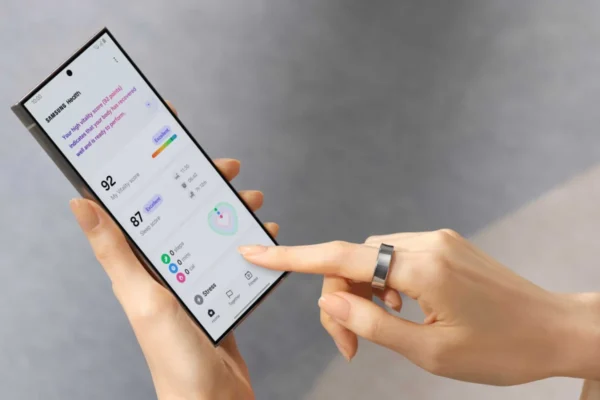
The IITGN project arrives at a time of rapid innovation in the wearables market. As seen in recent developments from major tech firms, there is a clear trend toward moving beyond simple step counting and heart rate monitoring toward more sophisticated diagnostic and performance-tracking metrics. For instance, recent advancements in sleep apnea detection—where companies like Samsung are utilizing sensors to track breathing disturbances—demonstrate a shift toward using wearable data as a legitimate clinical input.
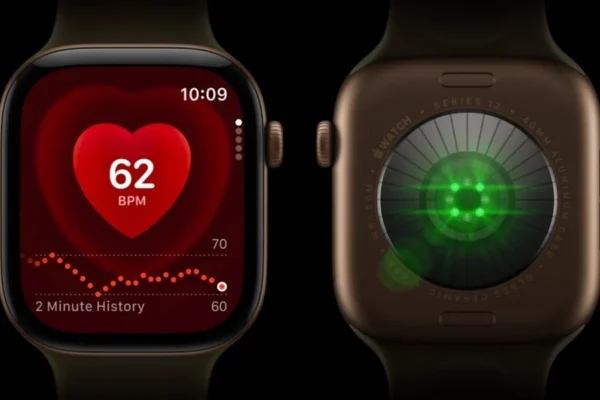
Similarly, the ongoing evolution of sports-focused hardware, such as advanced biometric-tracking smartwatches and ear-worn sensors, has conditioned consumers to expect more intelligence from their accessories. However, the IITGN patch occupies a distinct niche: it is a "form-factor" sensor. Unlike a watch that tracks internal biometrics (like heart rate or blood oxygen), this patch tracks external kinetics. By focusing on the mechanics of motion rather than internal physiological states, it addresses a fundamental requirement of physical training that has remained largely untouched by current mass-market wearables.
Addressing Skepticism and Technical Hurdles
Despite the enthusiasm surrounding this technology, several hurdles remain before the device reaches the commercial shelves. Accuracy in a lab environment is distinct from accuracy in a sweaty, high-friction gym environment. Ensuring that the adhesive properties of the patch remain consistent during intense physical activity, and that the Bluetooth connectivity remains stable amidst the interference of other gym equipment, will be the primary focus of the next development phase.
Moreover, data privacy will be a critical concern. As these devices collect sensitive biomechanical data, establishing clear protocols for how that data is stored, shared, and protected will be paramount. If the IITGN team can navigate these regulatory and technical landscapes, their invention could become a staple in the gym bag of the future.

Looking Ahead: The Path to Commercialization
The transition from a TRL 5 prototype to a mass-market product involves several rigorous stages, including large-scale clinical trials and iterative design updates. The research team’s decision to keep the project under patent protection suggests a long-term commitment to a commercial roadmap.
Should they succeed in finding the right manufacturing partners, the impact could be transformative. Imagine a world where every amateur athlete, regardless of their financial status, has access to the same form-correcting technology used by Olympians. The democratization of elite-level coaching through AI-driven hardware could shift the paradigm of physical fitness, making high-performance training more accessible, safer, and significantly more efficient.
As the team at IITGN continues to refine their algorithms and field-test their prototypes, the fitness industry will be watching closely. Whether this device becomes a standard tool for the average gym-goer or remains a niche instrument for specialized athletic training, it stands as a testament to the power of interdisciplinary research. By merging material science, sensor technology, and artificial intelligence, the researchers have provided a glimpse into a future where technology acts as an invisible, always-present coach, guiding us toward our goals with precision and accuracy.
For now, the project serves as a reminder that the most impactful innovations in health technology are often those that address the simplest, most human problems. The challenge of maintaining correct form is as old as exercise itself; the solution, it seems, may finally be within our grasp. As the developers look toward the next phase of testing, the global fitness community awaits further data, eager to see if this bendy, unassuming patch can truly hold its own against the watchful eye of a human expert.