







The Open Home Foundation, in collaboration with commercial partner Apollo Automation, has officially released the ESPHome Starter Kit, marking a significant milestone in the evolution of open-source smart home automation. First teased in April 2026 during the annual State of the Open Home address, the product is designed to bridge the gap between complex electronics and everyday consumers. By eliminating traditional barriers to entry—such as soldering, breadboarding, and manual code compilation—the newly debuted hardware suite aims to transition users from passive consumers of smart home technology into active creators of localized, privacy-focused automation infrastructure.
The hardware ecosystem is engineered around an ESP32-C6 microcontroller, serving as the central processing unit for a modular array of snap-apart components. The kit includes an array of interchangeable modules, flat ribbon cables for secure physical connections, and a dedicated desktop application known as the ESPHome Device Builder. Priced for affordability and distributed through official channels, the product launch underscores a broader industry push toward local-first computing, sustainability, and open standards in the Internet of Things (IoT) sector.
Background Context and Chronology of the Open Hardware Initiative
The genesis of the ESPHome Starter Kit traces back to the strategic evolution of the Open Home Foundation, an organization committed to ensuring transparency, privacy, and user choice in residential automation. ESPHome, originally a community-driven firmware platform designed to control ESP8266 and ESP32 boards using simple configuration files, was integrated into the Open Home ecosystem to streamline custom device creation. However, historically, building custom ESPHome hardware required a steep learning curve. Users had to independently source microcontrollers, sensors, resistors, and wiring components, then manually assemble them using soldering irons and breadboards.
Recognizing that this hardware friction restricted custom device creation to seasoned hobbyists and software developers, the foundation sought a commercial partner capable of producing an integrated, beginner-friendly physical product. Apollo Automation, recognized previously for its contributions to open-source sensor technology, was selected as the Open Home Foundation’s second official commercial partner. Following months of joint development, prototyping, and community beta testing, the initiative culminated in the public release announced in mid-2026. The launch schedule coincided with major software upgrades to the ESPHome Device Builder, ensuring that the software interface evolved concurrently with the physical product.
Hardware Architecture and Design Specifications
At the core of the ESPHome Starter Kit is the ESP32-C6 microcontroller, a modern low-power chip supporting Wi-Fi 6, Zigbee, Thread, and Bluetooth 5 connectivity protocols. This ensures that the devices built using the kit are not only compatible with contemporary home automation standards but are also positioned for long-term interoperability within mixed-ecosystem smart homes.
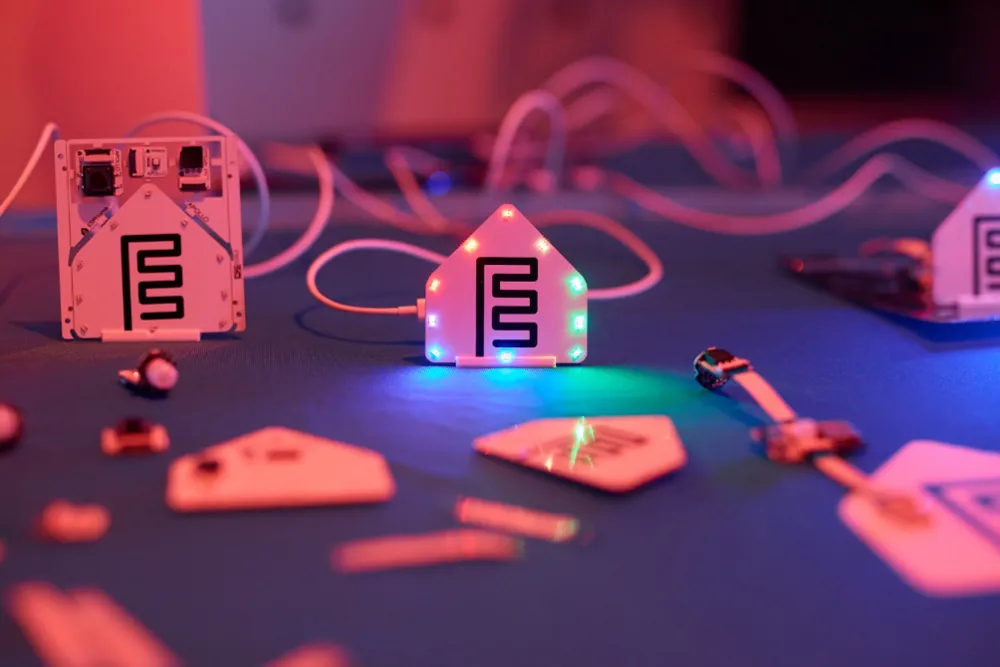
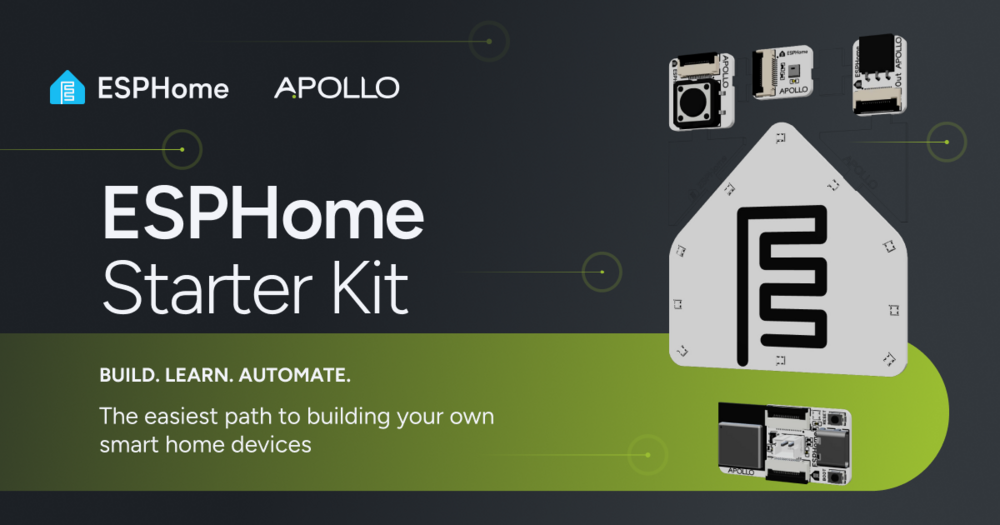
Rather than requiring loose electronic components, the kit utilizes a snap-apart panel design. Users detach individual functional modules—such as motion detectors, tactile input buttons, and programmable notification arrays featuring the backlit ESPHome logo—via scored breakaway tabs. These modules interface with the main control board through standardized flat ribbon cables. Because every module employs a uniform connection protocol, the hardware is entirely interchangeable. A user can transition from a motion-sensing security node to an interactive desktop notification display simply by snapping on a different module and flashing the corresponding configuration profile through the Device Builder.
Power and data management are handled via standard USB-C architecture. Furthermore, the physical design incorporates a display stand, allowing notification modules to function as polished desktop accessories rather than experimental prototypes destined for a workbench drawer.
Software Integration and the Revised Device Builder
Hardware accessibility is heavily dependent on intuitive software tools. To accompany the physical release, the development team overhauled the ESPHome Device Builder, transforming it into a streamlined desktop application. The updated interface permits users to configure, compile, and flash firmware onto their ESP32-C6 chips without writing raw YAML code, though advanced users retain the option to manipulate configuration scripts directly.
The Device Builder communicates locally over the user’s network, aligning with the Open Home Foundation’s core tenet of zero cloud dependency. Once configured, the hardware integrates natively with Home Assistant and other compatible platforms out of the box. To support the educational journey of new builders, Apollo Automation and ESPHome published an exhaustive online Learning Wiki. This resource transitions users from basic assembly instructions to fundamental concepts in electronics, ensuring that buyers acquire transferable technical literacy rather than merely following a rigid instructional recipe.
Industry Implications and Sustainability Focus
The commercial strategy behind the ESPHome Starter Kit addresses a persistent critique of educational electronics: obsolescence and waste. Starter kits in the consumer electronics market frequently suffer from high attrition rates, ending up abandoned in storage after initial experimentation. Trevor Schirmer, co-founder of Apollo Automation, emphasized that sustainability and long-term utility were foundational requirements during the engineering phase.
"One of the core requirements for the kit was that you had something useful at the end," Schirmer noted. "One of the foundation’s principles is sustainability. So, this isn’t something that you just buy, learn, and then put in a drawer or the trash never to be seen again. You can make real usable products out of this at the end."
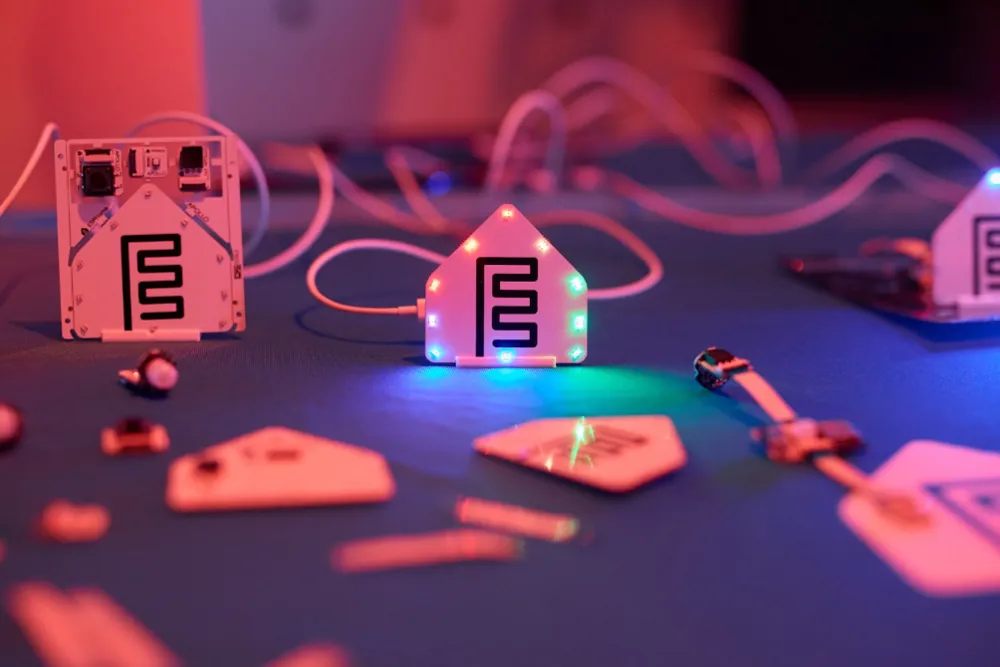
By ensuring that every module transforms into a durable, deployment-ready smart home appliance—such as a localized occupancy sensor or a status indicator light for remote work environments—the product maintains utility well past the initial learning phase. Moreover, the decision to run entirely on local networks prevents user data from migrating to external corporate servers, addressing growing consumer concerns regarding privacy and cloud service discontinuation risks.
Financial Structure and Community Reception
The economic model of the ESPHome Starter Kit release is structured to support the broader open-source ecosystem. According to project disclosures, the majority of profit generated from each kit sale is funneled directly back to the Open Home Foundation. These funds are allocated to sustain and expand development on core infrastructure projects, including ESPHome, Home Assistant, and Music Assistant.
Early community reception across developer forums and dedicated Discord channels has been largely favorable, with makers praising the transition away from soldering requirements. Discussions within the community have already begun exploring advanced automation applications utilizing the ESP32-C6’s multi-protocol radio capabilities, bridging the gap between beginner-tier learning modules and complex, enterprise-grade residential networks.
As smart home technology becomes increasingly commercialized and closed ecosystems tighten restrictions on cross-platform compatibility, the introduction of the ESPHome Starter Kit represents a strategic counterweight. By lowering the barriers to custom hardware creation while upholding open standards and data sovereignty, the Open Home Foundation and Apollo Automation have established a new benchmark for accessible, community-driven device engineering.