







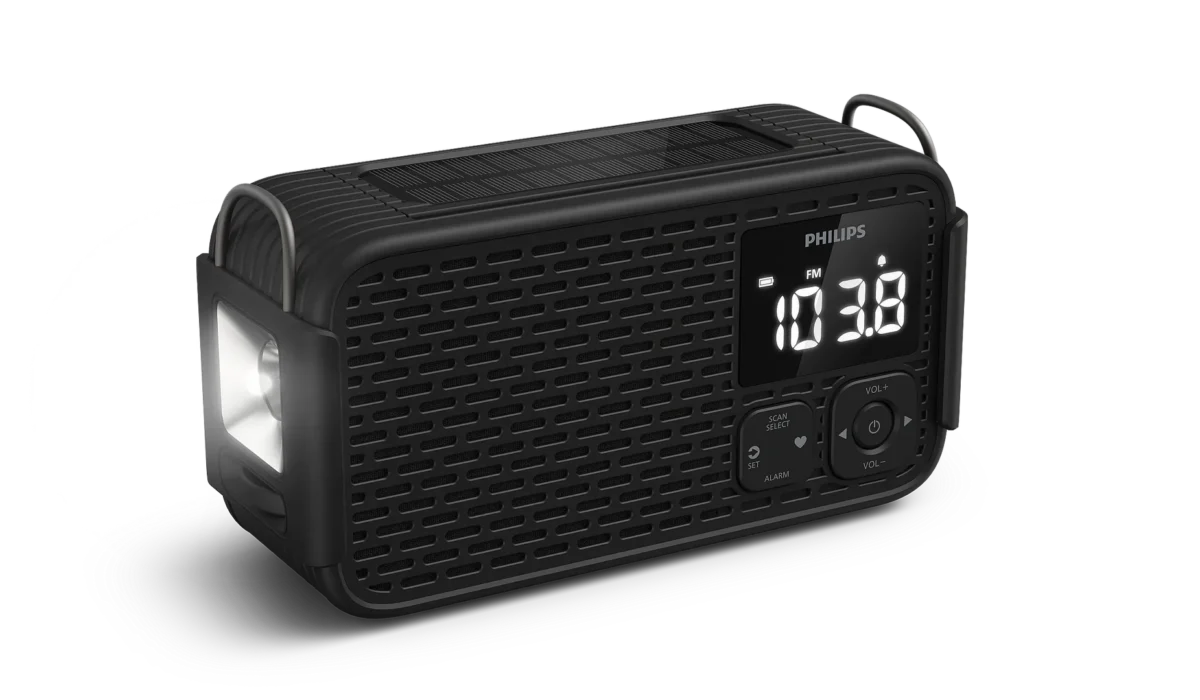
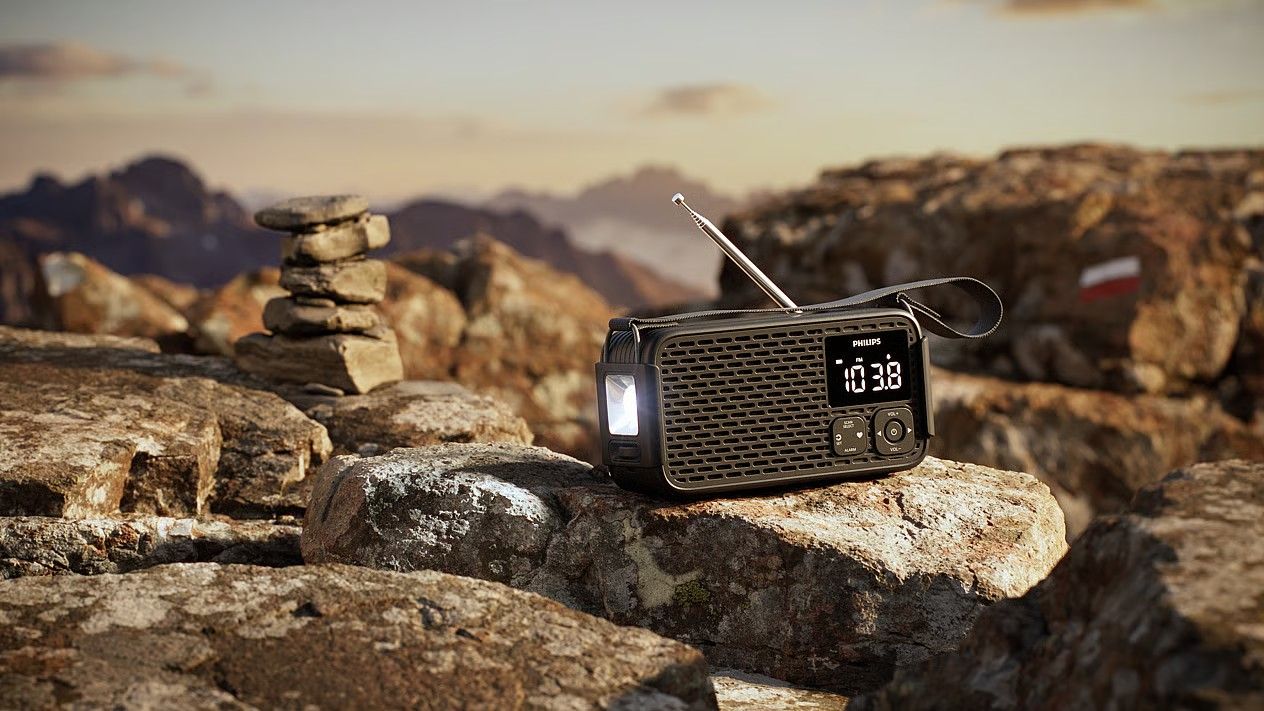
Philips has officially entered the ruggedized, multi-purpose electronics market with the launch of the TAR3500, a portable radio designed specifically for off-grid scenarios, emergency preparedness, and outdoor recreation. While the portable radio market has seen a resurgence in recent years, driven by a growing consumer interest in emergency readiness and back-to-basics outdoor experiences, the TAR3500 distinguishes itself through a multi-modal power strategy and an integrated suite of survival-focused tools. Priced at £50 / $69, the device represents a strategic pivot for the electronics giant, moving away from high-fidelity home audio toward the functional, survival-oriented sector of portable technology.
Core Technical Specifications and Performance
At the heart of the TAR3500 is a 5.7cm full-range driver delivering 3 watts of output power. While not intended for audiophile-grade performance, the driver is calibrated for clarity in speech and broadcast reception, essential for news and weather alerts in remote locations. The unit supports AM and FM frequency bands, utilizing a robust 550mm extendable antenna designed to maximize signal acquisition in areas where cellular coverage and digital signals are often non-existent.
The device features an intuitive LED display for frequency tracking and station identification, complemented by 20 programmable presets. This digital-analog hybrid approach aims to minimize the "stress-free operation" requirement Philips cites as a core design philosophy, allowing users to switch between emergency broadcasts or entertainment channels with minimal configuration, even in low-light or high-pressure environments.
Power Versatility: The Multi-Source Advantage
Perhaps the most significant engineering decision regarding the TAR3500 is its power flexibility. In modern disaster scenarios, grid dependency is a primary vulnerability. Philips has addressed this by integrating a high-capacity internal battery capable of providing 60 hours of continuous operation on a single charge.
The device provides four distinct recharging methods:
- USB-C Charging: The modern standard for high-efficiency energy intake.
- Solar Harvesting: Integrated solar panels allow for trickle charging, extending the life of the battery during extended outdoor excursions.
- Mechanical Hand Crank: A manual kinetic energy generator, ensuring that the radio remains operational even when sunlight is absent and grid power is unavailable.
- AAA Battery Support: A secondary power option providing a fallback for users who prefer the reliability of swappable cells.
Furthermore, the TAR3500 functions as a portable power bank. Using a standard USB-A output, users can channel the radio’s stored energy to charge smartphones or GPS units, providing a critical lifeline for navigation or communication in remote areas.
Design for Extreme Environments
The hardware is housed within an IP55-rated chassis, providing a degree of protection against dust ingress and low-pressure water jets. This rating ensures the internal circuitry is shielded from the common hazards of camping—such as sudden rainfall, morning dew, or dust during desert travel. The inclusion of a dedicated carry strap underscores the product’s emphasis on portability, allowing it to be clipped to backpacks or hung within a tent.
Safety features extend beyond radio reception. The device includes a high-visibility orange SOS button that triggers a three-fold alarm system: a high-decibel emergency siren, a visual light strobe for rescue signaling, and an ultrasonic frequency generator (dog whistle) to assist in search-and-rescue efforts. For standard utility, the radio also incorporates a dual-mode lighting system, offering both a focused flashlight for navigation and a softer reading light for illumination within confined living spaces like tents or cabins.
Market Context and Competitive Landscape
The release of the TAR3500 occurs at a time when the portable radio market is undergoing a significant transformation. Historically a legacy technology, portable radios are experiencing a "survivalist" renaissance. Consumers are increasingly diversifying their emergency kits as global weather patterns become more volatile and grid stability becomes a common public concern.
Philips faces stiff competition in this segment, most notably from established British audio manufacturer Roberts Radio. The Roberts SolarDAB 99, which retails for approximately £150, has set a high bar for rugged, solar-capable digital radio performance. While the Roberts model focuses on a premium digital experience, the Philips TAR3500 positions itself as a more accessible, entry-level, and highly mechanical alternative. The price difference—£50 for the Philips versus £150 for the Roberts—suggests a market segmentation strategy where Philips is targeting a broader demographic of casual campers and families building household emergency kits.
Implications for Emergency Preparedness
The trend toward "ruggedized" audio devices reflects a broader shift in consumer technology preferences. In the late 2010s, portable audio was dominated by Bluetooth speakers prioritizing sound quality and smart connectivity. The current 2024-2026 trajectory, however, shows a distinct pivot toward "analog-first" hardware.
Industry analysts suggest that the demand for these devices is being fueled by two primary factors: the "digital detox" movement and the rise of decentralized emergency infrastructure. As smartphones become more fragile and reliant on constant network pings—draining batteries quickly—the demand for a standalone radio that can be powered by hand-cranking has seen a measurable uptick. By offering a hybrid device that acts as a power bank, a radio, and a signal beacon, Philips is effectively positioning the TAR3500 as an essential "third pillar" in household emergency management, sitting alongside first-aid kits and water filtration systems.
Chronology of Product Development
While Philips has long been a fixture in the home audio industry, the development of the TAR3500 follows a two-year internal initiative to streamline their portable product line.
- Early 2024: Market research indicated a gap in the mid-range price bracket for emergency radios that offered both solar and hand-crank capabilities.
- Mid-2024: Prototyping began with a focus on IP55 durability testing, ensuring the device could withstand drops and exposure to elements consistent with wilderness hiking.
- Q4 2024: Final testing of the power bank functionality and the SOS signal system was completed.
- Q1 2026: Official market rollout begins in European and North American markets.
Expert Analysis: Is it a Necessary Upgrade?
For the average consumer, the primary question remains whether the TAR3500 offers enough of an upgrade over existing legacy radios. The integration of USB-C and the power bank functionality are the most significant improvements over the older generation of hand-crank radios. Older models often utilized proprietary charging cables or lacked any way to interface with modern mobile devices.
By incorporating USB-C, Philips has ensured that the TAR3500 can be integrated into a user’s existing tech ecosystem rather than requiring a separate set of specialized cables. However, the radio’s reliance on AM/FM tuning—while reliable—means it will not receive digital-only broadcasts, a trade-off users must weigh against the radio’s superior power versatility.
Conclusion: The Future of Portable Utility
As the market for portable electronics continues to diversify, the Philips TAR3500 represents a pragmatic approach to design. By focusing on utility over aesthetics and multi-source power over high-end digital features, the company has created a tool that bridges the gap between recreational camping gear and essential emergency equipment. Whether it is used for a weekend trip in the mountains or as a precaution during local power outages, the device serves as a reminder that in an increasingly connected world, there is still immense value in hardware that functions independently of the grid.
For prospective buyers, the choice between the TAR3500 and higher-end alternatives like the Roberts SolarDAB 99 will likely come down to the intended use case. Those seeking a primary home radio with occasional outdoor use may opt for the premium digital performance of the Roberts, while those looking for a dedicated, "throw-in-the-bag" survival tool will likely find the Philips TAR3500 to be a more practical and cost-effective investment. As the technology continues to mature, it is probable that we will see further refinements in solar efficiency and battery density in this sector, but for now, the TAR3500 sets a new standard for functional, emergency-ready audio equipment.